
Mountain Bike · FAQ
Questions about Hardtail Mountain Bike
Straight answers on fit, specs, and when this type makes sense — each topic has its own page with links back to the buying guide.
Open Hardtail Mountain Bike guide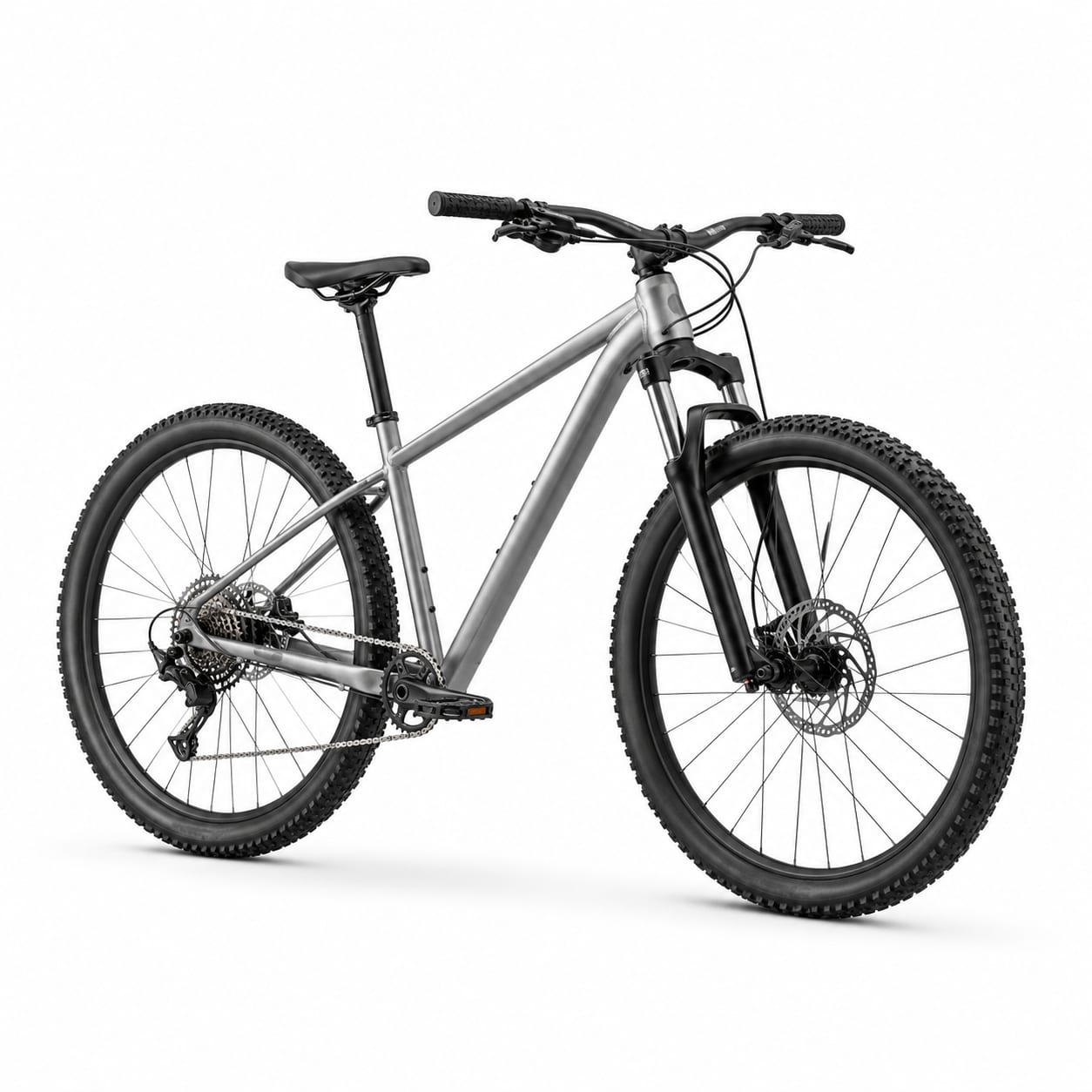
6 topics
Pick a question
Every answer links to the full subcategory guide and related gear types when it helps you decide.
Is a hardtail good for beginners?
Yes, hardtails are excellent for beginners for several reasons: they're more affordable, simpler to maintain, and teach fundamental bike handling skills. The direct feedback from the rigid rear end helps new riders learn proper line choice and body position. However, if your local trails are very rough and technical, a full suspension bike may be more confidence-inspiring. For most beginners on moderate trails, a hardtail is the ideal starting point.
Read answer →02Can a hardtail handle technical trails?
Modern trail hardtails with 130-140mm forks, slack geometry, and wide tires can handle surprisingly technical terrain. Skilled riders regularly ride black diamond trails on hardtails. However, there are limits — extremely rough, steep, and sustained technical descents are where the lack of rear suspension becomes a significant disadvantage. The question isn't whether a hardtail can handle technical trails, but whether you'll enjoy the experience and ride at your preferred speed.
Read answer →03How much should I spend on a hardtail?
For a capable entry-level hardtail with hydraulic disc brakes and an air fork, budget $800-1,200. For a solid mid-range hardtail with a quality fork, dropper post, and 12-speed drivetrain, expect $1,500-2,500. High-end carbon XC race hardtails range from $3,000-8,000+. The sweet spot for most riders is $1,500-2,500, where you get performance components without diminishing returns. At this price, a hardtail will significantly outperform a full suspension bike.
Read answer →04Will I outgrow a hardtail quickly?
Not necessarily. Many experienced riders prefer hardtails for their entire riding career, especially XC racers, bikepackers, and riders on smooth to moderate trails. A hardtail only becomes limiting if you regularly ride rough, technical terrain where rear suspension provides meaningful benefits. If your local trails are flowy and moderate, a hardtail may be the optimal choice indefinitely. Even if you later add a full suspension bike to your quiver, the hardtail remains valuable for training, commuting, and bikepacking.
Read answer →05What's the best tire setup for a hardtail?
Run a slightly wider, more aggressive tire up front (2.4-2.5") for cornering grip, and a slightly narrower, faster-rolling tire in the rear (2.25-2.35") for efficiency. Set up both tires tubeless and experiment with pressures — most riders run 18-22 PSI front and 20-24 PSI rear depending on rider weight and terrain. Lower pressures improve traction and comfort, which is especially valuable on a hardtail. Don't go so low that you risk rim damage on square-edge hits.
Read answer →06Should I get a hardtail or full suspension for my first mountain bike?
If your budget is under $2,000, a hardtail is almost always the better choice — you'll get better components, a lighter bike, and a more capable machine than a full suspension bike at the same price. If your budget allows $2,500+ and your local trails are rough and technical, full suspension is worth considering. For most new riders, the simplicity, lower cost, and skill-building nature of a hardtail make it the recommended starting point.
Read answer →