
Road Bike · FAQ
Questions about Lightweight / Climbing Road Bike
Straight answers on fit, specs, and when this type makes sense — each topic has its own page with links back to the buying guide.
Open Lightweight / Climbing Road Bike guide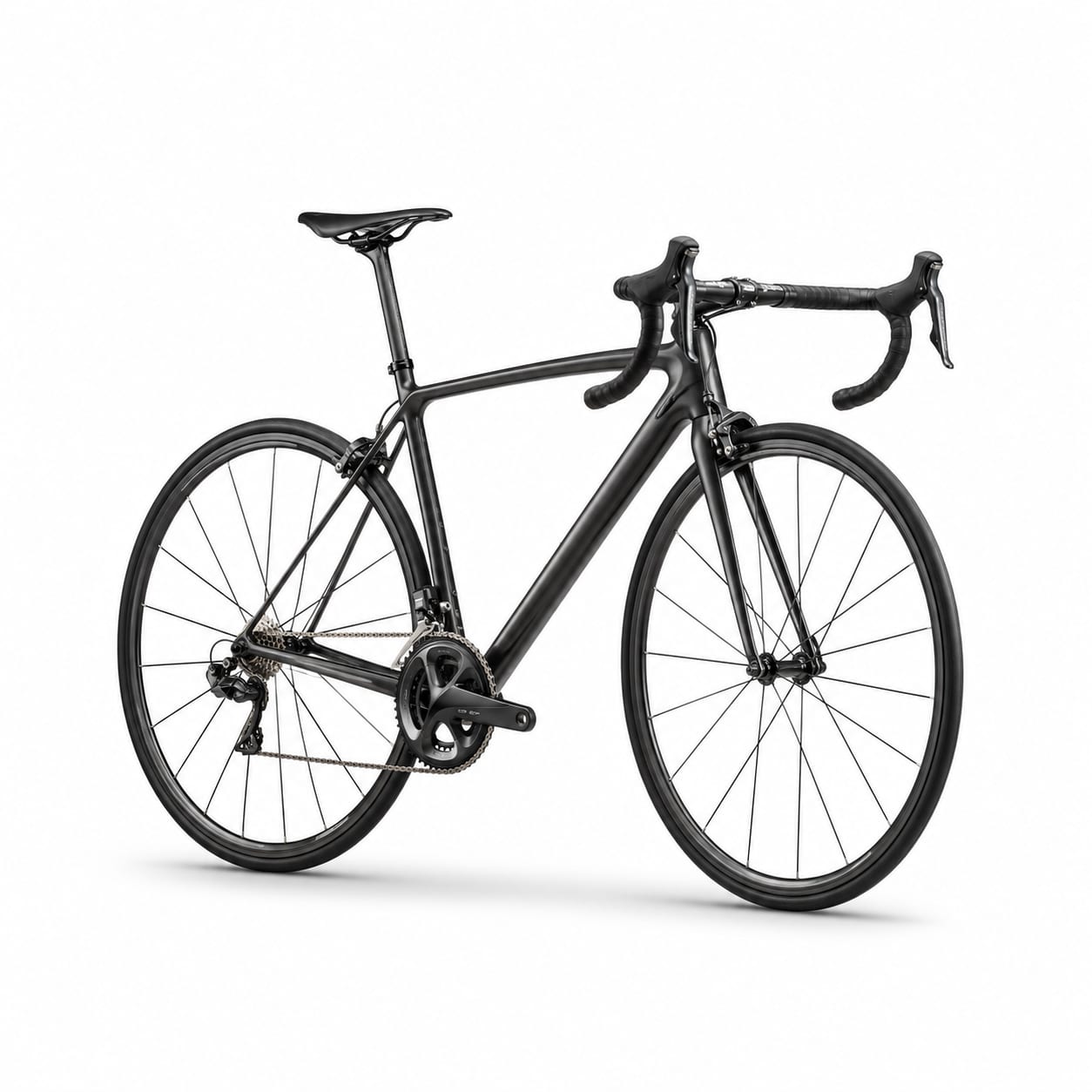
6 topics
Pick a question
Every answer links to the full subcategory guide and related gear types when it helps you decide.
How much does a climbing bike actually help compared to an aero bike on a hilly course?
On a course with 1,000m of climbing, a climbing bike that is 1 kg lighter than an aero bike will save roughly 30–60 seconds on the climbs. However, the aero bike will gain back time on descents and flat sections. The break-even point is typically around 3,000–4,000m of climbing per 100 km — above that, the climbing bike is faster overall. For most hilly gran fondos with 2,000–3,000m of climbing, the time difference is small and personal preference should guide your choice.
Read answer →02Can I use a climbing bike for flat criteriums and sprinting?
Yes, but it is not optimal. Climbing bikes can sprint and handle criteriums, but the aero penalty costs watts at high speeds, and some ultra-light frames flex under maximum sprint power. If you regularly race flat criteriums, an aero race bike is a better choice. If you do occasional criteriums but primarily climb, a climbing bike is fine — the rider matters more than the bike.
Read answer →03Is the UCI 6.8 kg weight limit relevant for non-racers?
No. The UCI weight limit only applies to UCI-sanctioned races. For training, gran fondos, and recreational riding, there is no minimum weight. Some riders build sub-6.8 kg bikes for the pure enjoyment of riding the lightest possible machine. However, bikes below 6.5 kg may require compromises in stiffness, durability, or component selection that most riders would find unacceptable.
Read answer →04Should I choose rim brakes or disc brakes on a climbing bike?
Disc brakes are recommended for virtually all riders. The weight penalty is now under 200g, and the benefits — consistent stopping power in all conditions, better modulation on long descents, wider tire clearance — far outweigh the small weight increase. Rim brakes make sense only for riders building the absolute lightest possible bike for hill climb events where braking is minimal, or for riders with existing rim brake wheelsets they want to keep.
Read answer →05What gearing should I choose for a climbing bike?
A compact chainring setup (50/34) with an 11-30 or 11-34 cassette is ideal for most riders on a climbing bike. Stronger riders may prefer semi-compact (52/36) with an 11-28 or 11-30. The key is having a bailout gear for the steepest climbs — a 34×34 ratio gives you a 1:1 gear that can spin up almost anything. Do not gear yourself too hard to look pro — proper gearing lets you maintain cadence and power on steep gradients.
Read answer →06Are climbing bikes comfortable enough for long rides?
Yes, often more so than aero bikes. The thin tube profiles of climbing frames provide natural vertical compliance that absorbs road vibration, and the moderate geometry is less aggressive than aero race bikes. With 28mm tires at appropriate pressures, a climbing bike can be very comfortable for 5–6 hour rides. The main comfort limitation is the race-oriented position, which may be too low for riders with limited flexibility.
Read answer →