Bike Type / Category
Road Bike Category
What it means
The intended use-case and design philosophy of the road bike, which determines its geometry, tube shapes, and component selection.
Typical for this type
Climbing Lightweight
In practice
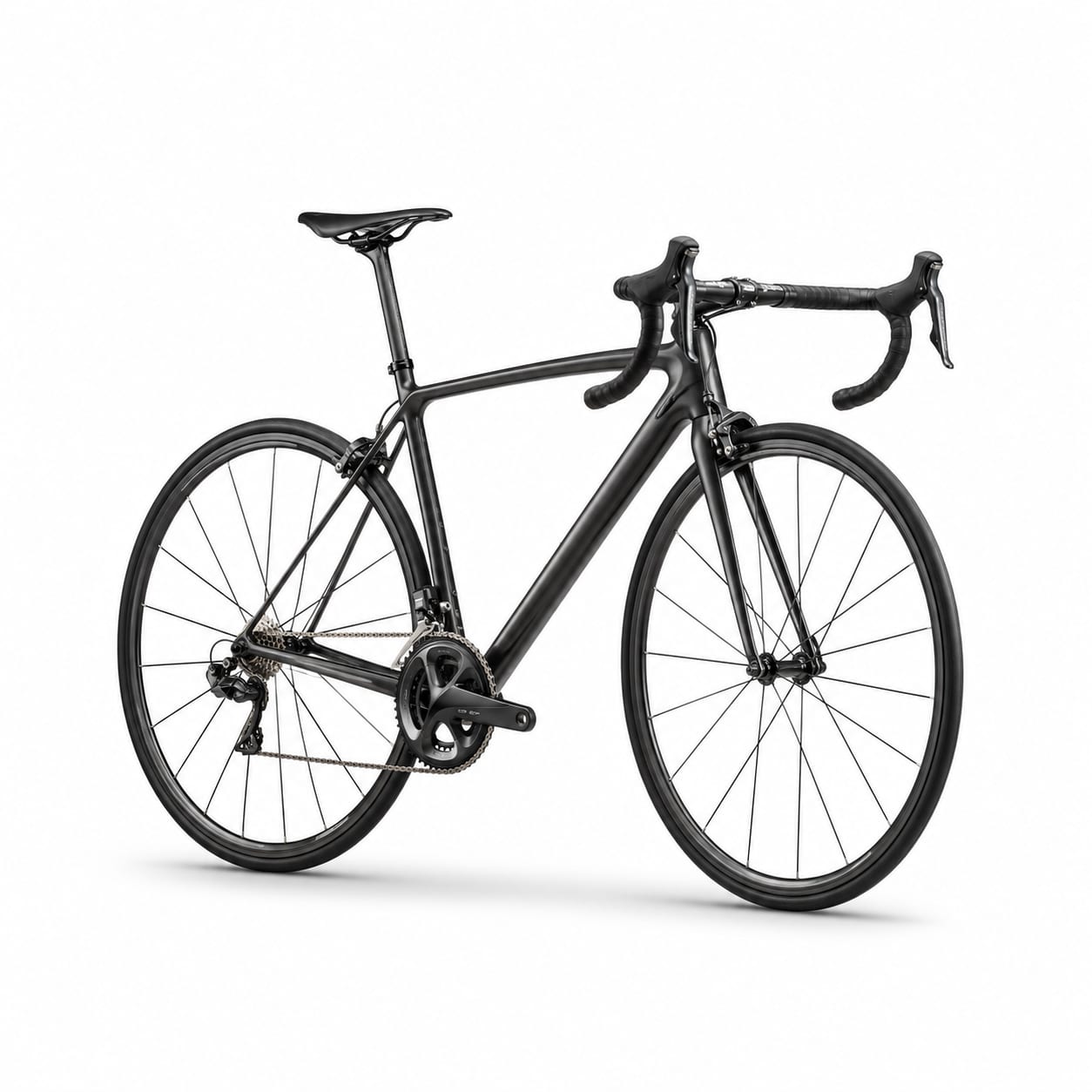
Climbing road bikes are defined by the climbing_lightweight category — minimized weight with thin tube profiles and compliance-focused frame design for ascending performance.
Compared to other types
Unlike aero_race bikes that prioritize flat speed, or endurance bikes that prioritize comfort, climbing bikes sit in a performance-oriented middle ground that favors power-to-weight ratio above all else.
Why it matters: This category designation confirms the bike's design prioritizes low weight and climbing efficiency over aerodynamic speed or endurance comfort.
Frame Material
Frame Material
What it means
The primary material used in frame construction, which determines weight, stiffness, ride quality, durability, and cost.
Typical for this type
Carbon Fiber (High-Modulus Preferred)
In practice
Carbon fiber is the dominant material for climbing bikes because it offers the best strength-to-weight ratio and allows engineers to tune stiffness and compliance through layup design. High-modulus carbon grades enable sub-800g frame weights.
Compared to other types
Climbing bikes benefit most from carbon's weight advantage. Aero bikes also use carbon but prioritize tube shaping over minimal weight. Titanium and steel climbing bikes exist but typically weigh 500g–1kg more than equivalent carbon frames.
Why it matters: Carbon fiber's tunability lets manufacturers create frames that are simultaneously light enough for climbing, stiff enough for power transfer, and compliant enough for comfort on long rides.
What it means
The nominal size designation of the frame, typically based on seat tube length or a general sizing system, which determines overall bike fit.
Typical for this type
44–64 cm (size-specific)
Most common pick: 54 cm
In practice
Climbing bikes are available across the full size range. Some manufacturers use size-specific carbon layups, optimizing wall thickness for each frame size to ensure smaller frames are proportionally lighter.
Compared to other types
Climbing bikes follow similar sizing conventions to other road categories. However, some riders size down slightly for a more compact, agile feel on climbs, which is easier to achieve with the moderate geometry of climbing bikes.
Why it matters: Proper frame size is critical for climbing efficiency — a well-fitted bike allows optimal power delivery and weight distribution on steep gradients where positioning is key.
What it means
The vertical distance from the center of the bottom bracket to the top of the head tube. Determines how upright or low the rider sits on the bike.
Typical for this type
510–555 mm (size 54)
Most common pick: 530 mm (size 54)
In practice
Climbing bikes typically have a moderate stack height — lower than endurance bikes but not as extreme as aero race bikes. This allows a position that is aerodynamic enough for fast descents while comfortable enough for long climbs.
Compared to other types
Climbing bike stack is typically 5–15mm lower than endurance bikes but 5–10mm higher than the most aggressive aero race bikes in the same size, striking a balance between aero and comfort.
Why it matters: Stack determines how low you sit on the bike. On climbs, a moderately low position helps keep front wheel traction and allows efficient power delivery. Too low and you cannot breathe or sustain effort on long climbs.
What it means
The horizontal distance from the center of the bottom bracket to the top of the head tube. Determines how stretched out the rider is on the bike.
Typical for this type
370–390 mm (size 54)
Most common pick: 378 mm (size 54)
In practice
Climbing bikes have moderate reach values that allow a stretched-enough position for power and aero on descents without being so long that weight shifts too far forward on steep climbs.
Compared to other types
Climbing bikes tend to have slightly shorter reach than aero race bikes, making it easier to shift weight rearward on steep gradients. Endurance bikes have even shorter reach for comfort.
Why it matters: Reach affects how stretched out you are. On steep climbs, too much reach shifts weight forward, reducing rear wheel traction. Moderate reach allows easy weight shifts between wheels.
Stack/Reach Ratio
Stack-to-Reach Ratio
What it means
The ratio of stack height to reach, indicating the overall riding position character independent of frame size. Higher ratios indicate more upright, endurance-oriented geometry.
Typical for this type
1.38–1.45
Most common pick: 1.40
In practice
Climbing bikes fall in the moderate race position range with stack/reach ratios around 1.38–1.45. This provides an aggressive but sustainable position for long climbs and confident descending.
Compared to other types
Aero race bikes often dip below 1.38 for maximum aero. Endurance bikes range 1.45–1.55 for comfort. Climbing bikes sit in the sweet spot that allows both performance and all-day rideability in the mountains.
Why it matters: This ratio is the best single metric for comparing fit character. A ratio around 1.40 means the bike is race-oriented but not so aggressive that it compromises climbing comfort or breathing.
Weight
Complete Bike Weight
What it means
The total weight of the complete bicycle without pedals, bottles, or accessories. Affects climbing speed, acceleration, and handling.
Typical for this type
6.0–7.5 kg
Most common pick: 6.8 kg
In practice
The best climbing bikes achieve weights at or near the UCI minimum of 6.8 kg. Mid-range climbing bikes typically weigh 7.0–7.5 kg. Sub-6.8 kg builds are possible with premium components but require careful part selection.
Compared to other types
Climbing bikes are 0.5–1.5 kg lighter than aero race bikes and 1–2 kg lighter than endurance bikes. This is their primary performance advantage on climbs and their most distinguishing characteristic.
Why it matters: Weight is the defining metric of a climbing bike. On steep gradients, every 100g saved translates to measurable time gains over long climbs. A 500g weight advantage can save 30–60 seconds on a 10km alpine climb.
Groupset / Drivetrain Level
Groupset Tier
What it means
The tier and brand of the drivetrain component group, which determines shifting performance, weight, durability, and features like electronic shifting.
Typical for this type
Shimano Ultegra to Shimano Dura Ace Or Sram Force
In practice
Climbing bikes are frequently spec'd with top-tier groupsets to minimize weight. Dura-Ace and Red are common on premium builds; Ultegra and Force represent the value-performance sweet spot.
Compared to other types
Climbing bikes more commonly feature top-tier groupsets than endurance or all-road bikes, where mid-tier groupsets are more common. The weight savings of premium groupsets matter more on climbs.
Why it matters: Higher-tier groupsets are lighter and shift more crisply. For climbing bikes, the weight savings of Dura-Ace over Ultegra (~200g) align with the bike's weight-minimization philosophy. Electronic shifting is preferred for precise shifts under load on climbs.
Speed / Number of Gears
Number of Gears
What it means
The total number of gear combinations available, determined by the number of chainrings multiplied by the number of cassette sprockets.
Typical for this type
2x12 (preferred) or 2x11
In practice
2×12 is the current standard for climbing bikes, offering tight gear steps for maintaining optimal cadence on varying gradients. Compact or semi-compact chainrings (50/34 or 52/36) paired with wide-range cassettes (11-30 to 11-34) are typical.
Compared to other types
Climbing bikes benefit more from wide-range cassettes than aero bikes, which often use closer-ratio cassettes for flat terrain. 1×12 is rare on climbing bikes due to the larger gear jumps and potential top-speed limitation.
Why it matters: Climbing demands precise gearing. Tight gear steps let you maintain cadence as gradients change. A 34-tooth inner ring with an 11-34 cassette provides a bail-out gear for the steepest climbs while maintaining tight steps in the middle of the cassette.
What it means
The braking system type, which affects stopping power, modulation, tire clearance, weight, and maintenance requirements.
Typical for this type
Hydraulic Disc (Modern Standard) Or Rim Brake (Weight-Optimized Builds Only)
In practice
Hydraulic disc brakes are now standard on most climbing bikes, offering superior stopping power on long descents. Rim brakes are still chosen by weight-obsessed riders for builds approaching or below the UCI 6.8 kg limit.
Compared to other types
Aero and endurance bikes have almost universally adopted disc brakes. Climbing bikes were the last holdout for rim brakes due to weight, but disc is now dominant. The safety and performance benefits outweigh the small weight penalty.
Why it matters: Mountain descents demand reliable braking over extended periods. Hydraulic disc brakes provide consistent, fade-free stopping power that rim brakes cannot match, especially on carbon rims in wet conditions. The weight penalty is now under 200g.
Max Tire Width
Maximum Tire Clearance
What it means
The widest tire the frame and fork can accommodate, which determines versatility for different road surfaces and conditions.
Typical for this type
28–32mm
Most common pick: 30mm
In practice
Modern climbing bikes typically accommodate 28–30mm tires, with some frames clearing 32mm. This is a significant increase from older generations limited to 25mm, acknowledging that wider tires at lower pressures are faster on real roads.
Compared to other types
Climbing bikes have less clearance than endurance (32mm) and all-road (35mm+) bikes but more than older aero race bikes (25–28mm). The 28–30mm range is optimal for pure road climbing performance.
Why it matters: Adequate tire clearance allows you to run 28–30mm tires for better grip, comfort, and rolling resistance on rough alpine descents and chip-seal climbs. More clearance is always better for versatility.
What it means
The nominal diameter of the wheels; determines tire availability, ride characteristics, and geometry constraints.
Typical for this type
700c
In practice
All climbing road bikes use 700c wheels. This is the universal standard with the best tire and wheelset availability. Lightweight wheelsets in 700c are readily available from every major manufacturer.
Compared to other types
All road bike subcategories use 700c as standard. 650b is only relevant for all-road bikes wanting very wide tires, which is not a priority for climbing bikes.
Why it matters: 700c is the only practical choice for a climbing road bike. The vast selection of lightweight climbing wheelsets in 700c means you can easily find wheels optimized for your riding style and budget.
Head Tube Angle
Head Tube Angle
What it means
The angle of the head tube relative to horizontal; affects steering speed, stability, and front-end feel.
Typical for this type
72.5–73.5°
Most common pick: 73.0°
In practice
Climbing bikes use moderately steep head tube angles that provide quick, responsive steering for tight switchbacks while maintaining stability on high-speed descents.
Compared to other types
Climbing bikes use similar head angles to aero race bikes (73–73.5°) but slightly steeper than endurance bikes (72–73°). The quick steering is valued for mountain switchbacks.
Why it matters: Steep head angles make the bike feel responsive and eager — ideal for navigating hairpin turns on climbs and descents. Too steep can feel nervous on fast descents; too slack feels sluggish on tight switchbacks.
Chainstay Length
Chainstay Length
What it means
The distance from the bottom bracket center to the rear axle; affects rear-end compliance, traction, and wheelbase.
Typical for this type
405–412 mm
Most common pick: 410 mm
In practice
Climbing bikes feature short chainstays for snappy acceleration and agile handling. Short stays put the rider's weight closer to the rear wheel for traction on steep climbs.
Compared to other types
Climbing bikes have the shortest chainstays of any road subcategory (405–410mm), compared to aero bikes (408–415mm) and endurance bikes (415–425mm). This prioritizes agility over pure stability.
Why it matters: Short chainstays make the bike feel responsive and eager to accelerate — exactly what you want when attacking on a climb. They also make it easier to lift the front wheel on steep gradients.
BB Drop
Bottom Bracket Drop
What it means
The vertical distance the bottom bracket sits below the wheel axle line; affects cornering clearance and center of gravity.
Typical for this type
68–72 mm
Most common pick: 70 mm
In practice
Climbing bikes use a moderate BB drop that balances a low center of gravity for stability with sufficient pedal clearance for cornering on alpine descents.
Compared to other types
Climbing bikes use similar BB drop to aero and endurance bikes (68–72mm). Criterium-specific bikes may use less drop (65–68mm) for cornering clearance, but climbing bikes prioritize the stability benefits of moderate drop.
Why it matters: On steep climbs, a lower center of gravity helps stability. On descents with tight corners, you need enough pedal clearance to lean without striking. Moderate BB drop (70mm) balances both needs.
Aero Optimization
Aerodynamic Features
What it means
The degree and type of aerodynamic optimization in the frame and component design, which affects high-speed efficiency.
Typical for this type
Minimal Aero to Semi Aero
In practice
Traditional climbing bikes use minimal aero features — round or near-round tube profiles that prioritize low weight and compliance. Modern climbing bikes increasingly adopt semi-aero features like truncated airfoils and internal routing for a small aero benefit with minimal weight penalty.
Compared to other types
Climbing bikes are the least aero of the race-oriented categories. Aero race bikes use full aero integration for 15–25 watts savings at 40 km/h. Semi-aero climbing bikes close the gap somewhat, losing only 5–10 watts to full aero bikes while being significantly lighter.
Why it matters: On climbs, aerodynamic drag is less significant because speeds are lower (15–25 km/h). Weight matters more. On descents and flats, aero matters more. Semi-aero climbing bikes offer the best of both worlds.
Seatpost Type
Seatpost Type
What it means
The seatpost design and integration level, which affects ride comfort, adjustability, and weight.
Typical for this type
Standard Round (27.2mm Preferred)
In practice
Climbing bikes typically use standard round 27.2mm seatposts, which are the lightest option and offer the best compliance for comfort on long rides. The thin 27.2mm diameter provides natural flex that absorbs road vibration.
Compared to other types
Aero bikes use integrated aero seatposts for drag reduction. Endurance bikes may use compliance posts for comfort. Climbing bikes prefer simple, light round posts that contribute to the low overall weight and provide adequate compliance through natural flex.
Why it matters: A 27.2mm round seatpost is lighter than integrated or compliance posts and provides natural damping. It also offers maximum saddle adjustment range and easy replacement — important for dialing in climbing position.