
Ski Backpack · FAQ
Questions about Backcountry Touring Daypack
Straight answers on fit, specs, and when this type makes sense — each topic has its own page with links back to the buying guide.
Open Backcountry Touring Daypack guide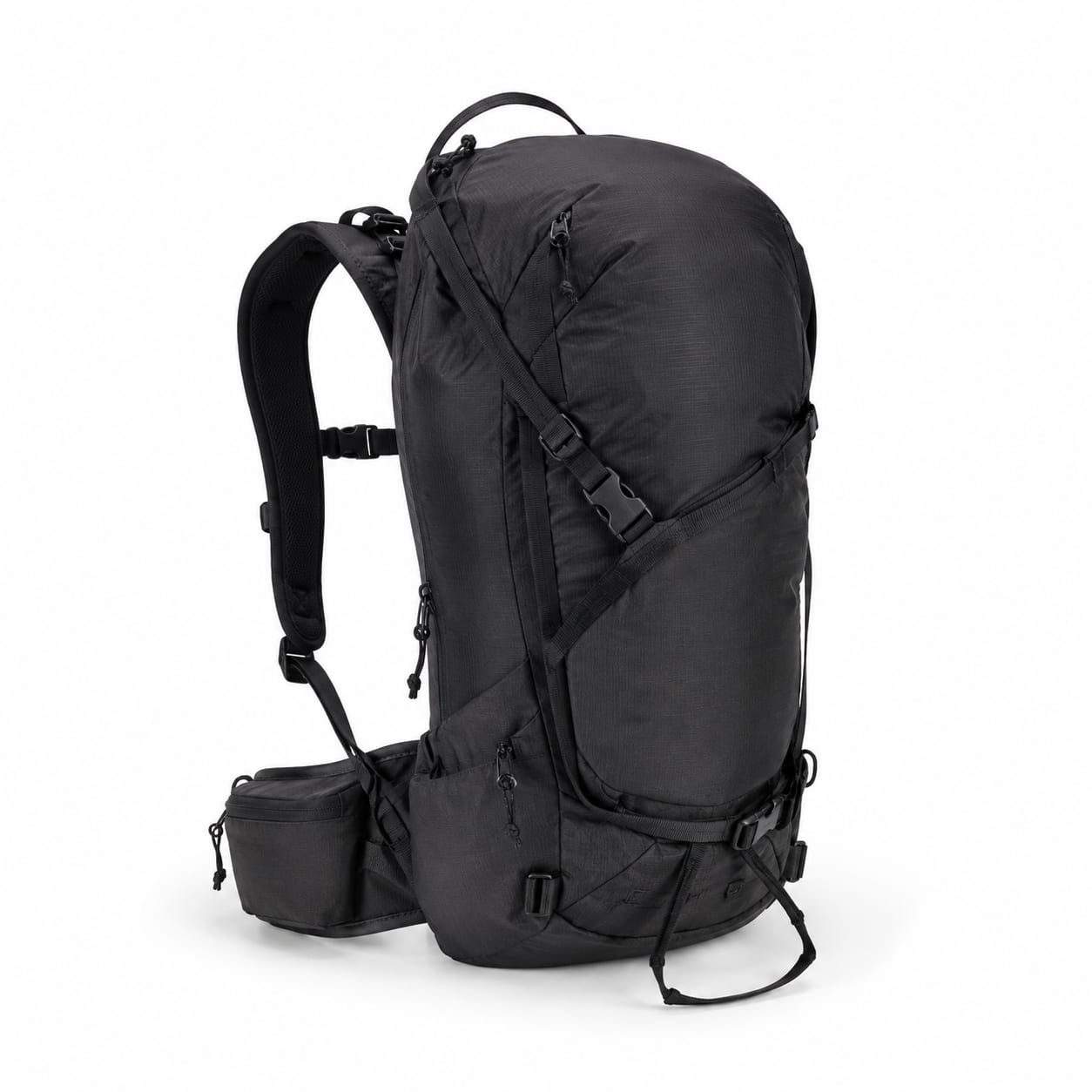
6 topics
Pick a question
Every answer links to the full subcategory guide and related gear types when it helps you decide.
What size backcountry touring daypack do I need?
For full-day backcountry tours, 25–35L is the ideal range. Choose 25L if you pack light and tour in mild climates, 30L for most full-day tours (this is the most versatile size), and 35L if you carry camera gear, tour in very cold climates requiring more layers, or tend to bring extras. Going below 25L means you may not have room for essential safety gear, food, and layers. Going above 35L adds unnecessary weight and bulk for day tours.
Read answer →02Can I use a regular hiking backpack for backcountry skiing?
It's not recommended. Regular hiking packs lack the critical features for backcountry skiing: a dedicated avalanche gear compartment for rapid shovel and probe access, a ski carry system for secure transport on steep terrain, and design elements that maintain stability while skiing downhill with a load. In an avalanche rescue, the seconds saved by a dedicated front-access avy gear pocket compared to digging through a hiking pack can be the difference between life and death.
Read answer →03Do I need an avalanche airbag pack for backcountry touring?
An airbag is not required but is strongly recommended by many avalanche education organizations. Studies show airbags increase survival odds in avalanches by roughly 50%. If budget allows, an airbag-compatible touring daypack lets you add a removable module ($500–1000) when you're ready. An airbag does not replace proper avalanche education, route-finding, and companion rescue skills—it's an additional safety layer, not a replacement for sound decision-making.
Read answer →04How do I prevent my hydration hose from freezing while touring?
Use a pack with insulated hose routing, blow air back into the hose after each sip to clear the tube of water, and tuck the bite valve inside your jacket collar when not drinking. Some riders add a neoprene hose cover for extra insulation. On very cold days (-15°C and below), consider using an insulated bottle in a hip belt pocket instead, as even insulated hoses can freeze in extreme cold. Always start with warm (not hot) water in your reservoir.
Read answer →05Will my wide powder skis fit in the ski carry system?
Not necessarily. Ski carry loops and straps vary significantly between packs, and skis with waists over 110mm may not fit through some attachment points—especially on smaller packs. Before buying, check the manufacturer's stated maximum ski width compatibility, and ideally test the carry system with your actual skis. A-frame systems generally accommodate wider skis better than diagonal systems, and some packs have specifically enlarged loops for fat skis.
Read answer →06What's the difference between airbag-compatible and integrated airbag packs?
Airbag-compatible packs have a sleeve or compartment that accepts a removable airbag module (like the Mammut Removable Airbag or Ortovox Avabag), which you purchase separately. You can swap the module between compatible packs and choose whether to carry the airbag on any given day. Integrated airbag packs have the airbag system built into the pack permanently—they're simpler to use (no module to transfer) and often have better trigger ergonomics, but you can't remove the airbag to save weight, and if the pack wears out, you replace the entire system.
Read answer →