Kitvore.com

Kitvore.com

Specs that matter. Gear that fits.

Ski Backpack · Subcategory

Backcountry Touring Daypack

Purpose-built daypack for backcountry ski touring with dedicated avalanche safety storage, ski carry systems, and touring-specific features.

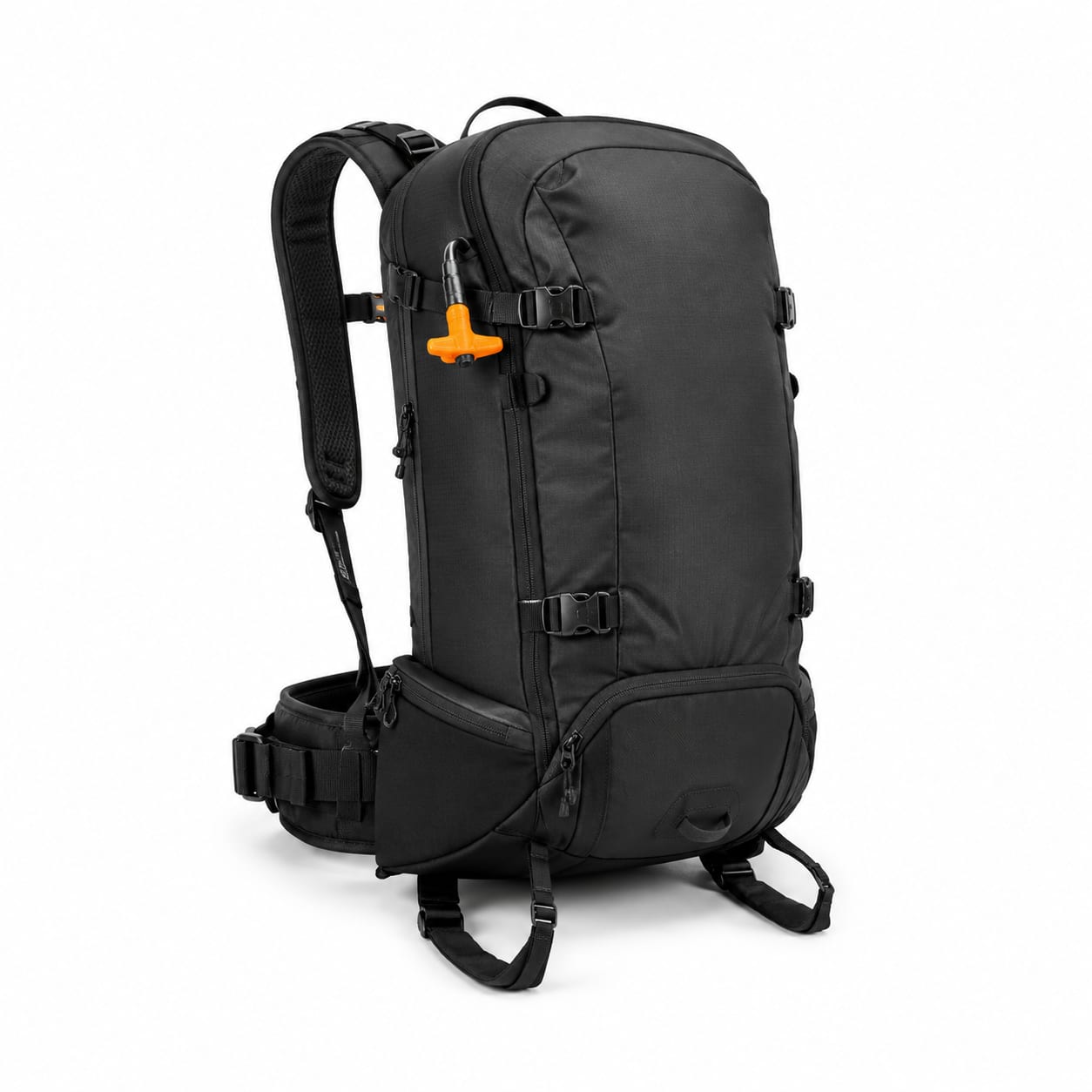
The backcountry touring daypack is the essential pack for anyone heading beyond resort boundaries on day-long ski tours. Designed around the critical requirements of avalanche safety gear access, stable ski carry on steep skin tracks, and efficient organization for layers, food, and emergency equipment, these packs balance weight, durability, and function for the unique demands of human-powered skiing in uncontrolled terrain.

$80 – $280mid tierbeginnerintermediateadvanced

Best known for

Dedicated avalanche safety gear compartments with rapid emergency accessStable A-frame and diagonal ski carry systems for uphill travelOptimized capacity for full-day backcountry tours (25–35L)Lightweight yet durable construction for demanding alpine environments
Backcountry Touring Daypack

Guide

Detailed overview

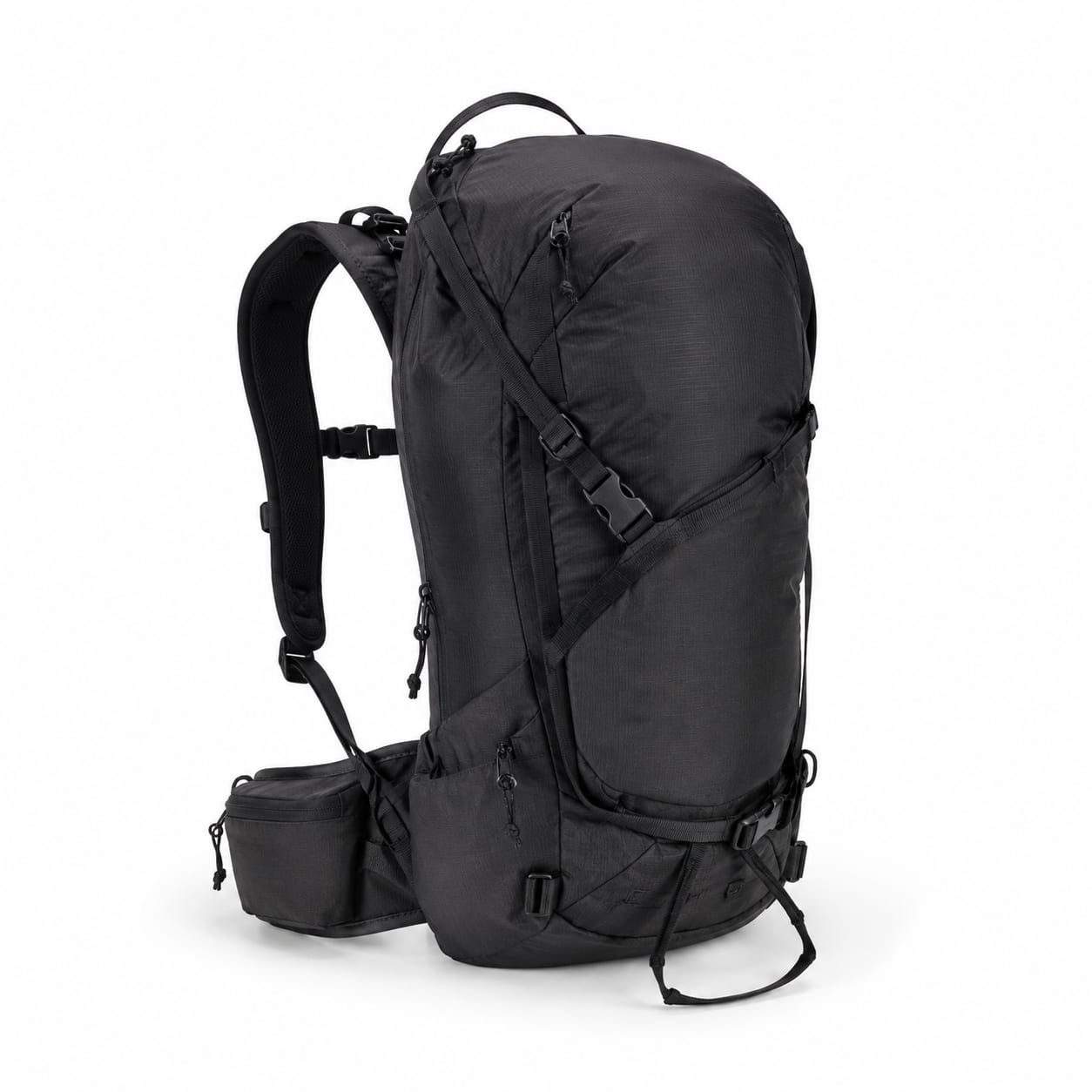
A backcountry touring daypack is a specialized backpack designed specifically for human-powered skiing and snowboarding in uncontrolled backcountry terrain on single-day outings. Unlike resort packs, these packs are built around the non-negotiable requirement of carrying and providing rapid access to avalanche safety equipment—shovel, probe, and sometimes a first aid kit. They feature dedicated ski or splitboard carry systems that keep your planks secure and balanced during steep uphill skinning, and they are engineered to maintain stability and comfort while skiing downhill with a full load. Typical capacities range from 25 to 35 liters, providing enough space for avalanche gear, extra layers, food, water, and emergency supplies without encouraging overpacking that throws off your balance. Key design priorities include weight efficiency for long uphill climbs, load stability for downhill skiing, quick-access organization, and compatibility with avalanche airbag systems. These packs are distinct from resort packs (which lack avalanche gear compartments), ultralight race packs (which sacrifice features for minimal weight), and multi-day touring packs (which are larger and heavier). Every design decision in a backcountry touring daypack serves the dual mandate of keeping you safe and keeping you moving efficiently through mountain terrain.

The backcountry touring daypack occupies a critical niche in ski equipment—it is the one piece of gear that directly interfaces with your avalanche safety system, your comfort during hours of uphill travel, and your stability while skiing technical terrain with a load. Choosing the right pack is not merely a matter of convenience; it can affect your safety in emergency situations and your physical performance over long days in the mountains. A well-designed touring daypack keeps your shovel and probe accessible within seconds, carries your skis securely without throwing off your center of gravity, and distributes weight so that a 15-kilogram load feels manageable on the fourth hour of a skin track.

Capacity selection is one of the most important decisions when choosing a touring daypack. The 25–35 liter range is the sweet spot for full-day tours because it accommodates the mandatory avalanche safety gear (shovel, probe) plus the layers, food, water, and emergency items needed for a full day in the mountains. Going smaller than 25 liters often means choosing between carrying extra warm layers or food—decisions that can have real safety consequences when weather moves in or a tour takes longer than expected. Going larger than 35 liters adds weight and bulk that affects skiing performance and encourages overpacking. The right size depends on your typical tour length, the climate you ski in (colder climates require more layers), and whether you tend to carry camera gear or other extras.

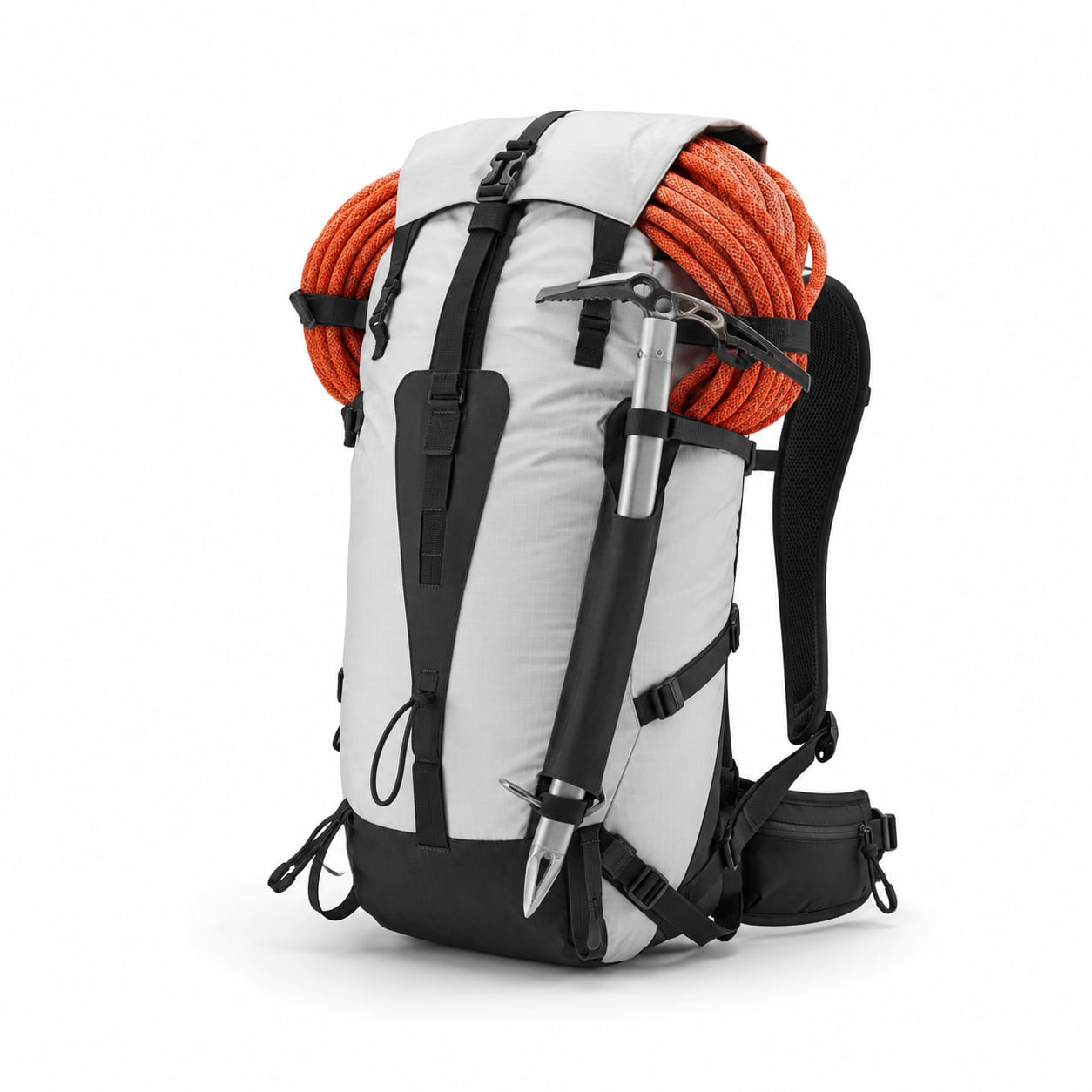
Ski carry system design directly impacts your experience on the skin track and during transitions. A-frame carry—where skis are attached vertically on both sides of the pack—is the gold standard for most touring because it provides the best balance and keeps skis from catching on branches. Diagonal carry is simpler and works well on smaller packs or shorter approaches, but it can feel less stable on steep or technical terrain. Whatever system you choose, test it with your specific skis before committing to a tour, as wide powder skis may not fit through all attachment loops, and some systems work better with certain ski lengths than others.

The avalanche gear compartment is arguably the most safety-critical feature of any backcountry pack. A dedicated front-access pocket allows you to deploy your shovel and probe in under 30 seconds—a timeline that can matter in a rescue scenario. Packs that bury avy gear inside the main compartment or under other items are not suitable for backcountry use, period. Similarly, the trend toward airbag-compatible packs reflects the growing recognition that avalanche airbags significantly increase survival odds in slides. Many quality touring daypacks now offer a compatible version that accepts a removable airbag module, giving you the flexibility to use the same pack with or without the airbag system depending on the day's objectives and your budget.

Fit and comfort are deeply personal but critically important. A pack that doesn't match your torso length will transfer load poorly, causing shoulder pain on long uphills and instability on descents. Hip belt design matters more than most riders realize—a well-fitted padded hip belt can transfer 70–80% of the pack's weight to your hips, saving your shoulders and lower back for skiing. Features like insulated hydration hose routing, compression straps that don't interfere with ski carry, and back panel access that lets you reach gear without removing skis from the pack are the thoughtful details that distinguish a great touring pack from a merely adequate one. These are the features you'll appreciate on your hundredth tour, even if they seem minor on your first.

Quick facts

Primary purpose
Carrying avalanche safety gear, layers, food, and water for day-long backcountry ski tours
Popular brands
Black DiamondOspreyDeuterOrtovoxMammutDynafit
Typical terrain
BackcountrySidecountryAlpine touring

What makes it different

Quick-access avalanche safety compartment; Stable ride for uphill and downhill; Ski carry system accessible while wearing pack; Often airbag-compatible (removable airbag module)

Recommended ranges

How this type usually specs out

Each spec is explained in plain language, then we show what buyers usually look for on this type.

Volume / Capacity

capacity

What it means

The total storage volume of the backpack measured in liters, determining how much gear can be carried.

Typical for this type

25–35L

Most common pick: 30L

In practice

Backcountry touring daypacks typically range from 25 to 35 liters, with 30L being the most common and versatile size. This capacity accommodates avalanche safety gear (shovel, probe), a full day's worth of layers, food, water, and emergency equipment without excess bulk.

Compared to other types

Larger than resort packs (12–20L) which don't need to carry avalanche gear or full tour supplies. Smaller than multi-day touring packs (36–45L) which carry overnight gear. Larger than ultralight race packs (12–18L) which strip features for minimum weight.

Why it matters: Too small and you cannot carry essential safety and comfort gear; too large and the pack becomes unwieldy, encourages overpacking, and negatively affects your balance while skiing. The right capacity ensures you have what you need without compromising performance.

Ski Carry System

ski_carry_system

What it means

The method and configuration used to attach skis to the backpack for uphill travel or transport.

Typical for this type

A-Frame Primary, Diagonal Secondary

In practice

A-frame carry is the standard and most versatile system for backcountry touring daypacks, with many packs also offering diagonal carry as a secondary option. A-frame provides the best balance and stability on steep skin tracks and during technical boot packs.

Compared to other types

Resort packs often lack proper ski carry or offer only diagonal. Race packs use minimal vertical carry for speed. Multi-day packs typically offer both A-frame and diagonal with more robust attachment points for heavier loads.

Why it matters: Your ski carry system affects stability on steep terrain, ease of transitions, and whether you can navigate tight trees without snagging. A poorly designed carry system can make skinning miserable and transitions slow.

Snowboard Carry

snowboard_carry

What it means

Whether and how the backpack can carry a snowboard.

Typical for this type

Vertical Carry For Snowboarders; Splitboard Carry For Splitboarders

Most common pick: Vertical Carry Or Splitboard Compatible

In practice

Many backcountry touring daypacks offer vertical snowboard carry, and an increasing number include dedicated splitboard carry systems. Ski-focused packs may have no snowboard carry at all. Splitboarders should specifically seek packs with splitboard-compatible carry or A-frame loops that accommodate split halves.

Compared to other types

Resort packs rarely include snowboard carry. Multi-day packs more commonly include both ski and snowboard carry options due to their larger size and more feature-rich design.

Why it matters: Snowboarders and splitboarders cannot use standard ski carry systems and must verify that a pack supports their specific board carry needs before purchasing.

Avalanche Safety Gear Compartment

avalanche_gear_compartment

What it means

Dedicated, quick-access compartment for avalanche shovel, probe, and sometimes a first aid kit.

Typical for this type

Dedicated Front Pocket (Non-Negotiable)

In practice

A dedicated front-access pocket for shovel and probe is the standard and essential configuration for backcountry touring daypacks. This allows rapid deployment of avalanche safety gear in under 30 seconds during an emergency.

Compared to other types

Resort packs typically have no avalanche gear compartment or only integrated storage. Race packs may use dedicated internal sleeves to save weight. Multi-day packs always feature dedicated front pockets, often larger to accommodate bigger shovels and group gear.

Why it matters: In an avalanche rescue, seconds count. A dedicated front pocket keeps your shovel and probe accessible without digging through the main compartment. This feature is non-negotiable for any pack used in the backcountry.

Avalanche Airbag Compatibility

airbag_compatible

What it means

Whether the pack has an integrated avalanche airbag system or is compatible with removable airbag modules.

Typical for this type

Compatible/Ready For Modularity; Integrated For Dedicated Backcountry Riders

Most common pick: Compatible / Ready

In practice

Many backcountry touring daypacks are now airbag-compatible, meaning they accept a removable airbag module (sold separately). Some models offer integrated airbag systems. The compatible/ready approach is popular because it allows you to use the same pack with or without the airbag and swap the module between compatible packs.

Compared to other types

Resort packs are typically not airbag-compatible. Race packs are never airbag-compatible due to weight. Multi-day packs offer the same compatible/integrated options but with larger volume. Dedicated airbag packs from brands like Mammut and Ortovox are increasingly popular in this subcategory.

Why it matters: Avalanche airbags have been shown to significantly increase survival odds in avalanches. Having the option to add an airbag system—either at purchase or later—provides flexibility as your backcountry experience and budget evolve.

Back Protection

back_protection

What it means

Integrated or compatible spine/back protector for impact protection during falls.

Typical for this type

Compatible For Versatility; None For Weight-Conscious Tourers

Most common pick: Compatible (Removable Insert)

In practice

Backcountry touring daypacks commonly offer back protector compatibility via a sleeve that accepts a removable CE-certified insert. Integrated protectors are less common in this subcategory due to weight concerns. Many touring-focused riders opt for no back protection to save weight on long uphills.

Compared to other types

Resort packs more commonly feature integrated back protectors since weight is less critical. Race packs never include back protection. Multi-day touring packs offer similar compatible options.

Why it matters: Back protection can prevent spinal injuries in falls but adds weight on long uphill climbs. The compatible approach lets you choose whether to carry the protector based on the day's terrain and objectives.

Pack Weight

weight

What it means

The weight of the empty backpack without any gear, airbag cartridge, or back protector insert.

Typical for this type

900–1400g (without airbag module)

Most common pick: 1100g

In practice

Standard backcountry touring daypacks weigh between 900 and 1400 grams empty, with most quality packs in the 1000–1200g range. This balances durability, features, and weight for full-day tours. Ultralight models can be as low as 700g but sacrifice durability and features.

Compared to other types

Heavier than race packs (500–800g) which strip all non-essential features. Lighter than resort packs with integrated back protectors (1200–1800g). Lighter than airbag-integrated packs (1700–2500g). Similar weight to multi-day packs of similar feature levels.

Why it matters: Every gram on your back is a gram you carry up thousands of vertical feet. However, going too light often means sacrificing durability, features, or load-carrying comfort. The right weight depends on your priorities and the demands of your typical tours.

Torso Length / Back Length

torso_length

What it means

The length of the backpack's back panel and suspension system, determining fit for different torso sizes. Often available in multiple sizes (S/M, M/L, L/XL) or with adjustable back length.

Typical for this type

Adjustable or M/L (43–50 cm) for most adults

Most common pick: Adjustable Back Length

In practice

Backcountry touring daypacks are most commonly available in M/L sizing or with adjustable back length systems. Adjustable back length is increasingly popular as it allows a precise fit across a wider range of torso sizes and accommodates varying layer thicknesses.

Compared to other types

Resort packs often come in one-size-fits-most. Race packs typically offer limited sizing. Multi-day packs more commonly offer multiple size options or adjustable systems due to the heavier loads carried.

Why it matters: Proper torso fit is essential for load transfer to the hips and comfort on long tours. A pack that's too long or too short will cause shoulder pain, poor load distribution, and instability while skiing downhill.

Hydration System Compatibility

hydration_compatible

What it means

Whether the pack supports a hydration reservoir/bladder and/or has insulated hose routing to prevent freezing.

Typical for this type

Insulated Hose Routing (Strongly Recommended)

In practice

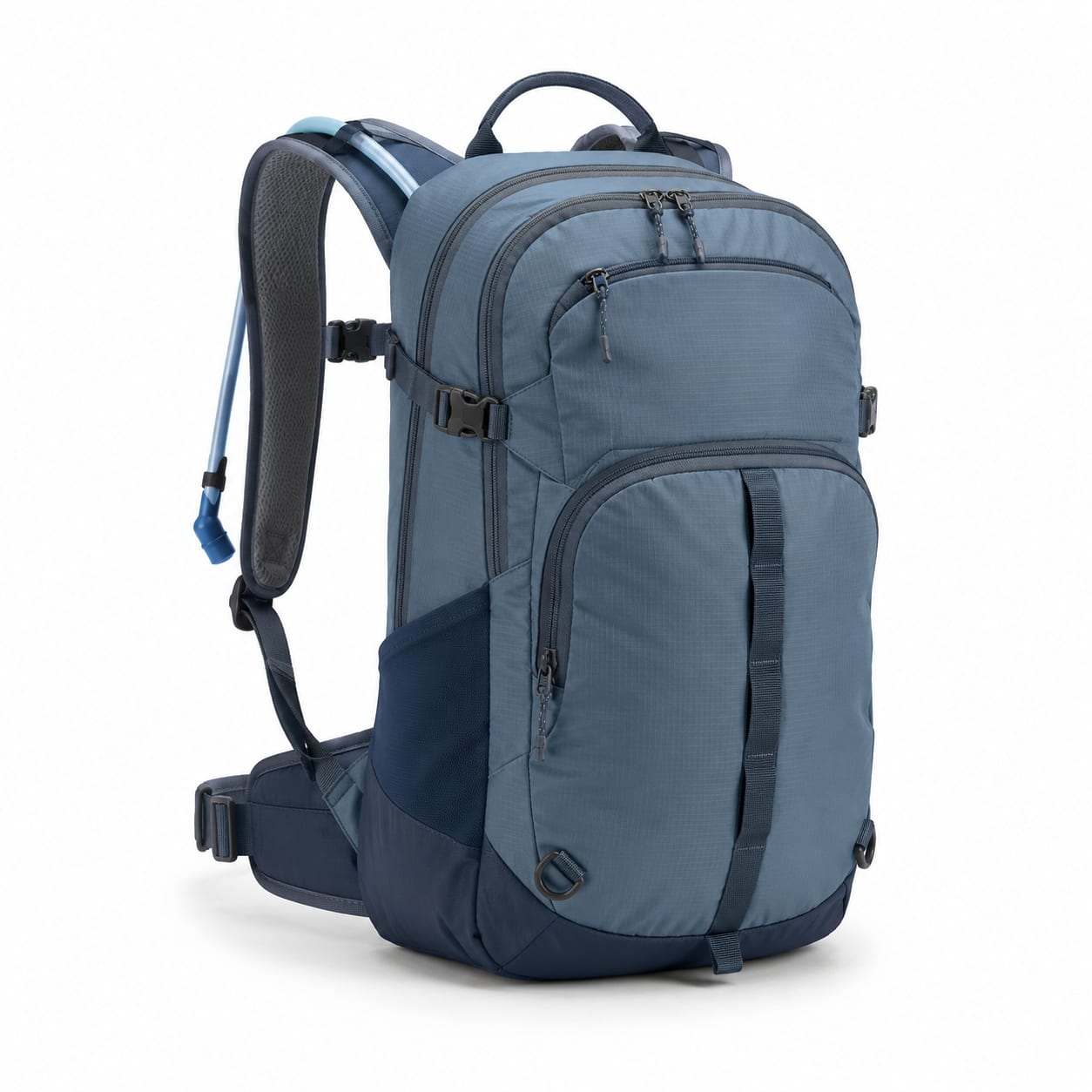
Most quality backcountry touring daypacks include an internal reservoir sleeve with insulated hose routing. This is critical for backcountry use where temperatures are often below freezing and a frozen hydration hose is a common and potentially dangerous problem.

Compared to other types

Resort packs may only have bottle pockets or non-insulated reservoir sleeves. Race packs often skip hydration systems entirely for weight. Multi-day packs universally feature insulated hose routing.

Why it matters: Staying hydrated is essential for performance and safety on long tours. Insulated hose routing prevents freeze-up, allowing you to drink on the move without stopping. In cold conditions, a frozen hydration system can become a safety issue.

Hip Belt Type

hip_belt_type

What it means

The style and padding level of the hip belt, which transfers load from shoulders to hips.

Typical for this type

Padded, Removable Or Padded With Hip Pockets

In practice

Padded, removable hip belts are the most common configuration for backcountry touring daypacks. They provide excellent load transfer for uphill skinning while allowing removal for resort use or weight savings. Padded belts with hip pockets are increasingly popular for the convenience of accessing snacks and small items on the move.

Compared to other types

Resort packs often use webbing belts or minimal padding. Race packs use webbing only for minimum weight. Multi-day packs typically use padded fixed belts with pockets for maximum load transfer on heavy carries.

Why it matters: A proper hip belt transfers 70–80% of pack weight to your hips, saving your shoulders and lower back. Removability adds versatility. Hip pockets provide convenient access to essentials without removing the pack or stopping.

Helmet Carry System

helmet_carry

What it means

External attachment point or net to carry a ski helmet when not wearing it.

Typical for this type

External Net Or Clip (Nice-To-Have)

Most common pick: External Helmet Net/Clip

In practice

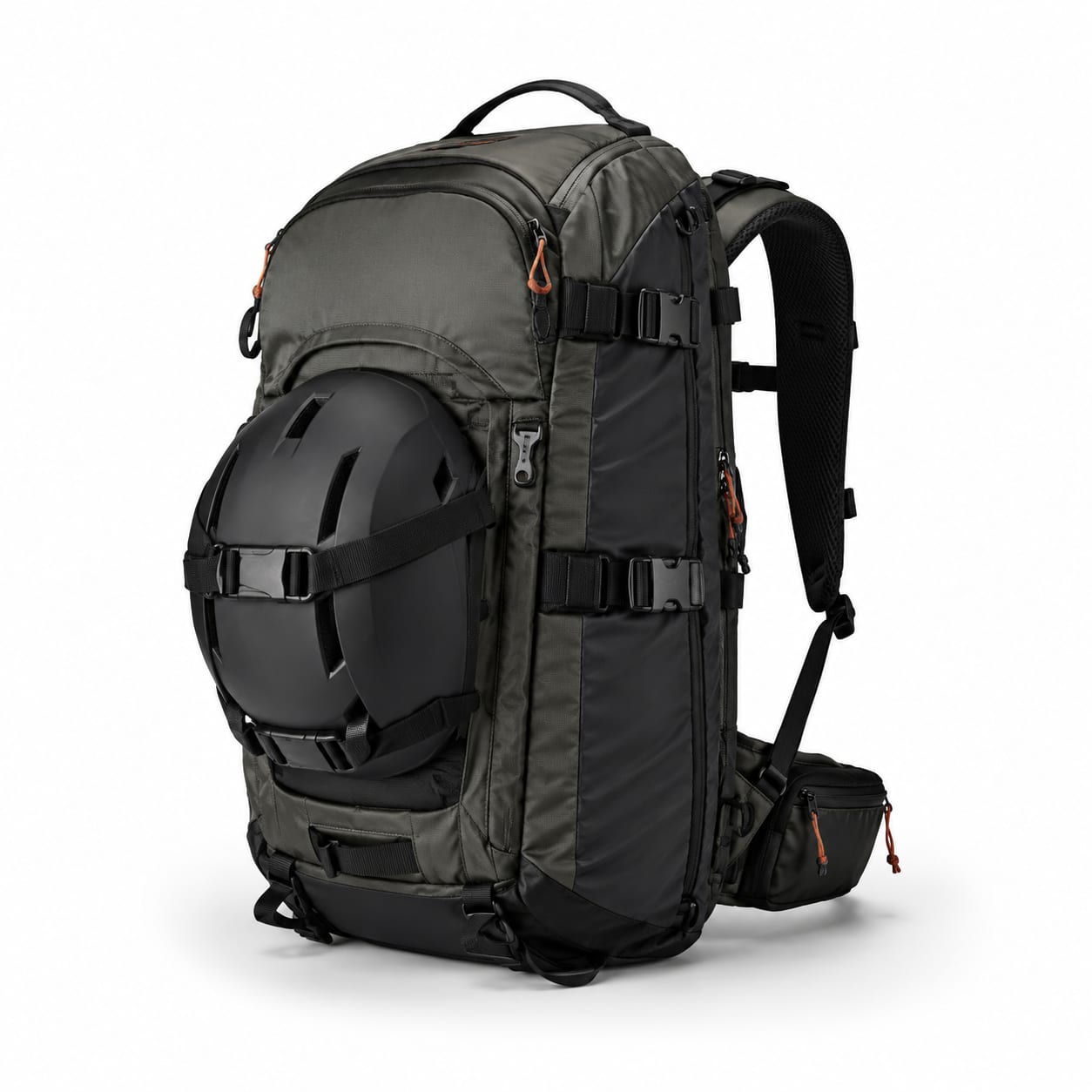
Many backcountry touring daypacks include an external helmet net or clip system, though it's not a universal feature. This is useful for carrying your helmet during hut breaks, lunch stops, or when skinning without a helmet on mellow approaches.

Compared to other types

Resort packs rarely include helmet carry. Race packs never include it. Multi-day packs more commonly include helmet carry systems for hut-to-hut tours where helmets are removed indoors.

Why it matters: A helmet carry system is convenient for breaks but is not essential since most backcountry riders keep their helmet on throughout the tour. It's a nice-to-have feature rather than a deciding factor.

Goggle Pocket

goggle_pocket

What it means

A soft-lined internal or external pocket designed to protect goggles from scratches when stored.

Typical for this type

Fleece-Lined Internal Or External Pocket

Most common pick: Fleece-Lined Internal Pocket

In practice

Many backcountry touring daypacks include a fleece-lined pocket—either internal or external—for goggle storage. Internal pockets offer better protection from scratches and impacts, while external pockets provide quicker access.

Compared to other types

Resort packs sometimes include goggle pockets. Race packs never include them. Multi-day packs commonly feature fleece-lined internal pockets for spare goggle storage on multi-day tours.

Why it matters: If you swap lenses or remove goggles during breaks, a fleece-lined pocket prevents costly lens scratches. However, most riders keep goggles on their helmet all day, making this a convenience feature rather than essential.

Material / Durability

material_durability

What it means

The primary fabric type and denier rating indicating abrasion resistance and durability of the pack construction.

Typical for this type

Midweight Nylon (200D–400D) for best balance

In practice

Midweight nylon in the 200D–400D range is the most common material for backcountry touring daypacks, offering the best balance of durability and weight. High-wear areas like the bottom panel and ski carry attachment points are often reinforced with heavier-denier fabric.

Compared to other types

Resort packs often use similar midweight nylon. Race packs use lightweight nylon (100D–200D) or Dyneema/Cuben fiber for minimum weight. Multi-day packs tend toward heavier-duty nylon (400D+) for durability on extended trips.

Why it matters: Ski edges are the primary threat to pack durability. A pack that gets punctured on the first tour is useless regardless of its other features. Reinforced bottom panels and robust ski carry attachment points are essential for longevity.

Water Resistance

water_resistance

What it means

The level of water and snow protection the pack provides for contents.

Typical for this type

DWR Coated For Day Tours; Waterproof Sealed Seams For Wet Climates

Most common pick: DWR Coated (Water Resistant)

In practice

DWR (durable water repellent) coating is the standard water resistance treatment for backcountry touring daypacks. It sheds light snow and brief exposure effectively but will eventually wet through in sustained precipitation. For day tours in most conditions, DWR is sufficient.

Compared to other types

Resort packs often use basic water-resistant fabric only. Race packs may use DWR-coated lightweight nylon. Multi-day packs more commonly feature waterproof sealed seams or included rain covers for extended exposure.

Why it matters: Keeping extra layers and electronics dry is important for comfort and safety. While DWR handles most day-tour conditions, riders in wet coastal snow climates should consider packs with sealed seams or use dry bags for critical items.

Access Type

access_type

What it means

How the main compartment of the backpack is accessed—determines ease of gear retrieval and organization.

Typical for this type

Top-Loading + Back Panel Access For Touring; Front Panel (Clamshell) For Organization

Most common pick: Top-Loading With Back Panel Access

In practice

The most functional configuration for backcountry touring is a combination of top-loading access with back panel access. Top-loading provides a weather-resistant main opening, while back panel access lets you reach gear without removing skis from the carry system. Front panel (clamshell) access is valued by organized riders and guides.

Compared to other types

Resort packs are typically top-loading only. Race packs use minimal top-loading for simplicity. Multi-day packs often combine top-loading with front panel or side access for maximum organization on longer trips.

Why it matters: Access type affects how quickly you can retrieve gear during transitions or emergencies. Back panel access is particularly valuable on touring packs because it allows access to the main compartment without disturbing ski carry attachments.

Chest Strap Features

chest_strap_features

What it means

Features of the sternum/chest strap including adjustability, whistle, and height positioning.

Typical for this type

Integrated Whistle + Height Adjustable + Elastic Section

Most common pick: Integrated Whistle + Height Adjustable

In practice

Most quality backcountry touring daypacks include an integrated emergency whistle in the chest strap buckle and height adjustability for proper positioning across different layer thicknesses. Elastic sections for breathing comfort are increasingly common on touring-specific models.

Compared to other types

Resort packs may have basic fixed chest straps. Race packs have minimal chest straps. Multi-day packs include the same features as touring daypacks, with elastic sections being particularly valued on long uphill days.

Why it matters: An integrated whistle is an always-available emergency signaling device that adds no weight. Height adjustability ensures proper strap positioning whether you're wearing a thin base layer or a puffy jacket. Elastic sections improve comfort during high-output uphill skinning.

Compression System

compression_system

What it means

Side or vertical compression straps that tighten the pack load to prevent shifting and reduce volume when partially full.

Typical for this type

Side Compression (Standard); Dual Compression For 30L+ Packs

Most common pick: Side Compression Straps

In practice

Side compression straps are the standard configuration for backcountry touring daypacks, allowing you to stabilize varying loads and reduce pack volume when partially full. Packs over 30L may benefit from dual (side + vertical) compression for maximum load control.

Compared to other types

Resort packs may have minimal or no compression. Race packs typically have no compression for weight savings. Multi-day packs commonly use dual compression systems for maximum load control with variable loads.

Why it matters: Load stabilization is critical for skiing performance—a shifting load throws off your balance and can be dangerous in technical terrain. Compression straps also reduce pack volume as you eat food and shed layers throughout the day.

Evaluation

Strengths and trade-offs

Pros

What this type does best

Dedicated avalanche safety gear compartment

Critical

The front-access avalanche gear pocket allows shovel and probe deployment in under 30 seconds—a critical safety advantage that resort packs and generic backpacks cannot match.

Stable ski carry on steep terrain

Critical

A-frame and diagonal ski carry systems are designed to keep skis secure and balanced during steep skinning, boot packing, and downhill skiing—something no regular backpack accomplishes well.

Optimized capacity for day tours

High

The 25–35L capacity range is purpose-built for full-day backcountry tours, carrying exactly what you need without the bulk and weight of larger packs or the inadequacy of smaller ones.

Touring-specific comfort features

High

Padded hip belts, insulated hydration routing, compression systems, and back panel access are designed around the realities of hours-long uphill travel and technical downhill skiing with a load.

Airbag compatibility

High

Many models offer compatibility with removable avalanche airbag modules, providing the option to add proven avalanche survival technology without committing to a dedicated airbag pack.

Weight-conscious design

Medium

Touring daypacks balance features against weight more carefully than any other pack category, recognizing that every gram matters on long uphill climbs.

Versatile for resort and backcountry

Medium

Many touring daypacks work well for in-bounds skiing on days when you're not touring, especially models with removable hip belts and clean profiles that don't interfere with chairlifts.

Cons

Trade-offs to be aware of

Higher cost than resort packs

Moderate

Backcountry touring daypacks typically cost $150–300+ compared to $50–150 for resort packs, reflecting the specialized features, materials, and safety-oriented design.

Heavier than minimalist alternatives

Moderate

The avalanche gear compartment, ski carry hardware, and touring-specific features add 200–500g compared to a simple resort pack of similar capacity, which is felt on long climbs.

Can be overkill for resort-only use

Minor

If you never venture into the backcountry, the avalanche gear pocket, ski carry system, and touring features add unnecessary weight, complexity, and cost.

Ski carry compatibility varies

Moderate

Not all ski carry systems work with all ski widths and lengths. Wide powder skis (110mm+ underfoot) may not fit through some attachment loops, requiring careful verification before purchase.

Airbag systems add significant cost and weight

Significant

While airbag compatibility is an advantage, the airbag modules themselves cost $500–1000+ and add 1–2 kg to the pack, which is a substantial investment and weight penalty.

Limited organization compared to travel packs

Minor

Touring daypacks prioritize weight and simplicity over pocket organization. If you carry lots of small items, you may need additional stuff sacks or organizer pouches.

Best for

Terrain

Backcountry bowls and ridgesSidecountry access gatesGlaciated terrainTree skiing zonesSteep skin tracks and boot packs

Snow conditions

Day tours in any snow conditionsVariable backcountry snowpackCold temperatures requiring extra layersStorm days requiring emergency gear

Skill level

Intermediate backcountry travelersAdvanced backcountry skiers and splitboardersExpert ski mountaineers doing day objectives

Riding style

Ski touringSplitboardingSki mountaineering (day trips)Sidecountry laps

Rider profile

Dedicated backcountry skiers doing regular day toursResort skiers expanding into sidecountry and backcountrySki mountaineers on single-day objectivesSplitboarders seeking dedicated backcountry packsGuides and instructors needing organized, quick-access packs

Not ideal for

Reasons

Resort-only riders don't need avalanche gear compartments or ski carry systemsRacers need lighter, more minimal packsMulti-day tours require more capacity than 25–35L providesThe specialized features add cost and weight unnecessary for in-bounds use

Terrain

In-bounds resort-only skiingSki area terrain parks

Skill level

Beginners who have not taken avalanche educationRiders who never leave controlled terrain

Riding style

Ski mountaineering racing (too heavy)Multi-day hut-to-hut tours (too small)Resort freestyle skiing

Compare

How it stacks up

This page

Backcountry Touring Daypack

Dedicated avalanche gear compartment, proper ski carry systems, touring-specific comfort features, and airbag compatibility that resort packs lack entirely.

Alternative

Resort / In-Bounds Pack

Lighter, simpler, less expensive, and often more comfortable on chairlifts since they don't need to accommodate ski carry or avy gear.

Bottom line

Choose a backcountry touring daypack if you ride any uncontrolled terrain, even occasionally. The avalanche gear compartment alone justifies the choice. Stick with a resort pack only if you never leave controlled terrain.

This page

Backcountry Touring Daypack

Far more features, better organization, more comfortable for long days, avalanche gear compartment, and durable enough for regular use rather than just racing.

Alternative

Ultralight Race Pack

Significantly lighter (500–800g vs. 900–1400g), more aerodynamic, and designed for maximum speed in ski mountaineering racing.

Bottom line

Choose a race pack only if you compete in skimo races or prioritize minimum weight above all else. For general backcountry touring, the comfort, features, and durability of a touring daypack are worth the weight penalty.

This page

Backcountry Touring Daypack

Lighter, lower profile, better balance for skiing technical terrain, and sufficient for day tours without the bulk of overnight capacity.

Alternative

Multi-Day Touring Pack

Carries overnight gear for hut-to-hut tours, more organization options, and better load distribution for heavier loads.

Bottom line

Choose a touring daypack for single-day outings and a multi-day pack for overnight trips. If you only do day tours, the smaller pack is always preferable for skiing performance and comfort.

This page

Backcountry Touring Daypack

Lighter when used without airbag module, less expensive base cost, and more versatile since you can choose when to carry the airbag weight.

Alternative

Avalanche Airbag Pack (Integrated)

Integrated airbag systems are purpose-built for seamless deployment, often have better trigger ergonomics, and the airbag is always with you (no forgetting to transfer a module).

Bottom line

If you always ride with an airbag, an integrated airbag pack may be simpler. If you want the option to ride with or without, choose an airbag-compatible touring daypack and add a removable module.

Shopping

Buying tips

  • 1

    Measure your torso length (C7 vertebra to top of hip bones) before buying—torso fit matters more than height for pack sizing.

  • 2

    Test the ski carry system with your actual skis before committing. Wide powder skis (110mm+ underfoot) may not fit all attachment loops.

  • 3

    Choose the smallest capacity that fits your needs—25L for half-day tours with minimal gear, 30L for full-day tours, 35L for full-day tours with camera gear or in cold climates requiring more layers.

  • 4

    Prioritize a dedicated front-access avalanche gear compartment—this is non-negotiable for backcountry use. Avoid packs that bury avy gear inside the main compartment.

  • 5

    If you're considering an airbag in the future, buy an airbag-compatible pack now. It costs little more than a non-compatible version and gives you the option to add a module later.

  • 6

    Insulated hydration hose routing is strongly recommended for backcountry touring. Frozen hydration tubes are a common and dangerous problem in cold temperatures.

  • 7

    Look for back panel access if you frequently transition with skis attached—it lets you reach the main compartment without removing skis from the carry system.

  • 8

    Consider a pack with a removable hip belt if you split time between resort and backcountry—it's more comfortable on chairlifts when removed.

  • 9

    Check that compression straps don't block or interfere with the ski carry system when both are in use—this is a common design flaw in lesser packs.

  • 10

    Invest in quality: a well-made touring pack lasts 5–10 seasons. Cheap packs fail at the worst times, and the cost per use of a quality pack is actually lower over its lifespan.

Care

Maintenance notes

  • Rinse or wipe down the pack after tours where it contacts salt or road chemicals from parking lots and shuttle vehicles.
  • Periodically check and tighten all buckles, straps, and attachment points—vibration and use can loosen hardware over time.
  • Store the pack uncompressed with all zippers open in a dry location to maintain zipper function and fabric integrity.
  • Reapply DWR coating annually or when water stops beading on the fabric surface—use a spray-on DWR treatment designed for nylon.
  • Inspect the avalanche gear compartment zipper before every tour—it must operate smoothly and quickly for emergency access.
  • If using an airbag system, test the trigger mechanism at the start of each season and follow the manufacturer's maintenance schedule for cartridges or fan batteries.
  • Check ski carry loops and straps for wear or fraying before each season, especially if you tour frequently—these are high-stress components.
  • Clean zipper teeth with a soft brush and lubricate with zipper wax if they become stiff, especially on the avalanche gear compartment zipper.

Progression

Skill development path

A backcountry touring daypack is appropriate once you've completed an avalanche awareness course (at minimum) and are beginning to venture into uncontrolled terrain. It's the first pack you should buy when transitioning from resort to backcountry skiing, as the dedicated avalanche gear compartment is essential from your very first tour. As your skills progress, you may add an airbag module to a compatible pack, upgrade to a lighter pack for faster tours, or add a larger multi-day pack for hut trips—but the touring daypack remains the core pack for most backcountry skiers throughout their progression. Even expert skiers who own multiple packs use a touring daypack for the majority of their outings.

FAQ

Common questions

Each question has a dedicated page with a full answer and links to the buying guide.

What size backcountry touring daypack do I need?

For full-day backcountry tours, 25–35L is the ideal range. Choose 25L if you pack light and tour in mild climates, 30L for most full-day tours (this is the most versatile size), and 35L if you carry camera gear, tour in very cold climates requiring more layers, or tend to bring extras. Going below 25L means you may not have room for essential safety gear, food, and layers. Going above 35L adds unnecessary weight and bulk for day tours.

Can I use a regular hiking backpack for backcountry skiing?

It's not recommended. Regular hiking packs lack the critical features for backcountry skiing: a dedicated avalanche gear compartment for rapid shovel and probe access, a ski carry system for secure transport on steep terrain, and design elements that maintain stability while skiing downhill with a load. In an avalanche rescue, the seconds saved by a dedicated front-access avy gear pocket compared to digging through a hiking pack can be the difference between life and death.

Do I need an avalanche airbag pack for backcountry touring?

An airbag is not required but is strongly recommended by many avalanche education organizations. Studies show airbags increase survival odds in avalanches by roughly 50%. If budget allows, an airbag-compatible touring daypack lets you add a removable module ($500–1000) when you're ready. An airbag does not replace proper avalanche education, route-finding, and companion rescue skills—it's an additional safety layer, not a replacement for sound decision-making.

How do I prevent my hydration hose from freezing while touring?

Use a pack with insulated hose routing, blow air back into the hose after each sip to clear the tube of water, and tuck the bite valve inside your jacket collar when not drinking. Some riders add a neoprene hose cover for extra insulation. On very cold days (-15°C and below), consider using an insulated bottle in a hip belt pocket instead, as even insulated hoses can freeze in extreme cold. Always start with warm (not hot) water in your reservoir.