
Ski Bindings · FAQ
Questions about Tech/Pin Bindings
Straight answers on fit, specs, and when this type makes sense — each topic has its own page with links back to the buying guide.
Open Tech/Pin Bindings guide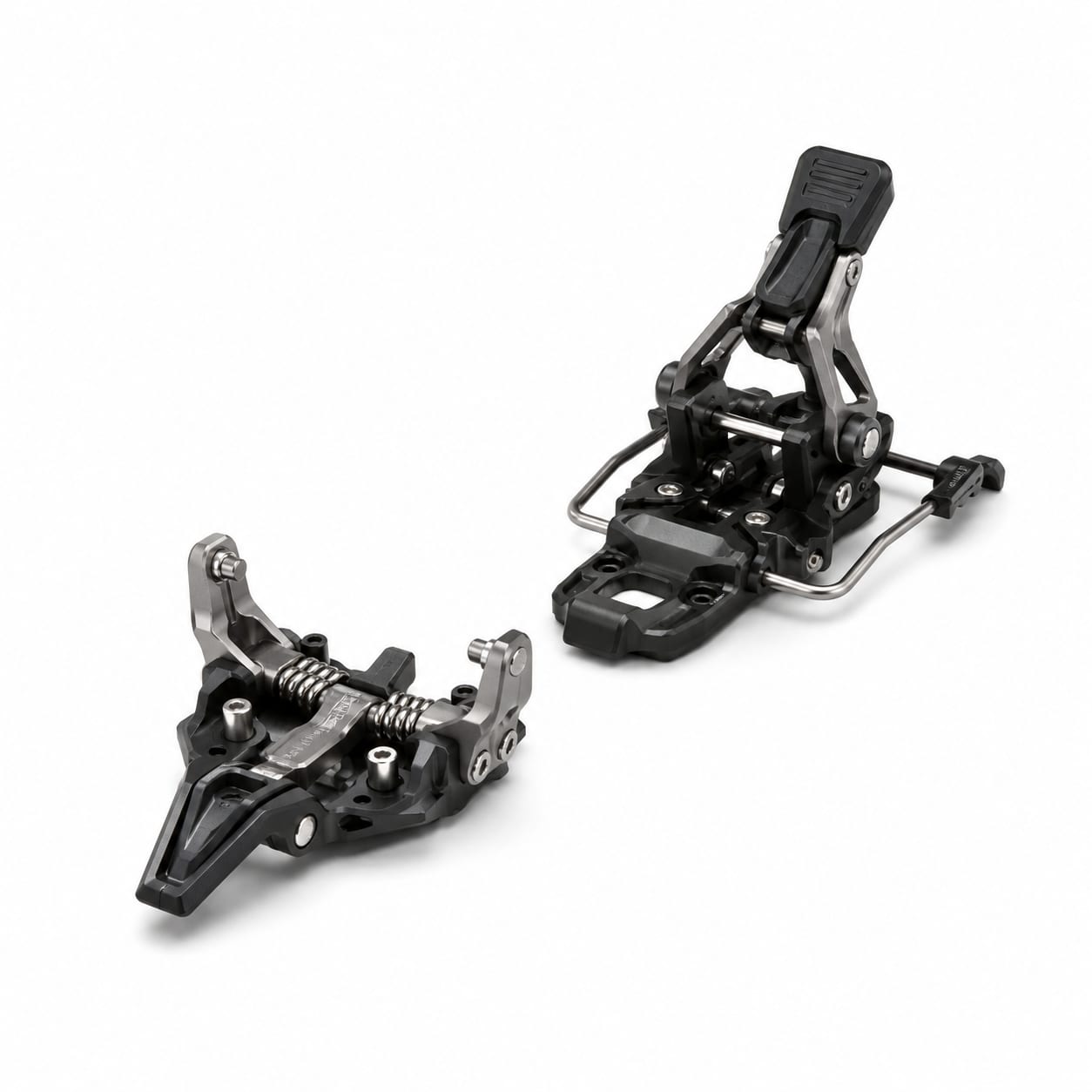
6 topics
Pick a question
Every answer links to the full subcategory guide and related gear types when it helps you decide.
Can I use my alpine boots with pin bindings?
No. Pin bindings require boots with molded tech fittings (metal inserts with two holes at the toe). Standard alpine boots (ISO 5355) do not have these fittings and cannot physically engage with pin binding toe pieces. You must use touring boots (ISO 9523) that specifically include tech fittings. Not all touring boots have them either—always verify before purchasing.
Read answer →02Why do I keep pre-releasing from my pin bindings?
Pre-release is the most common complaint with pin bindings and stems from their low elastic travel. Unlike alpine bindings that can absorb shocks before releasing, pin bindings release with minimal displacement. Solutions include: ensuring your DIN is properly set (don't be afraid to go slightly higher within your range), keeping pins and fittings clear of ice, considering models with improved retention features (rotating toe pieces, freeride spacers), and adapting your skiing style to be smoother and less aggressive. If pre-release persists after addressing these factors, consider hybrid bindings for your skiing style.
Read answer →03Do I need brakes or leashes with pin bindings?
Most pin bindings come with or accept brakes, and many also offer leash options. Brakes are strongly recommended for safety—they stop your ski after release, preventing it from becoming a hazard to others or sliding away on steep terrain. Leashes are lighter but keep you attached to the ski in a slide, which is dangerous in avalanche terrain. Many experienced backcountry skiers use brakes for this reason. Some ultralight setups omit both, but this is only appropriate for skimo racing where speed trumps safety margins.
Read answer →04Are pin bindings safe for backcountry skiing?
Yes, when used appropriately. Modern pin bindings that meet ISO 13992 certification have been tested for consistent release values and meet safety standards for touring use. However, their release characteristics differ from alpine bindings—primarily lateral toe release with limited upward release. This means they may not protect equally in all fall scenarios. The backcountry skiing community widely accepts this trade-off for the significant weight and efficiency gains. The key is understanding the limitations and skiing within them.
Read answer →05How do I transition between walk and ski mode?
The process varies by model but generally follows this sequence: Walk-to-ski mode: (1) Remove skins, (2) Rotate the heel piece to the ski position (pins facing down), (3) Step into the toe piece first by aligning the pins with boot fittings and pressing down, (4) Step down into the heel piece until it clicks. Ski-to-walk mode: (1) Step out of the heel piece by pressing down and rotating, (2) Step out of the toe piece by twisting laterally, (3) Rotate the heel to walk mode, (4) Apply skins. Practice this sequence in a controlled environment before heading into the backcountry.
Read answer →06Can I use pin bindings for resort skiing?
Technically yes, but it's not recommended as your primary resort setup. Pin bindings have lower elastic travel, reduced power transmission, and different release characteristics that compromise performance and enjoyment on groomed runs, in moguls, and at resort speeds. If you occasionally ride lifts to access backcountry gates, pin bindings are fine for the descent. For regular resort skiing, use alpine or hybrid bindings. Many backcountry skiers maintain separate setups: alpine bindings for resort days, pin bindings for touring days.
Read answer →