Kitvore.com

Kitvore.com

Specs that matter. Gear that fits.

Ski Equipment

Ski Bindings

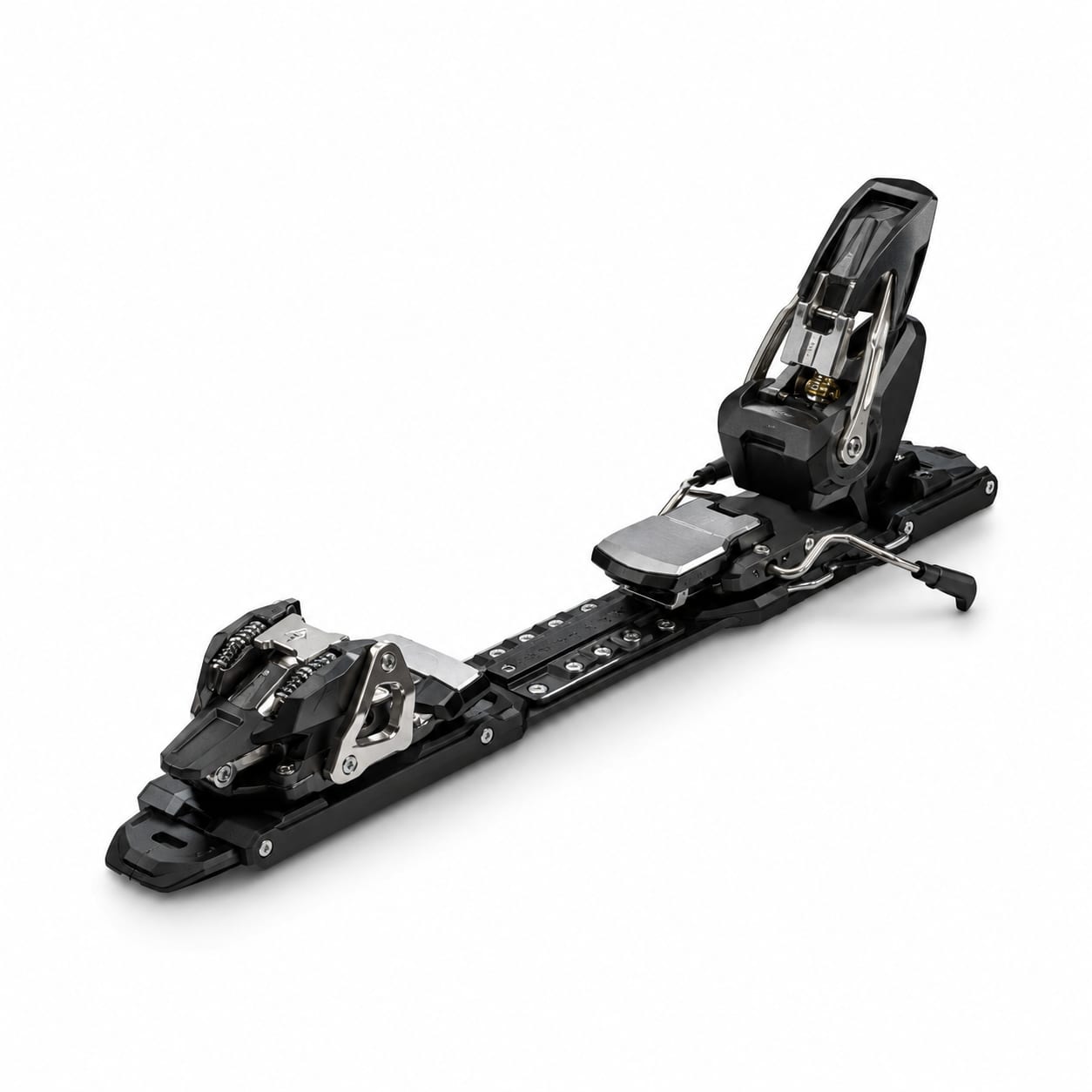
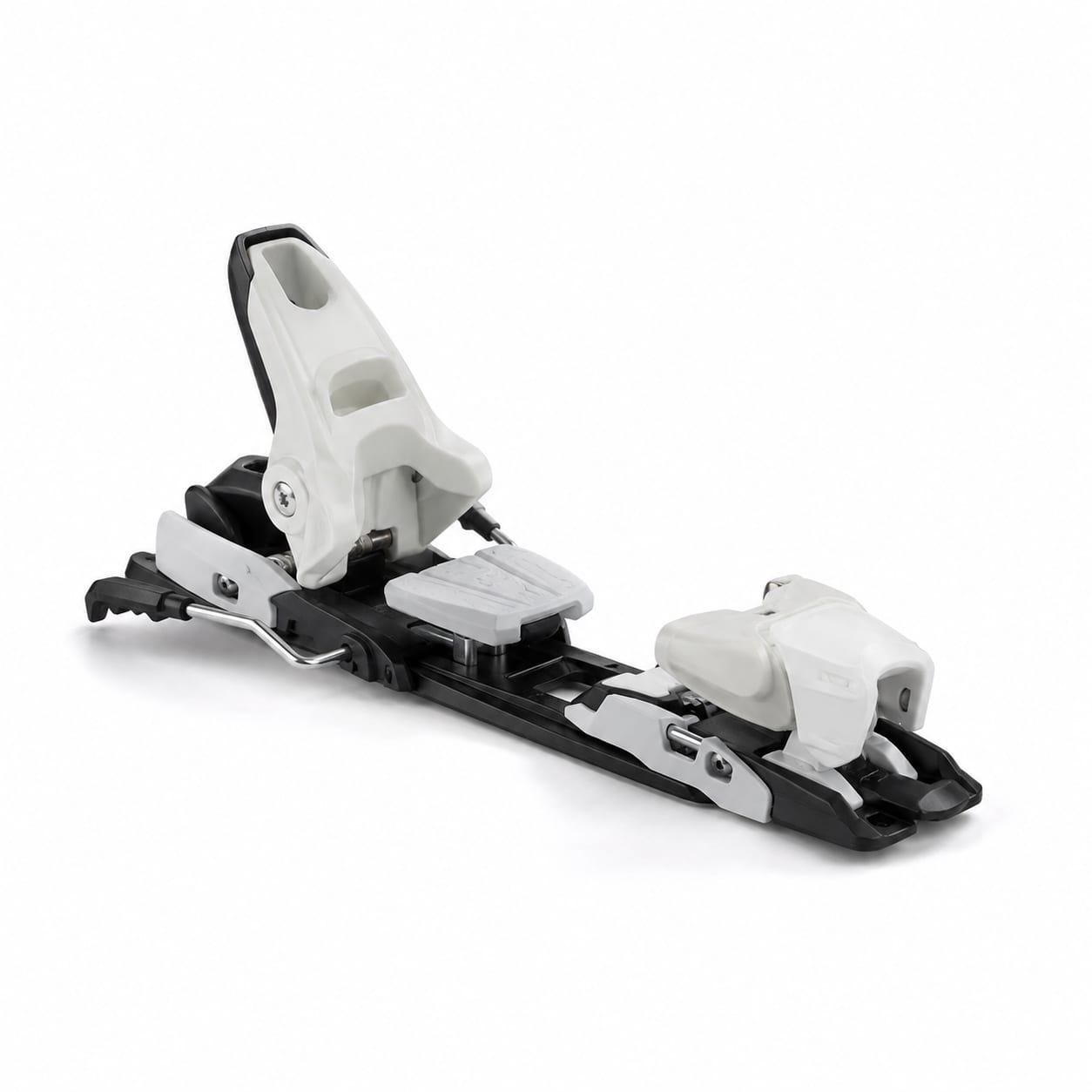
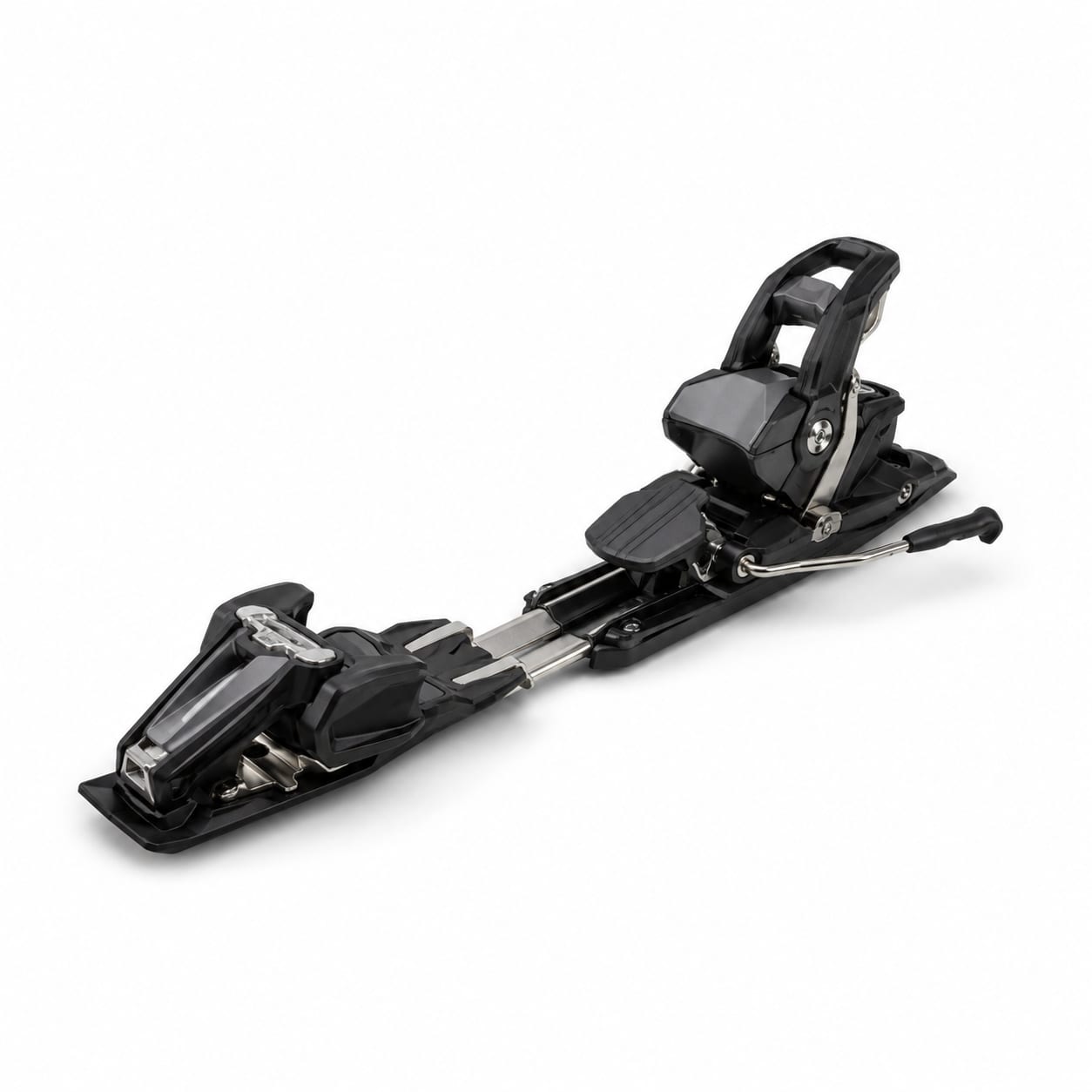
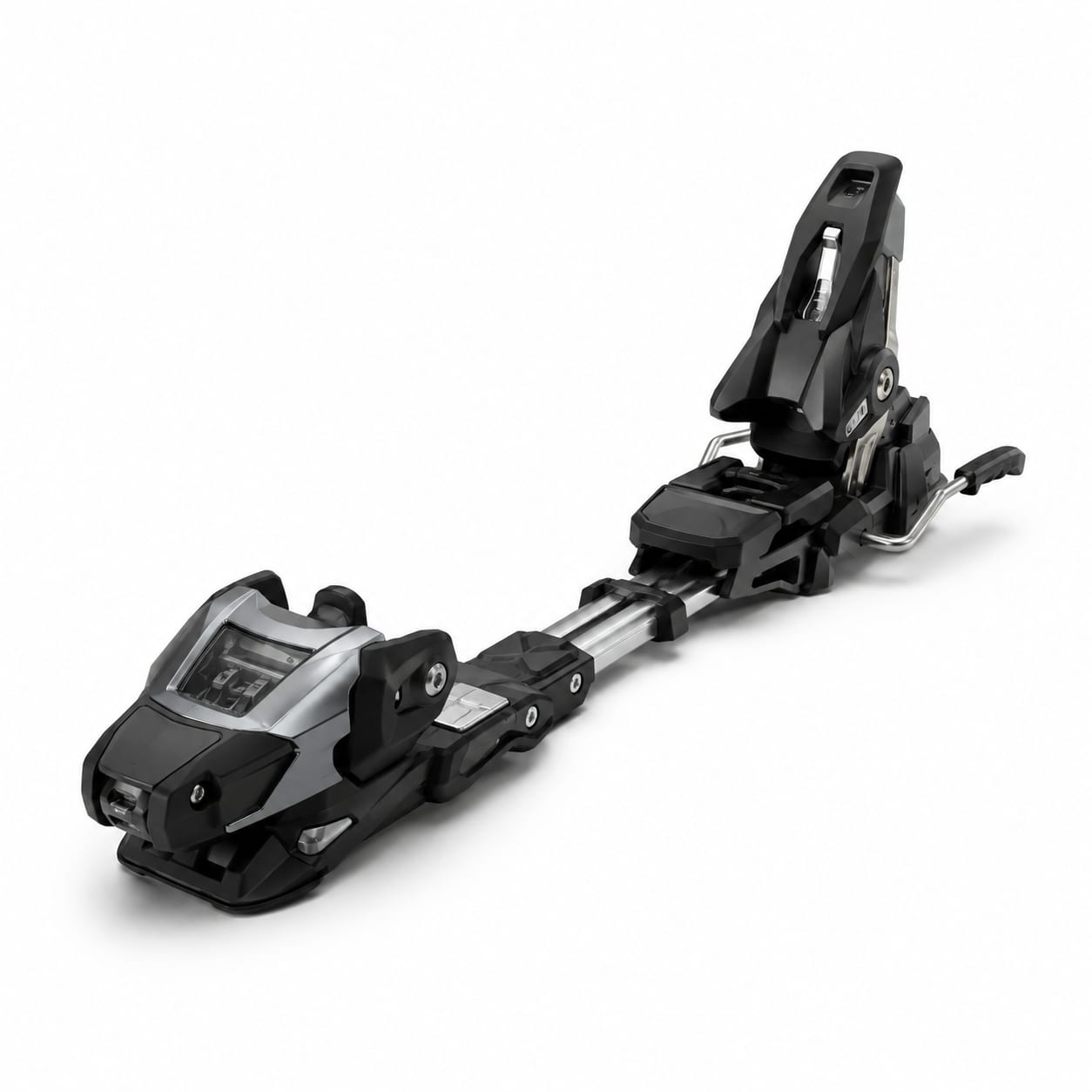
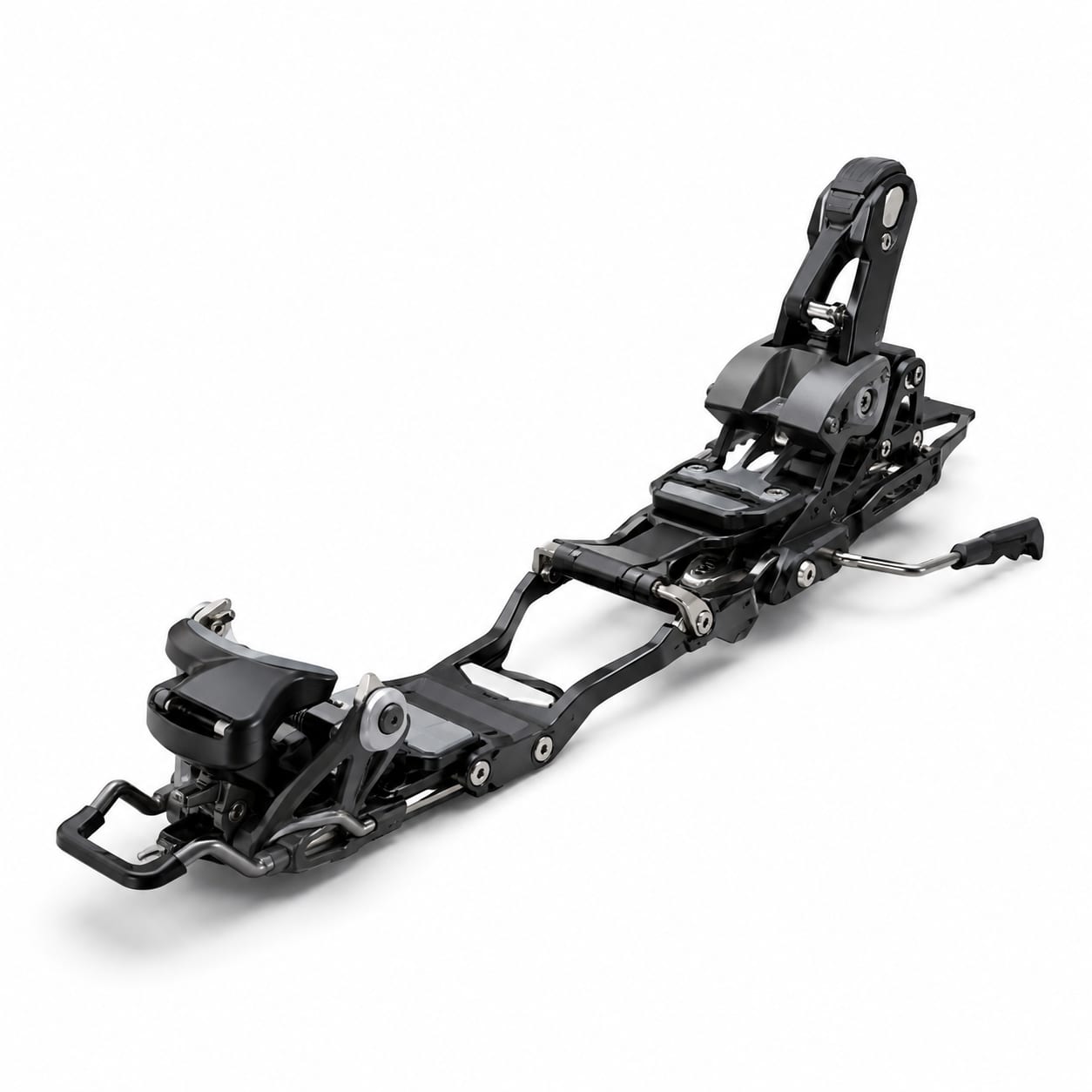
Mechanical devices that connect ski boots to skis, providing secure retention during skiing and reliable release during falls to prevent injury.

Alpine skiers replacing worn or upgrading bindingsBackcountry skiers seeking touring-capable setupsAdvanced/expert skiers needing higher DIN retentionBeginner skiers with first binding purchase on new skis

16

Key specs

8

Subcategories

7

Related gear topics

Ski Bindings

Overview

What this equipment is for

Ski bindings are the critical safety interface between skier and ski. They must hold the boot firmly during aggressive skiing while releasing predictably when forces exceed safe thresholds. Modern bindings range from lightweight pin-tech touring models to high-DIN alpine race bindings, with hybrid models bridging both worlds. Choosing the right binding involves matching DIN range to skier ability and weight, brake width to ski dimensions, and sole compatibility to boot type.

Related equipment

Ski BootsSkisClimbing SkinsSki HelmetsSki PolesBinding DampenersQuiver Killers

Buying specs

Specs worth understanding before you buy

Each spec explains how it affects performance, fit, and whether a product suits your style and use case.

Safety & Release

Dimensions that directly affect how the binding releases in a fall, which is the primary safety function of any ski binding.

DIN / Release Value Range

DIN Range

Importance

The range of release force settings the binding supports. DIN (Deutsches Institut für Normung) values indicate the force required to release the boot. Must accommodate the skier's calculated release value based on weight, ability, and boot sole length.

Typical range: 0.75–18 DIN

Calculate your recommended DIN using weight, ability level, and boot sole length via a DIN chart. Choose a binding where your setting falls in the middle third of the range. Beginners typically need DIN 3-5, intermediates 5-7, advanced 7-10, experts 10-14, racers 12-18.
Elastic Travel / Retention Travel

Elastic Travel

Importance

The distance the binding can flex elastically before releasing. Greater elastic travel allows the binding to absorb shocks and momentary forces without releasing, reducing inadvertent releases while maintaining safety.

High Elastic Travel

Extended elastic travel (typically 25-45mm lateral, 15-25mm vertical). Absorbs significant shock before release.

Standard Elastic Travel

Moderate elastic travel (typically 15-25mm lateral, 10-15mm vertical). Balances retention and release.

Low Elastic Travel

Minimal elastic travel. Common in lightweight touring and pin-tech bindings.

If you experience frequent inadvertent releases, consider bindings with higher elastic travel. Pin-tech bindings inherently have less elastic travel than alpine bindings, which is a key trade-off for touring setups. Race bindings prioritize maximum elastic travel.

Toe Release Direction

Toe Piece Release Direction

Importance

The directions in which the toe piece allows the boot to release. Affects the types of falls the binding protects against.

Lateral Only

Toe releases sideways only. Common in basic and older bindings.

Lateral + Upward

Toe releases both sideways and upward. Standard in modern alpine bindings.

Multi-Directional

Toe releases in multiple directions including diagonal. Found in advanced bindings.

Pin Lateral (Touring)

Pin-tech toe releases laterally by disengaging pins. Upward release is limited or absent.

Modern alpine bindings should offer at least lateral + upward release. Pin-tech bindings inherently have different release characteristics. This is primarily a safety consideration—more release directions generally mean better protection in varied fall types.

AFD (Anti-Friction Device) Type

AFD Type

Importance

The mechanism under the toe of the binding that reduces friction during lateral release. AFD design affects release consistency across different boot sole types and snow conditions.

Sliding AFD

A movable platform that slides laterally with the boot during release, reducing friction. Adjustable for different sole types.

Fixed / Gliding AFD

A fixed low-friction surface (often Teflon) that the boot slides across during release. Non-adjustable position.

Pin / Tech Interface

Touring bindings use pins that insert into tech fittings on the boot toe rather than a traditional AFD.

Rotating AFD

A rotating disc or platform that turns with the boot during release. Found in some Look and Tyrolia designs.

For GripWalk or mixed-sole use, look for adjustable sliding AFDs. Pin-tech bindings don't use traditional AFDs. If you ski only ISO 5355 alpine boots, any AFD type works. The AFD is a safety component—never modify or disable it.

ISO Safety Certification

ISO Certification

Importance

The international safety standards the binding meets or exceeds. Certified bindings have been tested for consistent release values and durability.

ISO 9462

International standard for alpine ski bindings. Covers release requirements, testing methods, and safety specifications.

ISO 13992

International standard for alpine touring bindings. Covers touring-specific requirements including walk mode and climbing aids.

TÜV / TIS Certification

Additional third-party testing certification common in European markets. Exceeds ISO minimum requirements.

Always buy bindings that meet current ISO standards for your binding type. Non-certified bindings may not release reliably. This is non-negotiable for safety. Check for current certification, as standards are updated periodically.

Compatibility & Fit

Dimensions that determine whether the binding works with your specific boots, skis, and mounting requirements.

Brake Pad Width

Brake Width

Importance

The width of the brake arms when deployed. Brakes must be wide enough to clear the ski waist but not so wide they drag or catch. The brake prevents runaway skis after release.

Typical range: 75–130 mm

75 mm

Narrow brake for traditional skis

85 mm

Standard brake for all-mountain frontside skis

95 mm

Wide brake for all-mountain and freeride skis

110 mm

Extra-wide brake for fat skis

Match brake width to ski waist width plus 5-15mm of clearance. A brake that is too narrow will not deploy properly; one too wide creates drag and can catch in snow. Many brands offer the same binding with multiple brake width options.

Boot Sole Type Compatibility

Boot Sole Compatibility

Importance

The types of ski boot soles the binding is designed to work with. Mismatched boot-sole combinations compromise release safety and may not engage properly.

ISO 5355 (Alpine)

Standard alpine boot sole with flat, rigid platform. Used in resort boots.

ISO 9523 (Touring)

Touring boot sole with rockered toe and heel for walking. Lighter and more flexible than alpine soles.

GripWalk

Rubberized, rockered sole format compatible with GripWalk-certified bindings. A subset of ISO 9523 with specific profile.

WTR (Walk to Ride)

Salomon/Atomic's walkable sole standard. Largely superseded by GripWalk but still found on some boots.

Check your boot's sole type (printed on the side or bottom) and ensure the binding explicitly supports it. Many modern alpine bindings accept both ISO 5355 and GripWalk. Touring bindings require ISO 9523 soles with tech fittings. Using incompatible soles can cause dangerous non-release.

Mounting System / Interface

Mounting System

Importance

How the binding attaches to the ski. Affects adjustability, remount options, and whether the binding can be moved without drilling new holes.

Flat Mount (Drilled)

Binding is screwed directly into the ski top sheet. Most common and lightest mounting method. Requires precise drilling.

Track / Slider System

Binding slides on a pre-mounted track, allowing fore/aft adjustment for different boot sole lengths.

Integrated System

Binding and ski are designed as a matched system with proprietary interface (e.g., Salomon STH, Rossignol Axial2 platform).

Quiver Killer / Insert Mount

Uses threaded inserts in the ski allowing bindings to be swapped between skis or repositioned without redrilling.

Flat mount is standard for most skiers. Track systems are useful for demo or rental. Integrated systems lock you into a brand ecosystem. Quiver killers are great for skiers who want to swap bindings between skis or experiment with mount position.

Recommended Ski Type

Ski Type Compatibility

Importance

The type of skiing and ski the binding is optimized for. Ensures the binding's performance characteristics match the intended use.

Frontside / Carving

Bindings optimized for on-piste performance with good power transmission and moderate stand height.

All-Mountain

Versatile bindings for mixed on-piste and off-piste conditions. Balanced performance characteristics.

Freeride / Big Mountain

Heavy-duty bindings with high DIN range and robust construction for aggressive off-piste skiing.

Freestyle / Park

Bindings with lower stand height, durable construction, and often wider AFD for park riding and jumps.

Match binding type to your primary ski type. If you have multiple skis for different conditions, choose bindings optimized for each. All-mountain bindings are the best default for most recreational skiers who don't specialize.

Binding Category & Type

Dimensions that define what kind of binding this is and who it's designed for.

Binding Type / Category

Binding Type

Importance

The fundamental design category of the binding, determining its intended use, mechanism, and compatibility with boot soles.

Alpine

Standard resort bindings with toe and heel retention via spring-loaded jaws. ISO 5355 boot sole compatible.

Alpine Touring (Pin/Tech)

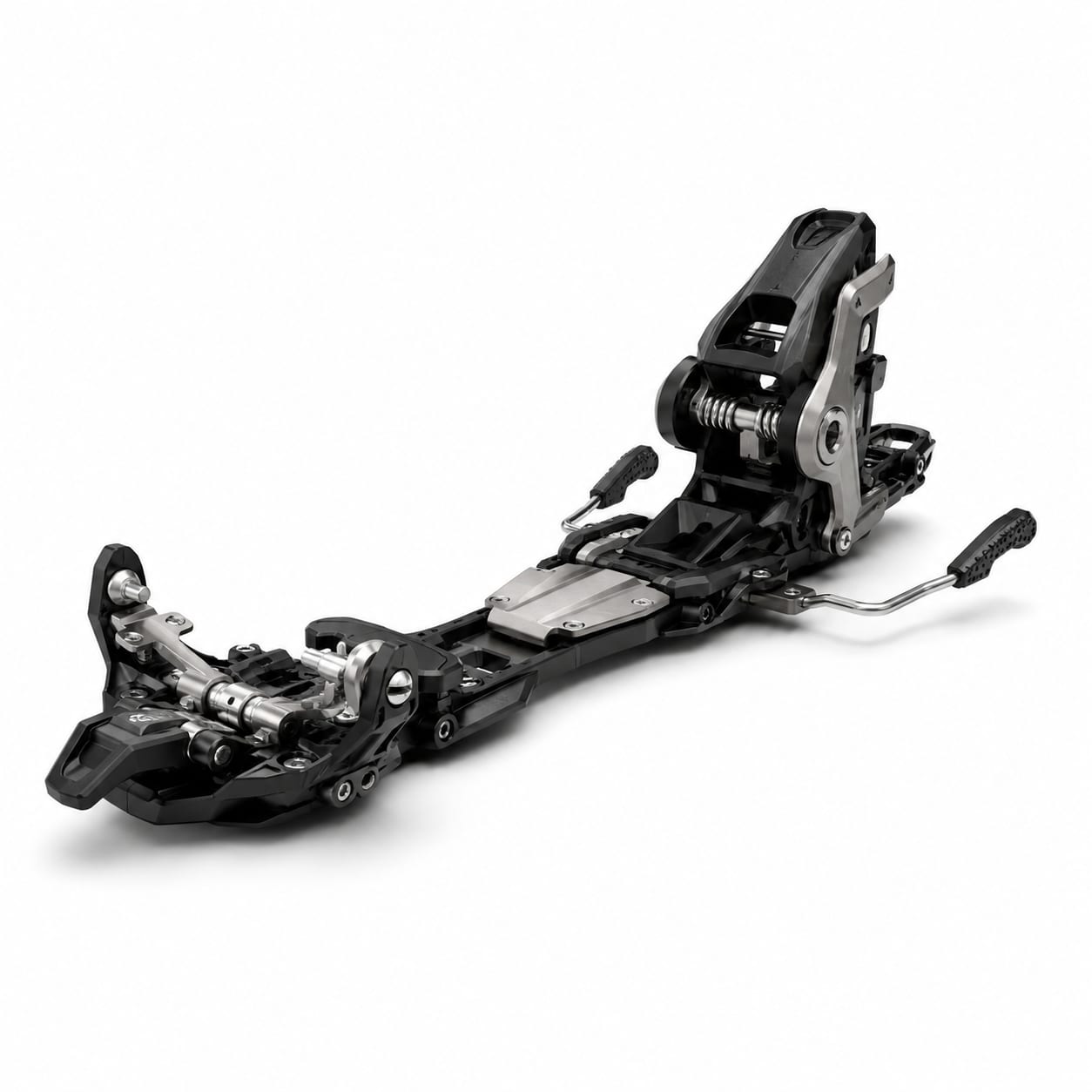
Lightweight touring bindings using pins at the toe and a heel locking mechanism. ISO 9523 boot sole compatible.

Frame Touring

Touring bindings where the heel piece pivots as a frame, allowing the heel to lift while the toe stays fixed. Often ISO 5355 compatible.

Hybrid / Shift-style

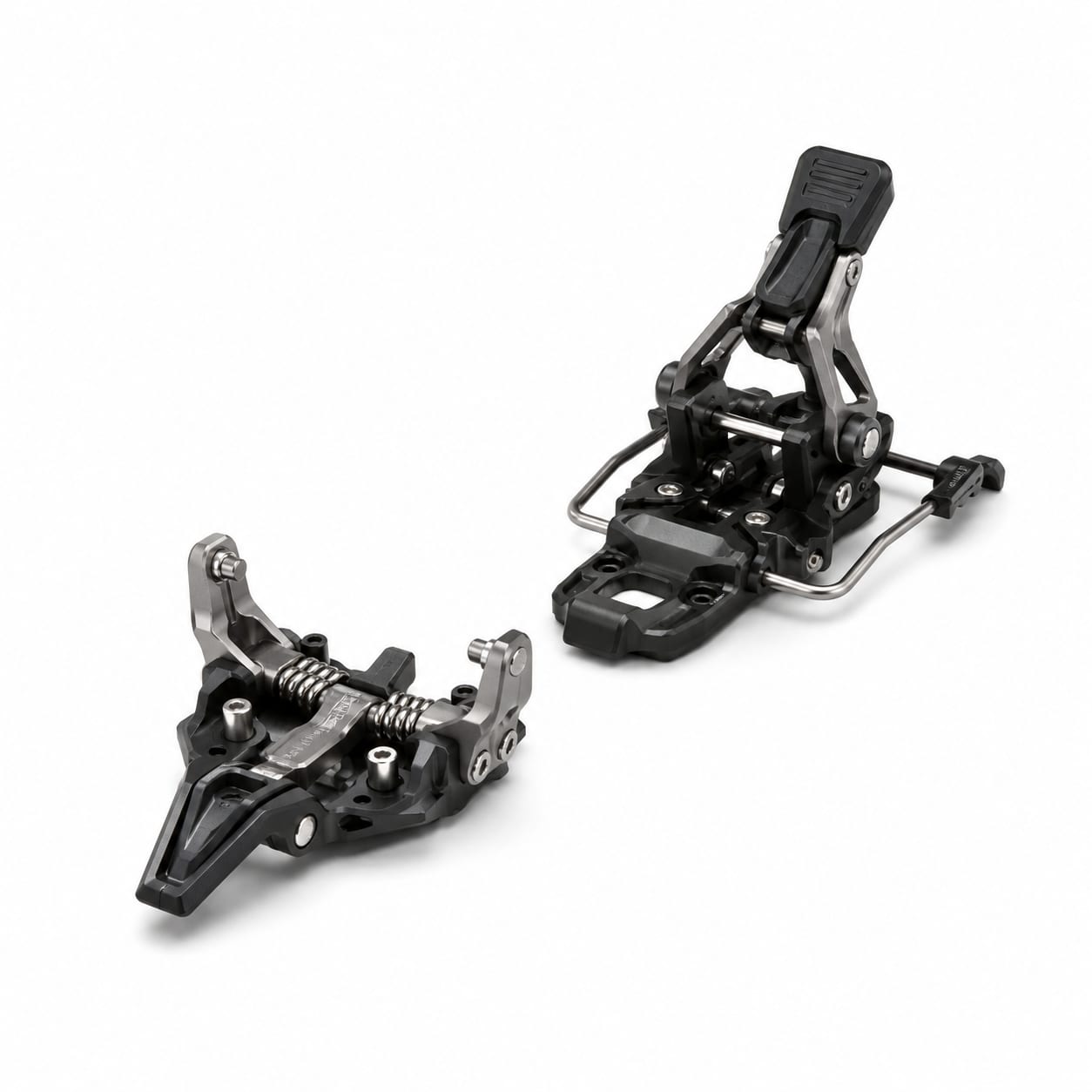
Bindings combining pin-tech touring mode with alpine-style toe jaws for downhill. Designed for both touring and resort skiing.

Choose based on primary use: alpine for resort-only, pin tech for touring-focused, hybrid for mixed resort/touring. Frame bindings are declining in popularity as hybrids improve. Never use alpine bindings for backcountry without a touring-compatible alternative.

Recommended Ability Level

Recommended Ability Level

Importance

The skier ability level the binding is designed and DIN-ranged for. Helps match binding performance and safety characteristics to skier needs.

Beginner

Low DIN range (0.75-4.5), forgiving release, easy step-in. Designed for new skiers learning fundamentals.

Intermediate

Mid DIN range (3-10), reliable release and retention for developing skiers.

Advanced

Higher DIN range (5-12), robust construction, good elastic travel for aggressive skiing.

Expert

High DIN range (8-16+), maximum elastic travel, race-grade durability.

Match the binding to your current ability with room to grow one level. A binding that is too aggressive may not release properly in a fall for lighter or less skilled skiers. A binding that is too basic may pre-release when you push your limits.

Geometry & Stance

Dimensions that affect the skier's position on the ski and how forces are transmitted.

Stand Height / Stack Height

Stand Height

Importance

The distance from the ski surface to the bottom of the boot sole when mounted. Higher stand heights increase leverage and edge power but reduce snow feel and stability.

Typical range: 15–40 mm

Lower stand heights (15-20mm) provide better snow feel and stability, preferred by freeskiers and powder skiers. Higher stand heights (25-35mm) increase edge leverage for carving and racing. Most all-mountain bindings sit at 17-22mm. Racers may prefer 30mm+ with lifters.

Ramp Angle / Delta Angle

Ramp Angle

Importance

The angle created by the height difference between the toe piece and heel piece. Affects stance, forward lean, and how the skier is positioned over the ski.

Typical range: 0–8 degrees

Most alpine bindings have 3-5 degrees of ramp angle. Higher ramp angles push the skier forward, aiding carving but potentially causing quad fatigue. Lower angles feel more neutral and are preferred in freestyle and backcountry. Combined with boot forward lean, total ramp affects stance significantly.

Touring-Specific

Dimensions relevant primarily to touring and backcountry bindings.

Weight (Pair)

Weight Per Pair

Importance

Total weight of both bindings including brakes. Critical for touring setups where every gram matters on the ascent. Less important for resort skiing.

Typical range: 240–2800 g

For touring: under 600g/pair is ultralight race, 600-900g is lightweight touring, 900-1400g is standard touring. For resort: 1400-2000g is typical, 2000g+ is heavy-duty freeride/race. Hybrid bindings typically weigh 1200-1800g. Weight savings on the feet are roughly equivalent to 3x weight on the back.

Climbing Aid / Heel Riser

Climbing Aid / Riser

Importance

Adjustable heel lifters on touring bindings that reduce calf strain during steep ascents. Not present on pure alpine bindings.

None

No climbing aid. Standard on alpine bindings.

Single Position

One climbing aid height, typically around 45mm lift.

Dual Position

Two climbing aid heights (typically 30mm and 55mm) for different slope angles.

Triple Position

Three climbing aid heights for fine-tuning to slope angle.

Only relevant for touring bindings. Dual-position is the sweet spot for most backcountry skiers. Single-position works for mellow tours. Triple-position is nice but adds complexity. Climbing aids are essential for any sustained uphill travel.

Construction & Durability

Dimensions related to the physical build and materials of the binding.

Primary Construction Material

Construction Material

Importance

The main material used in the binding body and key structural components. Affects weight, durability, and vibration damping.

Aluminum

Lightweight metal alloy used in many mid-to-high-end bindings. Good strength-to-weight ratio.

Steel / Stainless Steel

Heavy-duty metal for maximum durability. Used in high-stress components and race bindings.

Composite / Polymer

Engineering plastics and composites. Used in lightweight touring and entry-level bindings.

Mixed / Hybrid

Combination of metals and composites, using each where its properties are most beneficial.

Material choice matters most for touring (where composite saves weight) and racing (where steel maximizes durability). Most skiers will be fine with mixed construction. Don't over-index on material—design and engineering matter more than material alone.

Specs FAQ

Common questions about these buying specs

Plain-English answers for each spec and option — tap through for the full explanation.

What DIN range should I look for in ski bindings, and how do I pick the right one?

DIN is the scale that measures how much force it takes for your binding to release your boot in a fall. A higher DIN means the binding holds tighter before letting go. Your ideal DIN is calculated using your weight, skiing ability, and boot sole length—most ski shops use a standard DIN chart to find this number. When shopping for bindings, choose a pair where your recommended DIN falls in the middle third of the binding's range. This gives you room to adjust as you improve. Most beginners land around DIN 3-5, intermediates around 5-7, advanced skiers around 7-10, and experts and racers typically need 10 and above. Avoid the common mistake of buying race bindings (DIN 12-18) just because they seem more serious—if your setting sits at the very bottom of the range, the binding may not release properly when it should. And never crank your DIN higher than recommended to stop occasional pre-release; that's a real safety risk.

Who should get 75mm brake bindings, and can I just use them on wider skis?

75mm brakes are built specifically for narrow skis—race skis and frontside carvers with a waist width under 73mm. If you're skiing fast, tight turns on hardpack, these narrower brakes are ideal because they sit close to the ski with minimal drag, so they won't catch in the snow even during deep carves. However, 75mm brakes will not work on wider skis. If your ski waist is 73mm or wider, the brake arms won't clear the edge of the ski when deployed—they'll sit on top of the ski instead of hanging below it. That means they can't do their job of stopping a runaway ski after a release, which is a real safety issue. The general rule: your brake width should be your ski waist width plus 5-15mm of clearance. So 75mm brakes are the right call for skis in the roughly 60-72mm waist range. Always double-check your ski's waist width before buying—this is one spec where getting it wrong really matters.

Is an 85mm brake width right for my all-mountain skis?

An 85mm brake is designed specifically for frontside and all-mountain skis with a waist width between 73mm and 83mm. If your skis fall in that range, this is likely your best bet—it gives you enough clearance for the brake arms to deploy properly without hanging so far below the ski that they drag in the snow during turns. The key is matching brake width to your ski's waist (the narrowest point underfoot) plus a little extra room. Going too narrow means the brake pads sit on top of the ski instead of dropping below it, which defeats the whole purpose. Going too wide creates annoying drag and can catch in soft snow. If your ski waist is right around 80-82mm, the 85mm brake is a perfect fit. For skis at the lower end of the range, like 73-75mm, you could also consider a 95mm brake, but expect slightly more drag in deep carves.

Should I get the 95mm brake width for my all-mountain skis?

The 95mm brake is a great match if your ski waist falls between roughly 83mm and 93mm. The goal is to have the brake arms clear the edge of your ski by a small margin—usually 5 to 15mm wider than the waist—so they can deploy properly if the binding releases. If your skis are in that mid-80s to low-90s waist range, 95mm gives you that clearance without excess overhang. If you go with a narrower brake on a wider ski, the arms won't drop past the edges and your ski could become a runaway. Go too wide, and the brake arms can drag in the snow during deep carves or catch in crud, which is annoying at best and potentially dangerous at worst. One thing to keep in mind: if your skis are on the narrower end of that range—say an 84mm waist—you might notice slight brake drag when you're really laying over a turn. It's usually not a dealbreaker, but if you're a aggressive carver who spends most of the time on firm snow, an 85mm brake might be the cleaner choice.

Subcategories

Different styles, different picks

Each sub-type has its own guide with typical specs, trade-offs, and buying advice.

Alpine/Downhill Bindings

Alpine/Downhill Bindings

$120 – $450

dominant

Standard resort ski bindings designed for lift-served downhill skiing with fixed heels and reliable release performance.

fixed heelDIN-certified releaseISO 5355 boot compatibility
Alpine Touring Frame Bindings

Alpine Touring Frame Bindings

$300 – $650

common

AT bindings with a hinged frame that allows heel lift for uphill travel and locks down for alpine-like downhill performance.

hinged frame designwalk mode with heel liftalpine-like downhill mode
Tech/Pin Bindings

Tech/Pin Bindings

$300 – $900

common

Lightweight touring bindings using metal pins at the toe for uphill efficiency, favored by dedicated backcountry skiers.

pin toe interfaceultralight constructiontech-compatible boot required
Hybrid AT Bindings

Hybrid AT Bindings

$400 – $750

common

Bindings combining a tech/pin toe for touring with an alpine-style heel for improved downhill performance and release.

pin toe piecealpine-style heelbrake-equipped
Telemark Bindings

Telemark Bindings

$150 – $550

niche

Free-heel bindings for telemark skiing, allowing the heel to lift freely for the signature dropping-knee turn technique.

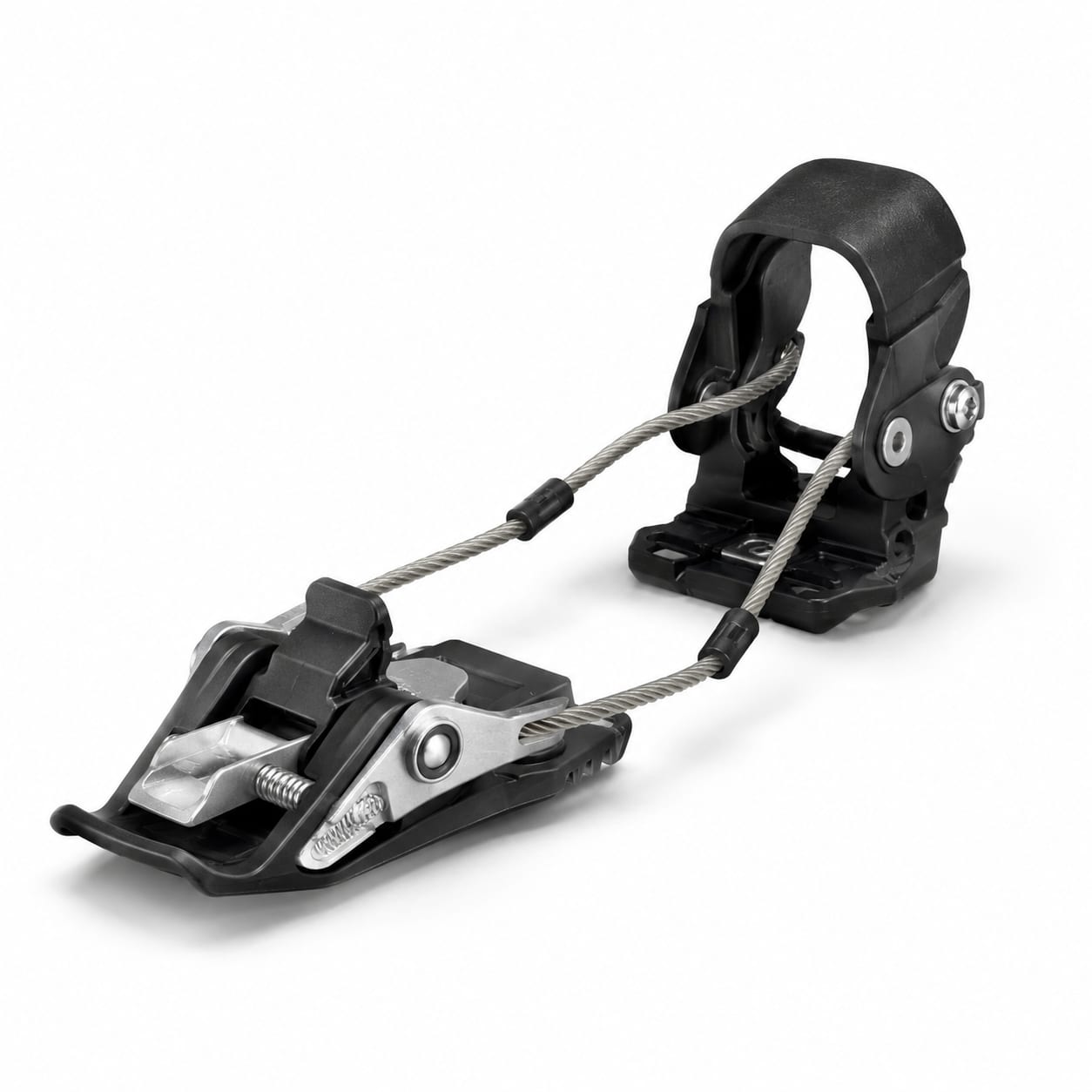
free-heel design75mm or NTN boot interfacetoe attachment only (75mm)
Cross-Country Bindings

Cross-Country Bindings

$25 – $130

common

Lightweight Nordic bindings for cross-country skiing, available in systems for classic, skate, and touring disciplines.

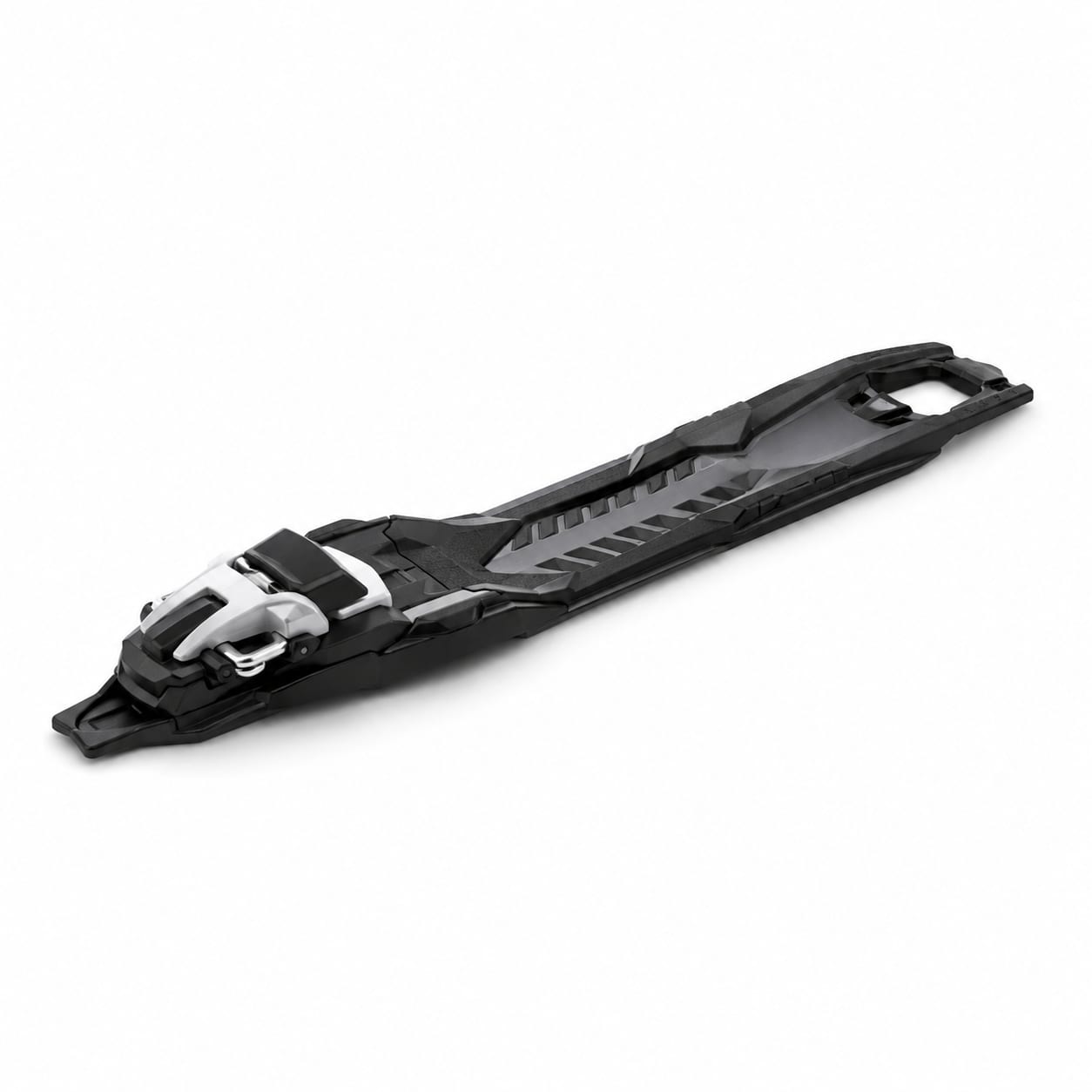
toe-only attachmentultralightNNN/Prolink/Turnamic or SNS compatibility
Racing Bindings

Racing Bindings

$200 – $600

niche

High-performance alpine bindings with elevated DIN ranges and precise power transfer for competitive ski racing.

high DIN rangerigid retentionplate/riser systems
Junior/Youth Bindings

Junior/Youth Bindings

$70 – $200

common

Alpine bindings with lower DIN ranges and appropriate release values designed for children and lighter-weight youth skiers.

low DIN rangechildren's boot sole compatibilitylightweight construction