DIN / Release Value Range
DIN Range
What it means
The range of release force settings the binding supports. DIN (Deutsches Institut für Normung) values indicate the force required to release the boot. Must accommodate the skier's calculated release value based on weight, ability, and boot sole length.
Typical for this type
6–10 for most touring skiers; ensure your calculated DIN falls in the middle third of the range
Most common pick: 5–12
In practice
Most tech/pin bindings offer DIN ranges of 5–10 or 6–12, narrower than alpine bindings. Some ultralight race models go as low as 4–9. Higher DIN options exist in models like the Dynafit Radical (up to 12) for aggressive skiers.
Compared to other types
Alpine bindings typically offer DIN 4–14 or higher; hybrid bindings range 6–13. Pin bindings have lower maximum DIN values, reflecting their touring-focused design and lower elastic travel capacity.
Why it matters: The narrower DIN range reflects the intended use at moderate speeds in the backcountry. Skiers who need DIN above 12 should consider hybrid or alpine bindings, as pin bindings are not designed for the forces of high-speed resort skiing.
Brake Pad Width
Brake Width
What it means
The width of the brake arms when deployed. Brakes must be wide enough to clear the ski waist but not so wide they drag or catch. The brake prevents runaway skis after release.
Typical for this type
Match ski waist width plus 5–15mm clearance; 95mm for most touring skis, 110mm for wider freeride touring skis
Most common pick: 95mm–110mm
In practice
Tech bindings are commonly available with brake widths of 85mm, 95mm, 100mm, 110mm, and 130mm. Some ultralight models omit brakes entirely in favor of leashes. Many models offer interchangeable brake widths.
Compared to other types
Brake width options are similar across binding types, but pin bindings more frequently offer brake-less configurations with leash options to save weight, which is rare in alpine bindings.
Why it matters: Correct brake width ensures the brake deploys below the ski to stop a runaway ski after release. Too narrow and the brake sits on the ski; too wide and the arms drag in turns and can catch in deep snow.
Binding Type / Category
Binding Type
What it means
The fundamental design category of the binding, determining its intended use, mechanism, and compatibility with boot soles.
Typical for this type
Alpine Touring Pin (This Is The Defining Characteristic Of The Subcategory)
In practice
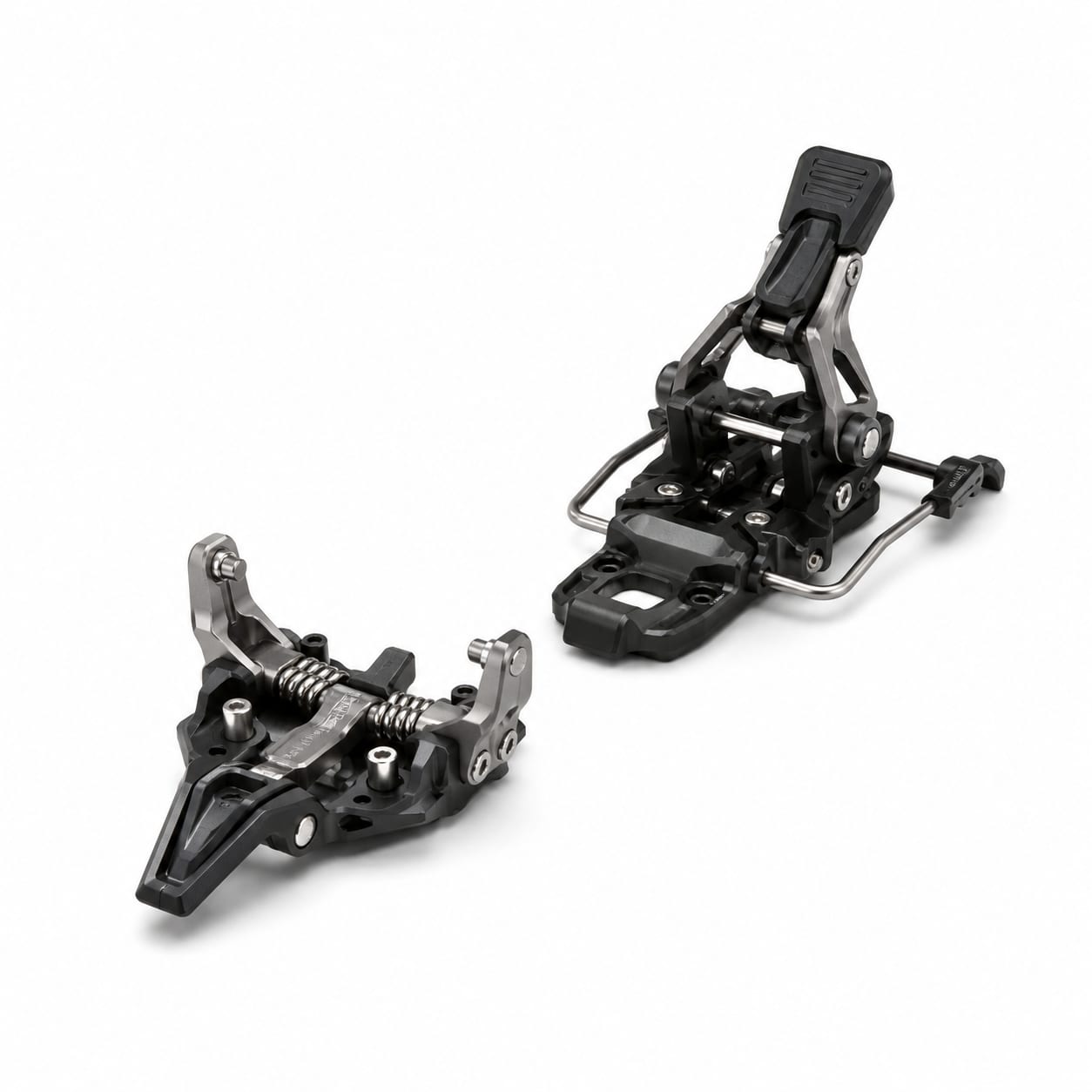
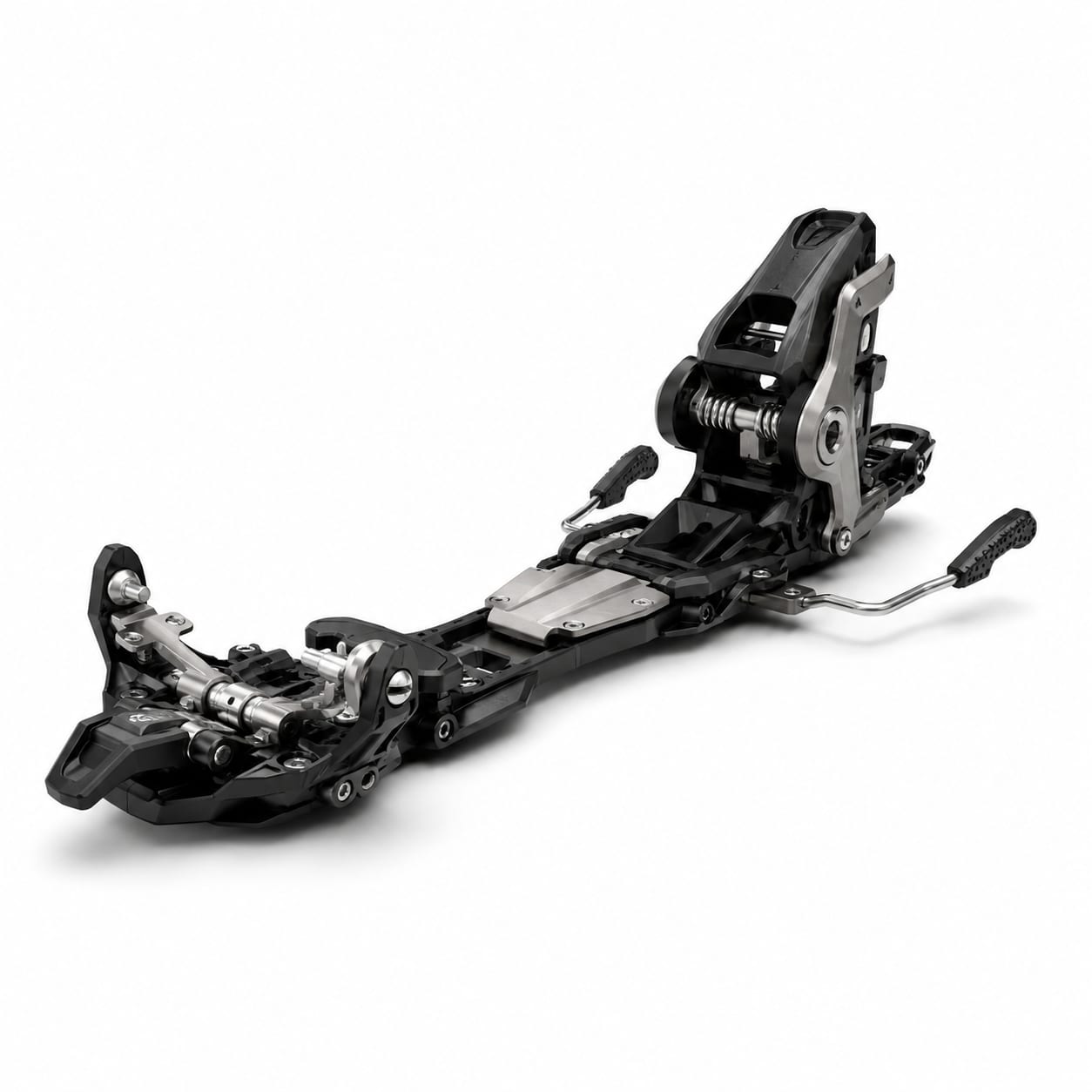
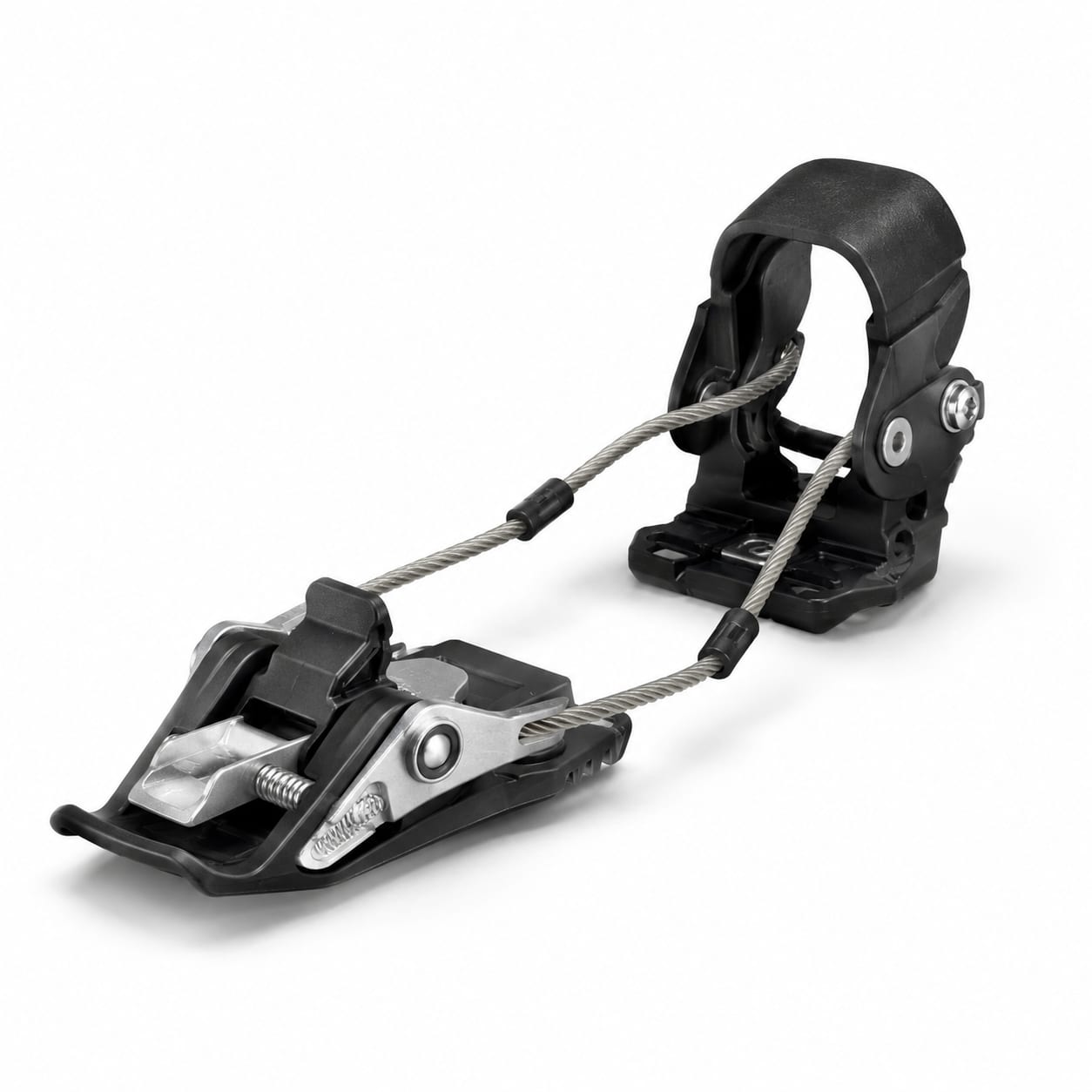
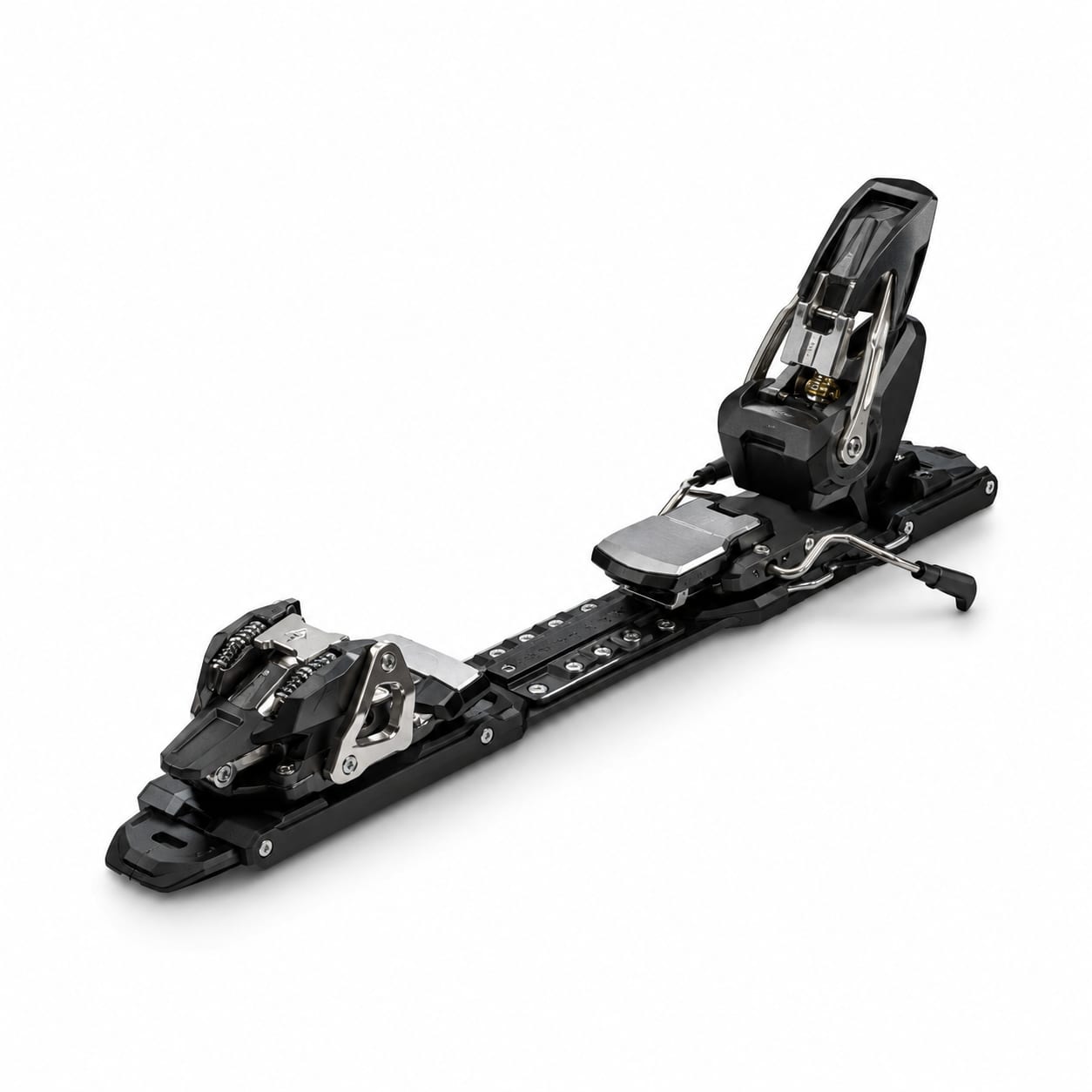
Tech/pin bindings are classified as Alpine Touring (Pin/Tech) type. They use spring-loaded pins at the toe that engage tech fittings on the boot, with a heel piece that rotates or locks for walk/ski modes.
Compared to other types
Unlike alpine bindings (jaw retention, no walk mode), frame bindings (heavy but alpine-boot compatible), or hybrids (pin toe + alpine jaw for downhill), pure pin bindings commit fully to the touring-optimized design with no alpine-style retention mechanism.
Why it matters: This classification determines boot compatibility, intended use, and the fundamental performance trade-offs between uphill efficiency and downhill capability.
Boot Sole Type Compatibility
Boot Sole Compatibility
What it means
The types of ski boot soles the binding is designed to work with. Mismatched boot-sole combinations compromise release safety and may not engage properly.
Typical for this type
ISO 9523 Touring Soles With Molded Tech Fittings Only; Verify Tech Fitting Presence Before Purchase
Most common pick: ISO 9523 (Touring) With Tech Fittings
In practice
Pin bindings require boots with ISO 9523 soles AND molded metal or reinforced tech fittings at the toe. Not all touring boots have these fittings—some are designed for frame or hybrid bindings. Alpine (ISO 5355) and GripWalk soles are NOT compatible.
Compared to other types
Alpine bindings accept ISO 5355 and often GripWalk; frame bindings often accept ISO 5355; hybrids accept both ISO 9523 and ISO 5355. Pin bindings are the most restrictive, accepting only ISO 9523 with tech fittings.
Why it matters: This is the most critical compatibility check. Boots without tech fittings cannot physically engage with pin bindings. Using incompatible boots is impossible, not just unsafe.
Stand Height / Stack Height
Stand Height
What it means
The distance from the ski surface to the bottom of the boot sole when mounted. Higher stand heights increase leverage and edge power but reduce snow feel and stability.
Typical for this type
17–22mm is standard; lower heights preferred for better snow feel and stability in variable backcountry conditions
In practice
Tech bindings have relatively low stand heights because they lack the bulky jaw mechanisms of alpine bindings. Most sit between 17–22mm, with some ultralight models as low as 15mm.
Compared to other types
Alpine bindings typically range 17–25mm; race bindings with lifters can exceed 30mm. Pin bindings are generally at the lower end of the spectrum, contributing to a more connected feel with the ski.
Why it matters: Lower stand height provides better snow feel and a more stable platform, which is valuable in variable backcountry snow. It also keeps the center of gravity lower, improving balance in challenging conditions.
Weight (Pair)
Weight Per Pair
What it means
Total weight of both bindings including brakes. Critical for touring setups where every gram matters on the ascent. Less important for resort skiing.
Typical for this type
350–600g for dedicated touring/skimo; 600–900g for freeride touring with brakes; under 350g for race
Most common pick: 500–800g
In practice
Weight is the primary advantage of pin bindings. Race/skimo models weigh 240–400g per pair, standard touring models 500–800g, and freeride-oriented pin bindings with brakes 800–1,200g. Every gram matters on long ascents.
Compared to other types
Alpine bindings: 1,400–2,200g; frame bindings: 1,800–2,800g; hybrid bindings: 1,200–1,800g. Pin bindings are dramatically lighter—often 50–75% lighter than alpine options.
Why it matters: Weight on the feet is felt approximately 3x more than weight on the back. A 500g pin binding versus a 1,800g alpine binding saves the equivalent of nearly 4kg in your pack over a full day of touring.
Elastic Travel / Retention Travel
Elastic Travel
What it means
The distance the binding can flex elastically before releasing. Greater elastic travel allows the binding to absorb shocks and momentary forces without releasing, reducing inadvertent releases while maintaining safety.
Typical for this type
Low Elastic Travel Is Inherent to The Design; Choose Models With Improved Retention Features If You Ski Aggressively
Most common pick: Low
In practice
Pin bindings have minimal elastic travel compared to alpine bindings. The pin-to-boot connection has very little give before releasing. Some modern models have improved retention through spring design, but the fundamental geometry limits elastic travel.
Compared to other types
Alpine bindings offer standard to high elastic travel (15–45mm lateral); pin bindings offer low elastic travel. This is the most significant performance difference and the main reason aggressive skiers may prefer hybrid or alpine bindings.
Why it matters: Low elastic travel means the binding is more likely to release inadvertently when subjected to shock, vibration, or momentary forces—common in rough backcountry snow, crud, or at higher speeds. This is the primary performance trade-off of pin bindings.
AFD (Anti-Friction Device) Type
AFD Type
What it means
The mechanism under the toe of the binding that reduces friction during lateral release. AFD design affects release consistency across different boot sole types and snow conditions.
Typical for this type
Pin/Tech Interface Is Standard; No Traditional AFD Exists In This Subcategory
Most common pick: Pin Afd
In practice
Pin bindings do not use a traditional anti-friction device. Instead, the pins insert directly into tech fittings on the boot toe. Lateral release depends on pin geometry and spring tension, not a sliding or rotating platform.
Compared to other types
Alpine bindings use sliding, fixed, or rotating AFDs for consistent lateral release. Pin bindings rely entirely on pin geometry and spring tension, which provides less consistent release across varying conditions.
Why it matters: The lack of a traditional AFD means lateral release behavior differs from alpine bindings. Release consistency can vary more with snow and ice buildup on the pins, and the release path is determined by pin geometry rather than a low-friction sliding surface.
Mounting System / Interface
Mounting System
What it means
How the binding attaches to the ski. Affects adjustability, remount options, and whether the binding can be moved without drilling new holes.
Typical for this type
Flat Mount (Drilled) Is Standard; Consider Quiver Killer Inserts For Multi-Ski Setups Or Mount Position Experimentation
Most common pick: Flat Mount Drill
In practice
Most pin bindings are flat-mounted directly to the ski with screws. Some skiers use Quiver Killer or Binding Freedom inserts to allow swapping bindings between skis, which is popular in the touring community for travel and quiver management.
Compared to other types
All binding types commonly use flat mount. Pin bindings are particularly popular candidates for insert mounting because touring skiers often have multiple skis and want to swap a single binding set between them.
Why it matters: Proper mounting is critical for pin bindings because the precise alignment of pins with boot tech fittings requires accurate drilling. Misaligned mounts cause step-in difficulty and inconsistent release. Inserts add flexibility but slightly increase stand height.
Ramp Angle / Delta Angle
Ramp Angle
What it means
The angle created by the height difference between the toe piece and heel piece. Affects stance, forward lean, and how the skier is positioned over the ski.
Typical for this type
2–4 degrees is typical; lower ramp angles preferred for a neutral stance in backcountry skiing
In practice
Pin bindings generally have lower ramp angles than alpine bindings because the heel piece sits lower and there's no built-in ramp from jaw mechanisms. Most fall in the 2–4 degree range, creating a more neutral stance.
Compared to other types
Alpine bindings typically have 3–5 degrees of ramp angle; some race setups exceed 5 degrees. Pin bindings tend toward the lower end, promoting a more neutral stance suitable for diverse snow conditions.
Why it matters: Lower ramp angle contributes to a more balanced, less forward-pressured stance, which is preferable for variable backcountry snow where you need to stay centered. Combined with touring boot forward lean, the total stance angle affects comfort and control.
Recommended Ability Level
Recommended Ability Level
What it means
The skier ability level the binding is designed and DIN-ranged for. Helps match binding performance and safety characteristics to skier needs.
Typical for this type
Advanced to Expert; Strong Intermediates With Touring Experience Can Use Lighter-Duty Models
Most common pick: Advanced, Expert
In practice
Pin bindings require more skill to use safely than alpine bindings. The lower elastic travel, different release characteristics, and need for proper technique during transitions demand experience. Most pin bindings have DIN ranges starting at 5–6, which excludes true beginners.
Compared to other types
Alpine bindings serve all ability levels from beginner to expert. Pin bindings are generally not recommended for beginners or low-intermediates due to their performance characteristics and the inherent demands of backcountry skiing.
Why it matters: Using pin bindings without adequate skill and understanding of their limitations can lead to pre-release, difficulty with transitions, and inappropriate expectations of downhill performance. Backcountry travel itself requires advanced decision-making skills.
Recommended Ski Type
Ski Type Compatibility
What it means
The type of skiing and ski the binding is optimized for. Ensures the binding's performance characteristics match the intended use.
Typical for this type
Touring/Backcountry Is Primary; Freeride-Oriented Pin Bindings For Aggressive Backcountry Descents
Most common pick: Touring, Freeride
In practice
Pin bindings are designed for touring and backcountry skiing. They pair with lightweight touring skis for skimo, mid-weight touring skis for general backcountry, and increasingly with wider freeride skis for big-mountain touring. They are not designed for frontside carving, freestyle, or race applications.
Compared to other types
Alpine bindings cover frontside, all-mountain, freestyle, and race; hybrids cover all-mountain and freeride. Pin bindings are specialized for touring and backcountry freeride, with no overlap into park, race, or pure frontside categories.
Why it matters: Matching pin bindings to appropriate ski types ensures the binding's performance envelope aligns with the ski's intended use. Mounting pin bindings on heavy, wide resort skis negates the weight advantage and creates a poorly balanced setup.
Climbing Aid / Heel Riser
Climbing Aid / Riser
What it means
Adjustable heel lifters on touring bindings that reduce calf strain during steep ascents. Not present on pure alpine bindings.
Typical for this type
Dual Position For Most Touring; Triple Position For Serious Ski Mountaineering; Single Position Acceptable For Mellow Tours
Most common pick: Dual Position
In practice
Most pin bindings feature dual-position climbing aids (typically ~30mm and ~55mm lift). Some models offer triple positions. Ultralight race bindings may have single or no climbing aids. The heel riser is flipped up with a pole basket while skinning.
Compared to other types
Alpine bindings have no climbing aids. Frame bindings have climbing aids but are heavier. Hybrid bindings have climbing aids. Pin bindings offer the most refined and easy-to-use climbing aid systems, often operable with a pole basket without bending down.
Why it matters: Climbing aids reduce calf strain on steep ascents by lifting the heel, allowing a more natural stride angle. The ability to adjust riser height to match slope angle significantly improves comfort and efficiency during long tours.
Toe Release Direction
Toe Piece Release Direction
What it means
The directions in which the toe piece allows the boot to release. Affects the types of falls the binding protects against.
Typical for this type
Pin Lateral Is Standard; Some Modern Models Add Limited Upward Release Capability
Most common pick: Pin Lateral
In practice
Traditional pin bindings release laterally at the toe by the pins disengaging from the tech fittings. Upward release at the toe is limited or absent in most designs. Some newer models incorporate additional release modes, but the fundamental pin geometry prioritizes lateral release.
Compared to other types
Alpine bindings offer lateral + upward or multi-directional release. Pin bindings offer primarily lateral release, providing less comprehensive fall protection. This difference is well-documented and accepted within the backcountry skiing community as a trade-off for weight and touring efficiency.
Why it matters: Limited upward toe release means pin bindings may not protect as effectively in certain forward-loading fall scenarios compared to alpine bindings with lateral + upward release. This is a known safety trade-off of the pin design.
Primary Construction Material
Construction Material
What it means
The main material used in the binding body and key structural components. Affects weight, durability, and vibration damping.
Typical for this type
Composite/Polymer For Ultralight Models; Mixed (Aluminum + Composite) For Durability In Standard Touring Models
Most common pick: Composite Polymer, Mixed
In practice
Ultralight pin bindings use extensive composite/polymer construction to minimize weight. Standard touring models use a mix of aluminum for structural components and composite for non-load-bearing parts. Race models may use carbon fiber reinforcement.
Compared to other types
Alpine bindings predominantly use aluminum and steel for durability. Pin bindings use more composite/polymer to save weight, accepting some durability trade-off. This is appropriate given the lower forces encountered in backcountry skiing versus resort charging.
Why it matters: Material choice directly impacts the weight-durability balance. Composite bindings are the lightest but may be less durable over seasons of heavy use, especially in cold conditions. Mixed construction offers the best balance for most skiers.
ISO Safety Certification
ISO Certification
What it means
The international safety standards the binding meets or exceeds. Certified bindings have been tested for consistent release values and durability.
Typical for this type
ISO 13992 Certified Is Essential; TÜV Certification Is A Bonus For Additional Quality Assurance
In practice
Pin bindings should meet ISO 13992, the international standard for alpine touring bindings. This standard covers release requirements, walk mode functionality, and touring-specific safety specifications. Many premium models also carry TÜV certification.
Compared to other types
Alpine bindings are certified to ISO 9462; touring bindings to ISO 13992. These are different standards reflecting different use cases. Always ensure your pin binding meets the appropriate touring standard, not just any ISO certification.
Why it matters: ISO 13992 certification ensures the binding has been tested for consistent release values and meets minimum safety requirements for touring use. Non-certified bindings may have unpredictable release behavior, which is dangerous in the backcountry where rescue resources are limited.