
Ski Boots · FAQ
Questions about Freeride / Big Mountain Ski Boots
Straight answers on fit, specs, and when this type makes sense — each topic has its own page with links back to the buying guide.
Open Freeride / Big Mountain Ski Boots guide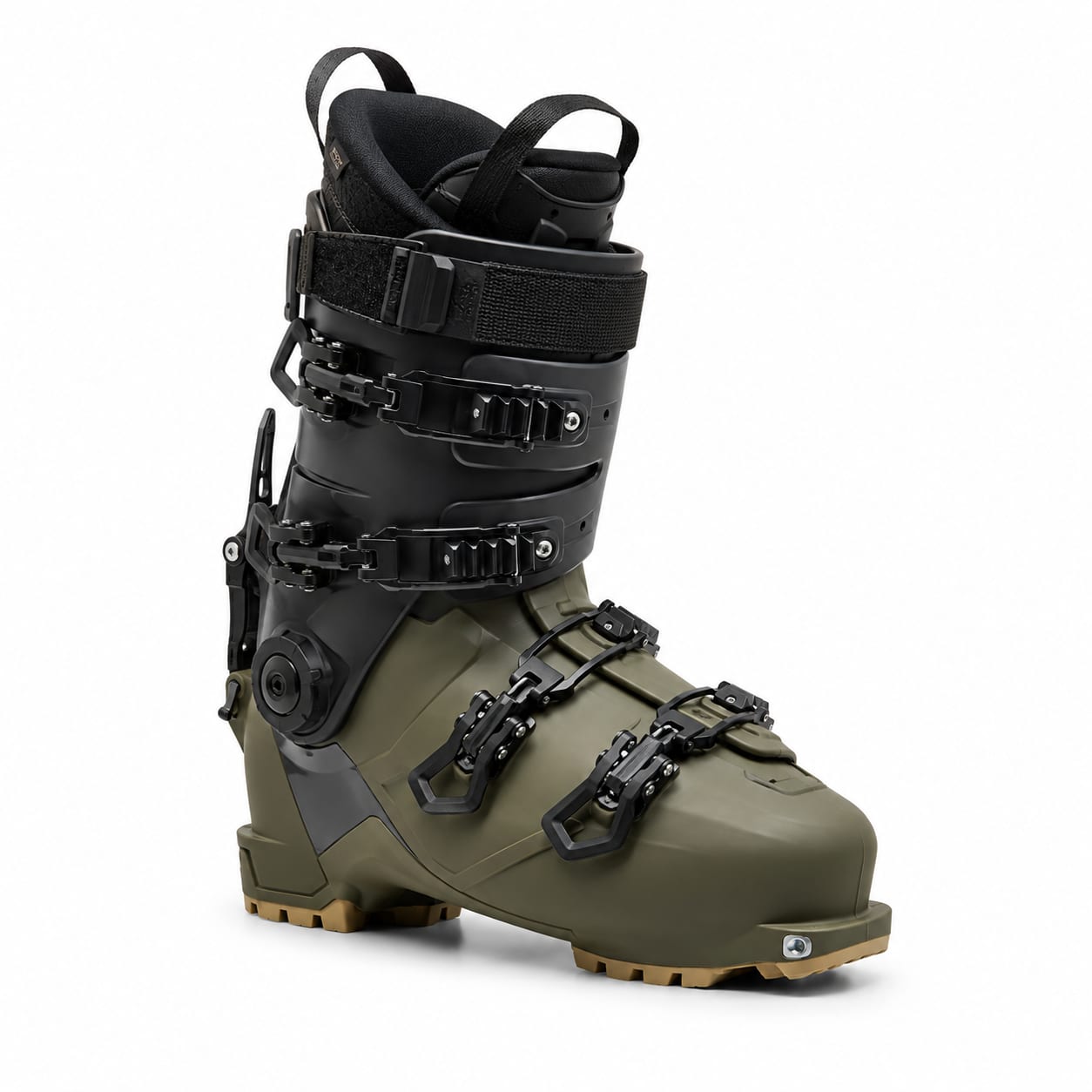
5 topics
Pick a question
Every answer links to the full subcategory guide and related gear types when it helps you decide.
Can I use freeride boots with standard alpine bindings?
It depends on the sole type. Many freeride boots feature GripWalk or WTR soles that require compatible bindings. Using rockered rubber soles in standard alpine bindings can cause prerelease or improper retention. Always check for the GW or WTR symbol on your bindings.
Read answer →02What is the difference between freeride and touring boots?
Freeride boots prioritize downhill performance, featuring stiffer flexes (110-130) and robust construction for aggressive skiing, with a walk mode added for short approaches. Touring boots prioritize uphill efficiency, using much lighter materials and offering greater walk range (50°+), but they sacrifice significant downhill power.
Read answer →03Do I need a walk mode if I only ski inbounds?
Not strictly necessary, but it is highly convenient. A walk mode makes walking in parking lots, lodges, and base areas much more comfortable. It also allows you to access hike-to terrain within the resort boundaries, which is increasingly popular at many ski areas.
Read answer →04How stiff should my freeride boot be?
For most advanced skiers, a flex rating of 110-120 provides an excellent balance of control and comfort in off-piste terrain. Only expert, highly aggressive chargers or very heavy skiers typically need a 130+ flex in a freeride boot.
Read answer →05Can I use freeride boots for long ski tours?
They can be used for short to moderate tours, but they are not ideal for long backcountry missions. The weight (often 3700g+ per pair) and limited walk range (35-50°) will cause fatigue on long ascents compared to dedicated touring boots.
Read answer →