
Ski Boots · FAQ
Questions about Hike & Ride / Walk-Mode Resort Boots
Straight answers on fit, specs, and when this type makes sense — each topic has its own page with links back to the buying guide.
Open Hike & Ride / Walk-Mode Resort Boots guide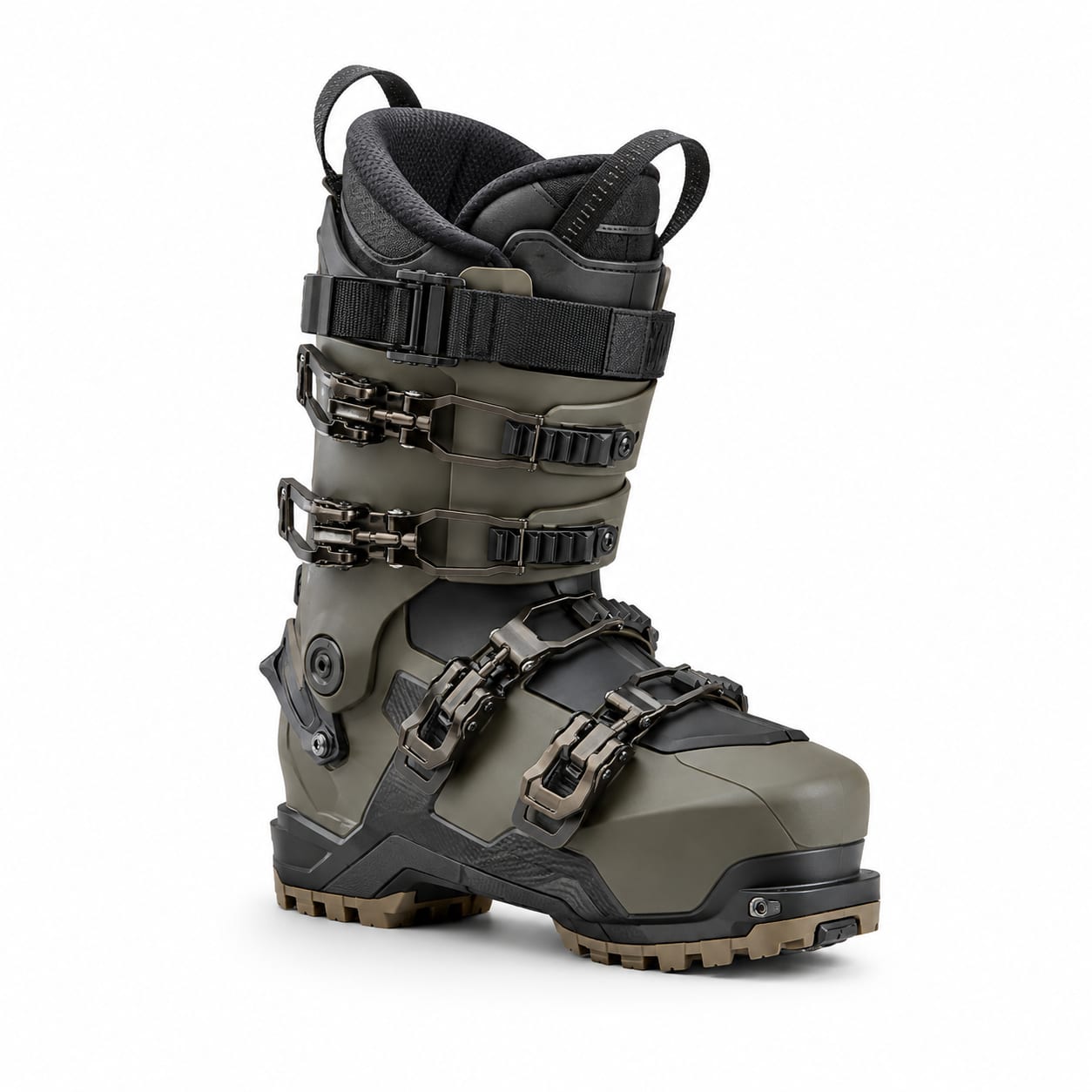
6 topics
Pick a question
Every answer links to the full subcategory guide and related gear types when it helps you decide.
Can I use Hike & Ride boots with my existing alpine bindings?
It depends on your bindings. Most Hike & Ride boots have GripWalk soles, which require GripWalk-compatible bindings (look for the GW symbol). Many modern bindings from the last 5–7 years are GW-compatible, but older bindings typically are not. Using GripWalk boots in non-compatible bindings can cause dangerous prerelease. Check your bindings before purchasing, or look for Hike & Ride models available with alpine standard soles if your bindings aren't GW-compatible.
Read answer →02Is there a performance penalty for having walk mode?
In modern Hike & Ride boots, the performance penalty is negligible. The walk mechanisms are engineered to engage firmly with no play when locked in ski mode. Independent tests have shown that current walk-mode boots perform comparably to their non-walk equivalents on the downhill. The only real trade-offs are slightly higher weight (100–200g per pair) and higher price.
Read answer →03Can I use Hike & Ride boots for backcountry touring?
Hike & Ride boots can handle short sidecountry laps and resort-accessed backcountry, but they are not ideal for dedicated touring. The walk range (25–45°) is less efficient for skinning than touring boots (50–70°), the weight is significantly higher, and most models lack tech fittings for pin bindings. If you plan to do more than occasional sidecountry laps, consider a proper touring boot or a hybrid model with tech fittings.
Read answer →04What's the difference between Hike & Ride boots and freeride boots with walk mode?
The distinction is often more marketing than engineering. Both categories feature walk mode, GripWalk soles, and 4-buckle alpine performance. Freeride boots may lean slightly toward off-piste performance with wider last widths and more aggressive walk ranges, while Hike & Ride boots may be slightly more on-piste oriented. In practice, many boots could be classified in either category. Focus on specific model features, fit, and flex rather than the category label.
Read answer →05Do I really need walk mode if I only ski resort?
Strictly speaking, no—skiers have managed without walk mode for decades. However, most skiers who try walk mode find it difficult to go back. The ability to walk normally to the lift, navigate icy parking lots safely, and hike to sidecountry gates adds significant value to the overall experience. If you never leave the groomed runs and don't mind the stiff-legged walk, you can save money with a non-walk boot. But for most skiers, walk mode is worth the modest premium.
Read answer →06How do I know what walk range I need?
If you only walk from parking lot to lift and around the lodge, any walk range (even 25°) is fine. If you regularly hike to sidecountry gates or short boot packs, look for 35–40°. If you're doing longer hikes or steep boot packs, prioritize 40–45°. For sustained skinning and multi-hour tours, you need a touring boot with 50°+. Most Hike & Ride boots offer 30–40°, which covers the vast majority of resort-based hiking needs.
Read answer →