
Ski Boots · FAQ
Questions about Race Ski Boots
Straight answers on fit, specs, and when this type makes sense — each topic has its own page with links back to the buying guide.
Open Race Ski Boots guide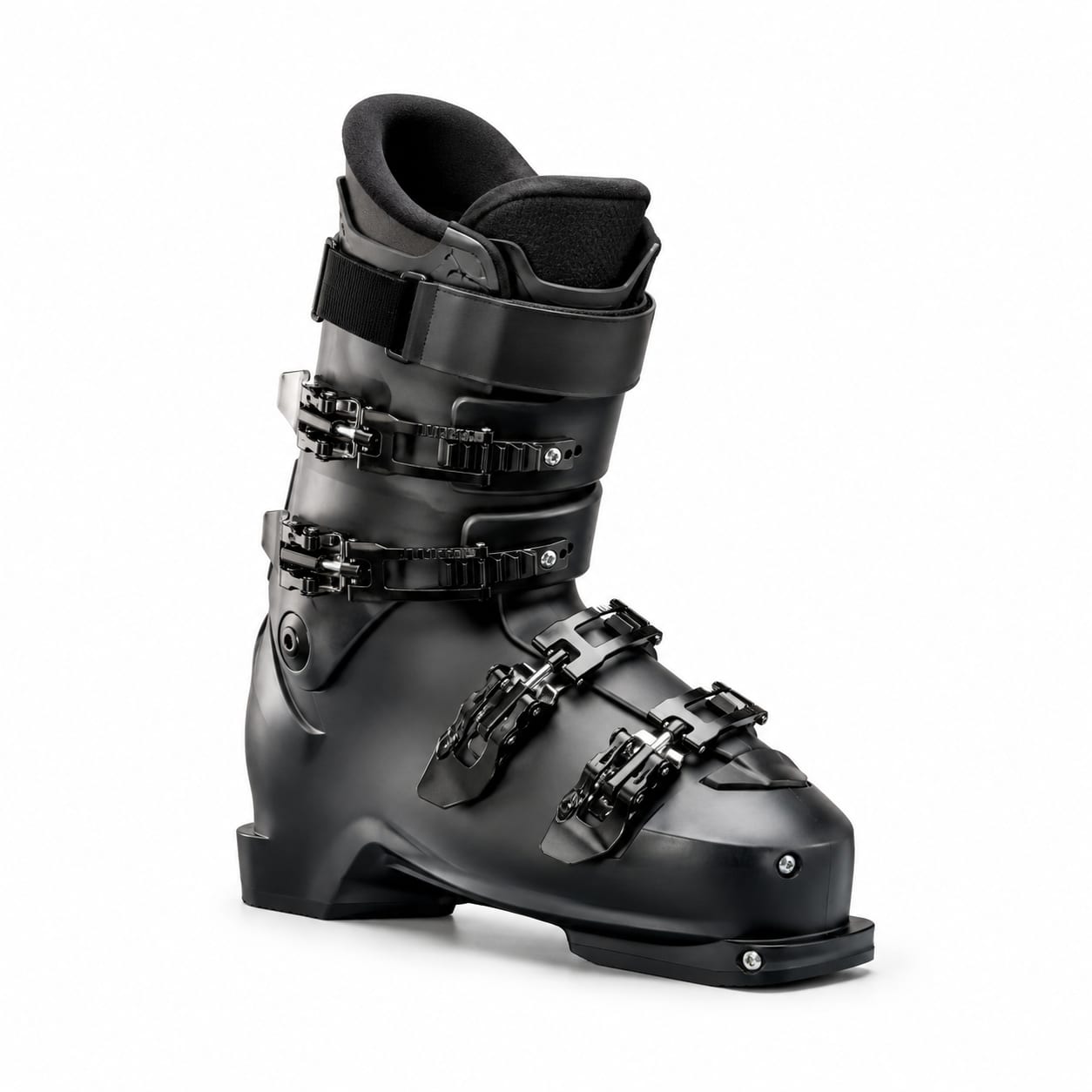
6 topics
Pick a question
Every answer links to the full subcategory guide and related gear types when it helps you decide.
Can I use race boots for regular resort skiing if I'm an expert skier but don't race?
Technically yes, but it's rarely the best choice. Race boots are optimized for the specific demands of racing—high-speed carving on groomed snow with maximum precision. For general expert resort skiing that includes moguls, powder, trees, and mixed conditions, a high-end frontside or all-mountain boot will be more comfortable, more versatile, and nearly as precise on groomers. Race boots are noticeably worse in any off-piste or variable snow condition.
Read answer →02What's the difference between slalom and GS race boots?
Slalom (SL) boots tend to have slightly softer flex (130–140 vs. 140–150 for GS) and may have a slightly more upright stance to facilitate quick, short-turn edge transitions. GS and speed event boots prioritize maximum stiffness and aggressive forward lean for stability at higher speeds with longer turns. Some manufacturers make distinct SL and GS models, while others offer a single race platform with adjustable features that can be tuned for either discipline.
Read answer →03My feet hurt in race boots—is that normal?
Some pressure and tightness is expected—race boots are designed for a performance fit, not comfort. However, pain, numbness, or hot spots that persist after proper fitting are not normal and indicate a fit issue. Common solutions include: custom footbeds to support the arch and distribute pressure, shell punching or grinding to relieve specific pressure points, and ensuring the last width and volume match your foot shape. A good bootfitter can resolve most pain issues while maintaining race performance.
Read answer →04Do I really need custom footbeds with race boots?
Yes, for anyone serious about race performance. Custom footbeds support the foot in its neutral position, prevent collapse under load, improve edge feel, and dramatically enhance comfort. They are considered essential equipment by virtually every race coach and bootfitter. Expect to pay $150–$300 for quality custom footbeds—they are one of the highest-return investments you can make in race equipment.
Read answer →05Can I put GripWalk soles on a race boot?
No. Race boots use alpine standard (DIN) soles, and this is not interchangeable. GripWalk soles would compromise the precise boot-binding interface that race bindings require, potentially causing dangerous retention or release issues at race speeds and forces. If walking comfort is a priority, race boots are the wrong choice—consider a frontside or all-mountain boot with GripWalk compatibility instead.
Read answer →06How long do race boots last?
With proper care, the PU shell of a race boot can last many seasons—PU is extremely durable. However, liners pack out after 100–150 days of aggressive use, and the precise fit that makes race boots effective degrades as the liner compresses. Competitive racers often replace liners every 1–2 seasons and shells every 3–5 seasons. Recreational skiers using race boots may get longer life from both components. Regular bootfitter check-ups can extend useful life through adjustments.
Read answer →