Kitvore.com

Kitvore.com

Specs that matter. Gear that fits.

Ski Boots · Subcategory

Race Ski Boots

Ultra-stiff, precision-engineered ski boots built for competitive ski racing with maximum power transfer and minimal flex.

Race ski boots are the most demanding and responsive boots in the ski equipment world, designed for competitive slalom, giant slalom, super-G, and downhill racers who need instantaneous edge-to-edge power transmission. With flex ratings of 130–150, narrow lasts under 97mm, and custom-moldable liners, these boots leave no energy wasted between your leg and your ski. They are not for the faint of heart—or the casual skier.

$500 – $1600pro tieradvancedexpert

Best known for

Extreme stiffness and instantaneous power transferNarrow, low-volume fit for maximum precisionCustom foam-injected liners for race-day lock-downMechanical power straps and micro-adjustable buckles
Race Ski Boots

Guide

Detailed overview

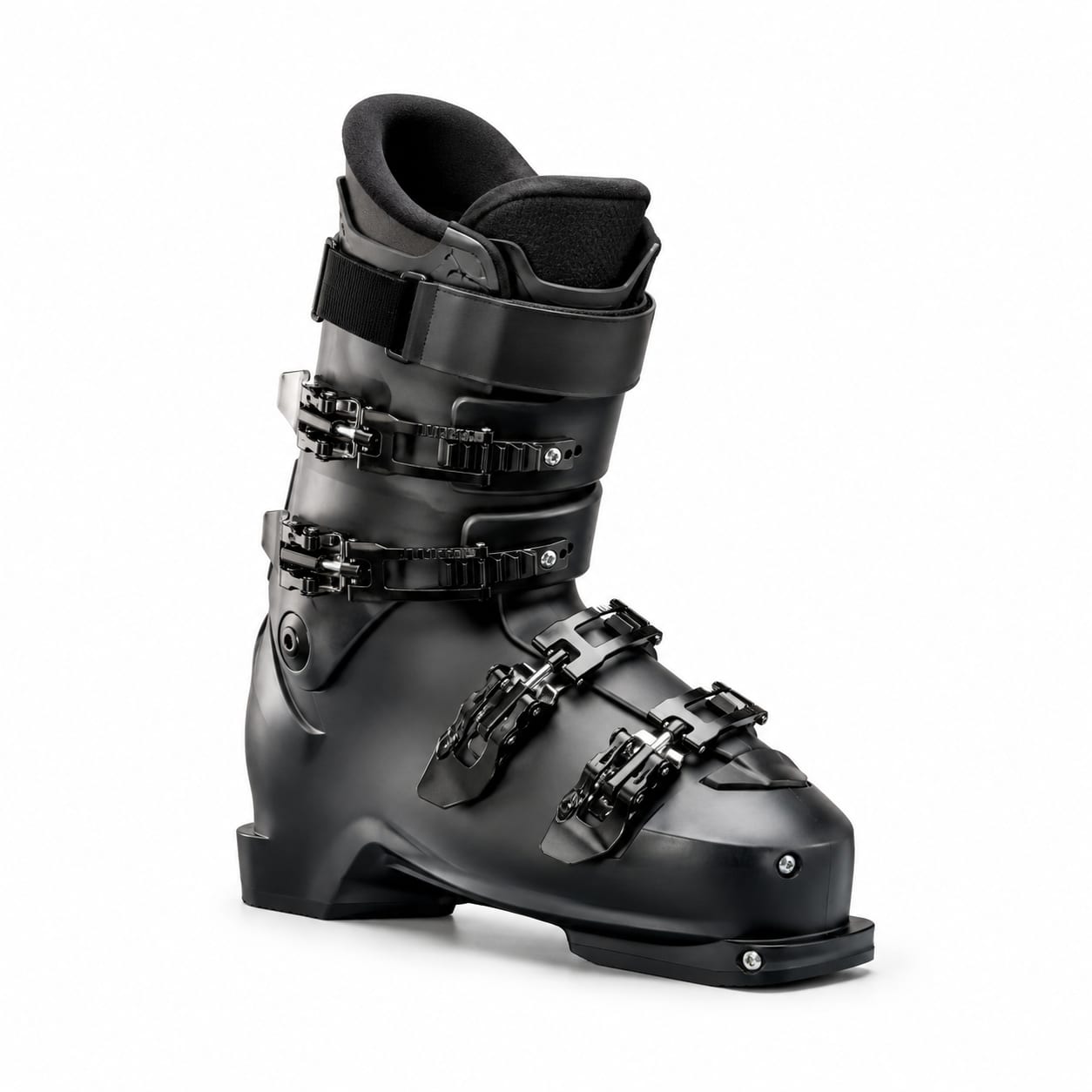
Race ski boots are purpose-built for competitive alpine ski racing, where every millisecond and every degree of edge angle matters. These boots feature the stiffest flex ratings available (130–150), the narrowest lasts (92–97mm), and the most aggressive forward lean angles in the sport. Every design choice prioritizes power transmission and responsiveness over comfort and versatility. The result is a boot that transforms even subtle leg movements into immediate ski reactions—ideal for racers carving at high speeds through gates, but unforgiving for skiers lacking the technique or strength to drive them properly.

Race ski boots occupy the extreme performance end of the ski boot spectrum, engineered without compromise for competitive alpine racing. Unlike all-mountain or freeride boots that balance multiple priorities, race boots have a singular focus: transmitting every ounce of the skier's input directly to the ski edge with zero delay and zero energy loss. This is achieved through a combination of ultra-stiff polyurethane shells, narrow low-volume fits, aggressive forward lean angles, and closure systems designed for maximum lockdown.

The typical race boot features a flex rating between 130 and 150, though these numbers are not standardized across manufacturers. What is consistent is the feel—these boots resist forward bending with remarkable force, requiring strong legs and refined technique to flex them properly. A skier who cannot adequately flex a race boot will end up in the backseat, unable to drive the ski tips, which defeats the entire purpose and creates a dangerous situation at race speeds. For this reason, race boots are genuinely only appropriate for expert skiers and racers who train regularly.

Fit is equally uncompromising. Race boots use the narrowest lasts, typically 92–97mm at the forefoot, with low instep volume to eliminate any internal slop. Many race boots come with custom foam-injected liners that create a precise mold of the skier's foot and ankle, ensuring zero heel lift and maximum sensitivity. The shell itself is almost always pure polyurethane (PU), chosen for its consistent flex across temperatures and superior energy transmission compared to lighter materials like Grilamid or Pebax. Race boots universally use 4-buckle closure systems with micro-adjustability, and many feature mechanical ratchet-style power straps instead of standard velcro for the most secure cuff closure possible.

Within the race category, there are further sub-specializations. Slalom (SL) boots tend to have slightly softer flex and more upright stance for quick edge transitions, while giant slalom (GS) and speed event boots lean toward maximum stiffness and more aggressive forward lean for stability at velocity. Some manufacturers offer specific SL and GS models, while others provide a single race platform with adjustable features. Race boots never include walk mode, use alpine standard (DIN) soles for maximum binding retention, and prioritize downhill performance to the exclusion of all other considerations. Walking in a race boot is awkward and uncomfortable—this is a boot that belongs in the start gate, not the parking lot.

Quick facts

Primary purpose
Competitive alpine ski racing at club, collegiate, and professional levels
Popular brands
LangeTecnicaSalomonAtomicRossignol
Typical terrain
race coursesgroomed icehardpacktraining venues

What makes it different

Stiffest boots available; Narrowest performance fit; Z-shaped or asymmetric closure on some models; No walk mode; Designed for race bindings and plates

Recommended ranges

How this type usually specs out

Each spec is explained in plain language, then we show what buyers usually look for on this type.

Boot Type / Discipline

Boot Type

What it means

The primary intended use category of the ski boot, which determines overall construction, features, and performance characteristics.

Typical for this type

Race

In practice

Race boots are classified under the 'race' boot type, defined by extreme stiffness, narrow fit, and construction optimized for competitive alpine racing disciplines including slalom, giant slalom, super-G, and downhill.

Compared to other types

Race boots are the stiffest and narrowest of all boot types, compared to frontside boots which offer similar on-piste focus with more forgiveness, and all-mountain boots which add versatility at the cost of pure race performance.

Why it matters: The race designation determines the entire construction philosophy—these boots sacrifice comfort, versatility, and walkability for maximum power transfer and precision. Choosing a race boot means committing to this performance-first approach.

Flex Rating (Stiffness)

Flex Rating

What it means

A numerical index indicating how resistant the boot cuff is to forward bending. Higher numbers mean stiffer boots that resist flex more, providing more precise power transfer but requiring more strength and technique to drive.

Typical for this type

130-150

In practice

Race boots feature the highest flex ratings in the sport, typically 130–150. Junior race boots may range from 90–120. Flex varies by manufacturer with no industry standard, but race flex is consistently the stiffest within any given brand's lineup.

Compared to other types

Race boots at 130–150 flex are significantly stiffer than frontside boots (110–130), all-mountain boots (100–120), and freeride boots (100–130). Only the most aggressive expert freeride boots approach race stiffness.

Why it matters: The extreme stiffness ensures maximum power transfer and minimal energy loss during high-speed carving. At race speeds and forces, a softer boot would buckle and lose edge precision, which is catastrophic in a race course.

Last Width (Forefoot Width)

Last Width

What it means

The width of the boot shell at the widest point (forefoot/ball area), measured in millimeters. This is the single most important fit dimension for comfort and control.

Typical for this type

92-97mm

In practice

Race boots use the narrowest lasts available, typically 92–97mm at the forefoot. This tight fit eliminates any internal movement, ensuring the skier's foot and the shell move as one unit for instant response.

Compared to other types

Race boots at 92–97mm are narrower than frontside boots (96–100mm), all-mountain boots (98–102mm), and freeride boots (99–104mm). Only some frontside boots approach race boot narrowness.

Why it matters: Even a few millimeters of excess width translates to delayed edge engagement and lost precision—unacceptable in racing where races are won and lost by hundredths of a second. The narrow last is fundamental to race boot performance.

Volume / Instep Height

Volume / Instep Height

What it means

The overall internal volume and height of the boot through the instep and midfoot area. Categorized as low, medium, or high volume, this affects both comfort and heel hold.

Typical for this type

Low Volume

In practice

Race boots are universally low volume through the instep and midfoot, designed to clamp down on the foot for maximum heel hold and eliminate any vertical movement inside the shell.

Compared to other types

Race boots are exclusively low volume, whereas frontside boots may offer low or medium volume options, and all-mountain boots commonly come in medium volume for broader comfort.

Why it matters: Low volume ensures the heel stays locked in the heel pocket during the extreme forces of racing. Any heel lift means lost power and delayed edge transitions, which directly costs time on course.

Shell Material

Shell Material

What it means

The primary plastic or composite material used in the boot shell and cuff, which affects weight, stiffness, cold-weather performance, and ease of entry.

Typical for this type

Polyurethane Pu

In practice

Race boots almost exclusively use polyurethane (PU) for both the lower shell and cuff. PU provides the most consistent flex across temperatures, the best energy transmission, and the durability needed for the extreme forces of racing.

Compared to other types

Unlike touring and freeride boots that increasingly use Grilamid or Pebax for weight savings, race boots stick with PU because weight is secondary to power transmission and flex consistency.

Why it matters: PU's consistent flex behavior is critical in racing where the boot must perform identically in cold morning runs and warmer afternoon sessions. Its superior energy return means less power is absorbed by the shell and more is delivered to the ski.

Liner Type

Liner Type

What it means

The type of inner boot/liner that provides insulation, cushioning, and customizable fit around the foot and ankle.

Typical for this type

Custom Foam Or Intuition

In practice

High-end race boots often feature custom foam-injected liners for the most precise fit possible. Many race-ready boots come with high-quality heat-moldable Intuition-style liners as a more accessible option. Non-moldable liners are never found in race boots.

Compared to other types

Race boots use the most advanced liner types—custom foam or premium heat-moldable—whereas all-mountain boots typically use standard thermo-formable liners and entry-level boots use non-moldable foam.

Why it matters: The liner is the critical interface between foot and shell. Custom foam injection fills every void around the foot and ankle, creating a perfect mold that eliminates any micro-movement. This translates directly to better edge feel and control.

Number of Buckles

Number of Buckles

What it means

The number of closure buckles on each boot. More buckles provide finer adjustment and more even closure pressure, while fewer buckles save weight and simplify entry.

Typical for this type

4

In practice

All race boots use 4 buckles for maximum closure precision and even pressure distribution across the foot and lower leg. This is non-negotiable for race performance.

Compared to other types

Race boots always have 4 buckles, same as frontside and most all-mountain boots. Touring boots may use 2–3 buckles to save weight, which would be unacceptable for race performance.

Why it matters: Four buckles allow independent adjustment of forefoot, midfoot, ankle, and lower cuff tension. This precise closure is essential for maintaining consistent pressure and lockdown during the extreme and varied forces encountered in racing.

Walk Mode / Hike Mechanism

Walk Mode

What it means

A mechanism that unlocks the cuff from the lower shell, allowing a greater range of forward motion for walking, hiking, or skinning.

Typical for this type

False

In practice

Race boots do not include walk mode. The mechanism would add weight, reduce structural integrity, and introduce a potential failure point—all unacceptable in a pure race application.

Compared to other types

Unlike freeride and touring boots where walk mode is standard and expected, race boots forgo it entirely. Even frontside boots increasingly offer walk mode, but race boots remain purely downhill-focused.

Why it matters: Walk mode requires a hinge mechanism that inherently compromises the solid connection between cuff and lower shell. In racing, where every watt of power must transfer cleanly, this compromise is unacceptable.

Walk Range of Motion (Degrees)

Walk Range of Motion

What it means

The total range of forward cuff rotation when in walk mode, measured in degrees. Greater range makes walking, skinning, and hiking easier and more natural.

Typical for this type

N/A

In practice

Race boots do not have walk mode, so there is no walk range of motion to measure. The cuff is locked to the lower shell at all times for maximum power transfer.

Compared to other types

Touring boots offer 50–70° of walk range, freeride boots 25–45°, and some frontside/all-mountain boots 15–25°. Race boots offer zero, which is the correct trade-off for their intended use.

Why it matters: Not applicable for race boots. The absence of walk range is a deliberate design choice that prioritizes downhill performance over any walking capability.

Boot Sole Length (BSL)

Boot Sole Length

What it means

The length of the boot sole in millimeters, critical for binding setup and adjustment. Different from mondo point size; the same size boot can have different BSL across brands.

Typical for this type

Determined By Foot Size

Most common pick: 295-315mm (typical for sizes 25.5-28.5)

In practice

Boot sole length (BSL) is determined by mondo point size and varies by manufacturer. Race boots in common sizes (25.5–28.5) typically have BSLs of 295–315mm. BSL is critical for binding setup and must be verified when mounting or adjusting bindings.

Compared to other types

BSL varies by size and brand across all boot types. Race boots may have slightly different BSLs than all-mountain boots of the same mondo size due to different shell designs and sole constructions.

Why it matters: Race bindings must be precisely adjusted to the boot's BSL for proper retention and release. Even small BSL discrepancies can affect binding function, which is a safety-critical concern at race speeds.

Forward Lean Angle

Forward Lean

What it means

The angle of the cuff relative to vertical, positioning the skier's body forward over the skis. Affects stance, balance, and the ability to drive the ski tips.

Typical for this type

15-18°

In practice

Race boots typically feature aggressive forward lean angles of 15–18°, with some models offering adjustable lean. SL-oriented boots may sit at the lower end (15–16°) for quicker transitions, while GS and speed boots may use 17–18° for driving pressure at velocity.

Compared to other types

Race boots have the most aggressive forward lean (15–18°), compared to frontside boots (14–17°), all-mountain boots (13–16°), and freeride/touring boots (12–15°). The extra lean in race boots demands more ankle mobility and strength.

Why it matters: Aggressive forward lean positions the skier's center of mass ahead of the boot, facilitating early edge engagement and maintaining pressure on the ski tips through the turn. This is essential for the dynamic carving technique used in racing.

GripWalk Sole Compatibility

GripWalk Compatible

What it means

Whether the boot features a GripWalk sole profile (rockered, rubberized) that requires GripWalk-compatible bindings for safe use.

Typical for this type

Alpine Standard

In practice

Race boots use traditional alpine standard (DIN) soles—flat, hard plastic with no rocker profile. This ensures maximum compatibility and retention with race bindings, which are exclusively DIN-compatible.

Compared to other types

While all-mountain and freeride boots increasingly adopt GripWalk soles for walking comfort, race boots remain strictly DIN. This limits walking comfort but ensures the most reliable and consistent binding interface possible.

Why it matters: Race bindings are designed for DIN soles and the precise interface they provide. GripWalk or rockered soles would compromise binding retention and release characteristics, which is dangerous at race speeds and forces.

Weight Per Pair (grams)

Weight Per Pair

What it means

The total weight of both boots in grams. Weight significantly affects touring efficiency and all-day fatigue, with lighter boots being easier on the uphill but sometimes sacrificing downhill performance.

Typical for this type

3800-4400g

In practice

Race boots typically weigh 3800–4400g per pair, making them among the heaviest ski boots. The weight comes from thick PU shells, robust hardware, and the structural reinforcement needed for extreme stiffness and durability under race forces.

Compared to other types

Race boots are heavier than all-mountain boots (3400–4000g), freeride boots (3200–3800g), and much heavier than touring boots (1800–3200g). The weight penalty is accepted as the cost of maximum performance.

Why it matters: In racing, weight is a secondary concern to power transmission and structural integrity. The heavy PU shell and robust construction ensure the boot doesn't deform under the extreme forces of high-speed carving, maintaining consistent performance run after run.

Micro-Adjustable Buckles

Micro-Adjustable Buckles

What it means

Whether the buckles can be fine-tuned with a screw mechanism for precise tension adjustment beyond the standard catch positions.

Typical for this type

True

In practice

All race boots feature micro-adjustable buckles as standard equipment. The ability to fine-tune buckle tension by small increments is essential for achieving the precise closure needed for racing.

Compared to other types

Micro-adjustable buckles are standard on race and high-end frontside boots, common on advanced all-mountain boots, but less common on entry-level and some touring boots.

Why it matters: Race conditions demand precise and consistent closure. Micro-adjustment allows racers to dial in exact tension for different conditions, course sets, or as feet change volume throughout a race day. Even a single click of adjustment can affect feel and performance.

Power Strap Type

Power Strap

What it means

The velcro or mechanical strap at the top of the cuff that provides additional closure power and fine-tuning of upper cuff tension.

Typical for this type

Buckle Strap Or Wide Velcro

In practice

Race boots commonly feature mechanical/buckle power straps (ratchet-style) for the most precise and powerful cuff closure. Some models use wide velcro straps (40mm+). Standard velcro straps are never used on race boots.

Compared to other types

Race boots use the most powerful strap options (mechanical or wide velcro), while all-mountain boots typically use wide velcro, and entry-level boots use standard velcro straps that can stretch under load.

Why it matters: The power strap controls the upper cuff closure and directly affects how power transfers from the shin to the boot. Mechanical straps provide zero stretch and infinite micro-adjustment, ensuring consistent closure throughout a race run.

Cuff Alignment / Cant Adjustment

Cuff Alignment Adjustment

What it means

The ability to adjust the lateral angle of the cuff relative to the lower shell, accommodating bowlegged or knock-kneed stances for proper edge engagement.

Typical for this type

True

In practice

Race boots universally offer cuff alignment adjustment, allowing the lateral angle of the cuff to be adjusted to accommodate the skier's natural leg alignment. This is critical for achieving proper edge engagement on both skis.

Compared to other types

Cuff alignment is standard on race and frontside boots, common on advanced all-mountain boots, but less frequently found on freeride, touring, and entry-level boots.

Why it matters: In racing, symmetric edge engagement is essential. A skier who is bowlegged or knock-kneed without cuff alignment correction will have difficulty holding a clean edge on one side, directly impacting race performance. Proper alignment can be the difference between a podium and mid-pack finish.

Recommended Skill Level

Recommended Skill Level

What it means

The skier ability level the boot is designed and optimized for, which correlates with flex, features, and overall construction philosophy.

Typical for this type

Expert

In practice

Race boots are designed exclusively for expert-level skiers and competitive racers. They require advanced technique, significant leg strength, and the ability to ski dynamically at high speeds to be used effectively and safely.

Compared to other types

Race boots are the only category exclusively rated for expert skiers. Frontside boots serve advanced-to-expert skiers, all-mountain boots span intermediate-to-advanced, and freeride/touring boots vary widely by model.

Why it matters: A skier without expert-level technique and strength cannot properly flex a race boot, leading to a backseat stance, fatigue, poor edge control, and potential injury. Race boots are genuinely counterproductive for skiers below expert level.

Evaluation

Strengths and trade-offs

Pros

What this type does best

Maximum Power Transfer

Critical

The ultra-stiff PU shell and precise fit ensure virtually every ounce of energy from your legs reaches the ski edge instantly, with zero lag or energy absorption by the boot.

Instantaneous Edge Response

Critical

The narrow last, low volume, and custom-molded liner eliminate internal slop, allowing the subtlest ankle movements to translate to immediate edge angle changes.

Precise Closure and Lockdown

High

Micro-adjustable buckles, mechanical power straps, and 4-buckle design provide the most precise and consistent closure possible, ensuring the foot and leg are locked in place even under extreme race forces.

Consistent Performance Across Conditions

High

PU shell material maintains consistent flex regardless of temperature, so the boot performs identically in sub-zero morning training sessions and warmer afternoon race runs.

Customizable Fit for Maximum Precision

High

Custom foam-injected liners and extensive bootfitting options (cuff alignment, forward lean adjustment, punchable PU shells) allow racers to achieve a truly personalized fit that maximizes both comfort and performance.

Durability Under Extreme Forces

Medium

Thick PU shells and robust hardware are built to withstand the repeated extreme forces of race training and competition without deforming or degrading performance over time.

Optimized Stance for Aggressive Carving

Medium

Aggressive forward lean angles and the rigid connection between cuff and shell create a stance that naturally positions the skier for dynamic, high-angle carving at race speeds.

Cons

Trade-offs to be aware of

Extremely Unforgiving

Significant

Race boots offer zero margin for technique errors. If you lack the strength or skill to properly drive them, they will fight you, push you into the backseat, and make skiing worse, not better.

Very Low Comfort

Significant

The narrow last, low volume, and extreme stiffness make race boots the least comfortable ski boots available. Extended wear is painful for most feet, and even properly fitted race boots prioritize performance over comfort.

No Walk Mode or Walking Comfort

Moderate

Race boots have no walk mode and aggressive forward lean, making walking awkward and exhausting. Even short walks from the car to the lodge are noticeably uncomfortable compared to any other boot type.

Limited Versatility

Moderate

Race boots are single-purpose tools optimized for groomed snow at high speeds. They perform poorly in powder, moguls, and variable conditions, and their stiffness makes casual cruising unpleasant.

Require Professional Bootfitting

Moderate

Getting race boots to fit properly almost always requires professional bootfitting—shell modification, custom footbeds, liner molding, and cuff alignment. This adds significant cost and time beyond the already premium purchase price.

Premium Price Point

Minor

Race boots are among the most expensive ski boots available, typically ranging from $600–$1,200+, and the additional cost of custom fitting and footbeds can add $200–$500 more.

Best for

Terrain

Groomed race coursesIce and hardpackSteep groomed runs

Snow conditions

HardpackIcy conditionsGroomed snow

Skill level

ExpertCompetitive racersFormer racers

Riding style

Giant slalomSlalomSpeed events (super-G, downhill)High-speed carving

Rider profile

USSA/FIS competitive racersMasters racersRace program athletesExpert skiers who exclusively ski fast groomers

Not ideal for

Reasons

Too stiff for skiers without the strength and technique to flex them properlyNarrow fit causes pain for medium and wide feetNo walk mode makes any uphill travel impossibleAggressive forward lean and stiff flex are counterproductive in powder and mogulsDIN-only soles are incompatible with touring bindings

Terrain

Deep powderMogulsTight treesBackcountry

Skill level

BeginnerIntermediateAdvanced skiers who are not aggressive chargers

Riding style

Freestyle and parkTouring and skinningCasual cruisingBump skiing

Compare

How it stacks up

This page

Race Ski Boots

Race boots offer noticeably stiffer flex, narrower fits, and more aggressive stance than frontside boots, translating to sharper edge response and more direct power transfer for true race performance.

Alternative

Frontside / Piste Ski Boots

Frontside boots are more forgiving, often include walk mode, come in wider fit options, and are significantly more comfortable for all-day resort skiing while still delivering strong on-piste performance.

Bottom line

Choose race boots only if you actively compete or train in a race program. For aggressive groomer skiing without racing, frontside boots deliver 90% of the performance with far more comfort and versatility.

This page

Race Ski Boots

Race boots provide dramatically superior edge grip, power transfer, and precision on groomed snow compared to all-mountain boots, which cannot match the instantaneous response of a race boot's stiff, narrow construction.

Alternative

All-Mountain Ski Boots

All-mountain boots are vastly more versatile, comfortable, and forgiving. They handle powder, moguls, and variable conditions competently, include walk mode on most models, and come in wider fit options.

Bottom line

Unless you are a competitive racer, all-mountain boots are the better choice for 95% of expert skiers. Race boots only make sense if you spend the majority of your time in a race course.

This page

Race Ski Boots

Race boots offer superior on-piste precision, edge hold, and power transfer. Their solid cuff-to-shell connection (no walk mode hinge) provides a more direct and consistent feel when carving at speed.

Alternative

Freeride Ski Boots

Freeride boots include walk mode for sidecountry access, have wider lasts for comfort, perform better in soft snow, and are far more comfortable for mixed resort/backcountry days.

Bottom line

Choose race boots for pure resort racing and high-speed carving. Choose freeride boots if you want strong downhill performance plus the ability to access sidecountry and off-piste terrain.

This page

Race Ski Boots

Race boots deliver dramatically more power, precision, and edge hold for downhill skiing. Their stiff PU shells and solid construction provide a level of performance that touring boots cannot approach.

Alternative

Touring / AT Ski Boots

Touring boots are dramatically lighter (often half the weight), offer 50–70° walk range for efficient skinning, and are compatible with tech bindings for backcountry travel.

Bottom line

These are completely different tools for completely different purposes. Race boots are for lift-served racing; touring boots are for earning your turns. There is virtually no overlap in their appropriate use cases.

Shopping

Buying tips

  • 1

    Be brutally honest about your ability level—race boots will make you a worse skier if you cannot properly flex and drive them. If you're not racing competitively, consider a high-end frontside boot instead.

  • 2

    Get professionally fitted by a bootfitter who specializes in race boots. The fit must be precise, and a qualified bootfitter will assess your foot shape, stance, and alignment to recommend the right model and size.

  • 3

    Size by shell fit, not street shoe size. Remove the liner, put your foot in the shell, and slide your foot forward until toes touch the front. You should have 0.5–1.5 fingers of space behind your heel for a proper race fit—tighter than any other boot type.

  • 4

    Consider the specific race discipline. Slalom racers may prefer slightly softer flex and more upright stance for quick transitions, while GS and speed event racers benefit from maximum stiffness and aggressive forward lean.

  • 5

    Budget for custom footbeds and bootfitting on top of the boot purchase. A race boot without a custom footbed and proper alignment work is leaving significant performance on the table—expect to add $200–$500 for proper fitting.

  • 6

    Try multiple brands before committing. Despite similar specs, each brand's race boot has a distinct fit shape (last), cuff shape, and feel. The best race boot is the one that fits your foot and leg shape most naturally.

  • 7

    If you are between sizes, go with the smaller shell and have the bootfitter punch or grind where needed. A slightly too-big race boot will always have slop that cannot be fixed, but a slightly too-tight boot can be precisely modified.

Care

Maintenance notes

  • Dry liners and shells thoroughly after every use. Remove liners and insoles, and store boots opened up in a warm (not hot), dry location. Moisture degrades liners and promotes bacterial growth.
  • Inspect buckles and ladder straps regularly for wear, cracks, or loose screws. Race forces can accelerate hardware fatigue—replace worn components before they fail during a race run.
  • Check and tighten all screws on the boot (buckle mounts, power strap, sole plates) at the start of each season and periodically during the race season. Vibration and forces can loosen hardware over time.
  • Do not leave race boots in extreme cold or heat (car trunk in summer). PU shells can become brittle in extreme cold and deform in extreme heat. Store at room temperature.
  • Replace custom foam liners when they pack out significantly—typically after 1–2 race seasons of heavy use. Packed-out liners cause heel lift and lost precision.
  • Keep the DIN soles clean and free of deep scratches or gouges. Damaged soles can affect binding retention and release. Replace worn sole plates if your boot model allows it.
  • Have a bootfitter check your fit and alignment at least once per season, especially for growing junior racers whose foot size and shape change rapidly.

Progression

Skill development path

Race boots represent the terminal skill level in ski boot selection—they are the most demanding boots available and there is no 'next step up.' Skiers should progress through softer, more forgiving boots (all-mountain, then frontside) before considering race boots. A typical progression might be: beginner all-mountain boot (flex 70–80) → intermediate all-mountain (flex 90–100) → advanced frontside (flex 110–120) → race boot (flex 130+). Each step requires corresponding improvements in technique, strength, and aggressive skiing ability. Jumping multiple steps (e.g., from an intermediate boot directly to a race boot) is a recipe for frustration, fatigue, and potential injury. Junior racers should use appropriately sized and flexed junior race boots, not adult race boots that are too stiff for their weight and strength.

FAQ

Common questions

Each question has a dedicated page with a full answer and links to the buying guide.

Can I use race boots for regular resort skiing if I'm an expert skier but don't race?

Technically yes, but it's rarely the best choice. Race boots are optimized for the specific demands of racing—high-speed carving on groomed snow with maximum precision. For general expert resort skiing that includes moguls, powder, trees, and mixed conditions, a high-end frontside or all-mountain boot will be more comfortable, more versatile, and nearly as precise on groomers. Race boots are noticeably worse in any off-piste or variable snow condition.

What's the difference between slalom and GS race boots?

Slalom (SL) boots tend to have slightly softer flex (130–140 vs. 140–150 for GS) and may have a slightly more upright stance to facilitate quick, short-turn edge transitions. GS and speed event boots prioritize maximum stiffness and aggressive forward lean for stability at higher speeds with longer turns. Some manufacturers make distinct SL and GS models, while others offer a single race platform with adjustable features that can be tuned for either discipline.

My feet hurt in race boots—is that normal?

Some pressure and tightness is expected—race boots are designed for a performance fit, not comfort. However, pain, numbness, or hot spots that persist after proper fitting are not normal and indicate a fit issue. Common solutions include: custom footbeds to support the arch and distribute pressure, shell punching or grinding to relieve specific pressure points, and ensuring the last width and volume match your foot shape. A good bootfitter can resolve most pain issues while maintaining race performance.

Do I really need custom footbeds with race boots?

Yes, for anyone serious about race performance. Custom footbeds support the foot in its neutral position, prevent collapse under load, improve edge feel, and dramatically enhance comfort. They are considered essential equipment by virtually every race coach and bootfitter. Expect to pay $150–$300 for quality custom footbeds—they are one of the highest-return investments you can make in race equipment.