
Ski Goggles · FAQ
Questions about All-Mountain Ski Goggles
Straight answers on fit, specs, and when this type makes sense — each topic has its own page with links back to the buying guide.
Open All-Mountain Ski Goggles guide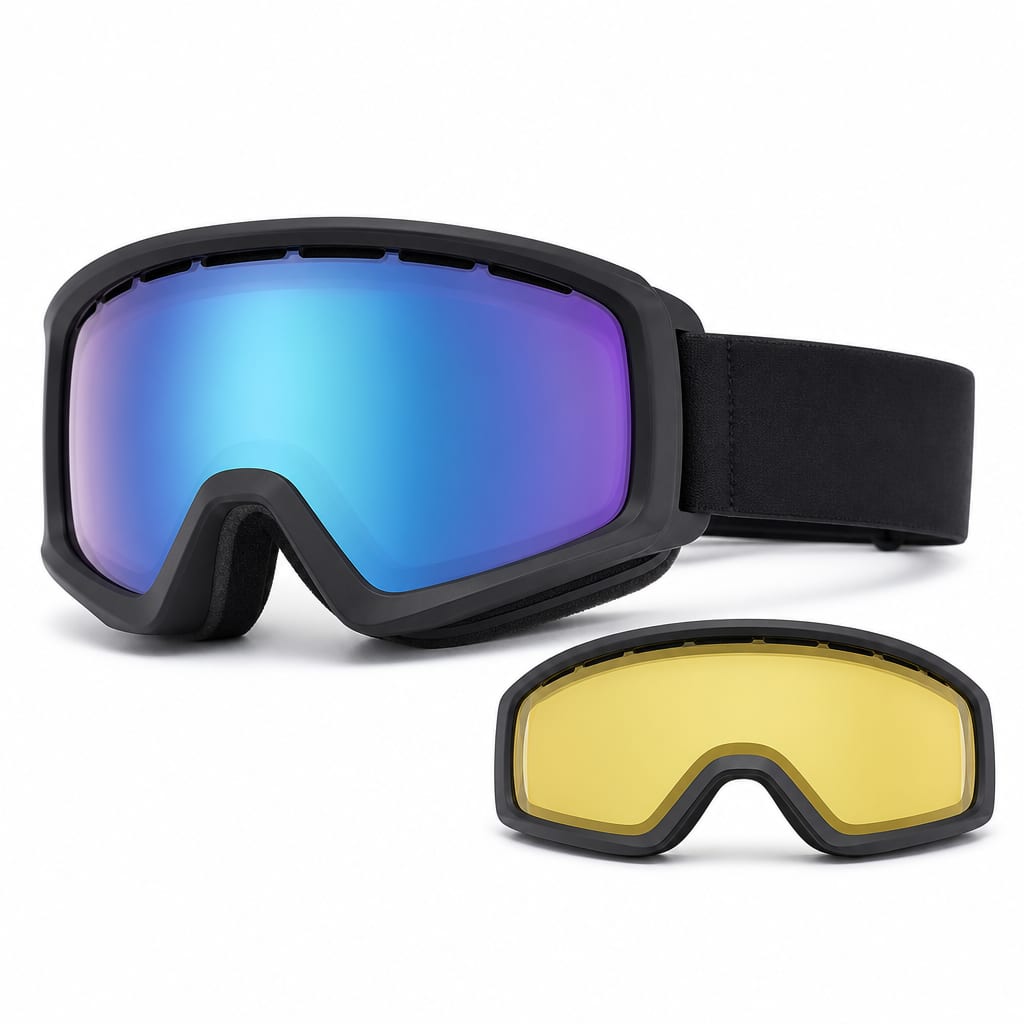
6 topics
Pick a question
Every answer links to the full subcategory guide and related gear types when it helps you decide.
What VLT percentage should I look for in an all-mountain goggle?
For your primary all-mountain lens, target 20-35% VLT with a rose, copper, or amber tint. This range handles partly cloudy to sunny conditions—the most common mountain weather. If you frequently ski storms or overcast days, add a spare lens with 60-80% VLT. If you ski mostly bright sunny days at high altitude, consider a darker 10-18% VLT lens. The key insight: no single VLT covers all conditions, so plan for at least two lenses if you ski more than 10 days per season.
Read answer →02Are magnetic quick-swap lenses worth the extra cost?
Yes, if you ski more than 15 days per year in variable conditions. Magnetic systems let you swap lenses in 10-15 seconds with gloves on, which means you'll actually do it when conditions change. Without quick-swap, most riders never change lenses because traditional frame swaps are difficult with cold hands and risk lens damage. If you ski fewer days or in consistent weather, a quality fixed-lens goggle with the right tint is more cost-effective.
Read answer →03Should I get polarized lenses for all-mountain skiing?
Most skiers should avoid polarization for all-mountain use. While polarization reduces snow glare effectively, it also makes ice patches harder to see because it filters the reflected light that makes ice visually distinct. Since all-mountain riders encounter mixed snow conditions including ice, this safety trade-off usually isn't worth it. If glare causes you significant eye strain and you rarely encounter ice, polarization may be acceptable—but contrast-enhancing non-polarized tints are generally more versatile.
Read answer →04How do I know if I need an Asian/Low Bridge fit?
If you've ever experienced a gap between your goggle and the bridge of your nose, or if your goggles tend to slide down your face, you likely benefit from an Asian/Low Bridge fit. These models feature a modified nose bridge with less curvature and adjusted foam placement to create a proper seal on lower nose bridges and higher cheekbones. This isn't limited to any ethnicity—many riders of various backgrounds have face shapes that benefit from this design. The telltale sign is fogging that seems to come from the nose area.
Read answer →05Can I use my all-mountain goggles for night skiing?
Only if you have a high-VLT lens (70-90%) or clear lens. Your standard all-mountain lens with 20-35% VLT will be dangerously dark for night skiing under limited lighting. If you night ski regularly, invest in a dedicated clear or yellow/gold high-VLT lens—many quick-swap goggle systems offer these as accessories. If you night ski only occasionally, consider an affordable second goggle with a clear lens rather than investing in a premium spare lens you rarely use.
Read answer →06How long do all-mountain goggles typically last?
With proper care, quality all-mountain goggles last 3-5 seasons of regular use (20+ days per year). The limiting factor is usually face foam degradation—it compresses and loses its seal, causing fogging and discomfort. Anti-fog coatings also degrade over time, especially if the inner lens has been touched or wiped. Mirror coatings can scratch from improper cleaning. Store goggles properly (air-dried, in their bag, away from heat), never touch the inner lens, and replace when foam no longer seals or fogging becomes chronic.
Read answer →