
Ski Goggles · FAQ
Questions about Smart / Electronic Ski Goggles
Straight answers on fit, specs, and when this type makes sense — each topic has its own page with links back to the buying guide.
Open Smart / Electronic Ski Goggles guide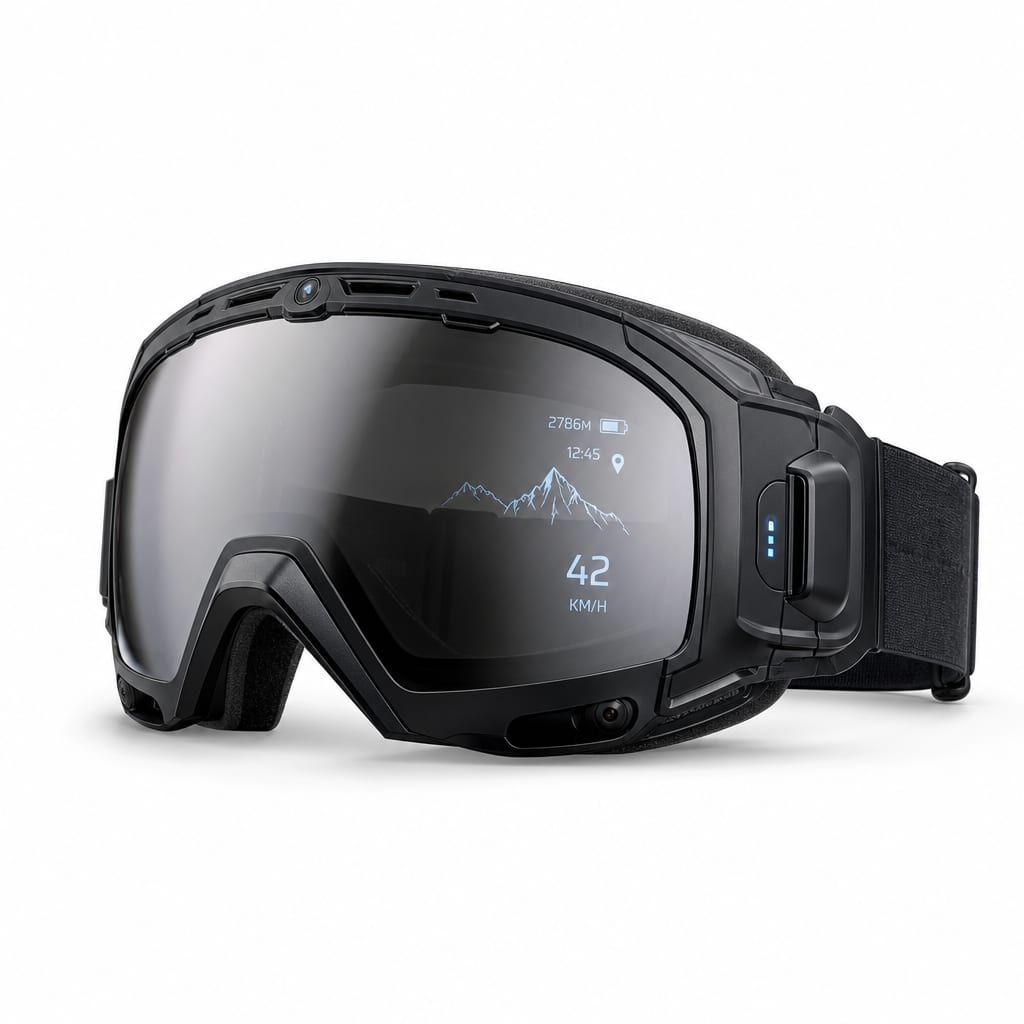
6 topics
Pick a question
Every answer links to the full subcategory guide and related gear types when it helps you decide.
How long does the battery last on smart ski goggles?
Battery life varies significantly by model and feature usage. HUD-only mode typically runs 8-12 hours. Continuous camera recording may drain the battery in 3-5 hours. Active ventilation fans alone can run 10-15 hours on a full charge. Most riders can get a full ski day by managing features—using the camera for short clips rather than continuous recording, and toggling the HUD off when not needed. Always charge fully before each ski day.
Read answer →02Can I still use smart goggles if the battery dies?
Yes, all smart goggles function as regular goggles when the battery is depleted. You'll lose the electronic features—HUD display, camera, active ventilation, GPS—but the core optical performance, UV protection, and passive anti-fog systems continue working. The goggle becomes slightly heavier than a traditional model due to the inactive electronics, but it remains fully functional as eye protection.
Read answer →03Is the HUD display distracting while skiing?
Well-designed HUD systems place data in the peripheral vision and use semi-transparent displays that don't obstruct your primary view. Most riders adapt quickly and find the data unobtrusive—similar to a car's speedometer in your peripheral vision. However, it can be distracting for less experienced riders who need full focus on terrain. Nearly all models allow you to toggle the HUD off entirely or switch between minimal and detailed data views.
Read answer →04Are smart goggles worth the extra cost compared to premium traditional goggles?
It depends on how much you'll use the electronic features. Active ventilation alone can justify the premium if you're a chronic fog sufferer. GPS tracking and run logging add genuine value if you're data-driven and enjoy performance metrics. The integrated camera is worthwhile if you regularly record footage. However, if you're drawn to the novelty but unlikely to use features consistently, a premium traditional goggle at half the price offers better value. Be honest about your usage patterns before investing.
Read answer →05How do electrochromic lenses compare to photochromic lenses for skiing?
Electrochromic lenses adjust tint electronically at the push of a button, typically shifting VLT from ~10% to ~70% in seconds. Photochromic lenses adapt automatically based on UV exposure but can take 30-90 seconds to transition and may not darken fully in very cold temperatures. Electrochromic gives you manual control and faster response, but requires battery power. Photochromic is automatic and battery-free but slower and temperature-dependent. Both eliminate the need to swap lenses, but electrochromic offers more precise control.
Read answer →06What happens if the companion app stops being supported?
This is a legitimate concern with any smart goggle purchase. If the companion app is abandoned, you may lose features like route planning, detailed run statistics, social features, and firmware updates. Core features that operate independently—HUD display, camera recording, active ventilation—typically continue working without the app. Before purchasing, research the brand's track record on software support and community engagement. Established outdoor brands with tech partnerships tend to offer better long-term support than pure tech startups.
Read answer →