Kitvore.com

Kitvore.com

Specs that matter. Gear that fits.

Ski Goggles · Subcategory

Smart / Electronic Ski Goggles

Tech-infused ski goggles with integrated HUD displays, GPS, cameras, or active ventilation for connected mountain experiences.

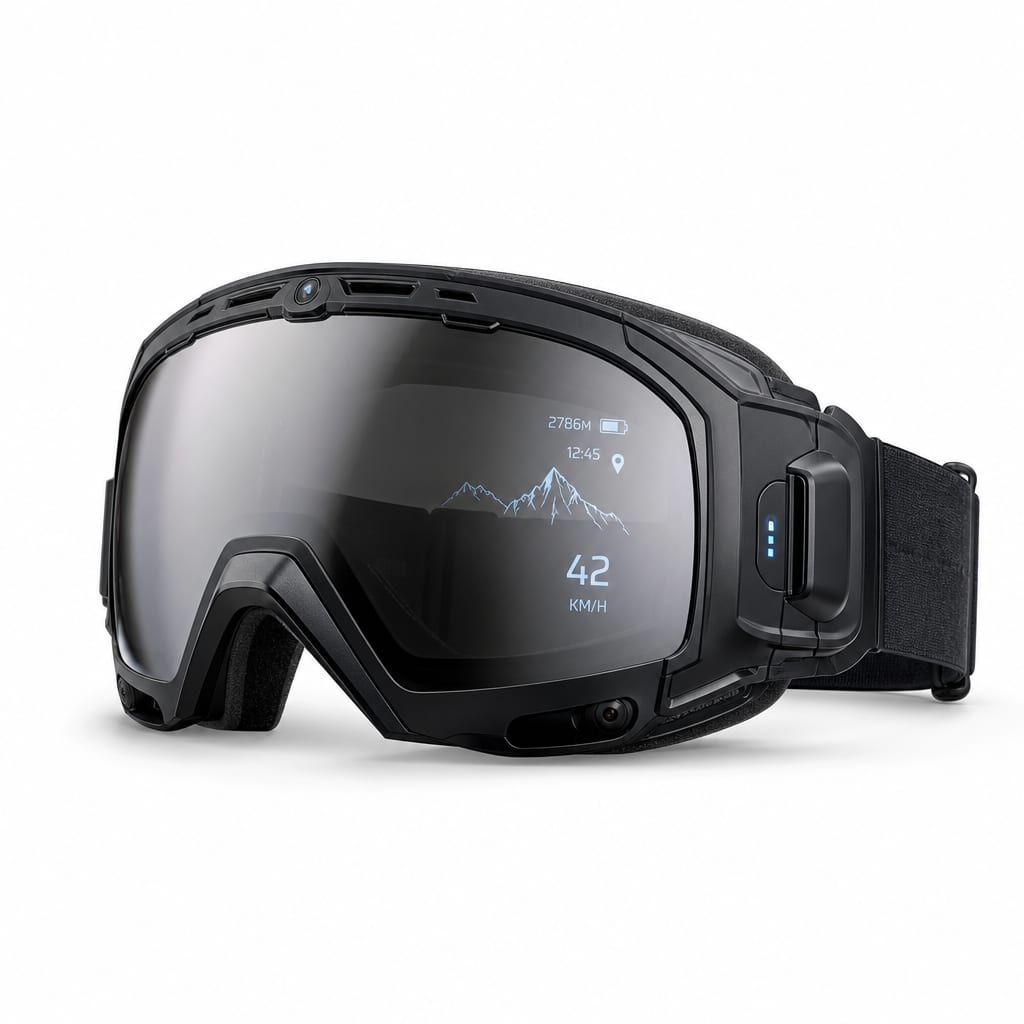
Smart and electronic ski goggles merge premium optical performance with wearable technology, offering features like heads-up displays showing speed and navigation, built-in action cameras, GPS tracking, Bluetooth connectivity, and battery-powered anti-fog systems. Designed for tech-forward riders who want real-time data and enhanced functionality without pulling out a phone, these goggles represent the cutting edge of on-mountain gear—though they come with premium pricing, added weight, and battery management requirements.

$250 – $600pro tierintermediateadvancedexpert

Best known for

Heads-up display (HUD) with speed, altitude, and navigation dataBuilt-in action cameras for POV recordingActive battery-powered ventilation systemsBluetooth smartphone connectivity and companion appsElectrochromic or electronic lens tint adjustmentGPS tracking and run logging
Smart / Electronic Ski Goggles

Guide

Detailed overview

Smart and electronic ski goggles represent the convergence of premium snow sports eyewear and wearable technology. Unlike traditional goggles that rely solely on passive optical features, these goggles incorporate electronic components—ranging from simple battery-powered anti-fog fans to full heads-up displays with GPS, smartphone integration, and built-in cameras. The category has evolved significantly since early attempts like the Oakley Airwave, with current offerings from brands like REKKIE, Zeal Optics, and others delivering more refined, lighter, and more reliable tech integration. The core value proposition is situational awareness: seeing your speed, navigating terrain, recording footage, or maintaining fog-free vision without interrupting your flow on the mountain. Most smart goggles start with a premium goggle foundation—spherical lenses, quality anti-fog systems, comfortable foam—and layer technology on top. This means you're not sacrificing basic goggle performance for features, though added weight and bulk are real trade-offs. Battery life ranges from 4-12 hours depending on features used, requiring charging between ski days. Prices typically start around $250 for active-ventilation models and can exceed $600 for full HUD-equipped goggles with cameras and GPS.

Smart ski goggles occupy an emerging space between traditional eyewear and wearable tech, offering features that were science fiction just a decade ago. The most compelling feature for many riders is the heads-up display, which projects data like speed, vertical feet, temperature, and navigation prompts directly into your peripheral vision. This information appears as a semi-transparent overlay that doesn't obstruct your primary view, similar to automotive HUD systems. Riders can toggle between data screens or dismiss the HUD entirely when they want an uninterrupted mountain experience. The technology typically uses a small display module embedded in the frame that reflects off a specialized lens coating.

Beyond HUD displays, built-in action cameras have become a sought-after feature in smart goggles. Unlike helmet-mounted cameras, integrated goggle cameras capture true POV footage aligned with your natural line of sight. The camera activation is typically controlled via glove-friendly buttons on the goggle frame or through voice commands via Bluetooth-connected smartphones. Video quality has improved to 4K in some models, though battery life takes a significant hit when recording continuously. Most riders use short clip modes—recording 15-30 second highlights triggered on demand—rather than full-run recording.

Active ventilation systems represent the most practical and widely-adopted electronic feature in ski goggles. Small battery-powered fans circulate air through the goggle chamber, providing fog prevention that passive systems simply cannot match. This is particularly valuable for glasses wearers, high-exertion backcountry tourers, and riders in humid coastal mountain environments. The fans are nearly silent and run for 8-12 hours on a single charge. Some models pair the fan with humidity sensors that automatically adjust fan speed based on internal moisture levels. For chronic fog sufferers, this single feature can justify the premium price and added complexity of electronic goggles.

The connectivity ecosystem around smart goggles has matured considerably. Companion smartphone apps provide pre-trip route planning, real-time weather overlays, run tracking with maps, and social features for sharing stats with friends. Bluetooth connectivity enables music control, call notifications, and voice assistant access through integrated speakers or connected headphones. However, the reliance on smartphone apps means software updates, compatibility issues, and potential obsolescence are real concerns. A goggle's electronic features are only as good as the software supporting them, and brands have varying track records on long-term app support.

The biggest considerations for potential buyers are weight, price, and reliability. Smart goggles typically weigh 20-40% more than comparable non-electronic models, which some riders notice during long days. Prices are 2-3x higher than equivalent-quality traditional goggles. And while the core goggle functions are generally reliable, electronic components introduce potential failure points—displays can glitch, batteries degrade, and software can crash. Riders who depend on their goggles for safety in challenging conditions should consider whether electronic features enhance or complicate their mountain experience. For tech enthusiasts and early adopters, smart goggles offer an exciting glimpse at the future of snow sports. For purists seeking simplicity and reliability, premium traditional goggles remain the smarter choice.

Quick facts

Primary purpose
Integrate digital information display or electronic lens control into ski eyewear
Popular brands
OakleyZealSmithReconAbom
Typical terrain
all terrainbackcountryresort

What makes it different

Active electronic components distinguish from passive optical goggles; HUD or electronic tint control is the defining technology

Recommended ranges

How this type usually specs out

Each spec is explained in plain language, then we show what buyers usually look for on this type.

Lens Shape

Lens Shape

What it means

The curvature profile of the goggle lens, affecting optical clarity, distortion, and field of view.

Typical for this type

Spherical Or Toric

In practice

Smart goggles almost exclusively use spherical lenses because the curvature accommodates HUD projection optics and provides the distortion-free viewing essential for overlaid data displays. Toric lenses appear in some models seeking a wider horizontal field for HUD elements.

Compared to other types

While standard premium goggles may use cylindrical lenses for cost savings, smart goggles require spherical optics as a functional necessity for HUD integration, making spherical the near-universal standard in this subcategory.

Why it matters: Spherical lenses minimize distortion at the periphery where HUD data is typically projected, ensuring readability and reducing eye strain when switching between the mountain view and displayed information.

VLT (%)

Visible Light Transmission

What it means

The percentage of visible light that passes through the lens, determining brightness and suitability for different weather conditions.

Typical for this type

15-70% (electrochromic models: 10-70%)

Most common pick: 18-60%

In practice

Smart goggles often feature electrochromic lenses that electronically adjust VLT, or they ship with versatile mid-range VLT lenses since riders investing in tech want adaptability. Electrochromic models can shift from ~10% in bright sun to ~70% in overcast conditions at the push of a button.

Compared to other types

Unlike traditional goggles where you choose a fixed VLT or swap lenses, smart goggles with electrochromic technology offer the widest effective VLT range in a single lens, a unique advantage that justifies part of the price premium.

Why it matters: Electronic VLT adjustment eliminates the need to carry and swap spare lenses, which is particularly valuable since smart goggle lenses are more expensive and complex to replace than standard lenses.

Lens Tint/Color

Lens Tint

What it means

The color tint of the lens, which filters light differently to enhance contrast and definition in specific conditions.

Typical for this type

Photochromic Or Electrochromic Preferred; Rose Copper As Fixed Tint Backup

In practice

Photochromic and electrochromic tints dominate the smart goggle category because adaptive tint aligns with the tech-forward value proposition. Riders buying smart goggles expect their equipment to adapt automatically rather than requiring manual lens swaps.

Compared to other types

Standard goggles typically use fixed tints requiring multiple lenses; smart goggles with electronic or photochromic adaptation offer superior convenience, though the base tint quality may not match the best fixed-tint lenses in extreme conditions.

Why it matters: Adaptive tint technology ensures optimal contrast and visibility as conditions change throughout the day, which is especially important when you're focused on HUD data and don't want to stop and swap lenses.

Frame Size

Frame Size

What it means

The overall size of the goggle frame and lens, determining field of view and face fit compatibility.

Typical for this type

Medium Or Large; Avoid Small Frames Due to Electronics Housing

Most common pick: Medium to Large

In practice

Smart goggles require additional frame volume to house batteries, display modules, cameras, and circuitry. Medium and large frames accommodate these components while maintaining a comfortable fit. Small frames rarely have sufficient real estate for electronics integration.

Compared to other types

Smart goggles run slightly larger and heavier than equivalent non-electronic models due to component housing. Riders with smaller faces may find fewer options, as the electronics demand minimum frame dimensions.

Why it matters: The frame must house electronic components without creating uncomfortable pressure points or excessive bulk. Proper sizing ensures both the goggle seal and the electronic functionality work correctly.

Anti-Fog System

Anti-Fog System

What it means

The technology and design features preventing lens fogging, including dual-layer construction, coatings, and ventilation.

Typical for this type

Dual Lens Premium Coating With Active Vent Preferred

In practice

All quality smart goggles feature dual-lens construction with premium anti-fog coatings as a baseline. Many also include active battery-powered ventilation fans, which represent the most effective fog prevention available and leverage the goggle's existing power infrastructure.

Compared to other types

Smart goggles uniquely combine premium passive anti-fog with the option for active powered ventilation, offering the best fog resistance of any goggle subcategory. This is a genuine functional advantage beyond the tech features.

Why it matters: Electronic components generate slight heat that can influence internal goggle conditions. Premium anti-fog systems counteract this, and active ventilation provides fog-free performance that passive systems cannot match—critical when you're relying on HUD visibility.

Lens Interchangeability

Lens Interchangeability

What it means

The system and ease with which lenses can be swapped to adapt to changing light conditions.

Typical for this type

Magnetic Quick Swap Preferred; Electrochromic Models May Use Fixed Lenses

In practice

Smart goggles with fixed VLT lenses typically use magnetic quick-swap systems for condition adaptation. However, models with electrochromic lenses may use fixed lenses since electronic tint adjustment replaces the need for physical swaps.

Compared to other types

Electrochromic smart goggles effectively eliminate the need for lens swapping entirely—a unique advantage. For models requiring swaps, magnetic systems are standard, as traditional frame swaps are impractical with the additional electronic connections some lenses require.

Why it matters: Lens interchangeability affects both adaptability and cost. Smart goggle replacement lenses are significantly more expensive than standard lenses due to integrated display coatings and sensor windows, so a system that minimizes swap frequency has real value.

UV Protection

UV Protection

What it means

The level of ultraviolet radiation blocking provided by the lens, critical for eye health at altitude.

Typical for this type

Uv400 (Non-Negotiable)

In practice

All reputable smart goggles provide UV400 protection as standard. The premium price point and quality lens materials used ensure complete UV blocking. This is not an area where corners are cut in this subcategory.

Compared to other types

No difference from premium traditional goggles—UV400 is standard across both categories. The electronic features do not compromise UV protection.

Why it matters: UV protection is essential at altitude regardless of goggle type. Smart goggles with electrochromic or photochromic lenses maintain full UV400 protection across all tint states.

Over-the-Glasses (OTG) Compatible

OTG Compatible

What it means

Whether the goggle is designed to accommodate prescription eyeglasses underneath without discomfort or fogging.

Typical for this type

Most Smart Goggles Are NOT OTG Compatible

Most common pick: False

In practice

The internal volume of smart goggles is partially consumed by electronic components, display modules, and wiring channels. This reduces the space available for prescription glasses underneath the goggle. Most smart goggles are not designed for OTG use.

Compared to other types

Smart goggles are less likely to be OTG compatible than traditional goggles due to internal component space requirements. This is a meaningful limitation for the significant portion of riders who wear prescription glasses.

Why it matters: Glasses wearers should verify OTG compatibility specifically, as the default assumption for smart goggles should be non-compatible. Prescription inserts or contact lenses are the recommended alternatives.

Field of View

Field of View

What it means

The peripheral vision range provided by the goggle, measured in degrees of horizontal and vertical visibility.

Typical for this type

170-200 degrees horizontal

Most common pick: 175-195 degrees horizontal

In practice

Smart goggles typically offer wide fields of view in the premium range (170-200 degrees). The spherical lenses and larger frames common in this subcategory support expansive peripheral vision. HUD data is positioned to avoid obstructing the primary field of view.

Compared to other types

Comparable to premium spherical goggle field of view. The HUD overlay technically reduces unobstructed view area slightly, but well-designed systems place data in the far periphery where it doesn't interfere with terrain assessment.

Why it matters: A wide field of view is essential for situational awareness, and HUD elements must be positioned within the peripheral zone without blocking critical terrain visibility. The best smart goggles integrate data displays that feel like natural extensions of your vision rather than obstructions.

Polarized

Polarized Lens

What it means

Whether the lens includes polarization to reduce glare from reflective snow surfaces.

Typical for this type

Non-Polarized Preferred For HUD Visibility

Most common pick: False

In practice

Most smart goggles use non-polarized lenses because polarization can interfere with HUD display visibility and create distracting visual artifacts with the display projection system. The anti-glare benefits of polarization are achieved through mirror coatings and electronic tint adjustment instead.

Compared to other types

Unlike traditional goggles where polarization is a matter of personal preference, smart goggles generally avoid it for functional reasons related to display compatibility. This is a technical constraint, not a cost-saving measure.

Why it matters: Polarization can reduce the contrast and readability of HUD projections, defeating the purpose of the display technology. Non-polarized lenses ensure consistent HUD performance across all lighting conditions.

Mirror Coating

Mirror Coating

What it means

Reflective coating on the outer lens surface that bounces additional light away, reducing glare and VLT.

Typical for this type

Partial Mirror Or Full Mirror Depending On Typical Conditions

In practice

Smart goggles commonly feature partial or flash mirror coatings that provide moderate glare reduction without significantly impacting the internal display projection system. Full mirror coatings are available but may slightly affect HUD clarity in some designs.

Compared to other types

Similar mirror coating options to premium traditional goggles, but with the additional consideration of HUD compatibility. Riders should verify that mirror coatings don't interfere with display readability on specific models.

Why it matters: Mirror coatings must be compatible with the HUD projection system. Some display technologies project onto the inner lens surface, and heavy mirror coatings can affect projection clarity. Partial mirrors offer the best balance of glare reduction and display performance.

Ventilation Design

Ventilation Design

What it means

The airflow system built into the goggle frame to manage moisture and prevent fogging during activity.

Typical for this type

Active Vent Preferred; Enhanced Passive Minimum

In practice

Active battery-powered ventilation is a hallmark feature of many smart goggles, leveraging the existing power source to drive small fans that circulate air through the goggle chamber. This provides the most effective fog prevention available and is a key selling point for the subcategory.

Compared to other types

Smart goggles are the only subcategory that commonly offers active ventilation, giving them a genuine performance advantage in fog prevention. This feature alone justifies consideration for chronic fog sufferers, regardless of interest in HUD or camera features.

Why it matters: Active ventilation is arguably the most practical electronic feature in smart goggles, solving a universal problem that affects all riders. The fan systems are quiet, effective, and can run for a full ski day on a fraction of the battery capacity, making them reliable even when other features drain the battery.

Face Foam

Face Foam

What it means

The multi-layer foam padding that creates a seal against the face, affecting comfort, fit, and moisture management.

Typical for this type

Triple Layer Moisture Wicking (Standard At This Price Point)

In practice

Given the premium price point, smart goggles universally feature triple-layer foam with moisture-wicking top layers. The foam must also accommodate the slightly different pressure distribution caused by the heavier frame and electronic components.

Compared to other types

Equivalent to premium traditional goggles. The foam quality must be excellent to justify the price point and compensate for the additional weight of electronic components.

Why it matters: The additional weight of electronic components makes quality foam even more important for comfort during long days. Moisture-wicking properties help manage the slightly warmer internal environment that electronic components can create.

Helmet Compatibility

Helmet Compatibility

What it means

How well the goggle integrates with ski helmets in terms of fit, strap grip, and gap-free interface.

Typical for this type

Universal Compatible; Verify Specific Helmet Pairings Due to Frame Bulk

In practice

Smart goggles are designed for universal helmet compatibility with adjustable silicone-backed straps. However, the additional frame bulk from electronics housing may create fit issues with some helmet-goggle combinations that work fine with standard goggles.

Compared to other types

Smart goggles may have slightly more fit issues than traditional goggles due to their bulkier frames, despite being designed for universal compatibility. Always test with your specific helmet.

Why it matters: The slightly larger frame profile of smart goggles can create gaper gap or pressure points with certain helmets that fit standard goggles well. Testing compatibility before purchase is more important with smart goggles than with traditional models.

Frame Material

Frame Material

What it means

The primary material used in the goggle frame, affecting flexibility, cold-weather performance, and durability.

Typical for this type

Tpu Flexible (Standard And Necessary)

In practice

TPU frames are universal in smart goggles. The flexibility is essential for accommodating electronic components, cable routing, and maintaining a proper face seal despite the rigid internal modules. TPU also provides impact protection for sensitive electronics.

Compared to other types

Identical to premium traditional goggles. TPU is the standard and no smart goggles use inferior frame materials, as the electronic components demand quality housing.

Why it matters: Flexible TPU frames protect electronic components from impact damage and allow the goggle to maintain a proper seal despite the internal rigidity of batteries and display modules. The material also dampens vibrations that could affect camera or display performance.

Prescription Lens Compatible

Prescription Ready

What it means

Whether the goggle supports prescription vision correction through inserts or Rx-able lens options.

Typical for this type

Rx Insert Compatible Preferred; Verify Availability For Specific Models

In practice

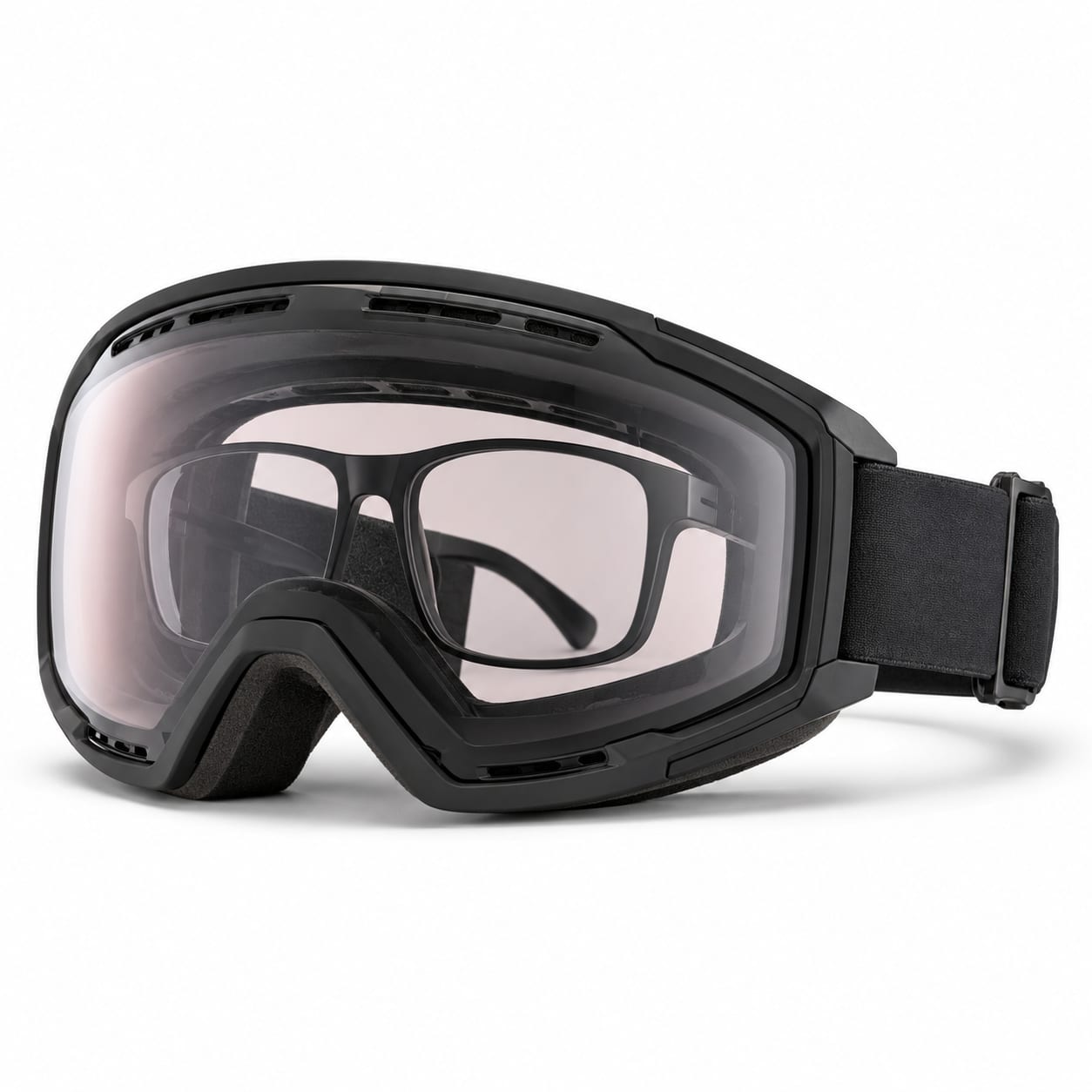
Many smart goggles offer Rx insert compatibility as an accessory, since OTG use is typically not feasible. The inserts sit behind the goggle lens and in front of the electronic components, providing vision correction without interfering with HUD displays or camera function.

Compared to other types

Smart goggles are less likely to support OTG use than traditional goggles, making Rx inserts more important. The availability of inserts varies by brand, so glasses wearers should confirm compatibility before purchasing.

Why it matters: Glasses wearers need a vision correction solution that works with the goggle's electronic features. Rx inserts are the most practical option since they don't interfere with HUD projection or camera alignment, and they eliminate the double-fog problem of wearing glasses under goggles.

Evaluation

Strengths and trade-offs

Pros

What this type does best

Real-time performance data via HUD

Critical

Heads-up displays show speed, vertical feet, altitude, temperature, and navigation without looking away from the terrain. This enhances situational awareness and adds a gamification element that many riders find motivating and fun.

Active fog prevention

Critical

Battery-powered ventilation fans provide fog prevention that passive systems cannot match, especially during high-exertion activities like backcountry touring or in humid storm conditions. This is the most universally valuable electronic feature.

Integrated POV camera

High

Built-in cameras aligned with your natural line of sight capture authentic POV footage without the bulk, vibration, and alignment issues of helmet-mounted cameras. Glove-friendly controls make recording effortless.

Electrochromic lens adaptation

High

Electronic tint adjustment eliminates the need to carry and swap spare lenses, adapting VLT instantly to changing conditions. Push a button to darken for sunny exposures or lighten when clouds roll in.

GPS tracking and run logging

Medium

Built-in GPS automatically tracks your runs, records vertical feet, maps your routes, and provides post-day statistics through companion apps. This data is valuable for tracking progression and sharing with friends.

Smartphone connectivity

Medium

Bluetooth integration enables music control, call notifications, weather updates, and friend tracking without removing gloves or pulling out your phone. Companion apps extend functionality with route planning and social features.

Premium goggle foundation

Medium

Smart goggles start with high-quality goggle construction—spherical lenses, premium anti-fog, quality foam—so you're not sacrificing basic optical performance for technology. The core goggle functionality is typically excellent.

Cons

Trade-offs to be aware of

Significant price premium

Significant

Smart goggles cost 2-3x more than equivalent-quality traditional goggles. Prices typically range from $250-$650+, and replacement lenses with display coatings are significantly more expensive than standard lenses.

Added weight and bulk

Moderate

Electronic components add 20-40% more weight compared to similar non-electronic goggles. Some riders notice the additional weight during long days, and the bulkier frame may not fit as seamlessly with all helmets.

Battery management required

Moderate

All electronic features depend on battery life, which ranges from 4-12 hours depending on usage. Forgetting to charge means losing HUD, camera, and possibly active ventilation. Batter degrade over time and eventually need replacement.

Software dependency and obsolescence risk

Moderate

Smart features rely on companion apps and firmware that may stop receiving updates, potentially rendering features unusable over time. The tech industry's track record on long-term support for niche products is concerning.

Potential display distractions

Minor

HUD data in your peripheral vision can be distracting, especially for less experienced riders who need to focus entirely on terrain. While toggling HUD off is usually an option, the temptation to check stats can reduce focus on the mountain.

Limited small-face and OTG options

Minor

The electronics housing requires minimum frame dimensions, limiting options for riders with smaller faces. OTG compatibility is rare due to internal component space, making these goggles less accessible for glasses wearers who prefer not to use inserts or contacts.

Best for

Terrain

All-mountainFreerideBackcountryLarge resorts with varied aspects

Snow conditions

Variable conditions (electrochromic advantage)Humid and fog-prone environments (active vent advantage)Full-day sessions with changing lightStorm days with active ventilation

Skill level

IntermediateAdvancedExpert

Riding style

Tech-oriented all-mountainData-driven performance skiingBackcountry touringSocial/group riding with tracking

Rider profile

Tech enthusiasts and early adoptersData-driven athletes tracking performance metricsChronic fog sufferers seeking active ventilationContent creators wanting integrated POV camerasRiders who ski multiple days per week and want connected featuresBackcountry tourers managing exertion and ventilation

Not ideal for

Reasons

High cost is hard to justify for occasional useAdded weight is noticeable during aggressive freestyle ridingBeginners benefit more from focusing on fundamentals than monitoring dataElectronic components add failure points that matter in remote backcountry settingsHUD can be distracting when full attention on terrain is critical

Terrain

Tight gladed runs where HUD is distractingTerrain parks where minimal weight matters

Skill level

Beginners who should focus entirely on terrainBudget-conscious occasional skiers

Riding style

Minimalist purists who prefer simplicityRacing where every gram counts and rules may restrict electronicsPark riders who prioritize low weight and low profile

Compare

How it stacks up

This page

Smart / Electronic Ski Goggles

HUD data, active ventilation, integrated camera, GPS tracking, and electrochromic lens adaptation provide functional capabilities that no traditional goggle can match. The connected experience adds genuine value for data-oriented riders.

Alternative

Premium All-Mountain Goggles

Lower price, lighter weight, no battery management, proven reliability, wider selection of frame sizes and OTG options, and no risk of software obsolescence. Premium traditional goggles offer equal or better pure optical performance.

Bottom line

Choose smart goggles if you'll actively use the tech features—especially active ventilation or GPS tracking. Choose premium traditional goggles if you prioritize simplicity, reliability, and value, or if you're unsure whether you'll actually use the smart features regularly.

This page

Smart / Electronic Ski Goggles

Electrochromic tint adjustment in smart goggles is faster and more controllable than photochromic reaction, which depends on UV exposure and temperature. Smart goggles also offer active ventilation, HUD, and camera features that photochromic goggles lack.

Alternative

Photochromic Goggles

Photochromic goggles cost significantly less, require no battery power for tint adaptation, and have no electronic components to fail. The automatic adaptation is seamless without button presses. Photochromic technology is also more proven and reliable than electrochromic.

Bottom line

If your primary need is adaptive lens tint, photochromic goggles offer better value and reliability. Choose smart goggles with electrochromic lenses only if you also want the other electronic features like HUD and active ventilation.

This page

Smart / Electronic Ski Goggles

Electrochromic smart goggles eliminate the need to carry spare lenses and swap them on the mountain—a significant convenience advantage in cold, windy conditions. Active ventilation and HUD features add further value beyond what interchangeable lens systems provide.

Alternative

Interchangeable Lens Goggles (Magnetic)

Magnetic interchangeable lens systems are proven, reliable, and give you exact VLT and tint choices for each condition. Replacement lenses are less expensive, and there's no battery dependency. You can optimize your lens for each condition rather than compromising with adaptive range.

Bottom line

Choose smart goggles with electrochromic lenses if you hate stopping to swap lenses and want the convenience of push-button adaptation. Choose magnetic interchangeable goggles if you prefer having precisely optimized lenses for specific conditions and don't mind carrying spares.

This page

Smart / Electronic Ski Goggles

Every aspect of optical performance, comfort, and fog resistance is superior. Smart features like active ventilation alone solve problems that budget goggles cannot address. The overall experience is dramatically better in every measurable way.

Alternative

Budget/Entry-Level Goggles

Budget goggles cost 5-10x less and provide adequate protection and visibility for casual use. There's no battery to charge, no software to update, and minimal financial risk from loss or damage. For occasional skiers, the value proposition is hard to argue against.

Bottom line

Smart goggles are not appropriate for budget-conscious buyers—if cost is a primary concern, you'll get far more value from a mid-range traditional goggle than a smart goggle. Invest in smart goggles only when you've already committed to premium gear and want to add technology.

Shopping

Buying tips

  • 1

    Prioritize the electronic features you'll actually use regularly. Active ventilation has the broadest practical value; HUD displays are exciting but not essential for most riders. Don't pay for features you won't use.

  • 2

    Check battery life specifications for your most-used features. HUD-only mode often lasts 8-12 hours, but continuous camera recording may drain the battery in 3-4 hours. Plan your charging strategy accordingly.

  • 3

    Verify that the companion app is actively maintained and well-reviewed before purchasing. Check app store ratings and recent update history—an abandoned app means abandoned features.

  • 4

    Test helmet compatibility with the specific smart goggle model you're considering. The additional frame bulk can create fit issues that don't occur with standard goggles, even from the same brand.

  • 5

    Consider the total cost of ownership including replacement lenses, which are significantly more expensive than standard lenses due to display coatings and electronic components. A dropped and scratched lens hurts more financially.

  • 6

    If you wear prescription glasses, confirm Rx insert availability and cost before purchasing. Most smart goggles are not OTG compatible, so you'll need an insert or contact lenses.

  • 7

    Look for models with glove-friendly controls. Touch-sensitive surfaces and small buttons are frustrating with ski gloves. Physical buttons and voice control are more practical on the mountain.

  • 8

    Consider warranty coverage for electronic components separately from the goggle itself. Electronic failures may not be covered under standard goggle warranties, and out-of-warranty repairs can be costly.

Care

Maintenance notes

  • Charge the battery fully before each ski day. Develop a routine of charging immediately after skiing so you're always ready. Most smart goggles use USB-C and charge in 1-2 hours.
  • Never store smart goggles in freezing temperatures, as this degrades battery health over time. Bring them inside overnight rather than leaving them in a car or unheated locker.
  • Keep the charging port cover sealed when not charging to prevent moisture intrusion. Water damage to electronic components is not covered under most warranties.
  • Update firmware when available to maintain feature compatibility and fix bugs. However, read update notes before installing—some updates may change features you rely on.
  • Clean the lens exterior gently with a microfiber cloth and lens cleaner. Never use abrasive materials on mirror coatings. Avoid touching the inner lens surface where HUD projection coatings may be present.
  • If your smart goggles have active ventilation, occasionally clear the fan intake vents of snow and ice buildup during use. Blocked vents reduce effectiveness and can cause the fan to work harder, draining battery faster.
  • Store goggles in a protective hard case when not in use. The electronic components are more vulnerable to impact damage than traditional goggles, and replacement costs are significantly higher.
  • Monitor battery health over time. Most smart goggle batteries maintain good capacity for 2-3 seasons of regular use before noticeable degradation. Contact the manufacturer about battery replacement options before capacity becomes problematic.

Progression

Skill development path

Smart goggles are best suited for intermediate-to-expert riders who have developed sufficient terrain awareness to benefit from—rather than be distracted by—HUD data. Beginners should focus entirely on developing fundamental skills and mountain awareness before adding data overlays to their visual field. As riders progress, the performance metrics (speed, vertical, run tracking) become more meaningful and motivating. Advanced riders and backcountry enthusiasts benefit most from navigation features, active ventilation during high-exertion climbs, and the ability to monitor conditions data without stopping. The technology enhances the experience most when the rider's foundational skills are solid enough that checking HUD data is a supplement, not a crutch.

FAQ

Common questions

Each question has a dedicated page with a full answer and links to the buying guide.

How long does the battery last on smart ski goggles?

Battery life varies significantly by model and feature usage. HUD-only mode typically runs 8-12 hours. Continuous camera recording may drain the battery in 3-5 hours. Active ventilation fans alone can run 10-15 hours on a full charge. Most riders can get a full ski day by managing features—using the camera for short clips rather than continuous recording, and toggling the HUD off when not needed. Always charge fully before each ski day.

Can I still use smart goggles if the battery dies?

Yes, all smart goggles function as regular goggles when the battery is depleted. You'll lose the electronic features—HUD display, camera, active ventilation, GPS—but the core optical performance, UV protection, and passive anti-fog systems continue working. The goggle becomes slightly heavier than a traditional model due to the inactive electronics, but it remains fully functional as eye protection.

Is the HUD display distracting while skiing?

Well-designed HUD systems place data in the peripheral vision and use semi-transparent displays that don't obstruct your primary view. Most riders adapt quickly and find the data unobtrusive—similar to a car's speedometer in your peripheral vision. However, it can be distracting for less experienced riders who need full focus on terrain. Nearly all models allow you to toggle the HUD off entirely or switch between minimal and detailed data views.

Are smart goggles worth the extra cost compared to premium traditional goggles?

It depends on how much you'll use the electronic features. Active ventilation alone can justify the premium if you're a chronic fog sufferer. GPS tracking and run logging add genuine value if you're data-driven and enjoy performance metrics. The integrated camera is worthwhile if you regularly record footage. However, if you're drawn to the novelty but unlikely to use features consistently, a premium traditional goggle at half the price offers better value. Be honest about your usage patterns before investing.