
Ski Knee Pads · FAQ
Questions about Hinged Knee Braces
Straight answers on fit, specs, and when this type makes sense — each topic has its own page with links back to the buying guide.
Open Hinged Knee Braces guide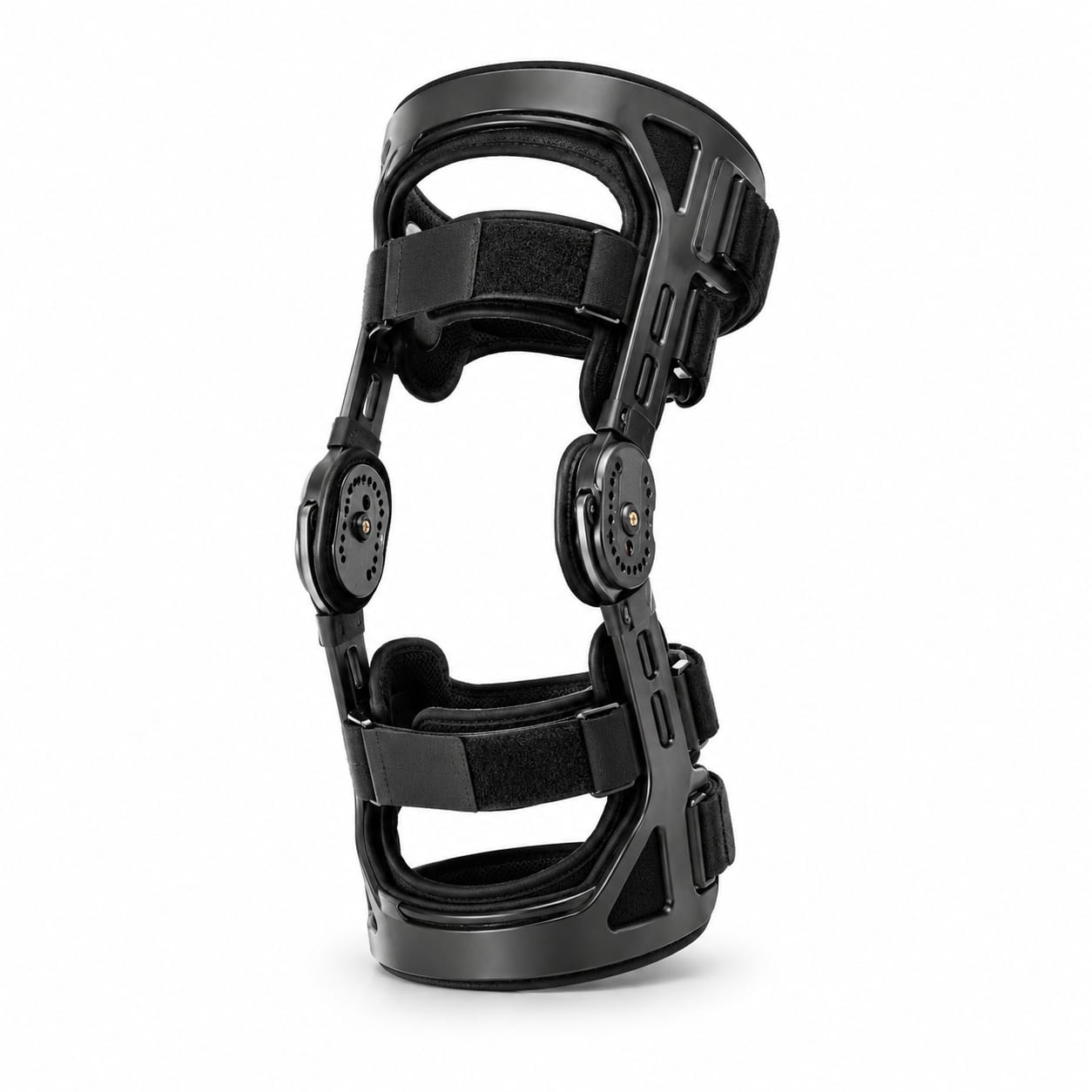
6 topics
Pick a question
Every answer links to the full subcategory guide and related gear types when it helps you decide.
Do I need a hinged knee brace if I've never had a knee injury?
Generally no. If you have healthy, stable knees and are skiing recreationally or even aggressively, a quality soft or hybrid knee pad provides sufficient impact protection without the cost, weight, and restriction of a hinged brace. Hinged braces are designed for joint stabilization, which uninjured knees don't need. The exception is competitive racing at high speeds where the forces involved exceed what healthy ligaments can withstand in worst-case scenarios.
Read answer →02Can I wear a hinged knee brace under my ski pants?
Most hinged braces are too bulky to fit comfortably under standard ski pants and are designed to be worn over clothing. Some lower-profile models with shorter frame arms may fit under very loose or stretchy ski pants, but you'll likely experience bunching, restricted movement, and difficulty adjusting straps. If wearing under clothing is important to you, look specifically for low-profile hinged models and test the fit with your actual ski pants before purchasing.
Read answer →03How do I know if my hinged brace fits correctly?
A properly fitted hinged brace should have its hinge axis aligned directly with your knee joint axis—you can verify this by bending your knee and confirming the hinge pivot point stays centered on the side of your knee. The frame arms should contact your thigh and calf evenly without gaps, and all straps should close securely without maxing out their adjustment range. You should be able to flex your knee to the brace's allowed range without pain, pinching, or the frame digging into your leg. If you feel pressure points after 15 minutes of wearing the brace while moving, the fit is likely wrong.
Read answer →04Will insurance cover my hinged knee brace?
Many insurance plans cover hinged knee braces when prescribed by a physician for a documented knee injury or post-surgical recovery. Coverage varies widely—some plans cover the full cost, others require copays, and some exclude braces classified as sports equipment rather than medical devices. Obtain a prescription from your orthopedic surgeon and have the brace supplier verify coverage with your insurance company before purchasing. Custom-molded braces are more likely to be covered than off-the-shelf models.
Read answer →05How long do hinged knee braces last?
Quality hinged braces typically last 3-5 seasons of regular skiing with proper maintenance. The hinge mechanisms are usually the first components to show wear, developing play or looseness after extensive use. Interior padding compresses and loses its cushioning over 1-2 seasons of heavy use but can often be replaced. Frame integrity is generally excellent in carbon fiber models but aluminum frames can develop fatigue cracks after several seasons. Inspect the brace thoroughly before each season and replace any component showing significant wear.
Read answer →06Can I use the same hinged brace for skiing and other sports?
It depends on the brace design and the sport. Many hinged braces are sport-specific in their construction—ski braces are designed for the flexion range and impact types common in skiing, while braces for motocross, mountain biking, or contact sports may have different hinge ranges, coverage areas, and impact certifications. A ski-specific hinged brace can often work for snowboarding, but may not provide appropriate support for sports with different movement patterns. Consult the manufacturer's guidance and your physician before using a ski brace for other activities.
Read answer →