
Ski Socks · FAQ
Questions about Compression Ski Socks
Straight answers on fit, specs, and when this type makes sense — each topic has its own page with links back to the buying guide.
Open Compression Ski Socks guide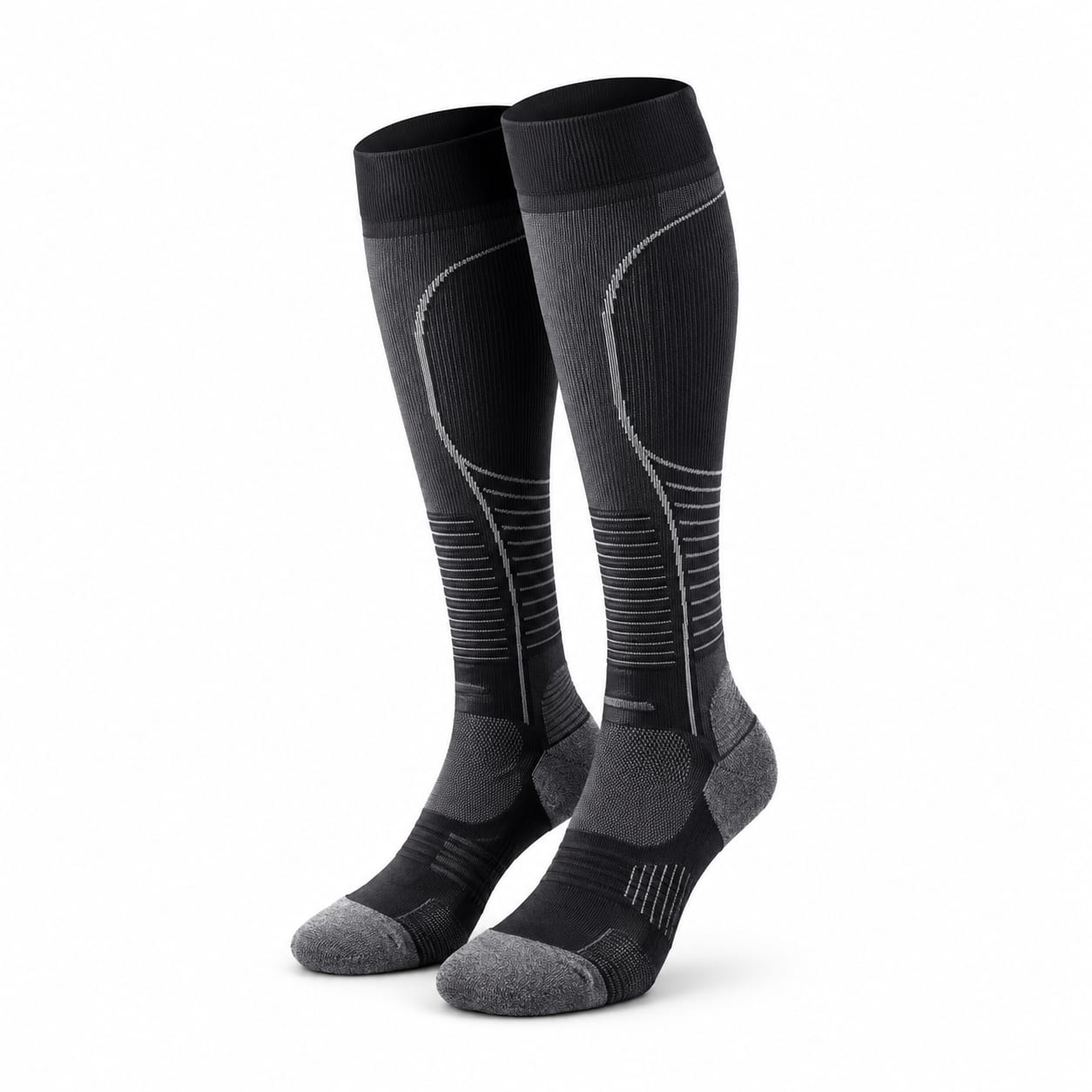
6 topics
Pick a question
Every answer links to the full subcategory guide and related gear types when it helps you decide.
Do compression ski socks really work, or is it just marketing?
Graduated compression is one of the most researched technologies in sports medicine. Studies consistently show that 15-20 mmHg compression improves venous return, reduces muscle oscillation, and decreases perceived fatigue. The key is proper fit and adequate compression level — a loosely fitting 'compression' sock provides no benefit. Look for socks with stated mmHg ratings from reputable brands, as these have verified compression profiles.
Read answer →02Will compression ski socks make my feet colder because they're thinner?
Most skiers find the opposite — compression socks keep feet warmer. Cold feet in skiing are usually a circulation problem, not an insulation problem. Compression improves blood flow to the feet, delivering more warm blood to the extremities. Many skiers who have tried thick socks for years without solving cold feet find that compression socks resolve the issue by addressing the root cause.
Read answer →03How tight should compression ski socks feel?
Compression socks should feel noticeably snug but not painful. You should feel firm, even pressure that is tightest at the ankle and gradually decreases up the calf. If you feel numbness, tingling, or pain, the sock is too small. If you cannot feel any difference from a regular sock, it is too large or the compression level is too low. The sensation takes 3-5 wears to get used to — it should never be painful.
Read answer →04Can I wear compression ski socks for recovery after skiing?
Yes, and many skiers do exactly that. Keeping compression socks on for 1-2 hours after skiing helps clear lactic acid and reduces swelling and soreness. Some skiers even sleep in them during multi-day trips. However, if you find them uncomfortable for extended wear, even wearing them during apres-ski provides recovery benefits. For dedicated recovery, some skiers prefer a separate pair with firm compression (20-30 mmHg).
Read answer →05Why are compression ski socks so hard to put on?
The same tight construction that provides compression benefits makes the socks resist stretching. The trick is to gather the sock down to the toe, slide your foot in, then gradually work the sock up your leg in small increments rather than trying to pull it on like a regular sock. Some people find it easier to put them on first thing in the morning before their legs swell. Compression donning gloves can also help. The difficulty decreases with practice.
Read answer →06Are compression ski socks safe for people with diabetes or circulation issues?
This requires a conversation with your doctor. Compression socks can be beneficial for some people with diabetes or circulation conditions, but they can be harmful for others — particularly those with peripheral arterial disease, where compression could further restrict already compromised arterial flow. Never use compression socks for medical conditions without medical guidance. If approved, your doctor can recommend the appropriate compression level.
Read answer →