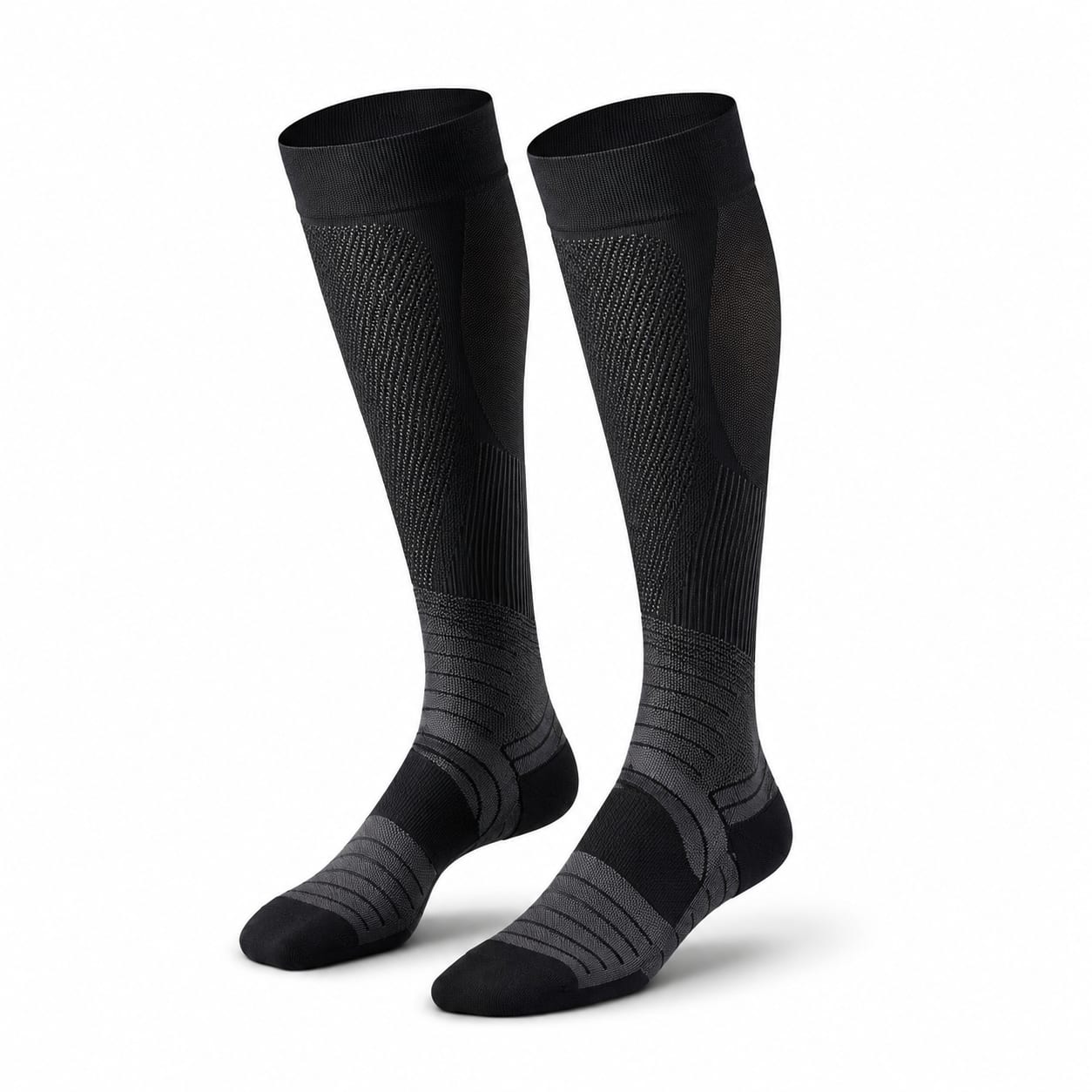
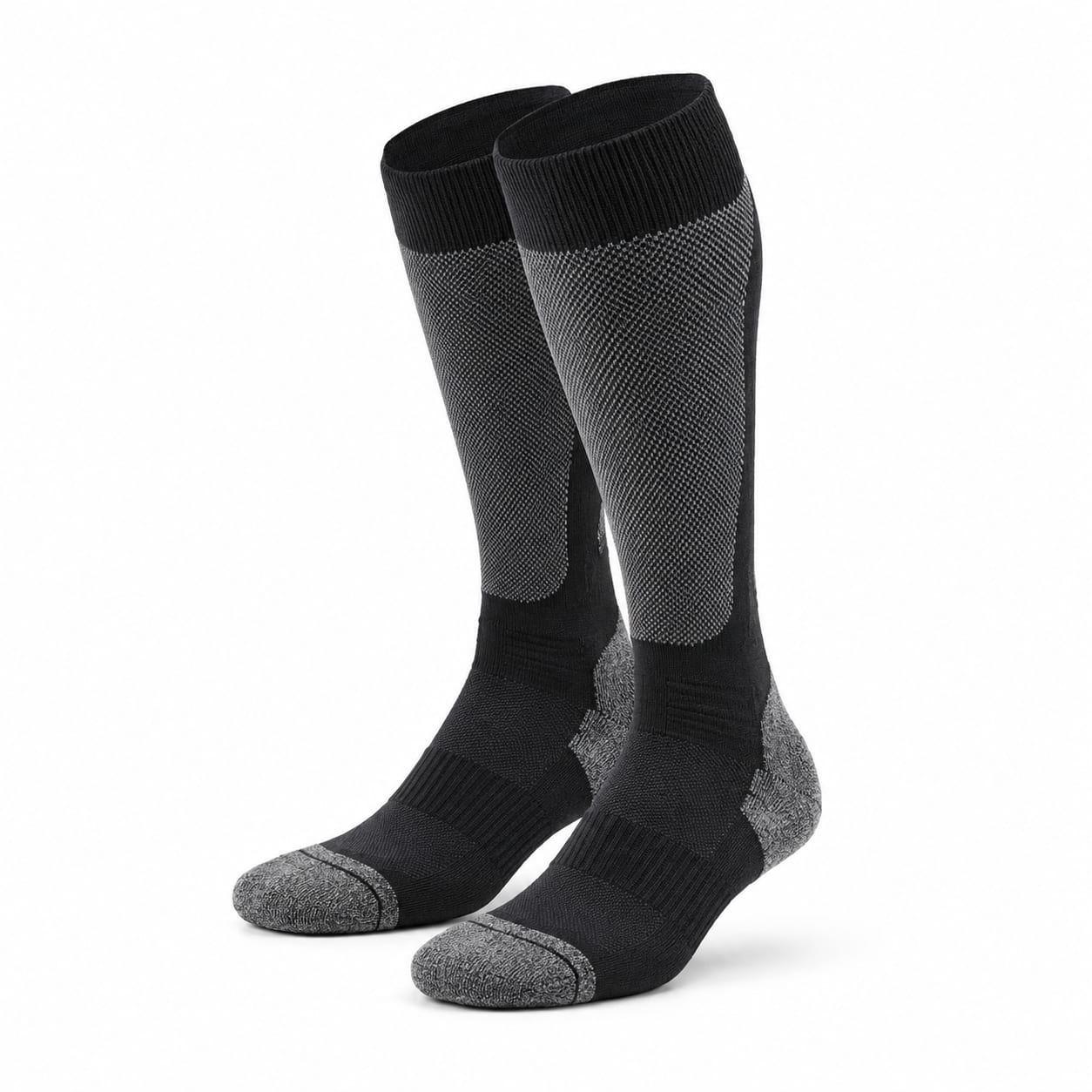
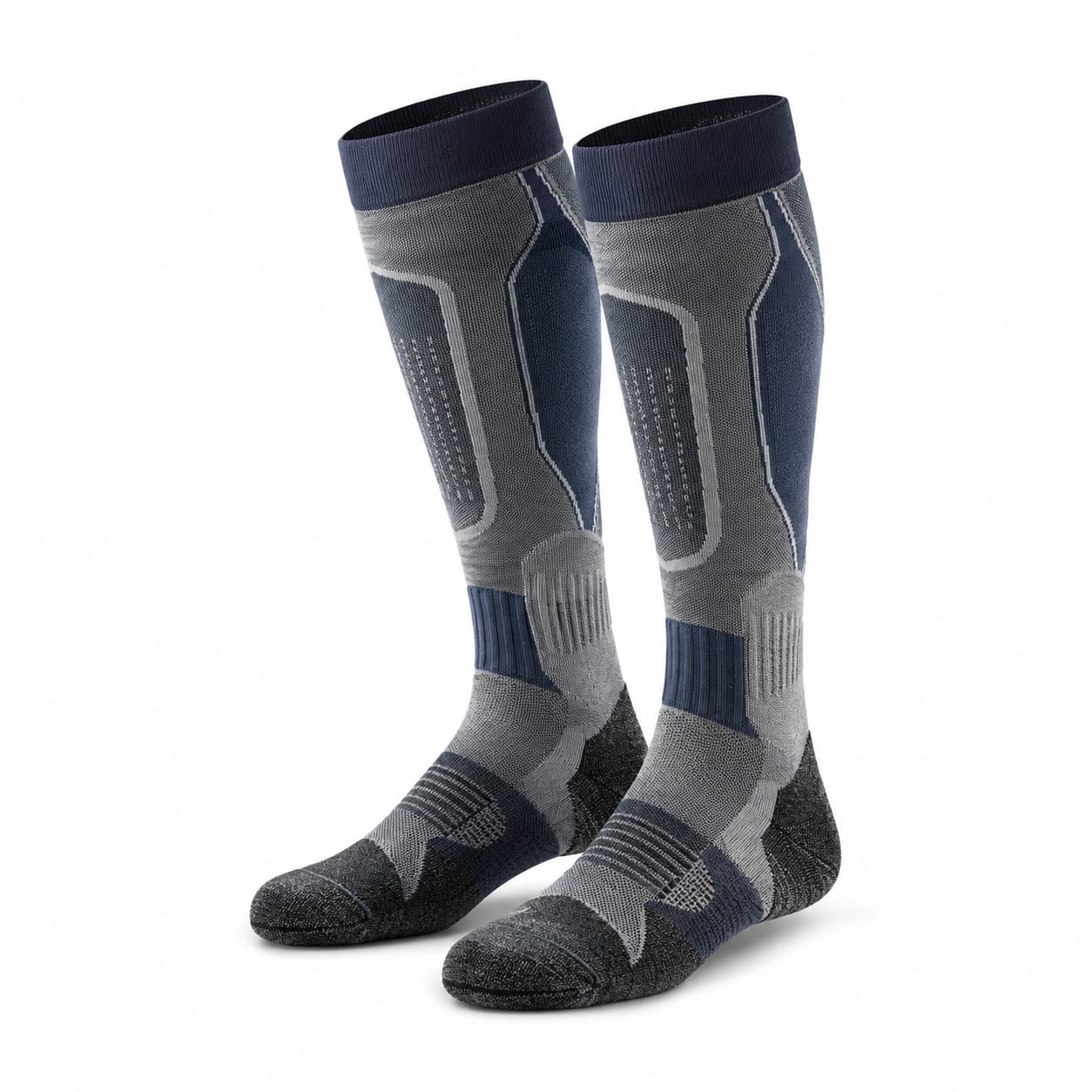
What it means
The height of the sock measured from the heel to the top of the cuff. Critical for preventing skin contact with the top of the ski boot shell.
Typical for this type
Over The Calf Or Knee High
In practice
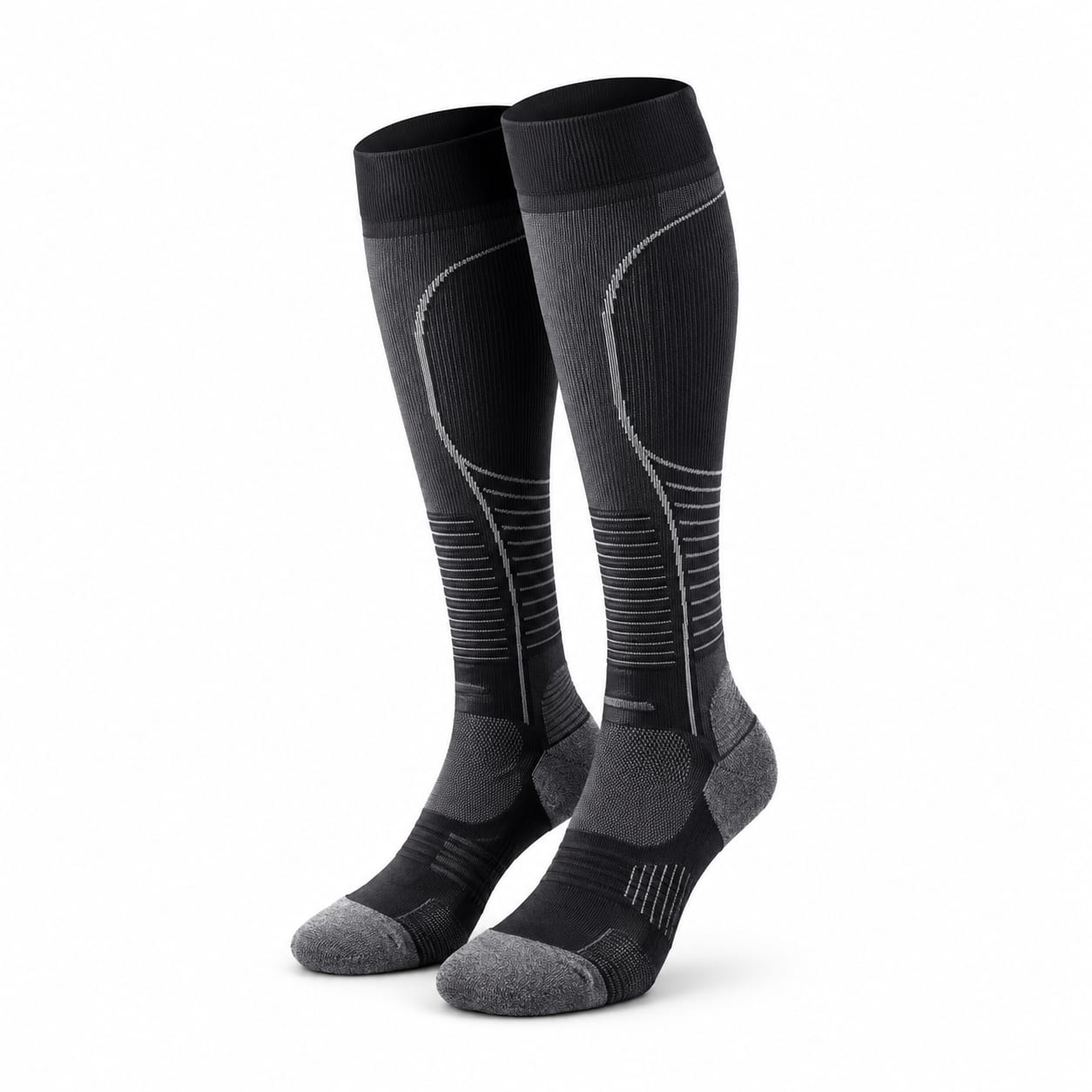
Compression ski socks are overwhelmingly over-the-calf height because the graduated compression profile requires sufficient length to create the pressure gradient from ankle to calf. Knee-high options are also common, especially in racing, to provide full compression coverage through the entire calf muscle.
Compared to other types
While most ski socks are over-the-calf, compression ski socks almost universally require this height or taller. Knee-high is more common in compression ski socks than in other subcategories because racers and performance skiers want full calf compression coverage.
Why it matters: The compression gradient cannot function properly without adequate sock height. A mid-calf or crew compression sock would end before completing the graduated pressure profile, significantly reducing effectiveness. The sock must extend above the largest circumference of the calf muscle.
Cushioning
Cushioning Level
What it means
The overall amount and density of padding built into the sock, affecting warmth, comfort, and boot fit. More cushioning means more warmth but less room in the boot.
Typical for this type
Ultralight to Medium
In practice
Compression ski socks tend toward light cushioning because the compression fit itself provides a snug, supportive feel that reduces the need for additional padding. Light cushioning allows the compression gradient to work effectively without excessive bulk that could alter the pressure profile.
Compared to other types
Compression ski socks typically have less cushioning than standard all-mountain or comfort-oriented ski socks. While a standard midweight ski sock might use medium cushioning, the compression equivalent usually opts for light cushioning to maintain the integrity of the compression profile.
Why it matters: Heavy cushioning can interfere with the graduated compression profile by adding variable thickness that disrupts the pressure gradient. The compression itself provides some cushioning effect through tissue stabilization. Lighter cushioning also ensures the sock fits properly in performance-oriented boots.
Material
Primary Fiber Material
What it means
The dominant fiber type used in the sock construction, which determines moisture management, warmth, odor resistance, and durability.
Typical for this type
Merino Synthetic Blend Or Merino Wool
In practice
Merino-synthetic blends dominate compression ski socks because the synthetic component (typically nylon and elastane) provides the structural integrity needed to maintain compression over time. Pure merino lacks the recovery properties needed for sustained compression, while pure synthetics lack the moisture management and odor resistance skiers need.
Compared to other types
Compression ski socks rely more heavily on synthetic content than non-compression ski socks. While a standard merino ski sock might be 70% merino, compression versions typically range from 40-60% merino, with the remaining content being nylon for durability and elastane for compression recovery.
Why it matters: Compression socks must maintain their pressure profile through repeated wear and washing. The synthetic fibers (especially elastane/spandex) provide the elasticity and recovery that makes graduated compression possible. Merino wool contributes moisture management, temperature regulation, and odor resistance. The blend is essential for this subcategory.
Merino %
Merino Wool Content
What it means
The percentage of merino wool in the sock's fiber composition. Higher percentages provide more natural performance benefits but may reduce durability.
Typical for this type
35% to 60%
Most common pick: 45%
In practice
Compression ski socks typically contain less merino than non-compression premium socks because more synthetic fiber is needed to achieve and maintain the compression profile. The 35-60% range provides enough merino for moisture management and odor resistance while leaving sufficient synthetic content for compression performance.
Compared to other types
Standard premium ski socks often contain 55-75% merino. Compression ski socks typically contain 35-60% merino, with the lower percentage offset by higher elastane and nylon content needed for compression construction.
Why it matters: Too little merino and the sock loses the natural moisture management and temperature regulation that keeps feet comfortable in ski boots. Too much merino and the sock may not maintain its compression profile over time, as wool lacks the elastic recovery of synthetic fibers. The blend ratio is a critical engineering decision.
Compression
Compression Level
What it means
The degree of graduated compression built into the sock, measured in mmHg. Compression improves blood flow, reduces fatigue, and enhances proprioception.
Typical for this type
Moderate (15-20 MmHg) For Most Skiers; Light (8-15 MmHg) For Beginners to Compression; Firm (20-30 MmHg) For Racing Or Medical Needs
In practice
Moderate compression (15-20 mmHg) is the most common and versatile level for compression ski socks, providing meaningful circulatory benefits without excessive tightness. This level is sufficient to improve venous return, reduce muscle vibration, and delay fatigue for most skiers.
Compared to other types
This dimension uniquely defines compression ski socks versus all other ski sock subcategories. Standard ski socks have no intentional compression (0 mmHg). The moderate 15-20 mmHg level common in compression ski socks provides approximately 40-50% improvement in venous return compared to non-compression socks, according to sports compression research.
Why it matters: This is the defining dimension of this subcategory. The compression level determines the primary benefit of the sock. Too little compression provides negligible benefit; too much can be uncomfortable and difficult to don. Moderate compression hits the sweet spot for the majority of skiers, offering proven benefits validated by sports science research.
Thickness
Thickness Category
What it means
The overall thickness of the sock construction, which directly affects boot fit, warmth, and feel. Related to but distinct from cushioning level.
Typical for this type
Ultralight to Midweight
Most common pick: Lightweight
In practice
Compression ski socks are most commonly lightweight because the compression construction itself adds a snug, substantial feel without requiring thick material. The graduated knit creates varying densities that provide cushioning-like effects through compression rather than bulk.
Compared to other types
Compression ski socks tend to be one thickness category thinner than their non-compression equivalents. A skier who wears midweight standard socks would typically prefer lightweight compression socks, as the compression itself provides much of the supportive feel that cushioning would otherwise offer.
Why it matters: Thinner construction allows the compression profile to work more effectively and ensures compatibility with performance ski boots. The compression fit provides a secure, wrapped feeling that many skiers find eliminates the need for thicker construction. Lightweight compression socks also manage moisture more effectively with less material to become saturated.
Left/Right Specific
Anatomical Fit Construction
What it means
Whether the sock is constructed with specific left and right foot shaping for improved fit and reduced bunching inside the boot.
Typical for this type
Anatomical Lr Preferred; Universal Acceptable
In practice
Compression ski socks frequently feature anatomical left/right construction because the compression profile must follow the leg's anatomy precisely. Left/right specific shaping ensures the graduated pressure gradient follows the natural contours of each leg for consistent compression delivery.
Compared to other types
Compression ski socks have a higher rate of anatomical L/R construction than standard ski socks because the compression profile demands precise anatomical alignment. Many premium compression ski socks are exclusively anatomical, while standard ski socks more commonly offer universal fit options.
Why it matters: An anatomical fit ensures the compression zones align correctly with the anatomy of each leg. A universal sock may have compression zones that sit slightly off-center, reducing effectiveness. In the tight environment of a ski boot, any bunching from improper fit is magnified and can create pressure points.
Shin Padding
Shin Cushioning
What it means
Dedicated cushioning zone on the front of the sock that protects the shin from ski boot pressure and impact. One of the most important zone-specific features.
Typical for this type
Light to Medium
In practice
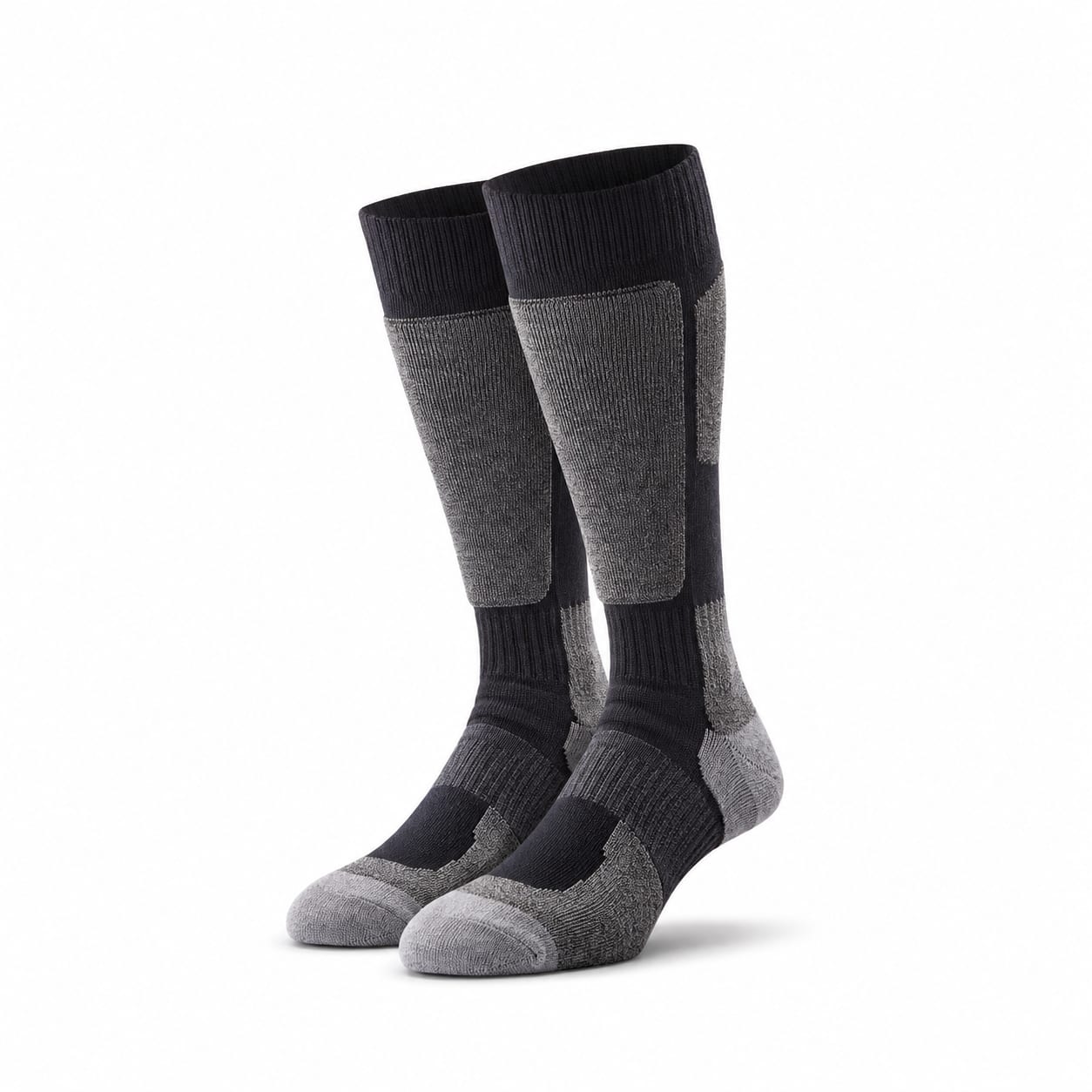
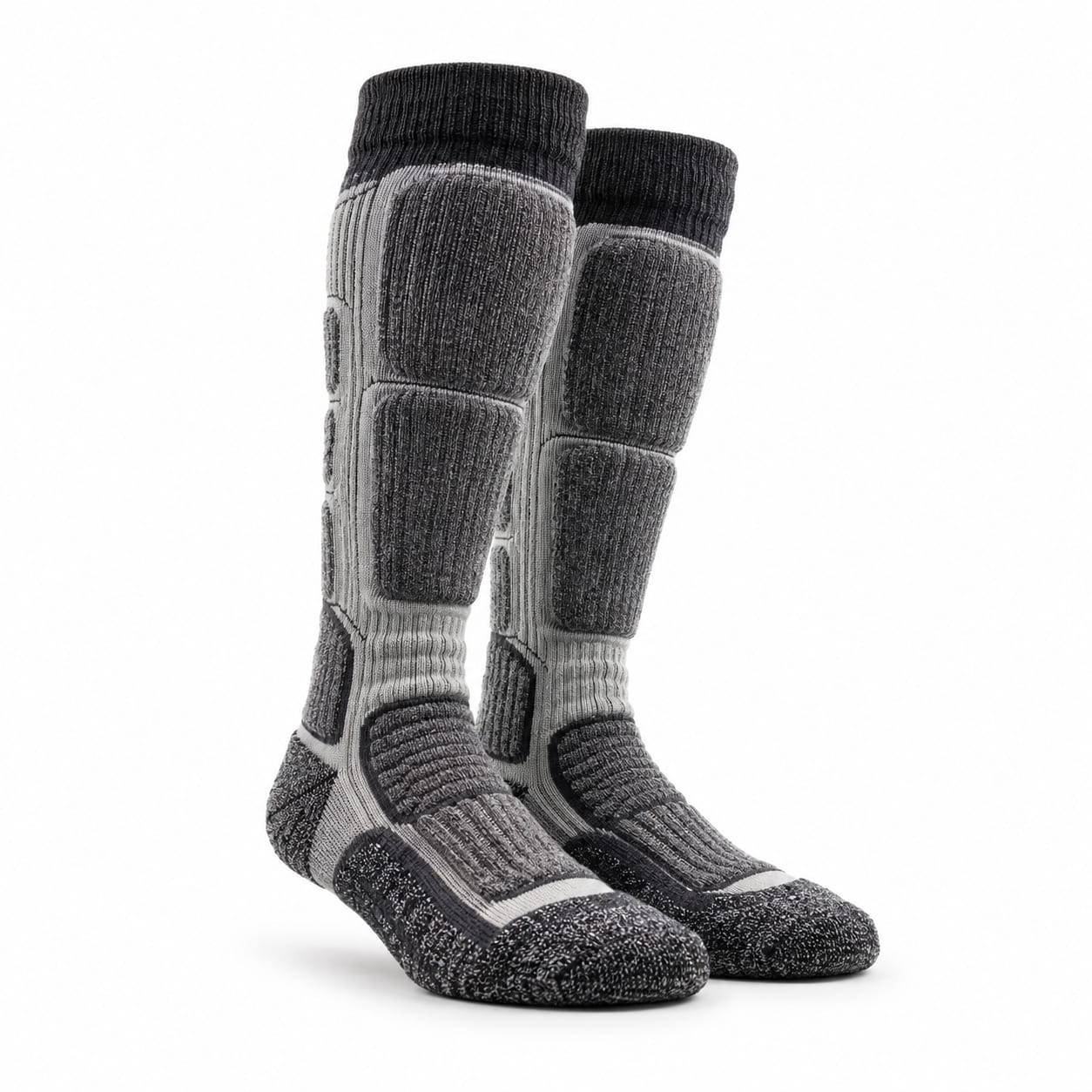
Light shin cushioning is typical in compression ski socks because the compression itself provides some shin support and protection. The graduated pressure over the shin area helps stabilize the tissue against boot tongue pressure, reducing the need for thick cushioning pads.
Compared to other types
Compression ski socks typically have less dedicated shin cushioning than standard ski socks because the compression itself provides shin support. A compression sock with light shin cushioning may feel as protective as a non-compression sock with medium cushioning due to the tissue stabilization effect.
Why it matters: The compression over the shin area provides a different type of protection than cushioning — it stabilizes the muscle and tissue against vibration and impact rather than padding it. Many skiers find that moderate compression over the shin reduces shin bang symptoms as effectively as heavy cushioning, without the bulk.
Toe Seam Type
Toe Construction
What it means
How the toe area of the sock is constructed and seamed. Affects comfort and blister risk in the tight toe box of a ski boot.
Typical for this type
Seamless Or Hand Linked
In practice
Seamless toe construction is common in compression ski socks because the snug fit of compression amplifies any seam irritation. Premium compression ski socks almost universally feature seamless or hand-linked toe closures to eliminate friction points.
Compared to other types
Compression ski socks have a higher standard for toe construction than budget or mid-range standard ski socks. The tight fit makes seam irritation more pronounced, so premium seamless or hand-linked construction is more frequently found and more strongly recommended in this subcategory.
Why it matters: Compression socks fit tightly against the skin, which means any seam is pressed firmly against the toes. In the confined space of a ski boot, a raised toe seam under compression can cause significant discomfort and blistering. Seamless construction is more important in compression ski socks than in looser-fitting alternatives.
What it means
Built-in compression or elastic support in the arch/instep area of the sock. Provides a more secure fit and can reduce foot fatigue.
Typical for this type
Moderate to Firm
In practice
Moderate to firm arch support is typical in compression ski socks because the compression construction naturally lends itself to arch support zones. The same elastic technology that creates graduated compression up the leg is easily adapted to create supportive compression through the arch.
Compared to other types
Compression ski socks typically offer stronger arch support than standard ski socks because the compression construction makes it easy to engineer targeted support zones. The arch is a natural anchor point for compression, and most compression ski socks take advantage of this with moderate to firm arch compression.
Why it matters: Arch support in compression ski socks serves dual purposes: it keeps the sock locked in place on the foot (preventing slippage inside the boot) and it provides mild support to the plantar fascia and arch. The compression through the arch also assists venous return from the foot, which is where circulation issues often originate.
Ventilation
Ventilation Zones
What it means
Mesh or thinner-knit zones designed to increase breathability and moisture escape in high-heat areas like the top of the foot and between toes.
Typical for this type
Targeted
In practice
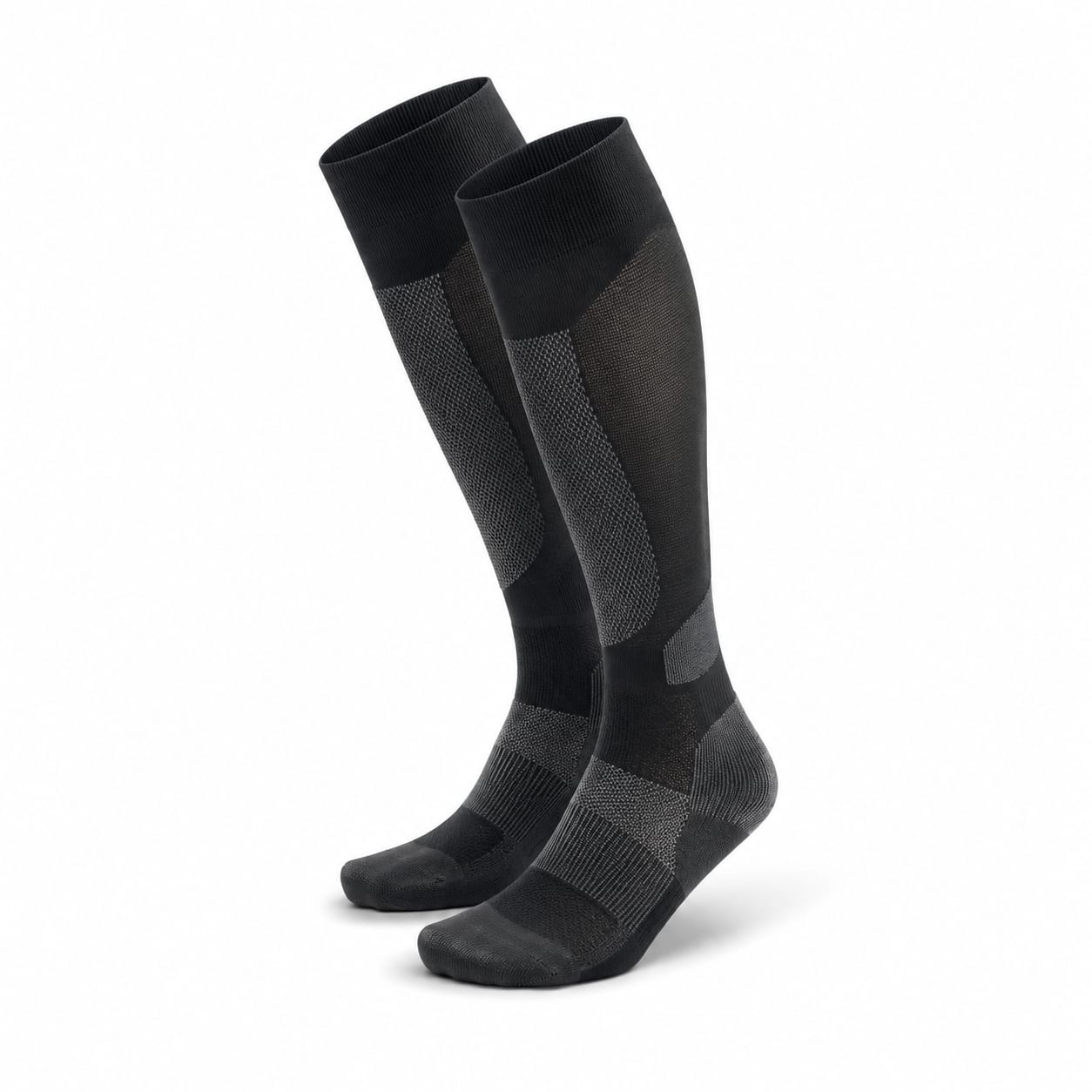
Targeted ventilation zones are standard in compression ski socks, providing breathability over the top of the foot and between toes while maintaining the compression profile. The mesh zones are engineered to not disrupt the graduated compression gradient.
Compared to other types
Ventilation is arguably more important in compression ski socks than in standard socks because the tight fit reduces natural air circulation. However, the ventilation zones must be carefully engineered to not create gaps in the compression profile, making targeted ventilation the optimal approach rather than extensive mesh panels.
Why it matters: Compression socks can feel warmer than non-compression socks because the tight fit reduces air circulation between the sock and skin. Targeted ventilation zones counteract this by allowing moisture to escape from high-heat areas without compromising compression performance. This is especially important because compression improves circulation, which can increase heat output from the feet.
Odor Control
Antimicrobial Treatment
What it means
Whether the sock has an applied antimicrobial treatment (e.g., silver ions, Polygiene) to reduce odor-causing bacteria. Merino wool has natural antimicrobial properties.
Typical for this type
True Preferred But Not Essential
In practice
Many compression ski socks include antimicrobial treatments because they are often worn for long days and sometimes for recovery after skiing. The tight fit and improved circulation can increase perspiration output, making odor control more relevant than in standard socks.
Compared to other types
Antimicrobial treatment is more common in compression ski socks than in standard ski socks, partly because compression socks are more likely to be worn for extended periods (including post-ski recovery) and partly because they tend to be positioned as premium products where additional treatments are expected.
Why it matters: Compression ski socks are frequently worn for extended periods — during a full ski day and sometimes continuing into apres-ski or recovery time. Antimicrobial treatment helps prevent odor buildup during these long wear periods. This is a nice-to-have feature, not essential, as merino content already provides natural odor resistance.
Gender Fit
Gender-Specific Fit
What it means
Whether the sock is designed with gender-specific proportions. Women's-specific socks account for typically narrower heels, higher arches, and different calf proportions.
Typical for this type
Gender-Specific Fit Strongly Recommended
Most common pick: Womens
In practice
Compression ski socks are available in men's and women's-specific fits, and proper gender-specific fit is especially important because compression effectiveness depends on the sock matching the leg anatomy. Women's compression ski socks account for typically smaller calf circumference and different calf shape proportions.
Compared to other types
Gender-specific fit matters more for compression ski socks than for standard ski socks because the compression profile must precisely match the leg's anatomy to function correctly. While a slightly loose standard sock is merely comfortable, a slightly loose compression sock provides no compression benefit at all.
Why it matters: Compression socks that do not match the wearer's leg anatomy will not deliver the correct pressure gradient. A woman wearing a men's compression sock may have a sock that is too loose at the ankle (reducing compression effectiveness) or too loose in the calf (failing to create the graduated profile). Proper gender-specific fit is more critical for compression socks than for any other ski sock subcategory.
Reinforced Areas
Reinforced Zones
What it means
Specific areas of the sock with extra-durable construction to resist wear from ski boot friction and extend sock life.
Typical for this type
Heel And Toe Minimum; Sole Is A Bonus
Most common pick: Heel, Toe
In practice
Heel and toe reinforcement are standard in compression ski socks. The tight fit of compression socks means more friction against the boot liner in these areas, making reinforcement important for durability. Some models add sole reinforcement for high-mileage use.
Compared to other types
Reinforcement needs are similar across ski sock subcategories, but compression ski socks may experience slightly faster wear at friction points due to the tight, non-slipping fit. Quality compression ski socks almost always include heel and toe reinforcement as standard.
Why it matters: The compression fit holds the sock tightly against the foot, which means there is no slippage to reduce friction — the sock and foot move as one unit against the boot liner. This can actually increase wear at high-friction points like the heel and toe, making reinforcement more important than in looser-fitting socks.
Warmth Level
Warmth Rating
What it means
The overall warmth category of the sock, determined by thickness, material, and construction. Indicates the temperature range the sock is designed for.
Typical for this type
All Season Or Lightweight Warmth
In practice
Compression ski socks are typically rated as all-season warmth because the improved circulation from compression provides additional warmth beyond what the sock's insulation alone would offer. Many skiers find that a lightweight compression sock keeps their feet as warm as a midweight non-compression sock.
Compared to other types
Compression ski socks effectively punch above their weight class in warmth. A lightweight warmth compression sock may keep feet as warm as an all-season non-compression sock because the improved circulation adds warmth that pure insulation cannot provide. This makes compression socks especially valuable for cold-foot sufferers.
Why it matters: The warmth benefit of compression is one of its most appreciated but least understood advantages. By improving blood flow to the feet, compression socks deliver more warm blood to the extremities. This circulatory warmth can be more effective than insulation alone, especially for skiers whose cold feet are caused by poor circulation rather than inadequate insulation.
What it means
The sock size, which must correspond to the skier's shoe size for proper fit. Ill-fitting socks cause bunching, wrinkles, and discomfort in ski boots.
Typical for this type
Must Match Shoe Size Precisely; Consult Brand-Specific Size Chart Including Calf Circumference
Most common pick: 4-15 US
In practice
Proper sizing is more critical for compression ski socks than any other subcategory. The sock must match both foot size and calf circumference to deliver the correct pressure gradient. Many brands provide sizing based on both shoe size and calf measurement.
Compared to other types
Sizing precision matters more for compression ski socks than for any other ski sock subcategory. While a slightly wrong size in a standard sock is merely suboptimal, a wrong size in a compression sock can negate the entire purpose of the product or even cause harm. Always consult the manufacturer's specific size chart and measure your calf.
Why it matters: An incorrectly sized compression sock either provides no benefit (too large) or can restrict circulation (too small). Unlike regular socks where sizing is approximate, compression socks must fit precisely to function as designed. This is the one subcategory where measuring your calf circumference before purchasing is strongly recommended.