
Skis · FAQ
Questions about All-Mountain Skis
Straight answers on fit, specs, and when this type makes sense — each topic has its own page with links back to the buying guide.
Open All-Mountain Skis guide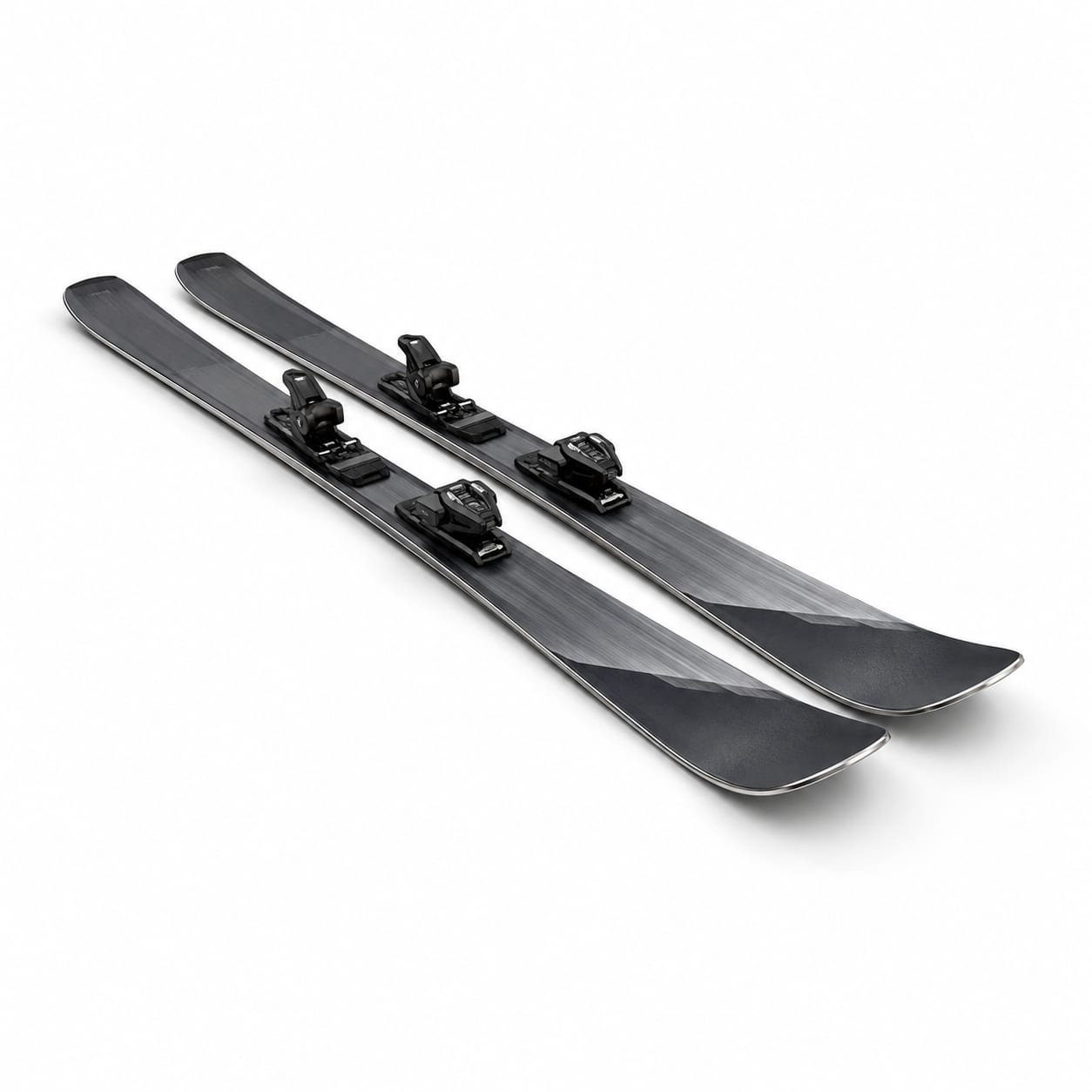
6 topics
Pick a question
Every answer links to the full subcategory guide and related gear types when it helps you decide.
What waist width should I choose for an all-mountain ski?
For most skiers, 88-92mm is the sweet spot for all-mountain skis. If you ski primarily groomed runs with occasional soft snow, go with 85-88mm. If you regularly seek out powder and off-piste, consider 92-95mm. East Coast skiers can lean narrower (85-90mm) while Mountain West skiers should lean wider (90-95mm). Remember: wider skis float better but require more effort to edge on firm snow.
Read answer →02Can I use all-mountain skis in deep powder?
All-mountain skis handle moderate powder (up to about 20-25cm) reasonably well, especially with tip rocker. In deeper powder (30cm+), they will struggle with flotation compared to wider freeride or powder skis. If you regularly ski deep powder, consider all-mountain-wide skis (95-105mm) or a dedicated powder ski. For occasional storm days, all-mountain skis are manageable with proper technique—stay centered, keep speed up, and make rounder turns.
Read answer →03Do I need metal layers in my all-mountain skis?
It depends on your skiing style and ability. If you're an aggressive skier who charges at high speeds and wants maximum edge hold on firm snow, a single metal layer (titanal) provides noticeable benefits in stability, edge grip, and dampening. If you ski at moderate speeds, prefer a lighter, more nimble feel, or are still developing your technique, skis without metal are more forgiving and easier to control. Double metal layers are overkill for most all-mountain skiers.
Read answer →04Should I get all-mountain skis or all-mountain wide skis?
The distinction comes down to typical snow conditions at your home mountain. If you ski in areas with frequent fresh snow (Utah, Colorado, Pacific Northwest, interior British Columbia), all-mountain wide skis (95-105mm) give you better soft-snow performance with acceptable groomed-run capability. If you ski in areas with predominantly firm or mixed conditions (East Coast, Midwest, Europe), standard all-mountain skis (85-95mm) provide better hardpack performance with adequate soft-snow capability. When in doubt, standard all-mountain is the safer choice.
Read answer →05How do I know if an all-mountain ski is frontside-biased or freeride-biased?
Look at the waist width, rocker profile, and flex. Frontside-biased all-mountain skis have narrower waists (85-88mm), less rocker (tip rocker only), stiffer flex, and often include metal layers. Freeride-biased all-mountain skis have wider waists (92-95mm), more rocker (tip and tail rocker), softer flex, and typically no metal. Product descriptions and reviews will also indicate where a ski falls on this spectrum. If a ski is described as 'carving-oriented' or 'frontside-focused,' it's frontside-biased. If it's called 'playful,' 'surfey,' or 'soft-snow oriented,' it's freeride-biased.
Read answer →06Are all-mountain skis good for beginners?
Some all-mountain skis are suitable for progressing beginners, but not all. Beginners should look for softer-flexing all-mountain skis (flex rating 4-5) with tip rocker, no metal layers, and shorter lengths. These features make the ski easier to turn and more forgiving of mistakes. Stiff, metal-reinforced all-mountain skis designed for advanced skiers will be too demanding for beginners and can hinder progression. If you're a true first-time skier, consider a dedicated beginner ski for your first season before moving to an all-mountain ski.
Read answer →