
Snow Pants · FAQ
Questions about 3-in-1 Snow Pants
Straight answers on fit, specs, and when this type makes sense — each topic has its own page with links back to the buying guide.
Open 3-in-1 Snow Pants guide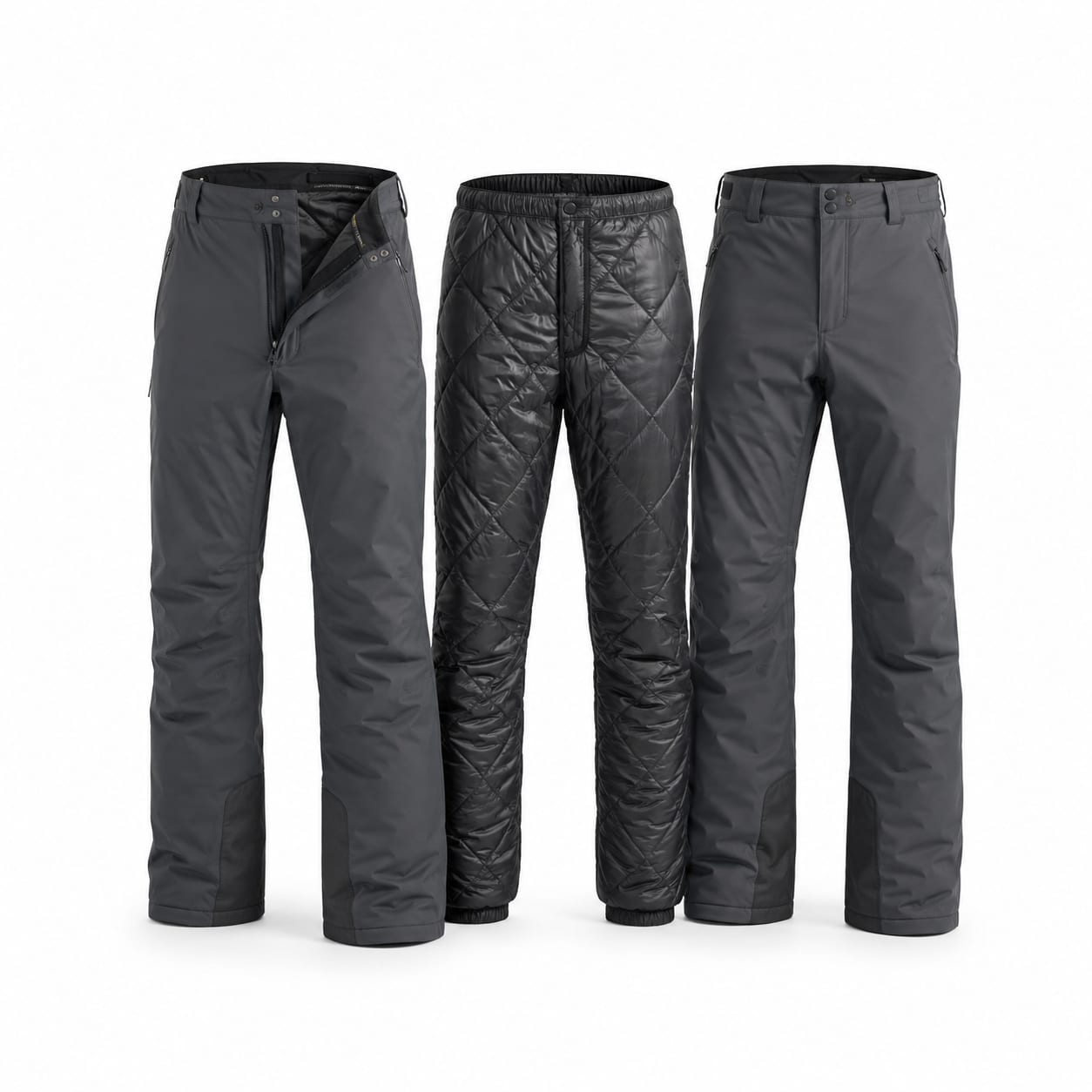
6 topics
Pick a question
Every answer links to the full subcategory guide and related gear types when it helps you decide.
Can I wear the liner by itself as a regular winter pant?
Yes, most 3-in-1 liners are designed to function as standalone casual pants. They typically have a clean enough appearance for apres-ski activities, running errands, or casual winter wear. However, the liner is not waterproof or windproof, so it is best suited for dry, calm cold weather. Check that the liner has its own pockets if you plan to wear it alone frequently, as some budget models omit pockets on the liner.
Read answer →02How do I know which configuration to wear for different temperatures?
As a general guide: wear both layers together below 20°F (-7°C) with a base layer; wear both layers without a base layer from 20-30°F (-7 to -1°C); wear the shell alone with a mid-layer from 30-45°F (-1 to 7°C); and wear the shell alone over a light base layer above 45°F (7°C). These ranges vary based on your activity level and personal temperature preference. Start with more warmth and vent or remove the liner if you overheat—it is easier to cool down than to warm up on the mountain.
Read answer →03Are 3-in-1 pants too bulky for active riding?
Modern 3-in-1 pants are significantly less bulky than earlier generations, but they do carry more weight and bulk than single-layer alternatives. For resort riding, most people do not find the bulk problematic. If you are doing high-output activities like backcountry touring or aggressive freestyle riding, the added bulk and reduced breathability may be noticeable. Try the pants in the combined configuration and simulate your typical riding movements before purchasing.
Read answer →04What happens if the liner zipper breaks? Can I still use the pants?
If the liner attachment system fails, you can still wear both components separately—the shell functions as a standalone shell pant, and the liner works as a casual pant. You can also layer them together without the attachment system, though the liner may shift or bunch during active movement. This is one advantage of 3-in-1 pants over fixed-insulation pants: even if the connection system fails, you still have two functional garments rather than one broken one.
Read answer →05Are 3-in-1 pants warm enough for extremely cold conditions like -20°F (-29°C)?
3-in-1 pants with a 40-60g synthetic liner, when combined with a proper merino wool or synthetic base layer, can handle temperatures down to about -10°F (-23°C) for active riding. For sustained temperatures of -20°F (-29°C) or below, you may need a heavier insulated pant (80g+) or additional mid-layers. The advantage of the 3-in-1 system is that you can add your own mid-layer between the liner and shell for extra warmth on the coldest days.
Read answer →06Should I size up for 3-in-1 pants to accommodate the liner?
Not necessarily. Quality 3-in-1 pants are designed so that the shell accommodates the liner at your normal size. However, if you plan to wear thick base layers under the liner, or if you are between sizes, sizing up is advisable. The key test is trying the pants on in the combined configuration with your intended base layer and ensuring you have full range of motion without restriction. If the shell feels tight over the liner, size up.
Read answer →