
Gravel Bike · FAQ
Questions about Endurance Gravel
Straight answers on fit, specs, and when this type makes sense — each topic has its own page with links back to the buying guide.
Open Endurance Gravel guide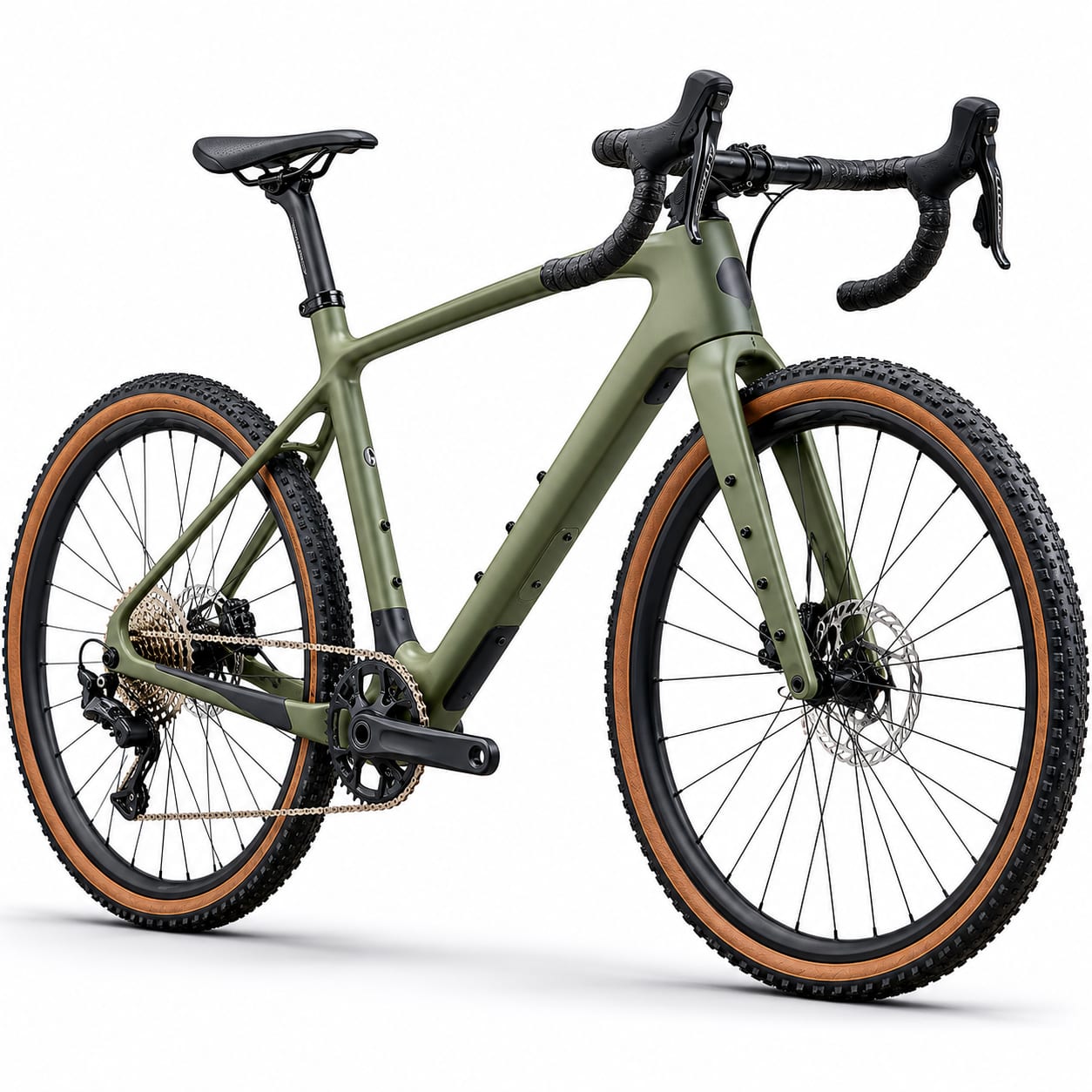
6 topics
Pick a question
Every answer links to the full subcategory guide and related gear types when it helps you decide.
Can I race on an endurance gravel bike?
Yes, absolutely. Many gravel races are won and lost on fitness, not bike choice. An endurance gravel bike will not hold you back in most grassroots gravel events. You may be at a slight disadvantage on fast, smooth courses where aerodynamics matter, but the comfort advantage pays off in the final hours of long races. If you plan to race competitively at the pointy end, a race-oriented bike may be better, but for the vast majority of gravel racers, an endurance bike is perfectly fine.
Read answer →02Do I really need 45mm+ tire clearance?
It depends on your terrain. If you only ride smooth, well-maintained gravel roads, 38–40mm is sufficient. But if you encounter washboard, chunky limestone, rocky doubletrack, or ride in wet conditions, 45mm+ tires at lower pressures provide dramatically better comfort and control. More clearance also preserves future options — you cannot make a 40mm-max frame fit 45mm tires later. Most riders who start on gravel find they want wider tires over time as they explore rougher terrain.
Read answer →03Is a compliance seatpost worth it?
For most endurance gravel riders, yes. A compliance seatpost is one of the most cost-effective comfort upgrades available, typically providing 10–30mm of effective suspension at the saddle. This reduces fatigue on long rides and can prevent back pain and saddle discomfort. If your bike comes with a rigid post, upgrading to a compliance post like the Ergon CF3, Cane Creek eeSilk, or PNW Coast is usually the first modification riders make and one they wish they had done sooner.
Read answer →04Should I choose 1x or 2x drivetrain for endurance gravel?
1x is the more popular choice for endurance gravel because of its simplicity, chain security on rough terrain, and cleaner cockpit. It is ideal if you ride mostly off-road and value reliability. 2x is better if you spend significant time on pavement, ride in very hilly areas where tight gear steps help maintain cadence, or prefer the feel of a front derailleur. Both work well — the choice comes down to your riding mix and personal preference. If in doubt, 1x with a low enough climbing gear (38T chainring with 11-46T cassette) is the safer bet for endurance riding.
Read answer →05Can I use an endurance gravel bike for bikepacking?
Yes — that is one of the primary use cases for this category. Endurance gravel bikes are designed with bikepacking in mind: abundant mounting points, frame bag clearance from longer chainstays, stable handling under load, and low climbing gears for steep terrain with gear. Check that the specific model you are considering has the fork mounts and under-downtube mounts you need for your bikepacking setup. Most endurance gravel bikes are bikepacking-ready without modification.
Read answer →06How does endurance gravel differ from a touring bike?
Endurance gravel bikes are lighter, faster, and more versatile than traditional touring bikes. Touring bikes have even longer wheelbases, heavier-duty frames designed for heavy loads, and flat or trekking bars. Endurance gravel bikes use drop bars for multiple hand positions, are efficient enough for fast unladen riding, and can handle bikepacking loads without the weight penalty of a full touring frame. Think of endurance gravel as a touring-capable bike that is also fun to ride unladen, whereas a touring bike is optimized for loaded travel at the expense of unladen performance.
Read answer →