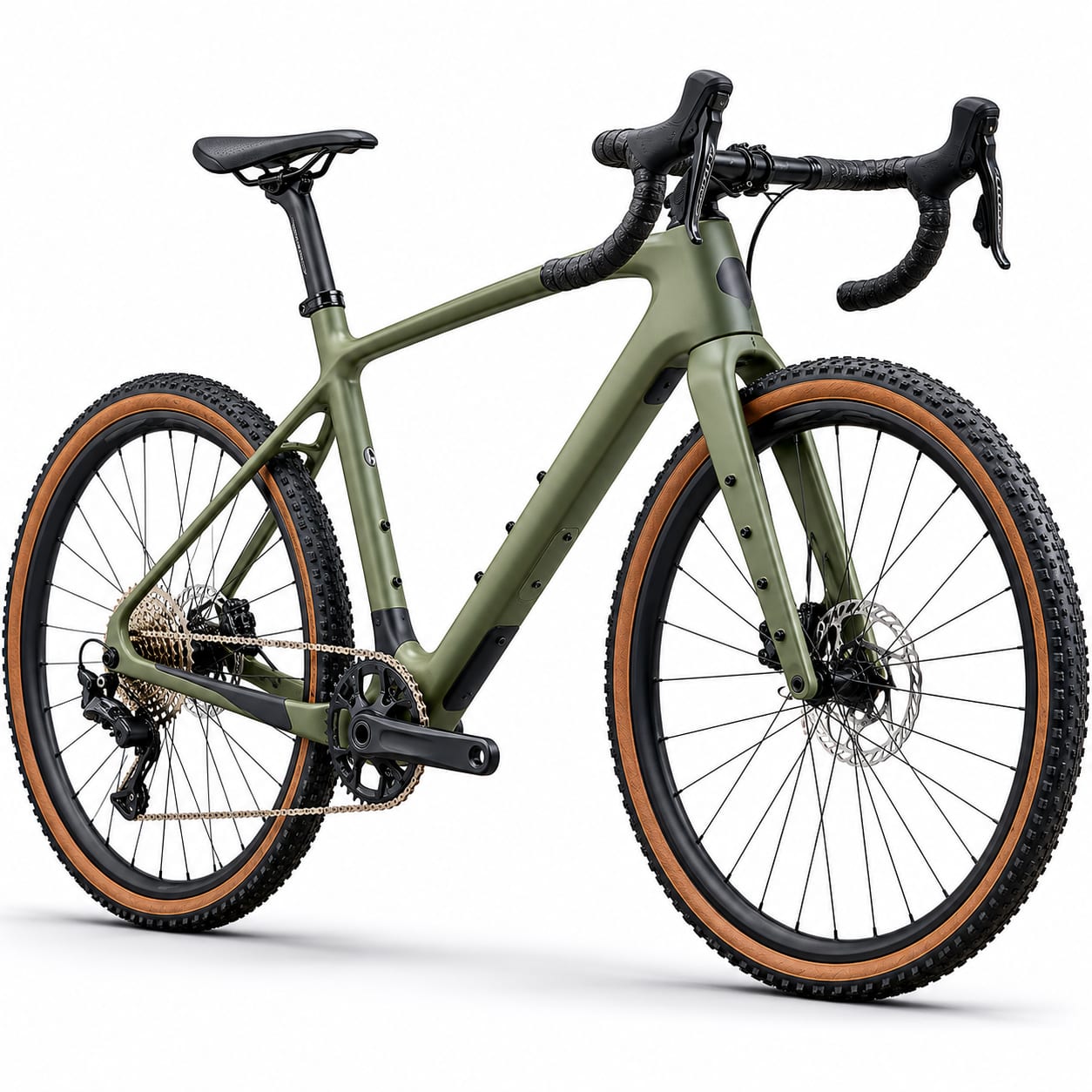
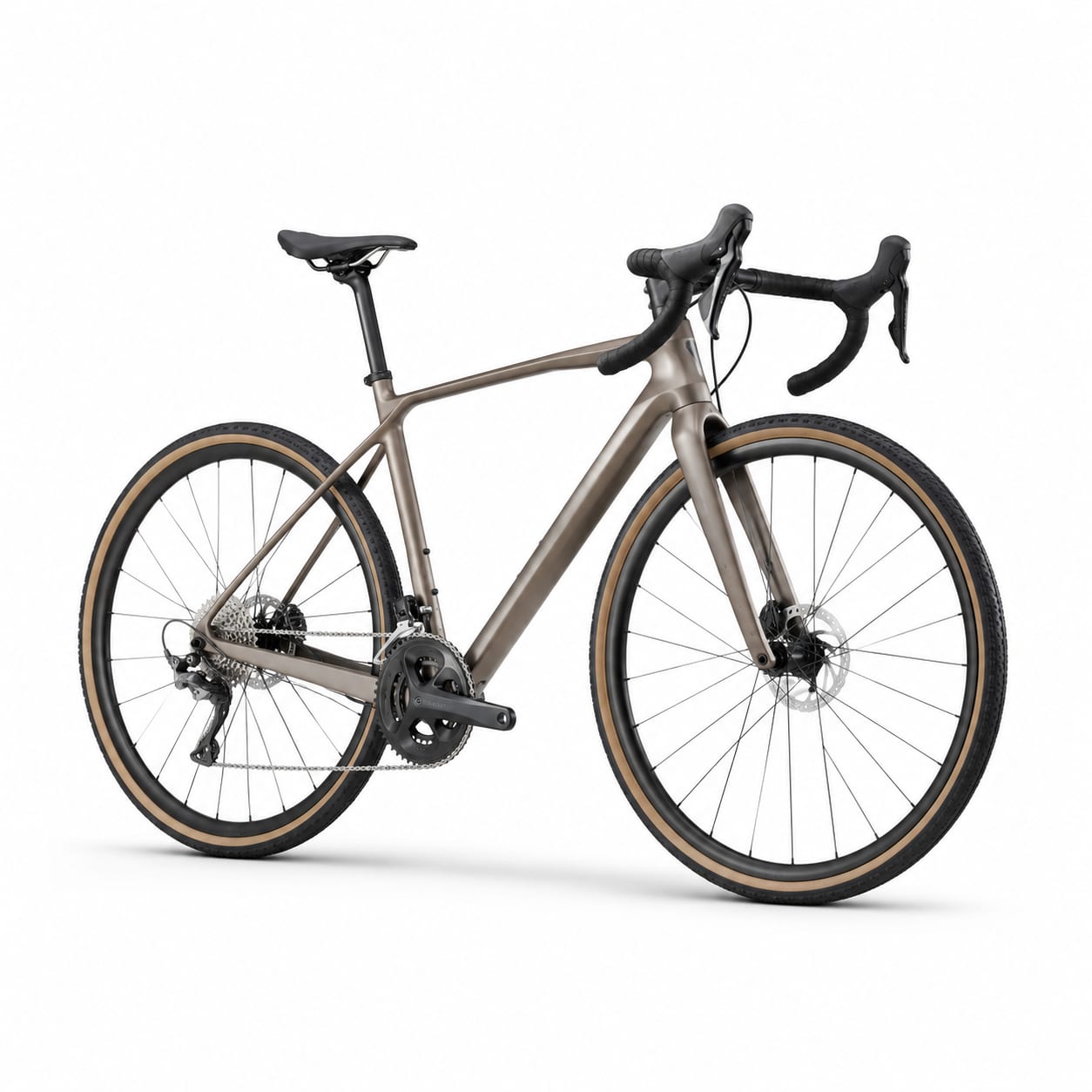
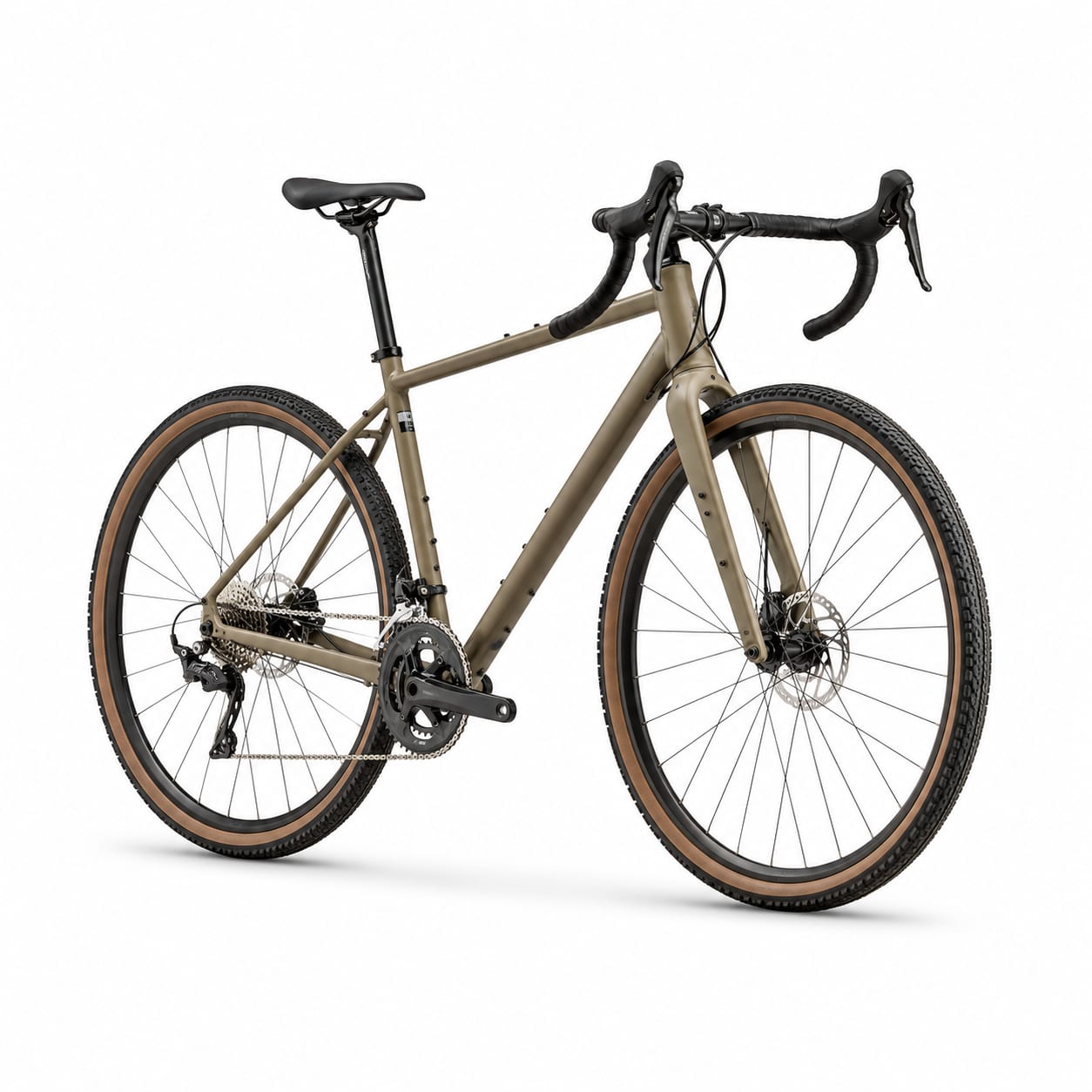
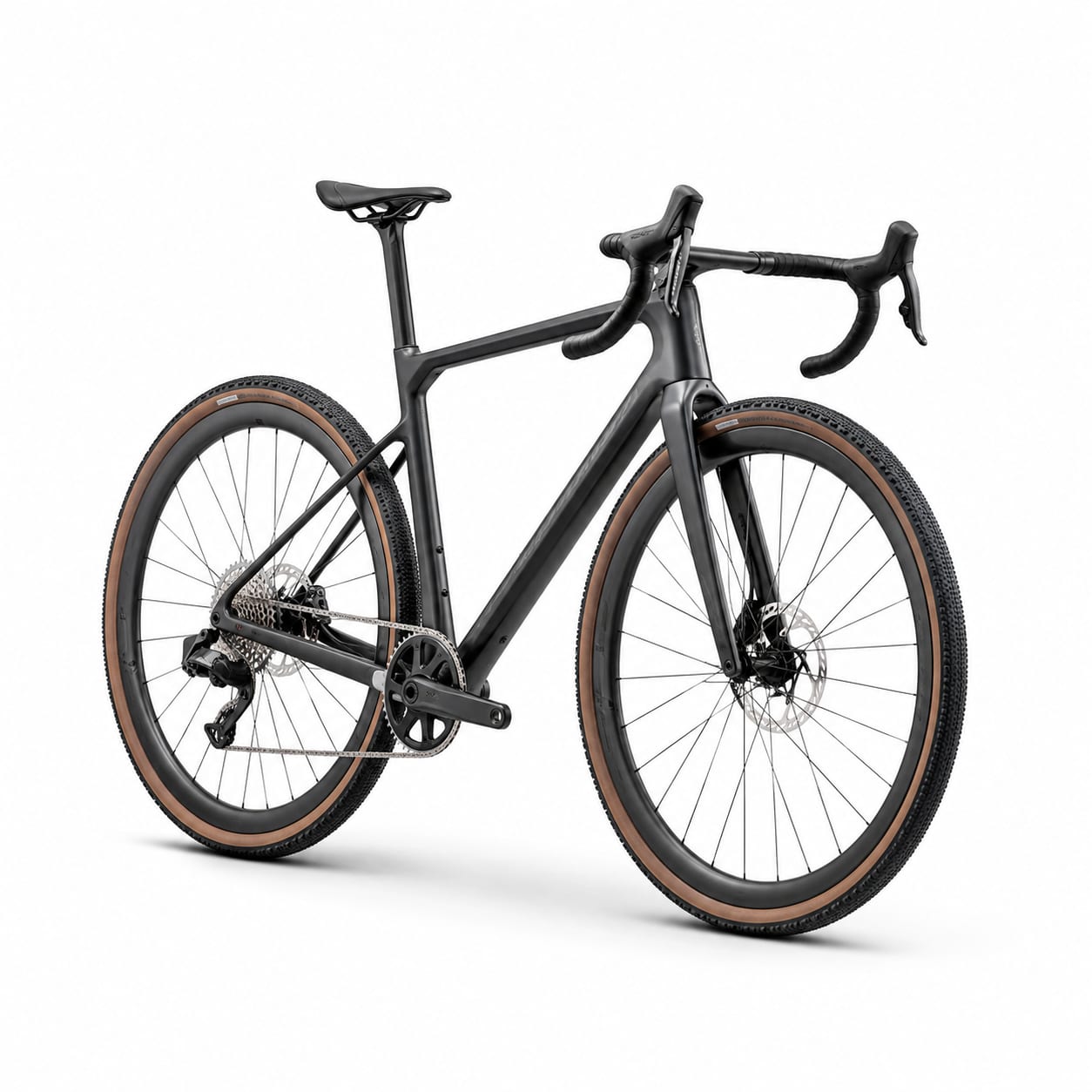
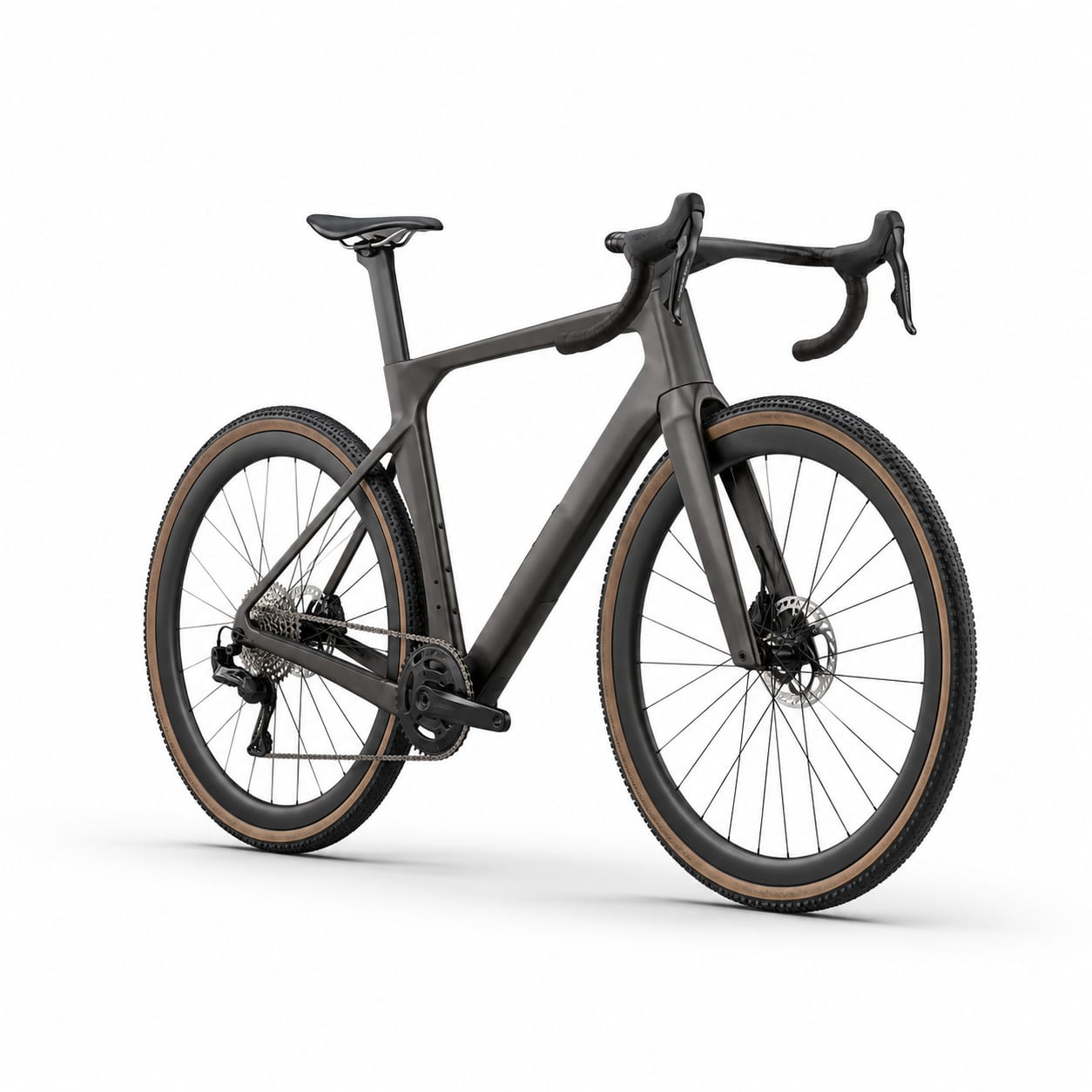
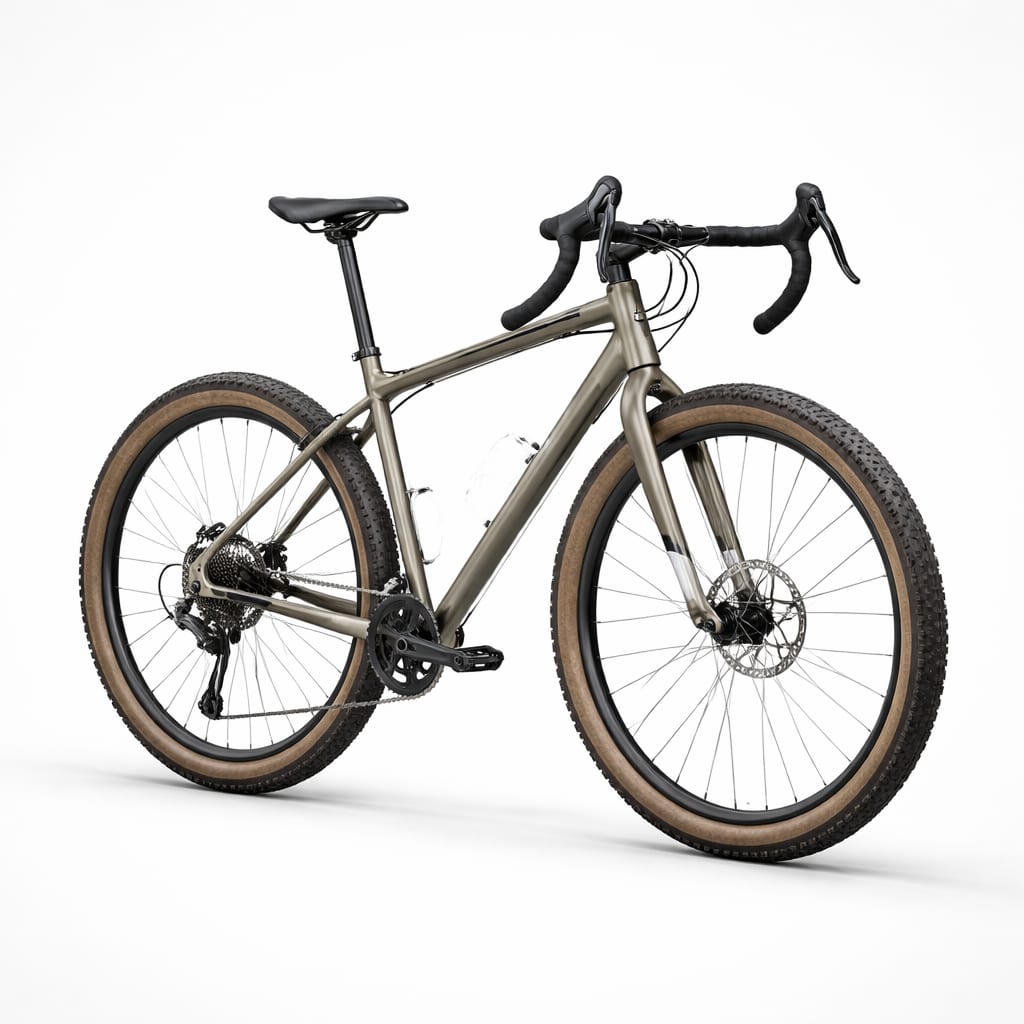
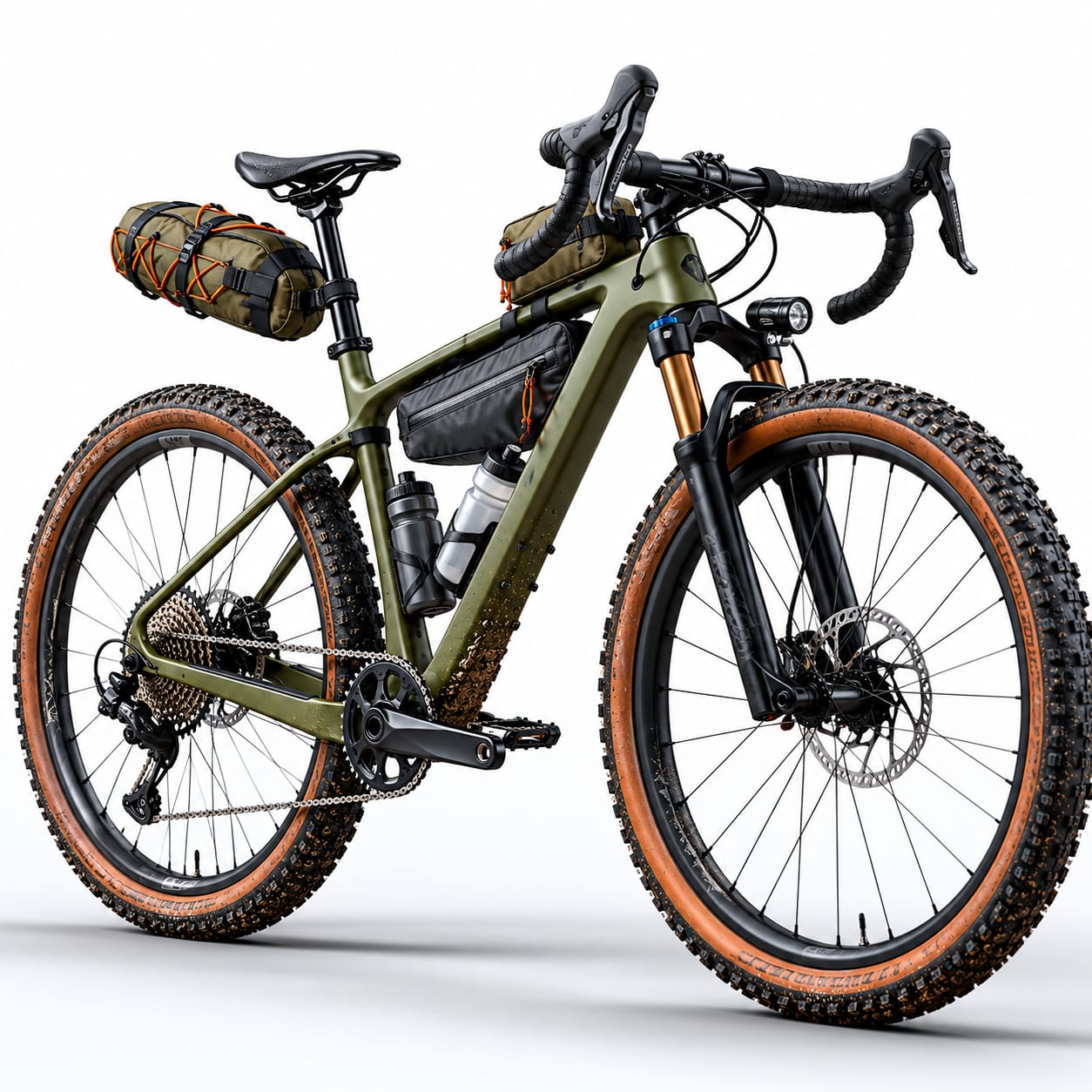
Endurance gravel bikes represent the comfort-first branch of the gravel family tree. Where race gravel bikes chase speed and aerodynamics, endurance gravel bikes chase miles — the kind that accumulate over 6-hour rides, multi-day bikepacking trips, and seasons of rough-road exploration. The geometry tells the story: stack-to-reach ratios of 1.50 to 1.65 place the rider in a more upright position that reduces fatigue on the lower back, neck, and hands. Chainstays stretch to 430mm and beyond, creating a stable platform that tracks straight through loose gravel and remains composed under the weight of frame bags and handlebar rolls. Tire clearance of 45mm or more opens the door to high-volume, low-pressure setups that float over washboard and absorb chatter that would beat up a rider on narrower rubber. Many endurance gravel frames incorporate engineered compliance — shaped seatstays, thin seat tubes, and carbon layups tuned to flex vertically while maintaining lateral stiffness for pedaling efficiency. The result is a bike that feels smooth and planted when the surface is anything but. Mounting points are abundant, with 10 to 16 bosses typically found on the frame and fork, accommodating three or more bottle cages, fork-mounted anything cages, and full fender and rack compatibility. This makes endurance gravel bikes the default choice for bikepacking, where carrying capacity and frame bag clearance are non-negotiable. Drivetrain choices lean toward 1x systems for their simplicity and chain security on rough terrain, though 2x remains popular among riders who spend significant time on pavement connecting gravel segments. Low gear ratios trend lower than race gravel, with many bikes shipping with climbing gears below 0.85:1 to handle steep, loaded climbs. Seatpost choice is a key differentiator: compliance posts like the Ergon CF3 or Cane Creek eeSilk are common spec or popular upgrades, and dropper posts are increasingly offered as standard equipment on models with technical terrain ambitions. Weight is not the priority it would be on a race bike. Complete bikes typically land between 8.5 and 10.5kg, with the understanding that a 500g frame weight penalty buys significant comfort and capability. The riders who choose endurance gravel bikes are not trying to win races — they are trying to ride further, longer, and more comfortably across terrain that would stop a road bike in its tracks.
Endurance gravel bikes emerged from the recognition that not every gravel rider is racing, and not every gravel road is smooth and fast. Early gravel bikes borrowed heavily from cyclocross geometry — low and aggressive — which worked for 60-minute races but punished riders on 6-hour adventures. The endurance gravel category corrected this by raising the bar, literally and figuratively. Stack heights increased, reach shortened, and chainstays lengthened, creating bikes that could be ridden all day without destroying the rider. This shift opened gravel riding to a much broader audience: riders who wanted to explore backroads without racing, cyclists transitioning from road or mountain biking who valued comfort, and bikepackers who needed a drop-bar platform that could carry gear across continents.
The defining characteristic of an endurance gravel bike is its geometry. A stack-to-reach ratio above 1.50 places the handlebars higher relative to the saddle, reducing the weight on the hands and the strain on the lower back and neck. This upright position is not just about comfort — it improves visibility on unfamiliar terrain and shifts weight rearward for better traction on loose climbs. The longer wheelbase created by extended chainstays (430mm+) and slightly slacker head tube angles (70.5–71.5°) produces a bike that tracks straight and stable at speed, resisting the twitchiness that can become dangerous on rough, loose descents. The trade-off is slower steering response and less agility in tight situations, but for the terrain endurance gravel bikes are designed for, stability is the priority.
Tire clearance is the second pillar of endurance gravel design. While 40mm was once considered generous, modern endurance gravel bikes commonly clear 45–50mm tires, with some accommodating up to 57mm (2.25") in 650b. This capacity is not about running the widest possible tire at all times — it is about having the option. A rider might run 700x38mm for a fast day on smooth gravel, then swap to 700x45mm or 650x47mm for a bikepacking trip on rough forest roads. The extra air volume at lower pressures is transformative on washboard, chunky limestone, and rocky doubletrack, absorbing impacts that would otherwise transmit through the frame to the rider. Many endurance gravel bikes also support both 700c and 650b wheel sizes, effectively giving the rider two bikes in one: fast-rolling 700c for speed days and high-volume 650b for comfort and traction.
Compliance engineering is where endurance gravel bikes diverge most visibly from their race counterparts. Frame designers use shaped seatstays (thin and flattened vertically), dropped driveside chainstays, and tuned carbon layups to allow the frame to flex vertically while remaining stiff laterally under pedaling loads. Some models incorporate proprietary suspension systems — the Specialized Future Shock in the head tube, the Trek IsoSpeed decoupler at the seat tube junction, or the Cannondale Kingpin flex zone in the rear triangle. These systems add complexity and cost but deliver measurable comfort improvements on rough terrain. Even without active suspension, a well-designed endurance gravel frame with wide tires at appropriate pressures can match or exceed the comfort of a rigid mountain bike from a decade ago.
The practical upshot of all this design intention is a bike that disappears beneath you on long rides. It does not fight you for position, it does not punish you for fatigue-induced form breakdown, and it does not demand constant attention to line choice on rough terrain. It is a bike built for the reality of gravel riding: that the best roads are often the worst-maintained, that the most beautiful routes are the longest, and that the ride is better when you arrive comfortable rather than fast. For bikepackers, endurance gravel bikes are the default choice because their mounting points, frame bag clearance, and stable handling under load make them uniquely suited to carrying everything needed for self-supported multi-day travel. For day riders, they offer the confidence to explore further and the comfort to enjoy the journey back.