
Mountain Bike · FAQ
Questions about Trail Mountain Bike
Straight answers on fit, specs, and when this type makes sense — each topic has its own page with links back to the buying guide.
Open Trail Mountain Bike guide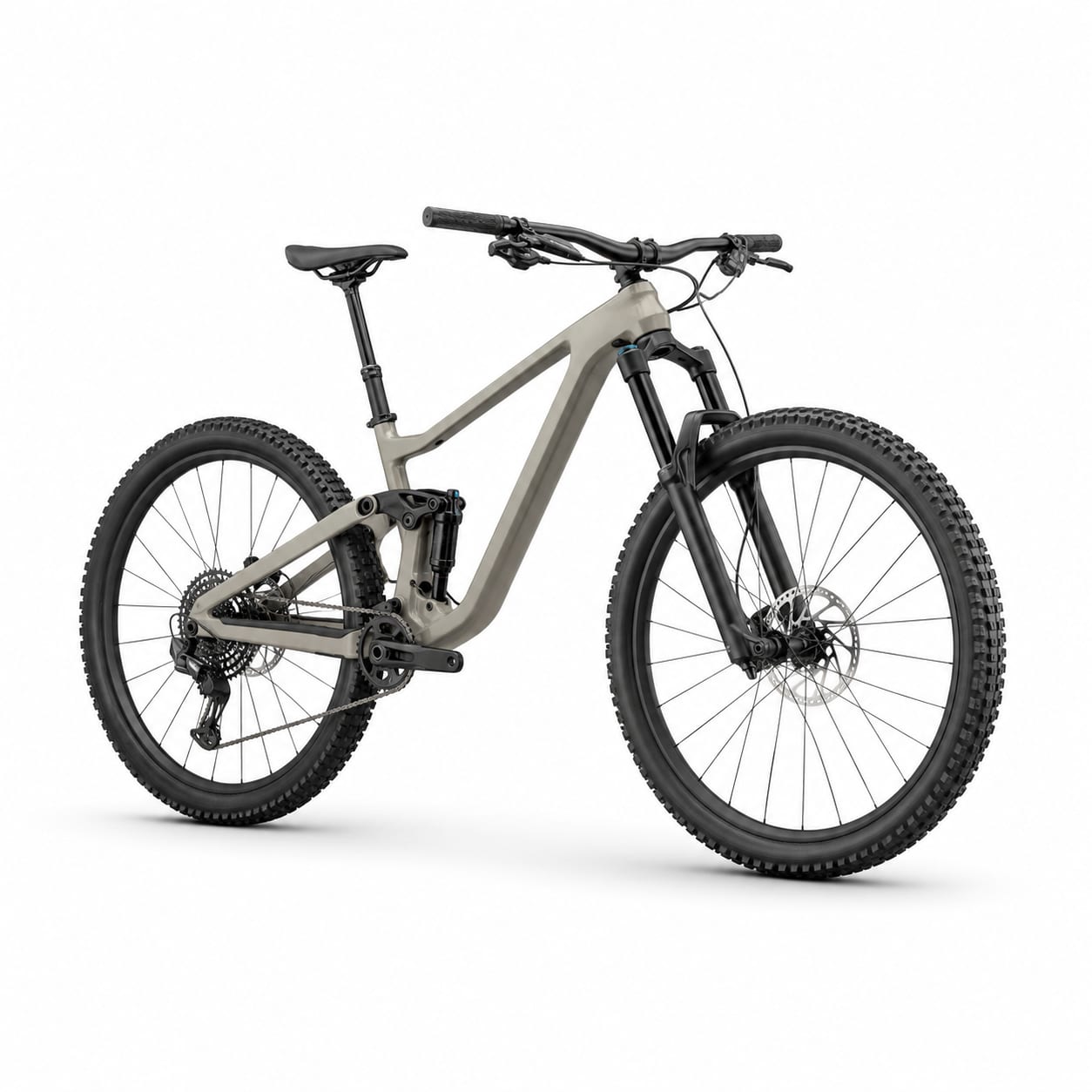
6 topics
Pick a question
Every answer links to the full subcategory guide and related gear types when it helps you decide.
How much suspension travel do I need on a trail bike?
For most trail riding, 130-140mm of front travel and 120-140mm of rear travel is ideal. If your local trails are relatively smooth and rolling, 130mm front / 120mm rear provides a responsive, efficient ride. If you regularly ride steep, rough terrain with rock gardens and moderate drops, 150mm front / 140mm rear gives more capability. The key is matching travel to your actual terrain, not your aspirations — over-suspended bikes feel sluggish on easy trails.
Read answer →02Should I get a hardtail or full suspension trail bike?
For most trail riders, full suspension is the better choice. It provides significantly more traction, control, and comfort on rough terrain, and modern designs minimize the pedaling efficiency penalty. Hardtails make sense if you're on a tight budget (they're typically $500-1000 less for equivalent components), prefer simpler maintenance, or ride primarily smooth trails. Hardtails also teach better line choice because you can't rely on rear suspension to cover mistakes. However, for technical terrain with rocks, roots, and descents, full suspension is transformative.
Read answer →03What wheel size is best for a trail bike?
29" wheels are the best choice for most trail riders. They roll over obstacles more easily, carry momentum better, and provide a larger contact patch for traction. 27.5" wheels are a good option for smaller riders (under 5'4") who find 29" wheels feel too large, or for riders who prioritize a playful, maneuverable feel over raw rollover capability. Mullet setups (29" front / 27.5" rear) are emerging for aggressive trail riders who want front rollover with rear agility, but these require frame-specific design. For the majority of riders on standard trail systems, 29" is the optimal choice.
Read answer →04How much should I spend on a trail mountain bike?
A quality entry-level full suspension trail bike starts around $2,000-2,500 with aluminum frame and mid-range components. The sweet spot for most riders is $3,000-5,000, where you get reliable suspension, quality brakes, and durable drivetrain. Above $5,000, you're paying for weight savings (carbon frame), premium suspension, and higher-end components with diminishing returns on trail performance. Hardtail trail bikes offer excellent value, with capable options starting around $1,200-1,500. Budget an additional $200-400 for essential accessories like a helmet, pump, and basic tools.
Read answer →05Can I ride a trail bike at a bike park?
Yes, trail bikes can handle most bike park trails up to and including black diamond difficulty. They're well-suited for flow trails, jump lines, and technical singletrack. However, avoid double black diamond trails with large mandatory gaps, huge drops, and extremely rough terrain — these exceed the capability of trail bikes and are better suited for enduro or DH bikes. Start on easier park trails and progress as you learn the limits of your bike and skills. Ensure your suspension is properly set up and your brakes are in good condition before riding park.
Read answer →06How do I choose the right size trail bike?
Focus on reach, not seat tube length or traditional sizing (S/M/L). Reach is the most important metric for modern mountain bike fit because it determines your position while standing — your primary position on technical terrain. Typical reach ranges: S (415-430mm), M (435-455mm), L (460-480mm), XL (485-510mm). If you're between sizes, size up for stability at speed or size down for nimble handling. Test ride if possible, as suspension kinematics and geometry feel vary between brands. When in doubt, consult the manufacturer's size chart and consider your riding style — aggressive riders often prefer longer reach.
Read answer →