
Road Bike · FAQ
Questions about Endurance Road Bike
Straight answers on fit, specs, and when this type makes sense — each topic has its own page with links back to the buying guide.
Open Endurance Road Bike guide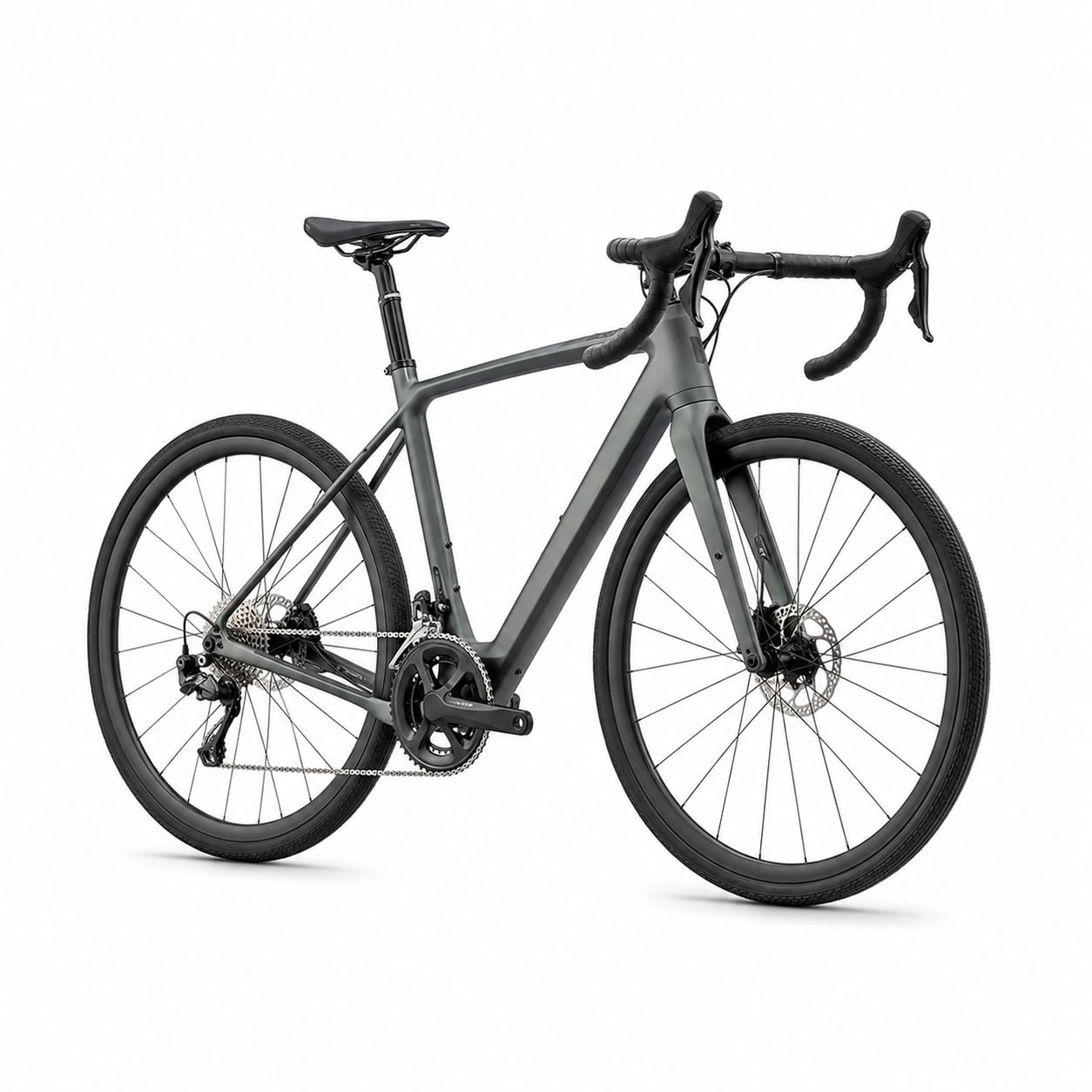
6 topics
Pick a question
Every answer links to the full subcategory guide and related gear types when it helps you decide.
Is an endurance road bike slower than a race bike?
It depends on the rider and the terrain. On flat roads at high speeds, a race bike's lower aerodynamic drag provides a measurable advantage of 5–15 watts. However, most riders cannot maintain an aggressive race position for more than 1–2 hours without significant discomfort, which reduces power output. On real-world rides of 3+ hours, an endurance bike is often faster overall because the rider can sustain higher power for longer. On climbs, the weight difference of 200–500g is minimal — roughly 5–10 seconds on a 30-minute climb.
Read answer →02Can I race on an endurance road bike?
Absolutely. Many riders complete gran fondos, club races, and even criteriums on endurance bikes. The handling is stable rather than razor-sharp, which is a disadvantage in tight criterium corners but an advantage in mass-start events where predictability matters. If you are new to racing, an endurance bike is a fine starting point. As you gain experience and discover you need a more aggressive position or sharper handling, you can consider a race bike later.
Read answer →03What tire width should I run on my endurance bike?
For most riders on typical roads, 28mm tires at around 4.5–5.5 bar (65–80 psi) provide an excellent balance of speed, comfort, and grip. If your roads are particularly rough or you ride long distances, 30–32mm tires at 3.5–4.5 bar (50–65 psi) will be faster and more comfortable. Contrary to old assumptions, wider tires at lower pressures are faster on real roads because they absorb vibration rather than bouncing over it. Start at 28mm and experiment — you will likely find that wider is better.
Read answer →04Do I need electronic shifting on an endurance bike?
Electronic shifting is not strictly necessary, but it is a significant quality-of-life upgrade for endurance riding. Shifting under load while climbing is smoother and more reliable with electronic systems, and the reduced hand effort matters when you are fatigued on hour five of a long ride. Shimano 105 Di2 and SRAM Rival eTap AXS have made electronic shifting accessible at lower price points. If your budget allows, it is worth the investment. Mechanical 105 is still excellent if electronic is out of reach.
Read answer →05Can an endurance bike handle gravel roads?
Smooth, well-maintained gravel roads are within the capability of an endurance bike with 32–35mm tires. However, endurance bikes lack the tire volume, geometry, and mounting points for sustained rough gravel riding. If your rides include more than 10–15% gravel, an all-road or gravel bike is a better choice. For occasional smooth gravel sections on otherwise paved routes, an endurance bike with 32mm tires at lower pressure works well.
Read answer →06How do I know if I need an endurance bike versus a race bike?
If you experience neck, shoulder, or lower back pain on rides longer than 2 hours; if you cannot comfortably reach the handlebars in the drops; if you ride primarily for fitness and enjoyment rather than competition; or if your roads are less than perfectly smooth, an endurance bike is the right choice. Race bikes are for riders who can comfortably maintain an aggressive position for hours, prioritize marginal speed gains, and ride primarily on smooth roads. When in doubt, choose endurance — you can always lower the stem and add a longer stem to make it more aggressive, but you cannot make a race bike as comfortable as an endurance bike.
Read answer →