
Ski Backpack · FAQ
Questions about Freeride Backpack
Straight answers on fit, specs, and when this type makes sense — each topic has its own page with links back to the buying guide.
Open Freeride Backpack guide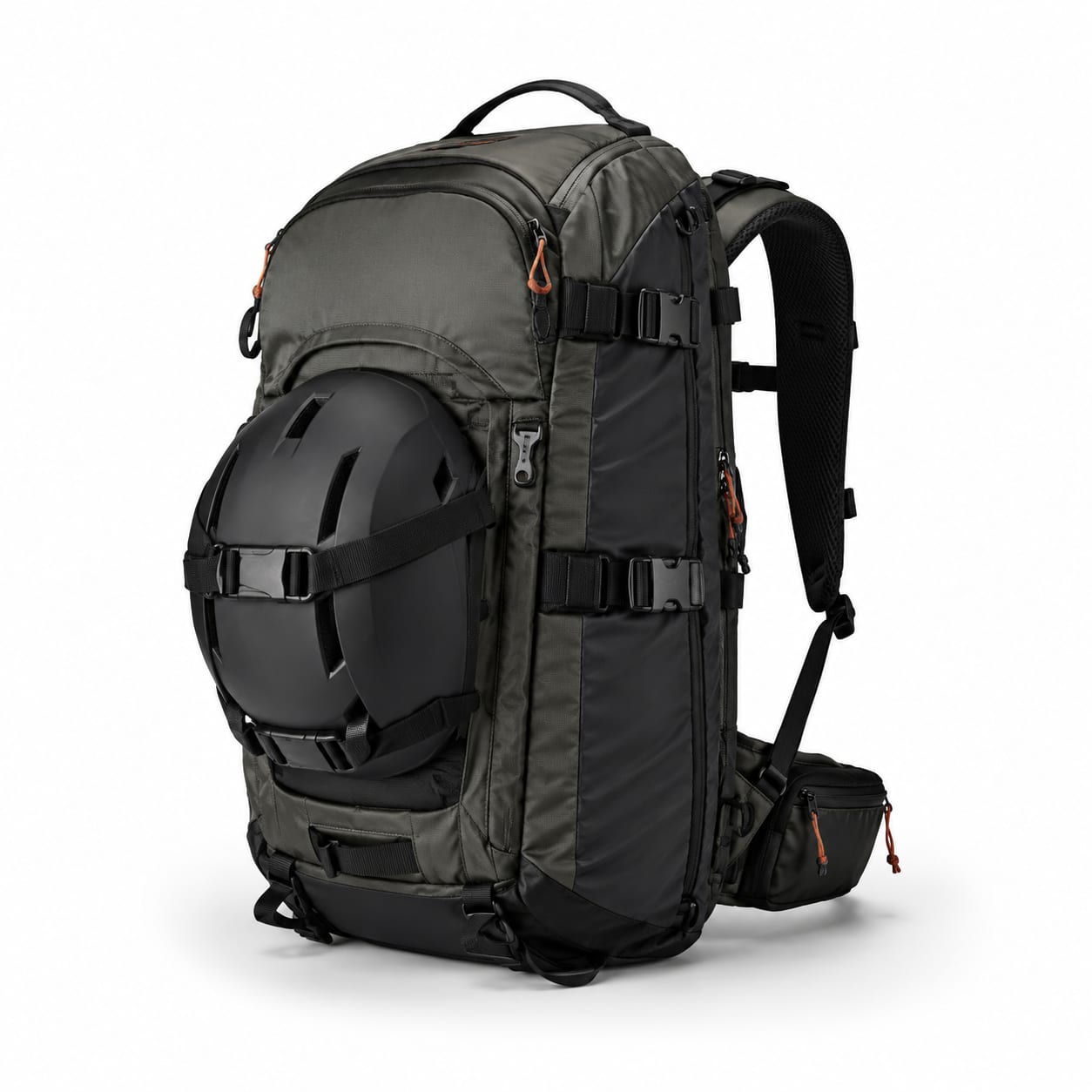
6 topics
Pick a question
Every answer links to the full subcategory guide and related gear types when it helps you decide.
Do I really need a freeride backpack, or can I use my regular hiking pack for backcountry skiing?
A regular hiking pack is not suitable for backcountry skiing for several critical reasons: it lacks a dedicated avalanche gear compartment for quick shovel and probe access, it doesn't have a ski carry system for uphill travel, it's not designed to handle ski edge abrasion, and its suspension system isn't optimized for the dynamic movements of skiing. In an avalanche rescue scenario, the seconds lost digging through an unorganized hiking pack to find your probe could be the difference between life and death. If you're going into avalanche terrain, you need a pack designed for it.
Read answer →02Should I get an airbag-compatible pack or an integrated airbag pack?
Airbag-compatible packs offer more flexibility—you can add the airbag module when you want it, remove it to save weight when you don't, and transfer the module between compatible packs. This is ideal if you want different pack sizes for different missions. Integrated airbag packs are simpler and more reliable because the system is purpose-built and always ready, with no assembly required. They're best for riders who always ride with an airbag and prefer a seamless system. If you're unsure, start with a compatible pack and add the module later—you can always upgrade to integrated if you find you always use the airbag.
Read answer →03What capacity do I need for a freeride backpack?
For most freeride skiers, 25–30L is the ideal range. This accommodates avalanche safety gear (shovel, probe, first aid), an extra warm layer, food and water for a full day, and a few extras like a headlamp and emergency bivy. A 25L pack works for half-day tours or minimalists. A 30L pack is the sweet spot for full-day tours. Only go to 35L if you regularly carry camera gear, need space for a rope, or run a larger airbag module that eats into internal volume. Remember: a smaller, well-packed load skis better than a larger, half-empty pack.
Read answer →04Will my wide freeride skis fit in the A-frame carry system?
This varies significantly between pack models. Many A-frame carry systems have loop openings that accommodate skis up to about 100–110mm underfoot, but modern wide freeride skis (115–130mm underfoot) may not fit. Check the manufacturer's specifications for maximum ski width compatibility, and ideally test your specific skis in the carry system before purchasing. Some packs have adjustable or larger loops specifically designed for fat skis. If you ride wide skis, make this a primary filter in your selection process.
Read answer →05How do I prevent my hydration hose from freezing?
Use a pack with insulated hose routing and follow these practices: blow air back through the hose after each sip to clear the tube of water, tuck the bite valve inside your collar or chest pocket when not drinking, use a neoprene hose cover if your pack doesn't have built-in insulation, and start with warm (not hot) water in your reservoir. Even with insulated routing, the bite valve is the most common freeze point. Some riders switch to an insulated bottle in a hip belt pocket for very cold days, as bottles are less prone to freezing than bladder systems.
Read answer →06Can I use a freeride backpack for resort skiing too?
Yes, freeride packs work well for resort skiing, especially on powder days when you're accessing sidecountry gates. The removable hip belt makes chairlift riding comfortable, and the avalanche gear compartment can hold extra layers or lunch on in-bounds days. The main downsides are the extra weight and bulk compared to a dedicated resort pack. If you split your time roughly evenly between resort and backcountry, a freeride pack is a good single-pack solution. If you primarily ski in-bounds with occasional backcountry days, consider a smaller freeride pack (25L) or keep a separate slim resort pack for groomer days.
Read answer →