
Ski Backpack · FAQ
Questions about Ski Mountaineering Pack
Straight answers on fit, specs, and when this type makes sense — each topic has its own page with links back to the buying guide.
Open Ski Mountaineering Pack guide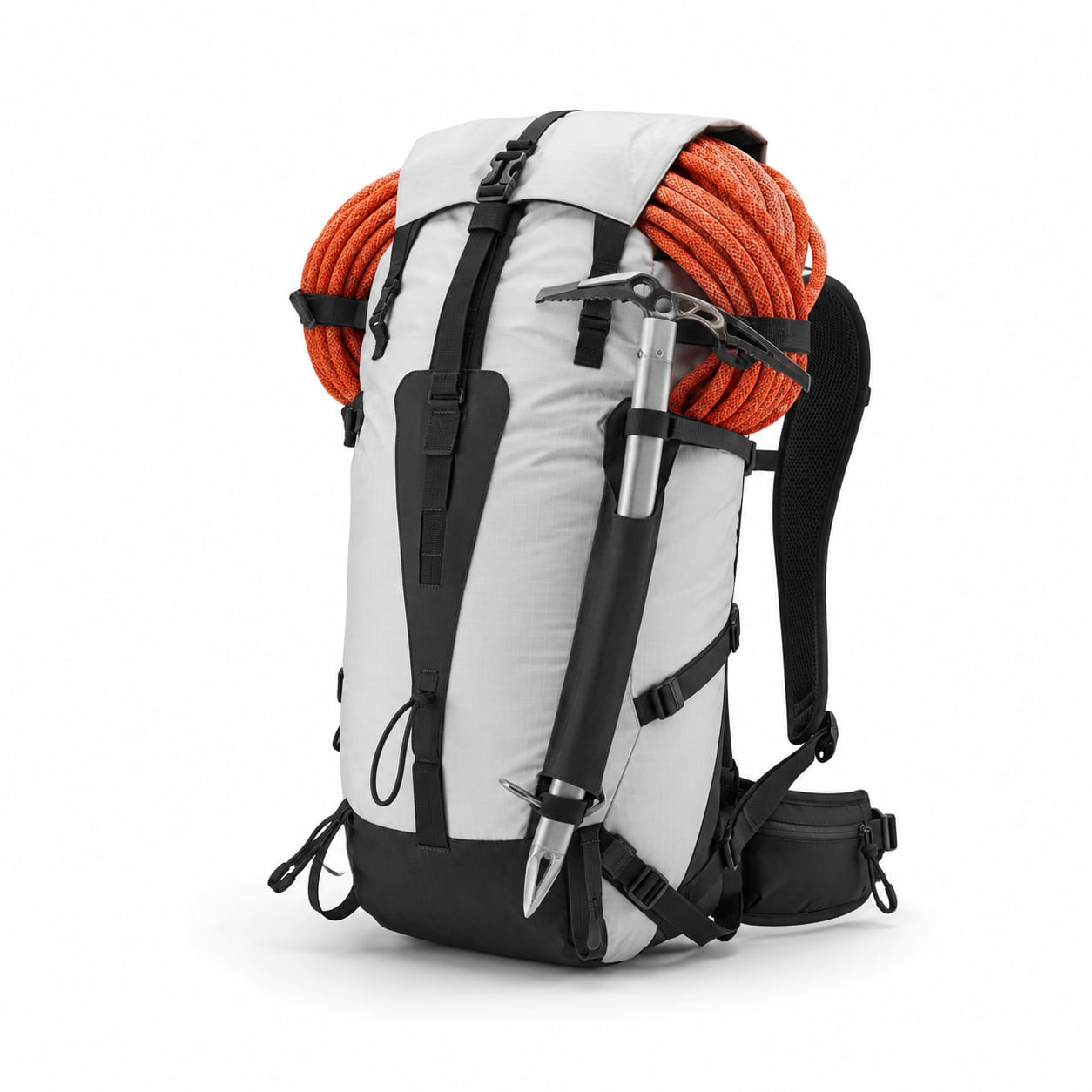
6 topics
Pick a question
Every answer links to the full subcategory guide and related gear types when it helps you decide.
What size ski mountaineering pack do I need?
For technical day missions (couloirs, single-summit days), 30–35L is ideal. For glacier days requiring rope and crevasse rescue gear, 35–40L. For lightweight overnight hut trips or bivouacs, 40–45L. Choose the smallest pack that fits your typical mission profile—oversized packs are heavier, shift more on technical terrain, and encourage unnecessary gear. If you use an airbag module, add 5–8L to your target to compensate for the volume the module occupies.
Read answer →02Can I use a ski mountaineering pack for regular backcountry touring?
Yes, but it's not optimal. Ski mountaineering packs work fine for standard tours, but the climbing-specific features (ice axe loops, rope carry, crampon attachments) add weight and complexity you don't need for non-technical objectives. If you split your time evenly between technical and non-technical tours, a ski mountaineering pack is a reasonable single-pack solution. If you primarily do non-technical tours, a standard backcountry touring pack is lighter and simpler.
Read answer →03How do I carry a rope on a ski mountaineering pack?
Most ski mountaineering packs carry rope coiled under the top lid or strapped across the top of the pack. Some models have dedicated rope straps or loops. The key is ensuring the rope coil doesn't interfere with ski carry (especially A-frame) or access to the avalanche gear pocket. Practice coiling and attaching the rope before your first technical mission—poorly secured rope can shift during climbing or snag on terrain features.
Read answer →04Do I need an airbag in my ski mountaineering pack?
It depends on your objectives and risk tolerance. Airbags significantly increase survival odds in avalanches, but they add weight (1–2 kg) and reduce internal volume (5–8L). Many ski mountaineers use airbag-compatible packs and install the module for high-avalanche-risk objectives while removing it for weight-sensitive technical climbs. If you frequently travel in avalanche-prone terrain, an airbag is a worthwhile investment. If your primary hazard is falls on technical terrain rather than avalanches, you may prioritize weight savings.
Read answer →05How do I fit a ski mountaineering pack with a climbing harness?
The hip belt should sit above the harness waistbelt—on the hip bones, not around the waist. A padded, removable hip belt allows you to remove or loosen it when wearing a harness, letting the harness waistbelt carry the load. Some ski mountaineers remove the hip belt entirely for technical climbing and rely on the shoulder straps and chest strap. Test the combination of pack and harness before committing to a purchase, as interference between the two can cause discomfort and restrict movement.
Read answer →06What's the difference between a ski mountaineering pack and an alpine climbing pack?
Ski mountaineering packs include dedicated ski carry systems (A-frame, diagonal) and avalanche gear compartments that alpine climbing packs lack. Alpine climbing packs are optimized for carrying climbing hardware and may have better suspension for heavy rock climbing loads but don't handle skis well. Ski mountaineering packs bridge both worlds with ski carry plus climbing features, but they're not as refined for pure rock climbing as dedicated alpine packs. If you primarily rock climb and occasionally ski, an alpine pack may be better. If you primarily ski with some climbing, a ski mountaineering pack is the right choice.
Read answer →