Kitvore.com

Kitvore.com

Specs that matter. Gear that fits.

Ski Backpack · Subcategory

Ski Mountaineering Pack

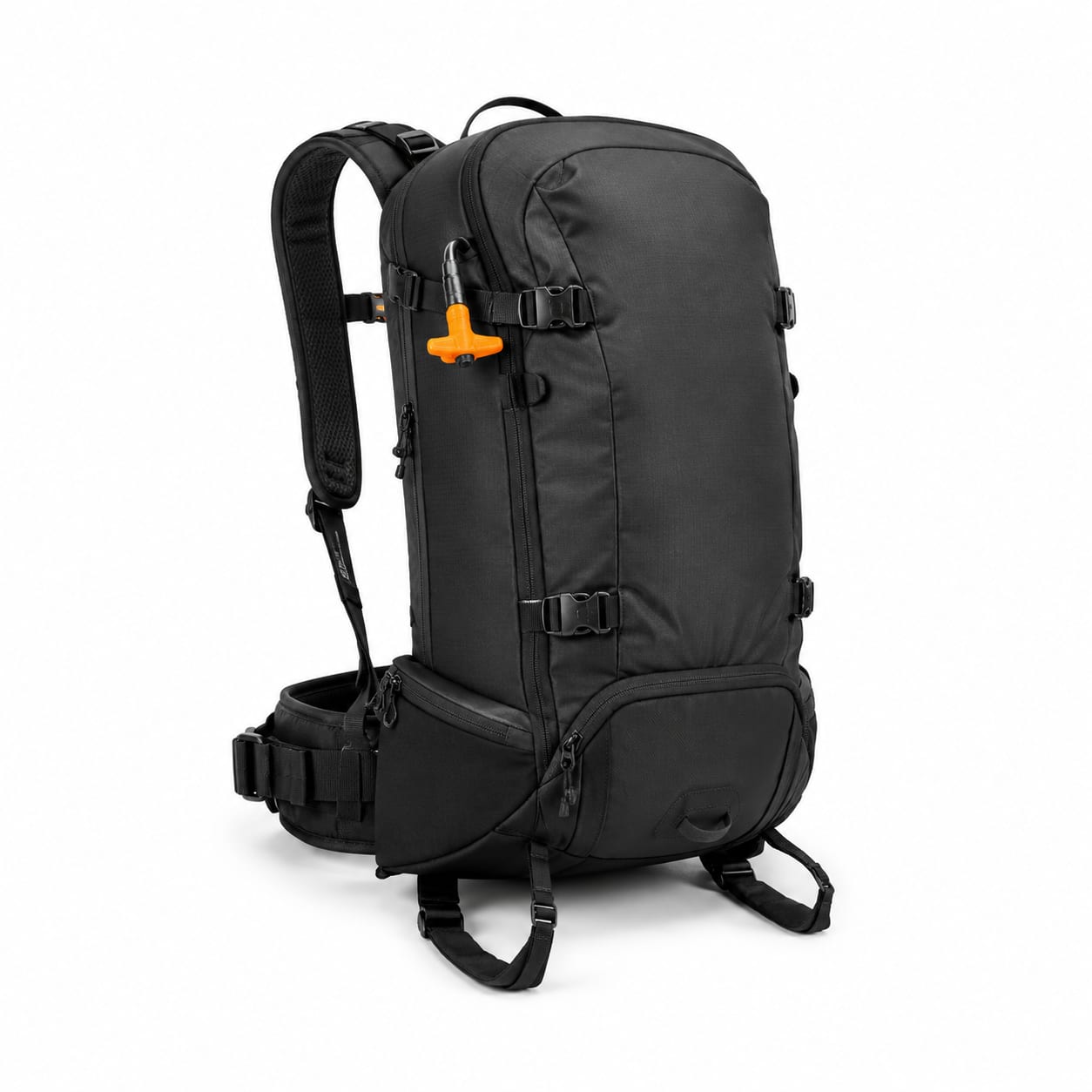
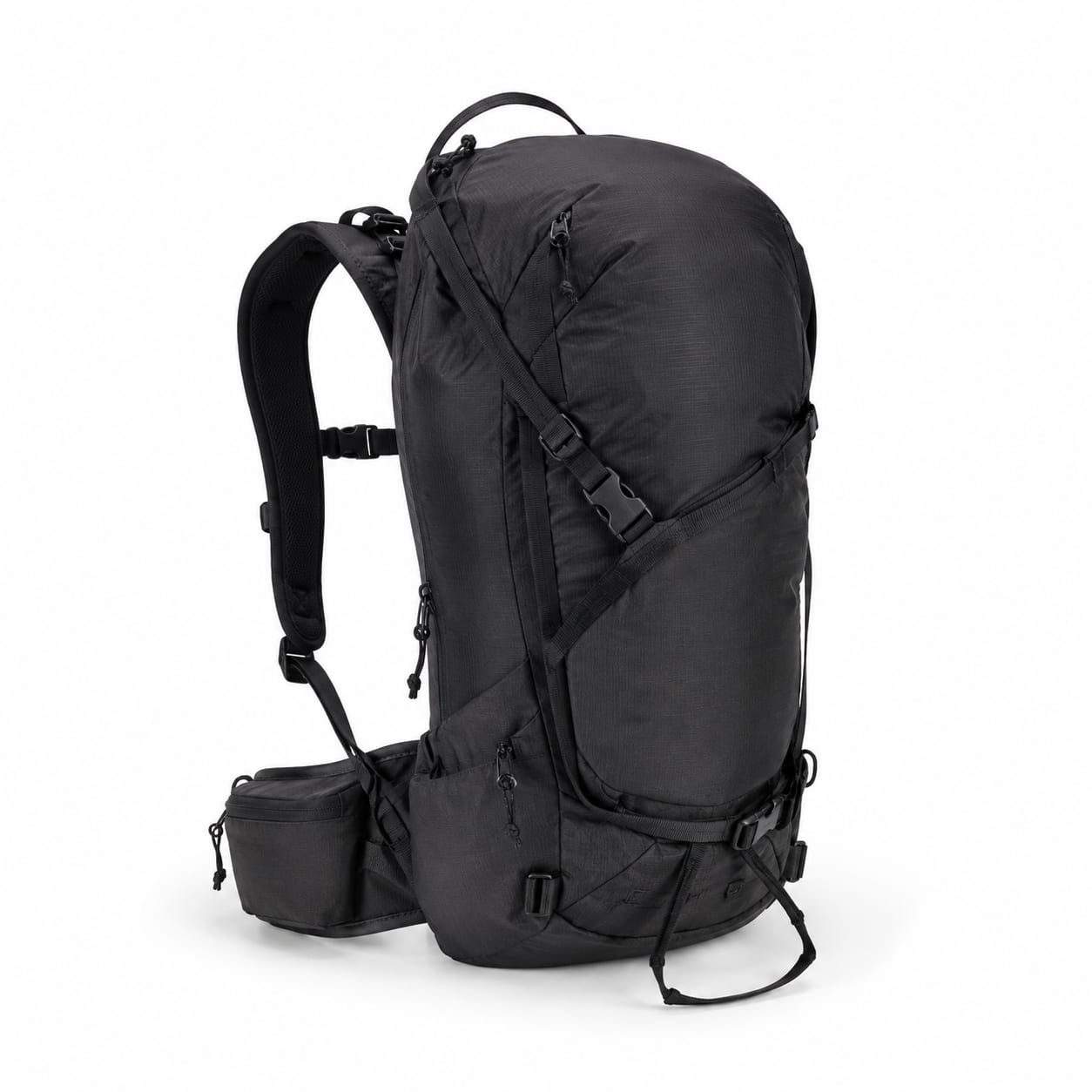
A technical, streamlined backpack purpose-built for ski mountaineering objectives combining uphill travel, glacier travel, and technical descent gear management.

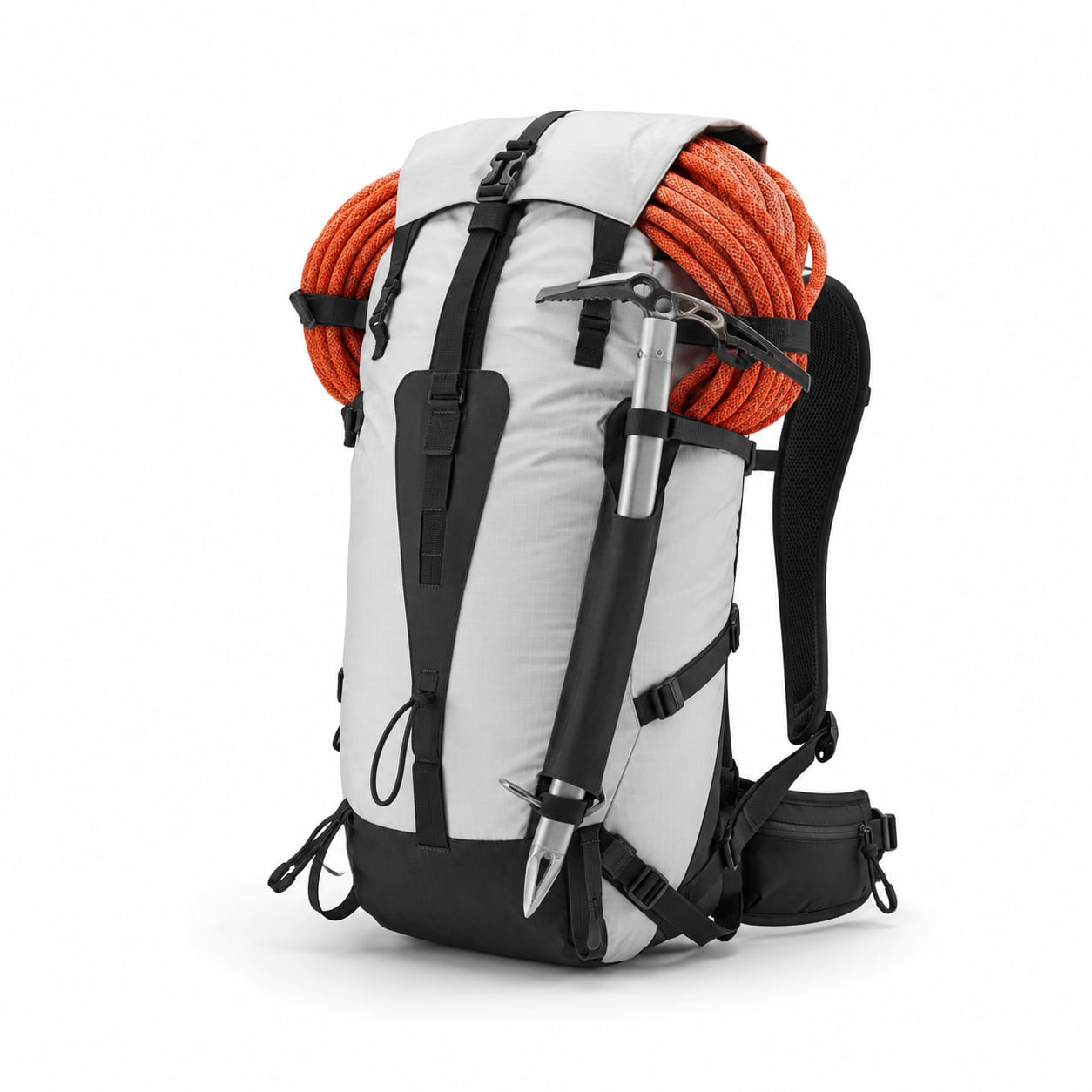
Ski mountaineering packs are engineered for riders who venture into technical alpine terrain where climbing gear, rope management, and weight efficiency are as critical as avalanche safety carry. They bridge the gap between ski touring packs and alpine climbing packs, offering dedicated attachment points for ice axes, crampons, and ropes alongside essential ski carry and avy gear compartments. Typically ranging from 30–45L, these packs prioritize a slim profile for climbing mobility, reinforced construction for abrasive alpine environments, and access systems that work with skis or rope attached. If your objectives include couloirs, glacier crossings, or technical ascents where you climb as much as you ski, this is your category.

$120 – $320premium tieradvancedexpert

Best known for

Technical alpine objectives requiring climbing gearStreamlined profiles for climbing mobilityDedicated ice axe, crampon, and rope carry systemsBalancing ski carry with rope management on glaciated terrainWeight-conscious construction for long approaches and steep ascents
Ski Mountaineering Pack

Guide

Detailed overview

Ski mountaineering packs occupy a specialized niche between standard backcountry touring packs and alpine climbing packs. They are designed for skiers who tackle objectives requiring technical climbing gear—ice axes, crampons, ropes, harnesses—alongside standard avalanche safety equipment and skiing gear. These packs typically range from 30 to 45 liters, providing enough volume for full-day to lightweight overnight missions in alpine environments. What distinguishes them from general ski touring packs is their emphasis on climbing-specific features: reinforced ice axe loops, external crampon attachments, rope carry straps, and sometimes helmet-compatible lids. Their profiles are intentionally slim to reduce snagging on rock or ice and to maintain balance during technical climbing moves. Access systems are often designed so you can reach gear without removing skis or rope from the pack. The best ski mountaineering packs achieve a difficult balance—light enough for grueling approaches and ascents, yet durable enough to withstand ski edges, crampon points, and abrasive rock contact.

Ski mountaineering represents one of the most demanding disciplines in the skiing world, requiring equipment that performs across multiple domains. A ski mountaineering pack must function as a climbing pack on the ascent and a ski pack on the descent, with seamless transitions between modes. This dual identity shapes every design decision, from the placement of compression straps (which must not interfere with rope carry) to the ski attachment system (which must remain accessible even when a rope is coiled on top).

The capacity range of 30–45 liters reflects the reality of technical objectives. A 30L pack handles ambitious day missions—avy gear, layers, food, water, plus climbing hardware for a couloir ascent. Moving to 35–40L accommodates glacier travel kits with rope, crevasse rescue hardware, and additional insulation for high-altitude exposure. The 40–45L range enters lightweight overnight territory, suitable for hut-to-hut traverses or alpine bivouacs where every liter counts but weight remains paramount. Unlike general touring packs where extra volume tempts overpacking, ski mountaineering packs demand disciplined packing because excess bulk directly impacts climbing performance and safety.

Material choices in this category reflect the abuse alpine environments deliver. Ski edges slice fabric during A-frame carry; crampon points puncture bottoms during transitions; rock abrades sides during chimneys and gullies. The best packs use strategic reinforcement—high-denier panels at ski contact zones, reinforced bottoms, and protective sleeves for sharp gear. Yet weight remains critical because every gram carried uphill at altitude extracts a metabolic cost. This tension between durability and weight defines the category and justifies the premium pricing of top models that achieve both.

Access design in ski mountaineering packs deserves particular attention because the sequence of gear access matters in alpine environments. Back panel access allows you to reach the main compartment without removing skis from A-frame carry—a critical advantage during transitions on exposed ridges or narrow ledges. Top-loading designs with extended collars accommodate rope coils and provide weather resistance. Side access zippers enable mid-pack retrieval without disturbing the carefully arranged attachment systems. The most versatile packs combine two or more access methods, recognizing that alpine climbing demands adaptability to changing conditions and terrain.

Fit and suspension quality separates adequate ski mountaineering packs from excellent ones. Technical terrain demands a pack that moves with your body during climbing moves—reaching overhead for ice tool placements, twisting through chimneys, bending over for crampon adjustments. The hip belt must transfer load effectively on long glacier approaches but not impede harness wear or leg movement during steep climbing. Shoulder straps should allow full arm mobility without chafing under heavy layering. Adjustable back length systems are particularly valuable in this category because the same pack may be worn over a thin softshell on the approach and a bulky insulated jacket on cold summits, requiring different suspension geometry for optimal comfort.

Quick facts

Primary purpose
Technical ski mountaineering and ski alpinism requiring rope, ice gear, and climbing equipment alongside ski gear
Popular brands
Black DiamondArc'teryxPetzlDynafitMilletOrtovox
Typical terrain
AlpineGlaciated terrainTechnical couloirsMixed climbing

What makes it different

Rope carry strap or tuck; Reinforced pick pocket for ice tools; Compression system for stable climbing; Lower profile for harness compatibility; Often compatible with via ferrata or climbing gear

Recommended ranges

How this type usually specs out

Each spec is explained in plain language, then we show what buyers usually look for on this type.

Volume / Capacity

capacity

What it means

The total storage volume of the backpack measured in liters, determining how much gear can be carried.

Typical for this type

30–45L

Most common pick: 35L

In practice

Ski mountaineering packs typically range from 30L for technical day missions to 45L for glacier days or lightweight overnights. 35L is the sweet spot for most full-day ski mountaineering objectives, accommodating avy gear, climbing hardware, rope, layers, food, and water without excess bulk that impedes climbing.

Compared to other types

Larger than freeride packs (18–30L) which skip climbing gear, and smaller than expedition packs (45–55L) designed for multi-day hut trips. Ski mountaineering packs occupy a precise middle ground where every liter serves a technical purpose.

Why it matters: Capacity directly determines mission capability. Too small and you cannot carry essential safety and climbing gear; too large and the pack becomes unwieldy on technical terrain, shifts your center of gravity, and tempts overpacking that slows ascent speed.

Ski Carry System

ski_carry_system

What it means

The method and configuration used to attach skis to the backpack for uphill travel or transport.

Typical for this type

A-Frame Primary, Diagonal Secondary

In practice

A-frame carry is the standard for ski mountaineering because it provides the best balance and stability on technical terrain, keeps skis accessible for quick transitions, and leaves the center back free for rope coil attachment. Many packs also offer diagonal carry as a secondary option for shorter sections or narrower terrain.

Compared to other types

More emphasis on A-frame carry than freeride packs which may prioritize diagonal for simplicity. Ski mountaineering packs often have reinforced A-frame loops to handle heavier skis with tech bindings and the repeated transitions typical of technical objectives.

Why it matters: On steep, exposed terrain, how you carry skis affects balance, safety, and transition speed. A-frame carry keeps weight distributed symmetrically and allows you to remove one ski at a time if needed—critical on narrow ledges or ridge traversals.

Snowboard Carry

snowboard_carry

What it means

Whether and how the backpack can carry a snowboard.

Typical for this type

Splitboard Compatible Or None

Most common pick: Splitboard Compatible Only

In practice

Most ski mountaineering packs are ski-focused and offer either no snowboard carry or splitboard-compatible carry for splitboard halves in touring mode. Dedicated whole-board carry is rare in this category because the technical climbing features and slim profile don't accommodate a full snowboard well.

Compared to other types

Less snowboard carry focus than freeride packs which often include vertical or horizontal board carry. Ski mountaineering packs prioritize ski and splitboard carry optimized for climbing mobility.

Why it matters: Splitboarders doing ski mountaineering objectives need to verify that the pack's A-frame or splitboard-specific carry system accommodates their split halves with bindings attached. Standard snowboard vertical carry is uncommon in this category.

Avalanche Safety Gear Compartment

avalanche_gear_compartment

What it means

Dedicated, quick-access compartment for avalanche shovel, probe, and sometimes a first aid kit.

Typical for this type

Dedicated Front Pocket (Mandatory)

In practice

A dedicated front-access avalanche gear pocket is standard and essential on ski mountaineering packs. This compartment must accommodate a shovel blade, shovel handle, probe, and sometimes a first aid kit, with quick zipper or flap access that can be operated with gloves.

Compared to other types

Same requirement as backcountry touring packs. However, ski mountaineering packs may have slightly larger avy pockets to accommodate crevasse rescue gear alongside standard shovel and probe, or separate compartments to keep avy and climbing rescue gear distinct.

Why it matters: In an avalanche burial, seconds matter. A dedicated front pocket ensures avy gear is always accessible and never buried under climbing hardware, ropes, or layers. This is non-negotiable for any backcountry travel, and especially critical in ski mountaineering where the terrain itself increases exposure.

Avalanche Airbag Compatibility

airbag_compatible

What it means

Whether the pack has an integrated avalanche airbag system or is compatible with removable airbag modules.

Typical for this type

Compatible/Ready Or None

Most common pick: Compatible / Ready

In practice

Many ski mountaineering packs are airbag-compatible, accepting removable airbag modules like the Mammut Removable Airbag or Ortovox Avabag. Integrated airbags are less common because they add weight and reduce internal volume—both significant penalties for technical climbing. Some riders prefer no airbag system to maximize volume and minimize weight.

Compared to other types

Less emphasis on integrated airbags compared to freeride packs where weight is less critical. Ski mountaineering packs favor the compatible/ready approach for modularity, or skip airbag systems entirely for maximum volume and minimum weight on technical objectives.

Why it matters: Airbag compatibility offers flexibility—install the airbag module for high-risk objectives and remove it for weight-sensitive technical climbs. However, the airbag module consumes 5–8L of internal volume, which is significant in a 35L pack.

Back Protection

back_protection

What it means

Integrated or compatible spine/back protector for impact protection during falls.

Typical for this type

None Or Compatible (Optional)

In practice

Ski mountaineering packs often skip integrated back protection to save weight and preserve internal volume. Some offer compatible sleeves for removable inserts. The priority in this category is climbing performance, and the weight penalty of a CE-certified protector (200–400g) is significant for technical objectives.

Compared to other types

Less common than in freeride or resort packs where impact protection is a higher priority. Ski mountaineering packs prioritize weight savings and volume efficiency. Riders who want protection often wear separate back protector vests under their pack.

Why it matters: Back protection adds weight and bulk that impacts climbing performance. However, ski mountaineering often involves steep, consequential terrain where fall protection matters. Riders must weigh the safety benefit against the performance cost for their specific objectives.

Pack Weight

weight

What it means

The weight of the empty backpack without any gear, airbag cartridge, or back protector insert.

Typical for this type

900–1400g (without airbag)

Most common pick: 1100g

In practice

Ski mountaineering packs typically weigh 900–1400g empty, balancing durability for alpine abuse against weight savings for long approaches. Ultralight models dip below 900g but sacrifice durability. Packs with reinforced ski carry zones and climbing features tend toward 1100–1300g.

Compared to other types

Heavier than ultralight ski touring race packs (500–800g) which sacrifice features and durability. Lighter than freeride packs with integrated airbags and back protectors (1500–2500g). Ski mountaineering packs occupy a middle ground where weight is critical but not at the expense of essential climbing features.

Why it matters: Weight is acutely felt on technical ascents at altitude. Every 100g matters on a 4-hour skin track followed by a 2-hour technical climb. However, insufficient durability leads to gear failure in remote alpine environments where pack failure is a safety issue, not just an inconvenience.

Torso Length / Back Length

torso_length

What it means

The length of the backpack's back panel and suspension system, determining fit for different torso sizes. Often available in multiple sizes (S/M, M/L, L/XL) or with adjustable back length.

Typical for this type

Adjustable or M/L (43–50 cm)

Most common pick: Adjustable Back Length

In practice

Adjustable back length is particularly valuable in ski mountaineering packs because layering varies dramatically—thin softshells on the approach, bulky insulated jackets on cold summits. Adjustable systems accommodate this range and ensure proper load transfer across conditions.

Compared to other types

Adjustable back length is more common in ski mountaineering packs than in simpler touring or resort packs because of the wider range of layering scenarios and the critical importance of stable load carriage during climbing.

Why it matters: Proper torso fit determines load transfer to the hips, which is critical during long approaches with heavy loads. On technical terrain, a poorly fitting pack shifts during climbing moves, affecting balance and concentration. Adjustable systems allow fine-tuning for different layer combinations.

Hydration System Compatibility

hydration_compatible

What it means

Whether the pack supports a hydration reservoir/bladder and/or has insulated hose routing to prevent freezing.

Typical for this type

Insulated Hose Routing (Strongly Recommended)

In practice

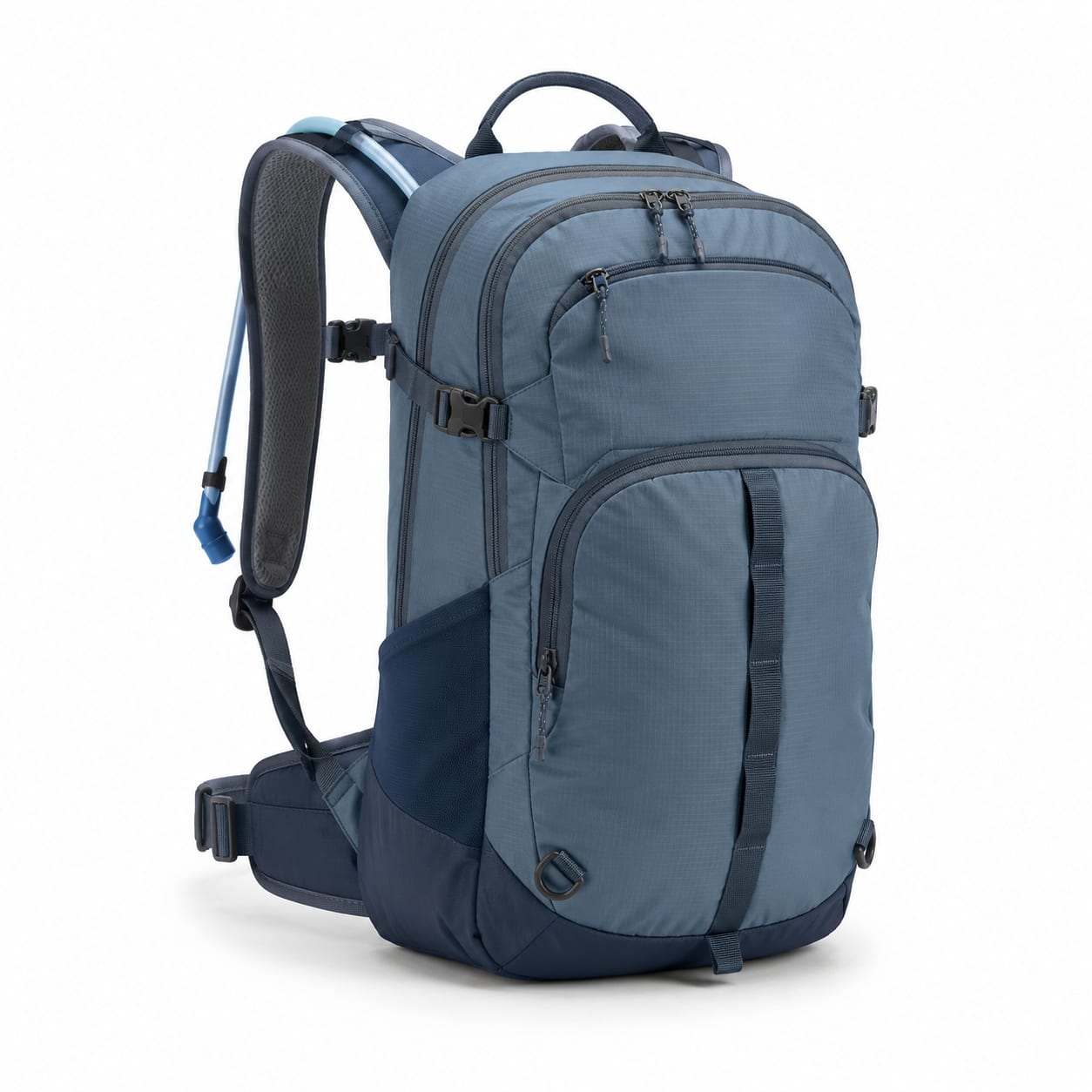
Insulated hose routing is strongly recommended for ski mountaineering where sub-zero temperatures at altitude are common and stopping to drink wastes time and exposes you to cold. The best systems route the hose inside the shoulder strap with an insulated cover to prevent freeze-up.

Compared to other types

Insulated hose routing is more critical in ski mountaineering than resort or sidecountry use because of colder temperatures at altitude, longer duration between breaks, and the consequences of impaired performance in technical terrain.

Why it matters: Dehydration at altitude accelerates fatigue and impairs decision-making—both dangerous in technical terrain. Frozen hydration hoses are a persistent problem in ski mountaineering, and insulated routing is the most effective prevention. The ability to drink while moving on a skin track or during a break on a ridge is operationally important.

Hip Belt Type

hip_belt_type

What it means

The style and padding level of the hip belt, which transfers load from shoulders to hips.

Typical for this type

Padded, Removable Or Padded With Pockets

In practice

A padded, removable hip belt is the most versatile option for ski mountaineering. It provides effective load transfer for heavy approaches but can be removed for weight savings on fast-and-light objectives or when climbing with a harness. Hip pockets are valuable for storing snacks, a phone, or a small camera for quick access on long days.

Compared to other types

More emphasis on removable designs than freeride packs because ski mountaineers frequently switch between touring mode (hip belt engaged) and climbing mode (hip belt removed or loosened to accommodate harness). Hip pockets are particularly valued for all-day missions where frequent snacking maintains energy.

Why it matters: Ski mountaineering packs carry heavier loads than typical touring packs due to climbing hardware and rope. Effective hip belt load transfer prevents shoulder fatigue on long approaches. Removability allows the pack to adapt to different mission profiles. Compatibility with a climbing harness is essential—the hip belt should not interfere with the harness waistbelt.

Helmet Carry System

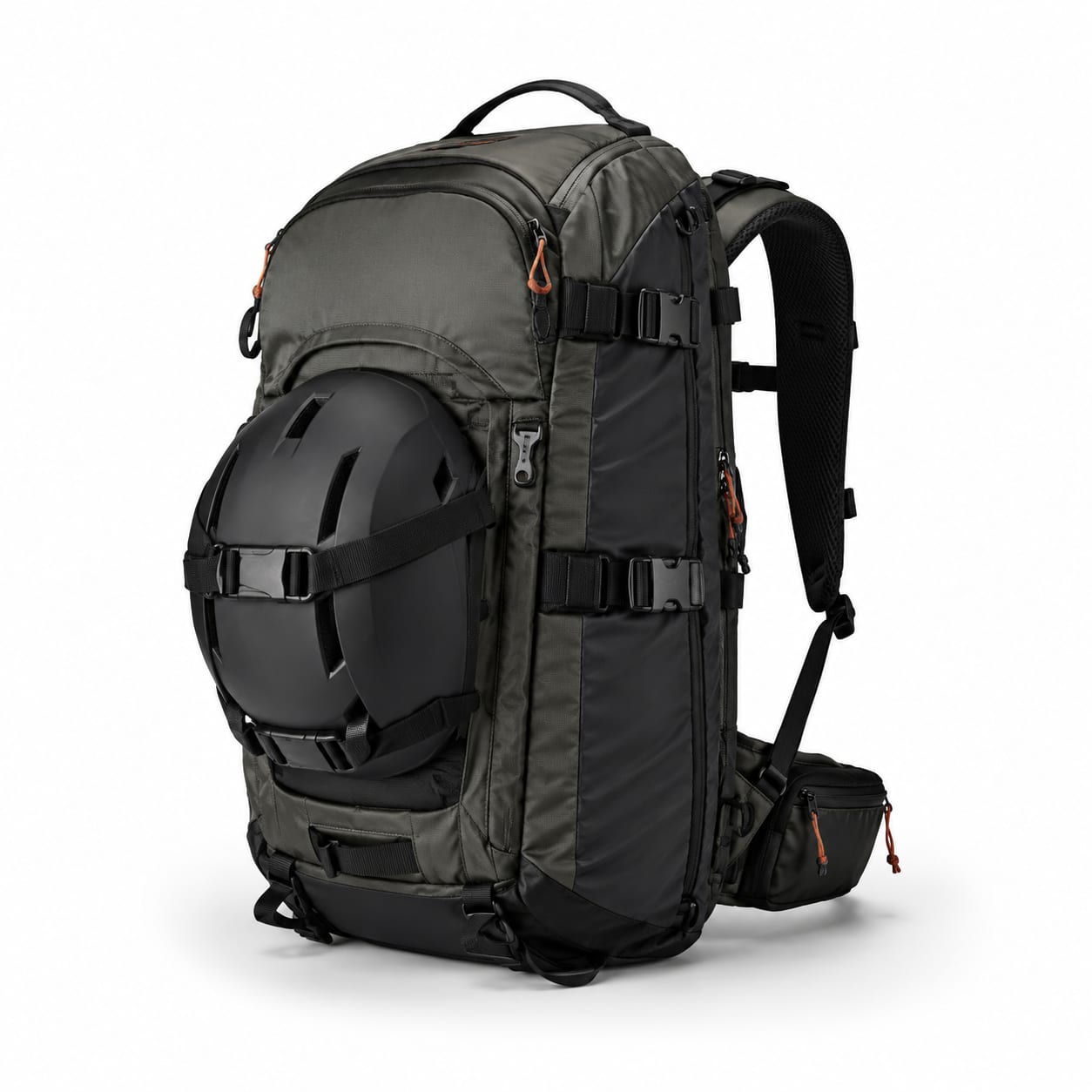
helmet_carry

What it means

External attachment point or net to carry a ski helmet when not wearing it.

Typical for this type

External Net/Clip Or None

Most common pick: External Helmet Net/Clip

In practice

External helmet carry is a useful feature for ski mountaineering where you may climb without a helmet (or with a climbing helmet) and want to carry your ski helmet. However, many ski mountaineers wear a climbing helmet on the ascent and switch to a ski helmet for the descent, making external carry convenient during the transition.

Compared to other types

More relevant in ski mountaineering than other subcategories because of the dual-helmet scenario (climbing helmet for ascent, ski helmet for descent). Resort and freeride riders rarely remove their helmets.

Why it matters: On technical climbs, a climbing helmet is often more appropriate than a ski helmet. The ability to carry your ski helmet externally during the climb and swap at the summit is a practical advantage. However, this is a convenience feature, not a safety-critical one.

Goggle Pocket

goggle_pocket

What it means

A soft-lined internal or external pocket designed to protect goggles from scratches when stored.

Typical for this type

Fleece-Lined Internal Or None

Most common pick: Fleece-Lined Internal Pocket

In practice

A fleece-lined internal goggle pocket protects spare lenses or goggles during the climb. Many ski mountaineers wear goggles on the ascent in poor weather or use sunglasses in clear conditions, making goggle storage less critical. However, for those who carry spare lenses for changing conditions, a protected pocket prevents costly scratches.

Compared to other types

Similar relevance to backcountry touring packs. Less important than in resort packs where goggle swapping at lunch is common. In ski mountaineering, the goggle pocket is primarily for spare lens protection rather than frequent goggle removal.

Why it matters: Ski mountaineering often involves dramatic weather changes between valley and summit. Carrying spare lenses for flat light versus sunny conditions is common, and scratched lenses in the backcountry are both expensive and potentially dangerous if visibility is compromised.

Material / Durability

material_durability

What it means

The primary fabric type and denier rating indicating abrasion resistance and durability of the pack construction.

Typical for this type

Midweight Nylon With Reinforced Zones

Most common pick: Midweight Nylon (200D–400D)

In practice

Midweight nylon (200D–400D) with DWR coating is the standard for ski mountaineering packs, offering the best balance of durability and weight. Critical wear zones—ski carry contact points, bottom panel, and crampon attachment areas—should use heavier denier fabric or reinforced patches. Some models use lightweight nylon for the body with heavy-duty reinforcement only where needed.

Compared to other types

More emphasis on strategic reinforcement than freeride packs which may use uniform heavy-duty nylon throughout. Ski mountaineering packs use targeted durability to save weight—reinforced where needed, lighter where possible. This differs from ultralight touring packs that may sacrifice durability for weight savings.

Why it matters: Ski mountaineering packs face extreme abuse: ski edges during A-frame carry, crampon points during transitions, rock abrasion during chimneys and gullies, and rope friction during rappels. Strategic reinforcement at high-wear areas extends pack life while maintaining reasonable overall weight.

Water Resistance

water_resistance

What it means

The level of water and snow protection the pack provides for contents.

Typical for this type

DWR Coated Minimum; Waterproof Sealed Seams For Glacier/Wet Conditions

Most common pick: DWR Coated (Water Resistant)

In practice

DWR coating is standard and sufficient for most ski mountaineering conditions where snow is cold and dry. For objectives involving wet snow, rain, or glacier travel where the pack may sit on wet snow for extended periods, waterproof sealed seams provide better protection. Some riders add a lightweight rain cover for variable conditions.

Compared to other types

Similar to backcountry touring packs. Ski mountaineering packs may lean toward higher water resistance than resort packs because of longer exposure to wet conditions and the safety implications of wet gear in alpine environments.

Why it matters: Wet layers and sleeping bags in alpine environments are a safety concern, not just a comfort issue. DWR coating handles typical snow exposure but prolonged contact with wet snow—common during glacier breaks or bivouacs—will eventually soak through. For multi-day objectives, better water resistance is worth the weight penalty.

Access Type

access_type

What it means

How the main compartment of the backpack is accessed—determines ease of gear retrieval and organization.

Typical for this type

Top-Loading + Back Panel Or Top-Loading + Side Access

Most common pick: Top-Loading With Back Panel Access

In practice

The combination of top-loading and back panel access is ideal for ski mountaineering. Top-loading provides weather resistance and accommodates rope coils; back panel access allows gear retrieval without removing skis from A-frame carry. Side access zippers offer additional mid-pack retrieval options.

Compared to other types

More emphasis on back panel access than freeride or resort packs because of the frequency of accessing gear with skis attached. Top-loading is preferred over front panel (clamshell) for weather resistance and rope management, though some packs combine both.

Why it matters: In ski mountaineering, you frequently need to access gear while skis or rope are attached to the pack. Removing skis on an exposed ridge or narrow col is dangerous and time-consuming. Back panel access solves this by allowing you to set the pack down (back panel up) and access the main compartment without disturbing front attachments.

Chest Strap Features

chest_strap_features

What it means

Features of the sternum/chest strap including adjustability, whistle, and height positioning.

Typical for this type

All Three Features Recommended

Most common pick: Integrated Whistle + Height Adjustable + Elastic Section

In practice

Ski mountaineering packs benefit from all chest strap features: an integrated whistle for emergency signaling in alpine terrain, height adjustability to accommodate varying layer thickness, and an elastic section for comfortable breathing during strenuous climbing at altitude.

Compared to other types

The elastic section is more important in ski mountaineering than in resort or sidecountry use because of the sustained high-output climbing. All three features are standard on quality ski mountaineering packs.

Why it matters: The elastic section is particularly valuable in ski mountaineering because of the high-output climbing at altitude where breathing is heavy and chest expansion is significant. The whistle is a safety requirement in alpine environments. Height adjustability ensures the strap stays in the correct position across the wide range of layering scenarios typical of ski mountaineering.

Compression System

compression_system

What it means

Side or vertical compression straps that tighten the pack load to prevent shifting and reduce volume when partially full.

Typical for this type

Side Compression Or Dual Compression

Most common pick: Side Compression Straps

In practice

Side compression straps are standard on ski mountaineering packs, allowing load stabilization as you consume food and shed layers throughout the day. Dual compression (side + vertical) is found on larger packs (38L+) where variable loads are more pronounced. Compression straps must be positioned to not interfere with ski carry or rope attachment.

Compared to other types

Compression system design is more critical in ski mountaineering than resort packs because of the wider variation in load size throughout the day and the safety implications of load shift on technical terrain. The interaction between compression straps and ski/rope carry systems requires more thoughtful design.

Why it matters: A shifting load on technical terrain is dangerous—it affects balance during climbing moves and can throw off your center of gravity on steep descents. Compression straps keep the load stable and compact, reducing the pack's profile for climbing mobility. They also allow you to reduce volume when the pack is partially empty.

Evaluation

Strengths and trade-offs

Pros

What this type does best

Purpose-built for technical alpine objectives

Critical

Dedicated attachment points for ice axes, crampons, and ropes eliminate the need for improvised carry solutions that are insecure or difficult to access. Every feature serves the specific workflow of ski mountaineering.

Streamlined profile for climbing mobility

Critical

Slim, close-to-body design reduces snagging on rock, ice, and branches during technical climbing. The low profile maintains balance during reaching, twisting, and bending movements essential for alpine climbing.

Versatile ski carry with climbing gear attached

High

A-frame and diagonal carry systems are designed to coexist with rope coils, ice axes, and crampon attachments. This allows efficient transitions between climbing and skiing modes without completely reconfiguring the pack.

Weight-optimized for long approaches

High

Every gram is scrutinized because ski mountaineering involves the longest approaches and highest altitude gains in the sport. Strategic material selection and feature inclusion balance durability against the metabolic cost of weight at altitude.

Access systems designed for alpine transitions

High

Back panel access and combination access types allow gear retrieval without removing skis or rope—critical on exposed terrain where removing attachments is dangerous or impractical.

Reinforced high-wear zones

Medium

Strategic reinforcement at ski contact points, bottom panels, and crampon zones extends pack life in the abrasive alpine environment without adding weight uniformly across the entire pack.

Harness-compatible suspension

Medium

Hip belts and suspension systems are designed to work with climbing harnesses, either through removable belts or low-profile designs that don't interfere with harness waistbelts.

Cons

Trade-offs to be aware of

Heavier than ultralight touring packs

Moderate

The climbing features, reinforced zones, and attachment hardware add 200–400g compared to minimalist touring packs. For pure ski touring without technical climbing, this weight is unnecessary.

Higher cost due to specialized features

Moderate

Ski mountaineering packs command premium pricing because of specialized hardware, reinforced construction, and lower production volumes. Expect to pay 20–40% more than comparable touring packs.

Overkill for non-technical objectives

Moderate

Ice axe loops, rope carry, and crampon attachments add complexity and potential snag points that are unnecessary for standard backcountry touring. If you never climb technical terrain, these features are dead weight and clutter.

Limited snowboard carry options

Minor

Most ski mountaineering packs are ski-focused with limited or no whole snowboard carry. Splitboarders must verify compatibility, and solid board riders may find no suitable carry system.

Smaller internal volume when airbag installed

Minor

Airbag-compatible packs lose 5–8L of internal volume when the airbag module is installed, which is significant in a 35L pack. This forces difficult gear choices on airbag-equipped technical missions.

Learning curve for feature integration

Minor

The interaction between ski carry, rope carry, compression straps, and access systems requires practice to use efficiently. New users may find the feature density confusing and transition times slow until muscle memory develops.

Best for

Terrain

Technical couloirs and gulliesGlaciated terrainAlpine ridges and traversesMixed rock, ice, and snow climbsSteep faces requiring rappel access

Snow conditions

High-altitude alpine conditionsVariable snow from powder to iceExposure to wind and cold at elevationGlacier travel conditionsMixed climbing conditions

Skill level

AdvancedExpert

Riding style

Ski mountaineeringTechnical backcountryAlpine touring with climbing objectivesHut-to-hut traverses with technical sections

Rider profile

Skiers with climbing backgrounds pursuing ski descentsAlpinists who ski approaches and descentsGuides and professionals working in technical terrainExperienced backcountry skiers progressing to technical objectivesRiders doing ski mountaineering races or enchainments

Not ideal for

Reasons

Climbing-specific features add unnecessary weight and complexity for non-technical useThe slim profile and technical focus reduce comfort for casual touringBeginners lack the experience to safely use technical climbing features in alpine environmentsSnowboarders without splitboards will find most models lack suitable board carryThe cost premium is not justified unless you regularly do technical objectives

Terrain

In-bounds resort skiingSidecountry with short hikesMellow meadow skipping

Skill level

BeginnerIntermediate

Riding style

Resort freeridingPark and pipeCasual backcountry touring without technical objectivesSnowboarders without splitboards

Compare

How it stacks up

This page

Ski Mountaineering Pack

Dedicated climbing gear attachment (ice axes, crampons, ropes), streamlined profile for climbing mobility, and access systems designed for alpine transitions. Far superior for any objective involving technical climbing.

Alternative

Freeride Pack

Freeride packs are simpler, lighter for their capacity, often include integrated back protection, and may have better snowboard carry options. They are more comfortable for resort use and sidecountry laps.

Bottom line

Choose a ski mountaineering pack if your objectives include technical climbing, glacier travel, or objectives requiring rope and hardware. Choose a freeride pack for lift-accessed backcountry, sidecountry laps, and non-technical touring where climbing features are unnecessary.

This page

Ski Mountaineering Pack

Significantly more durable, with reinforced zones for ski edges and crampon points. Purpose-built attachment hardware is secure and reliable versus improvised solutions. Better suspension for heavier loads including climbing gear.

Alternative

Ultralight Ski Touring Pack

Ultralight touring packs save 300–600g, which is meaningful on long approaches. They are simpler to use with fewer features to manage. Lower cost for equivalent materials.

Bottom line

Choose a ski mountaineering pack if you regularly carry ice axes, crampons, or ropes. Choose an ultralight touring pack for non-technical tours where weight is the primary concern and you don't need climbing-specific features.

This page

Ski Mountaineering Pack

Climbing-specific features (ice axe loops, rope carry, crampon attachments) that backcountry touring packs lack. More durable construction for alpine abuse. Better access systems for gear retrieval with skis attached. Streamlined profile for climbing mobility.

Alternative

Backcountry Touring Pack

Backcountry touring packs are often more comfortable for general touring, with better organization for non-technical gear. They may offer more internal volume for the same weight. Simpler designs are easier to use for standard tours.

Bottom line

Choose a ski mountaineering pack if your tours involve technical terrain, glacier travel, or climbing gear. Choose a backcountry touring pack for standard tours where avalanche gear and layers are the heaviest items you carry.

This page

Ski Mountaineering Pack

Lighter weight, more internal volume, and lower cost than integrated airbag packs. Greater flexibility to add or remove airbag modules based on objective risk. Better suited for technical climbing where airbag bulk and weight are significant penalties.

Alternative

Avalanche Airbag Pack

Integrated airbag packs provide proven avalanche survival benefit with no risk of forgetting the module. They are the standard for high-avalanche-risk terrain. Simpler user experience with no module swapping.

Bottom line

Choose a ski mountaineering pack (airbag-compatible) if you want the option to use airbag on high-risk days and remove it for technical objectives. Choose an integrated airbag pack if avalanche risk is your primary concern and you prioritize maximum safety over climbing performance.

Shopping

Buying tips

  • 1

    Verify that ice axe loops accommodate your specific axes—some loops are too small for technical ice tools with large picks or hammers.

  • 2

    Test the A-frame ski carry with your widest skis and largest bindings. Fat skis with frame bindings may not fit all A-frame systems.

  • 3

    Check that the hip belt works with your climbing harness. Some padded hip belts overlap with harness waistbelts, creating discomfort and poor load distribution.

  • 4

    Prioritize back panel access if you frequently transition with skis attached—it's the single most useful access feature for ski mountaineering.

  • 5

    Consider how rope carry works with your preferred system. Some packs have dedicated rope straps under the lid; others require coiling over the top. Match the pack to your rope management style.

  • 6

    If you use an airbag module, check the volume reduction when installed. A 35L pack may effectively become 28L with an airbag, which may be insufficient for technical objectives.

  • 7

    Look for packs with dedicated crampon pockets or sleeves rather than tossing crampons in the main compartment—this protects the pack fabric and other gear from sharp points.

  • 8

    Consider the pack's profile when fully loaded for climbing. A pack that's wide when full may interfere with arm movement during ice axe placements or rock climbing moves.

  • 9

    Check that compression straps don't block ski carry attachments when tightened. This is a common design flaw that forces you to choose between load stabilization and ski carry.

  • 10

    If you frequently ski glaciated terrain, prioritize packs with rope carry under the lid and separate crevasse rescue gear organization from avalanche gear.

Care

Maintenance notes

  • Rinse ski carry loops and buckles after tours in salty or gritty snow to prevent corrosion and freezing.
  • Inspect reinforced bottom panels regularly for punctures from crampon points—small holes expand quickly under load.
  • Reapply DWR coating annually or when water stops beading on the fabric surface. Use spray-on DWR for targeted application.
  • Check ice axe attachment loops for wear after each season—frayed loops can fail during critical moments on steep terrain.
  • Lubricate zippers on avalanche gear pocket with silicone lubricant to ensure smooth operation in cold, icy conditions.
  • Store the pack uncompressed in a dry location. Long-term compression of foam hip belt and shoulder strap padding reduces cushioning effectiveness.
  • Inspect all buckle and strap connections before each season. UV exposure and cold temperatures can make plastic buckles brittle.
  • Patch small fabric tears immediately with nylon repair tape to prevent expansion. Professional repair is recommended for structural damage.
  • If airbag-compatible, test the airbag deployment system at the start of each season and after any long storage period.
  • Clean and dry the pack thoroughly before storage to prevent mold and mildew, especially after wet spring tours.

Progression

Skill development path

Ski mountaineering packs are appropriate for advanced and expert skiers who have mastered backcountry travel skills and are progressing to technical alpine objectives. Before purchasing a ski mountaineering pack, you should be competent in avalanche safety, uphill skin track technique, and basic backcountry navigation. The progression typically starts with a standard backcountry touring pack for non-technical tours, then moves to a ski mountaineering pack as objectives become more technical—requiring ice axes, crampons, and rope. Key skills to develop alongside the equipment upgrade include ice axe self-arrest, crampon technique on steep snow, crevasse rescue, and basic alpine climbing movement. Many skiers benefit from taking a ski mountaineering course before investing in technical gear, as the course will clarify which features matter most for their objectives. The pack itself should be one of the last equipment purchases, after acquiring climbing hardware and determining your specific needs based on planned objectives.

FAQ

Common questions

Each question has a dedicated page with a full answer and links to the buying guide.

What size ski mountaineering pack do I need?

For technical day missions (couloirs, single-summit days), 30–35L is ideal. For glacier days requiring rope and crevasse rescue gear, 35–40L. For lightweight overnight hut trips or bivouacs, 40–45L. Choose the smallest pack that fits your typical mission profile—oversized packs are heavier, shift more on technical terrain, and encourage unnecessary gear. If you use an airbag module, add 5–8L to your target to compensate for the volume the module occupies.

Can I use a ski mountaineering pack for regular backcountry touring?

Yes, but it's not optimal. Ski mountaineering packs work fine for standard tours, but the climbing-specific features (ice axe loops, rope carry, crampon attachments) add weight and complexity you don't need for non-technical objectives. If you split your time evenly between technical and non-technical tours, a ski mountaineering pack is a reasonable single-pack solution. If you primarily do non-technical tours, a standard backcountry touring pack is lighter and simpler.

How do I carry a rope on a ski mountaineering pack?

Most ski mountaineering packs carry rope coiled under the top lid or strapped across the top of the pack. Some models have dedicated rope straps or loops. The key is ensuring the rope coil doesn't interfere with ski carry (especially A-frame) or access to the avalanche gear pocket. Practice coiling and attaching the rope before your first technical mission—poorly secured rope can shift during climbing or snag on terrain features.

Do I need an airbag in my ski mountaineering pack?

It depends on your objectives and risk tolerance. Airbags significantly increase survival odds in avalanches, but they add weight (1–2 kg) and reduce internal volume (5–8L). Many ski mountaineers use airbag-compatible packs and install the module for high-avalanche-risk objectives while removing it for weight-sensitive technical climbs. If you frequently travel in avalanche-prone terrain, an airbag is a worthwhile investment. If your primary hazard is falls on technical terrain rather than avalanches, you may prioritize weight savings.