
Ski Bindings · FAQ
Questions about Alpine Touring Frame Bindings
Straight answers on fit, specs, and when this type makes sense — each topic has its own page with links back to the buying guide.
Open Alpine Touring Frame Bindings guide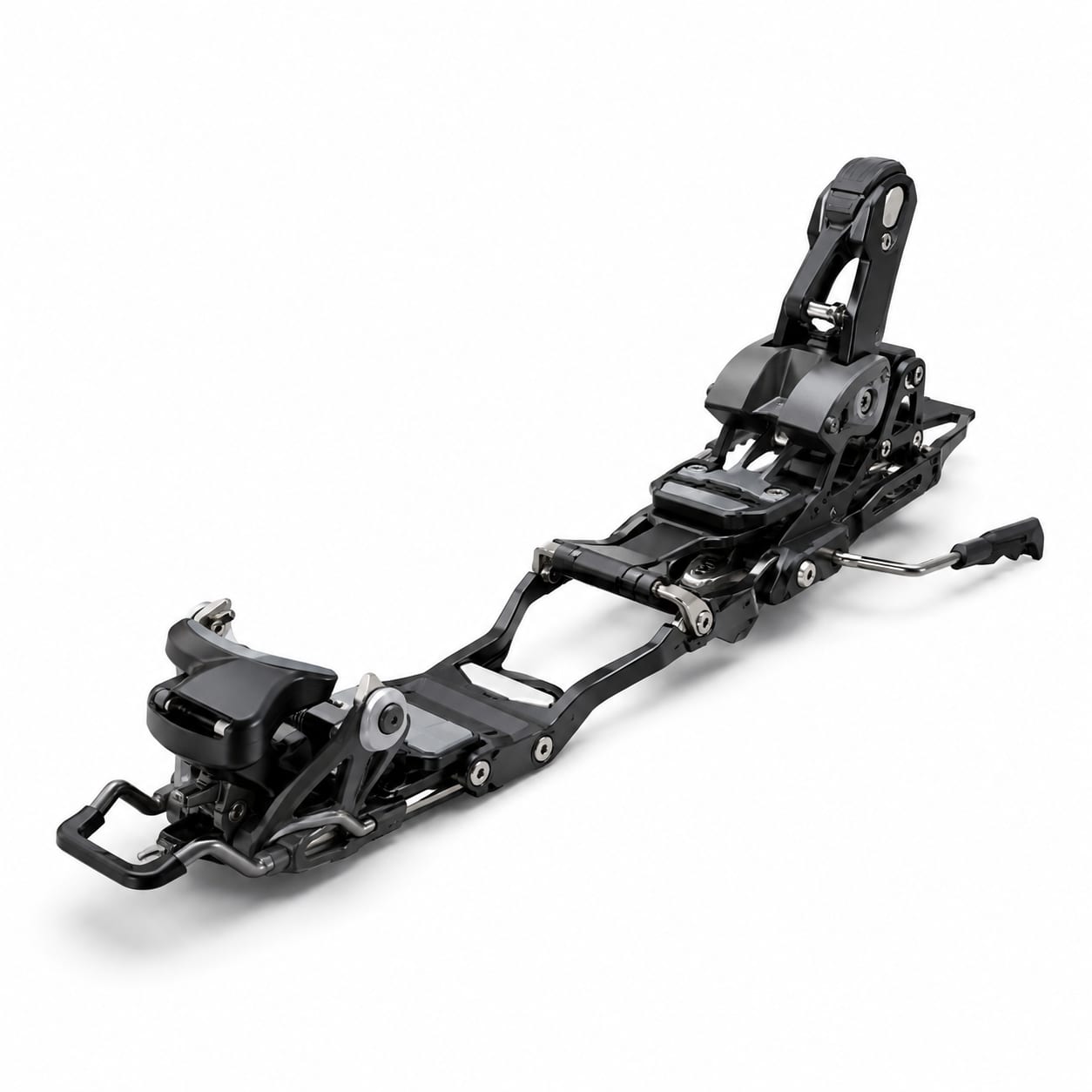
6 topics
Pick a question
Every answer links to the full subcategory guide and related gear types when it helps you decide.
Can I use my regular alpine boots with frame bindings?
Yes — this is the primary advantage of frame bindings. They accept standard ISO 5355 alpine boot soles, so you can use your existing resort boots without any modifications or special fittings. Some models also accommodate GripWalk soles, but check compatibility for your specific binding and boot combination. You do not need tech fittings on your boots for frame bindings.
Read answer →02Are frame bindings too heavy for touring?
It depends on the type of touring you do. For short sidecountry laps, hike-to terrain at resorts, and approaches under an hour, the weight is manageable. For long backcountry tours, multi-day trips, or any tour over 2 hours, the weight (1,800–2,800g per pair) becomes a significant disadvantage. If you tour frequently or for long distances, pin-tech bindings (600–1,000g) are dramatically more efficient on the ascent.
Read answer →03How do frame bindings compare to the Salomon Shift?
The Salomon Shift (a hybrid binding) is lighter (about 1,600g per pair), has a more natural touring stride with the pivot at the toe tip, and transitions faster between walk and ski mode. However, the Shift requires boots with tech fittings for touring mode, while frame bindings work with any alpine boot. The Shift also has a more complex mechanism with more potential failure points. For skiers with tech-fitting boots, the Shift is generally the better choice. For skiers who want to use their alpine boots, frame bindings are the only touring option.
Read answer →04Do frame bindings release as reliably as alpine bindings?
In ski mode, frame bindings offer release characteristics very similar to alpine bindings, including lateral and upward toe release and standard-to-high elastic travel. They are tested to the same ISO 9462 standards. The key difference is that you must ensure the frame is fully locked into ski mode before descending — a partially locked frame could affect release behavior. Always verify the lock is engaged before skiing.
Read answer →05What's the difference between the Marker Baron and Marker Duke?
The Marker Baron has a DIN range of 4–13 and weighs approximately 1,900g per pair, making it the lighter, more touring-oriented option. The Marker Duke has a DIN range of 6–16 and weighs approximately 2,400g per pair, making it the heavier, more aggressive option for big-mountain charging. Both use the same frame mechanism and offer similar touring capability. Choose the Baron if you're under DIN 10 and want to save weight; choose the Duke if you need higher retention for aggressive skiing.
Read answer →06Are frame bindings becoming obsolete?
Frame bindings are declining in popularity as hybrid bindings like the Salomon Shift improve, but they're not obsolete. They remain the only touring binding option for skiers with standard alpine boots who don't want to invest in touring-specific footwear. However, the category sees less innovation and fewer new models than pin-tech or hybrid bindings. If you're buying new, consider whether a hybrid binding with a touring boot might serve you better long-term, even if it requires a larger initial investment.
Read answer →