Kitvore.com

Kitvore.com

Specs that matter. Gear that fits.

Ski Bindings · Subcategory

Alpine Touring Frame Bindings

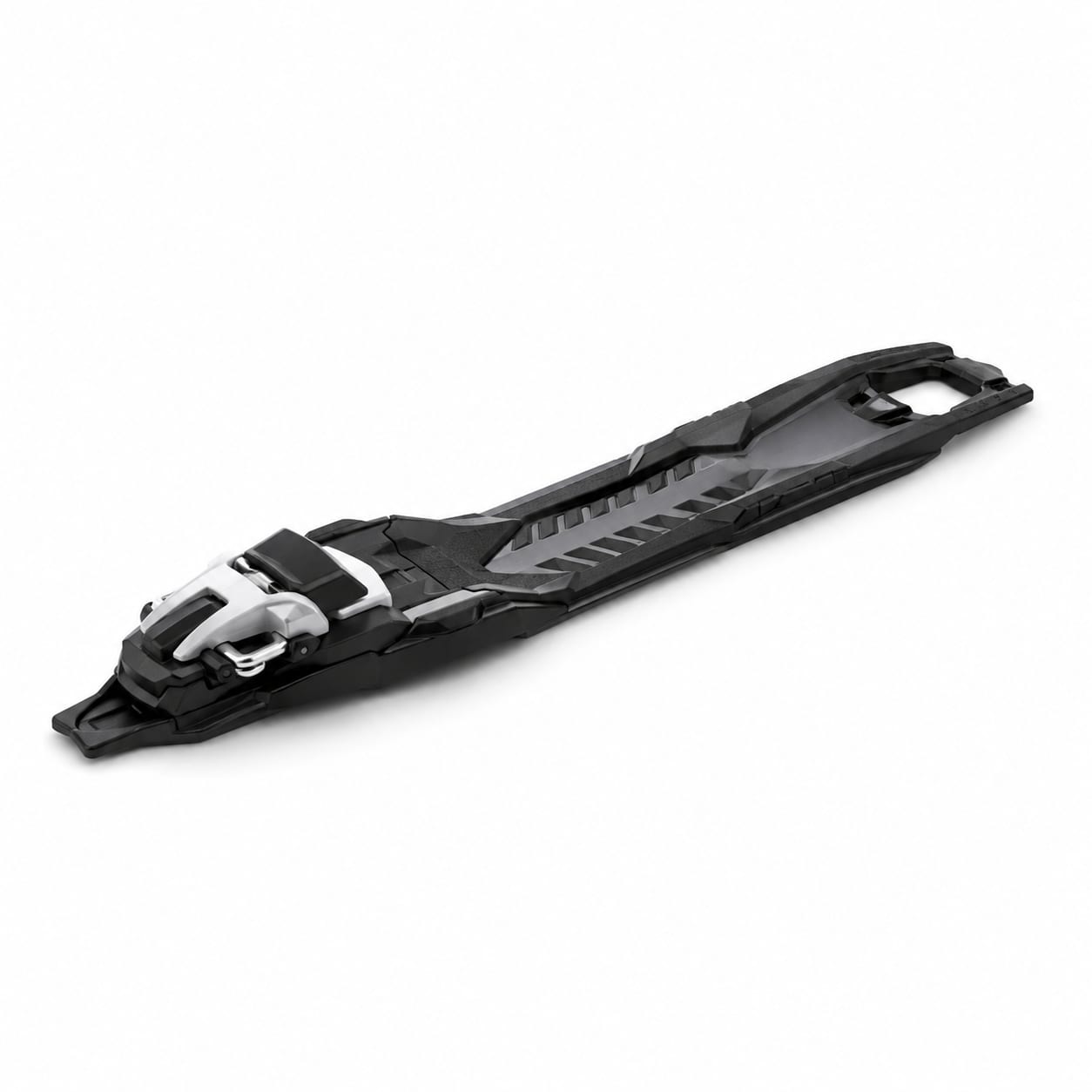
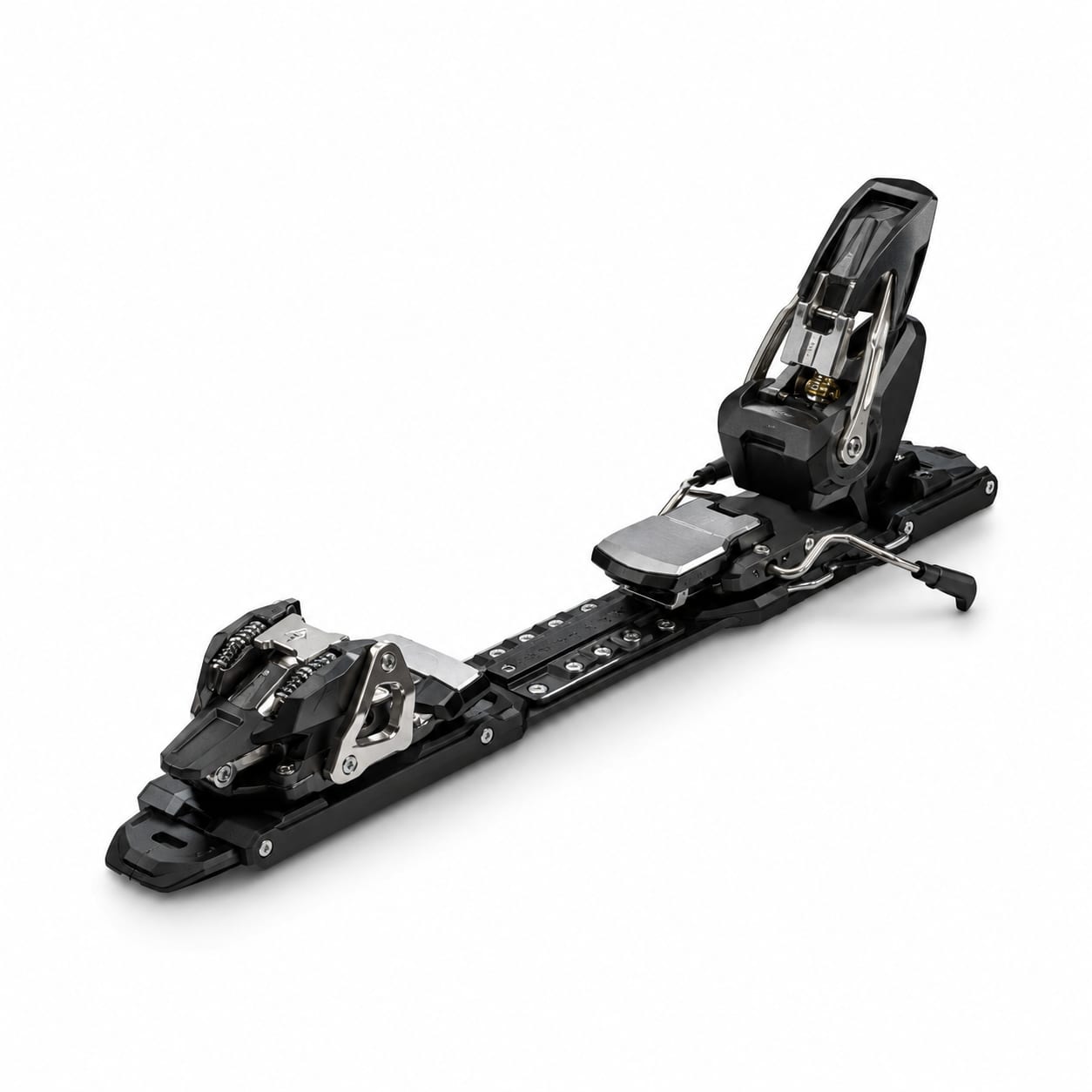
Heavy-duty touring bindings that pivot at the toe for uphill travel while delivering near-alpine downhill performance with standard alpine boots.

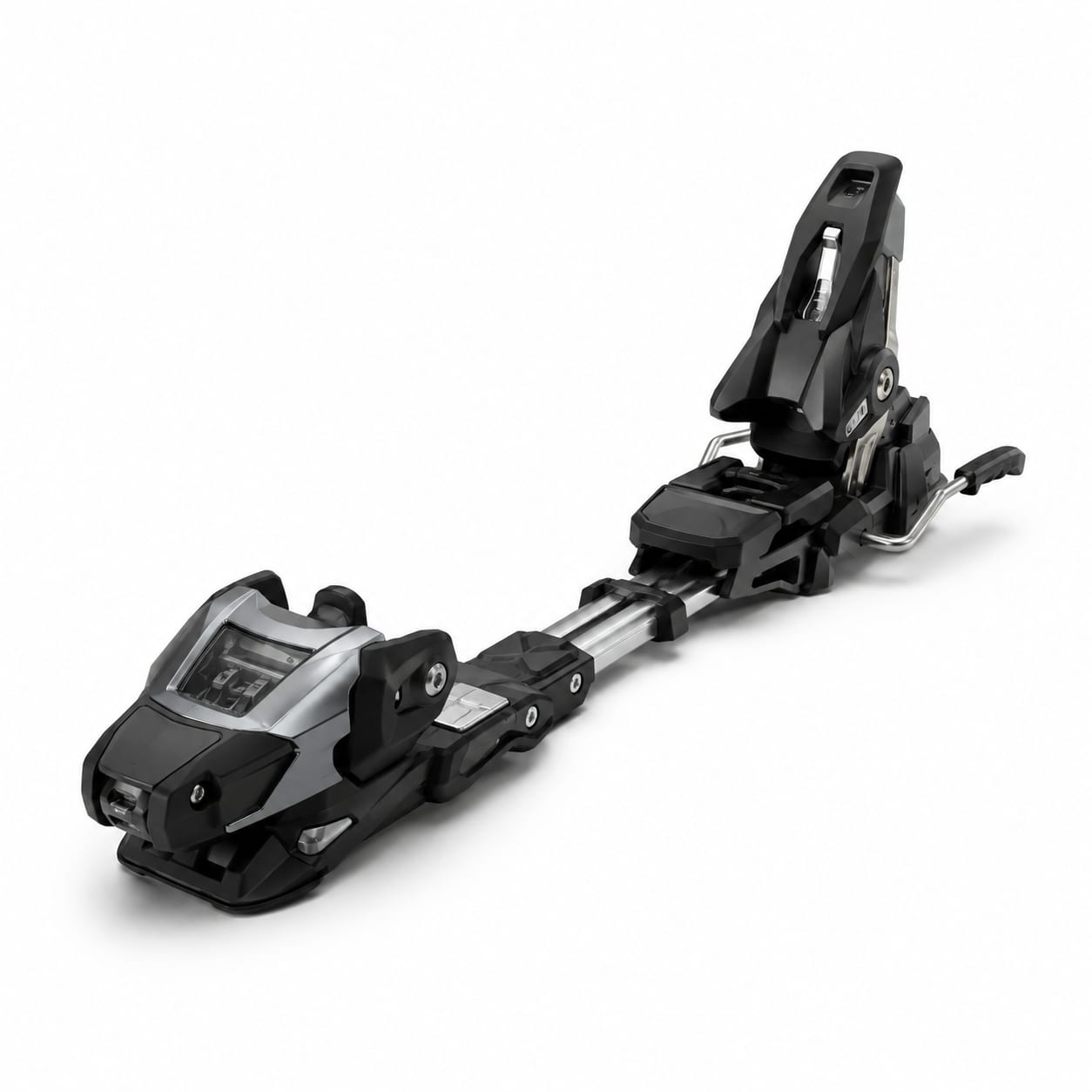
Alpine touring frame bindings are the bridge between resort and backcountry skiing for riders who want to tour occasionally without sacrificing downhill performance or buying dedicated touring boots. The entire heel assembly pivots as a single frame, allowing your heel to lift on the ascent, then locks down solidly for the descent. They accept standard ISO 5355 alpine boot soles, making them the only touring option for skiers who already own resort boots. While significantly heavier than pin-tech bindings and less efficient on the climb, they deliver superior power transmission, elastic travel, and release reliability on the way down — closer to a true alpine binding than any other touring category.

$300 – $650premium tierintermediateadvancedexpert

Best known for

Working with standard alpine boots — no touring-specific boot requiredNear-alpine downhill performance with reliable elastic travel and releaseHeel-lift touring capability for sidecountry and occasional backcountryRobust construction that handles aggressive skiing in variable conditionsMultiple climbing aid positions for ascending at different slope angles
Alpine Touring Frame Bindings

Guide

Detailed overview

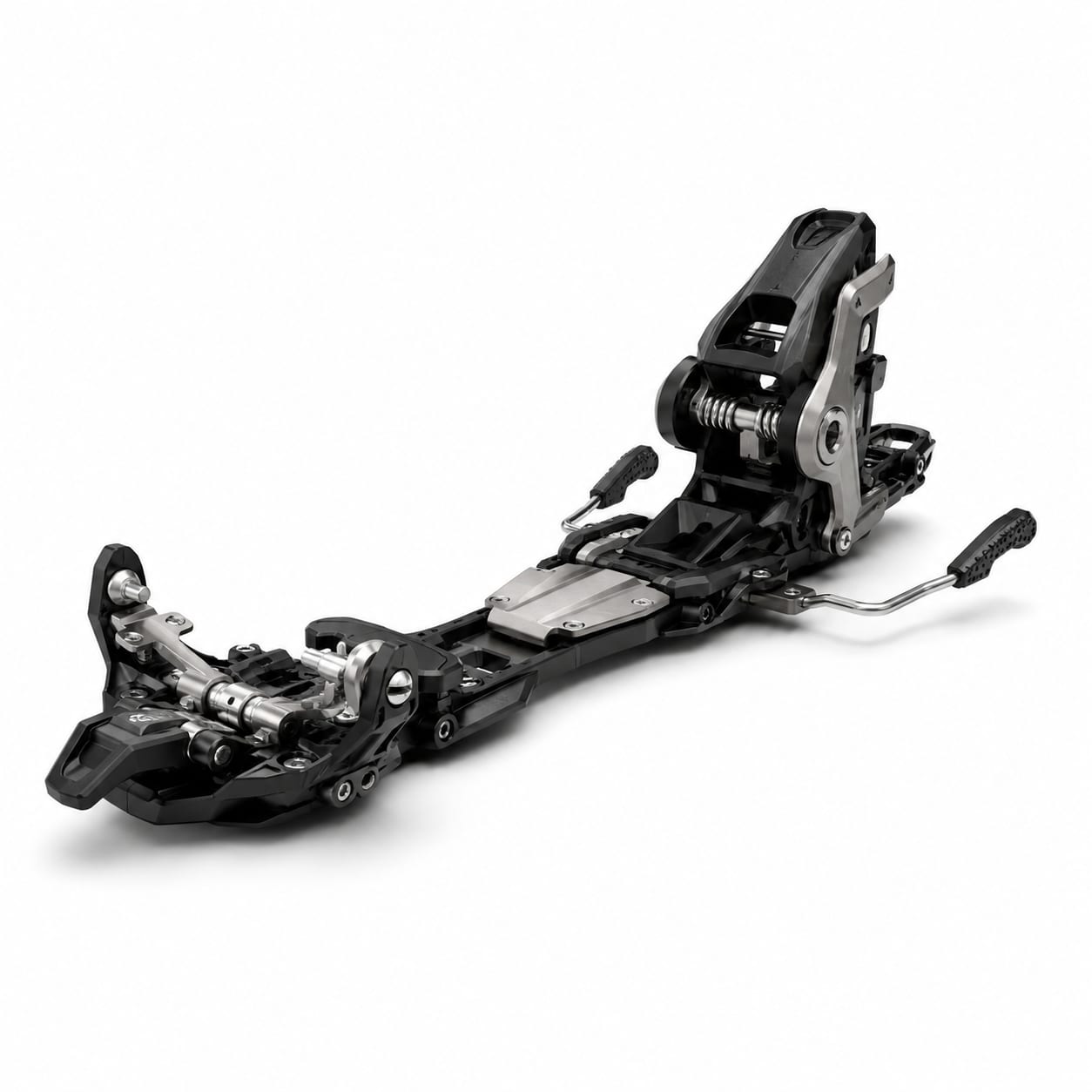
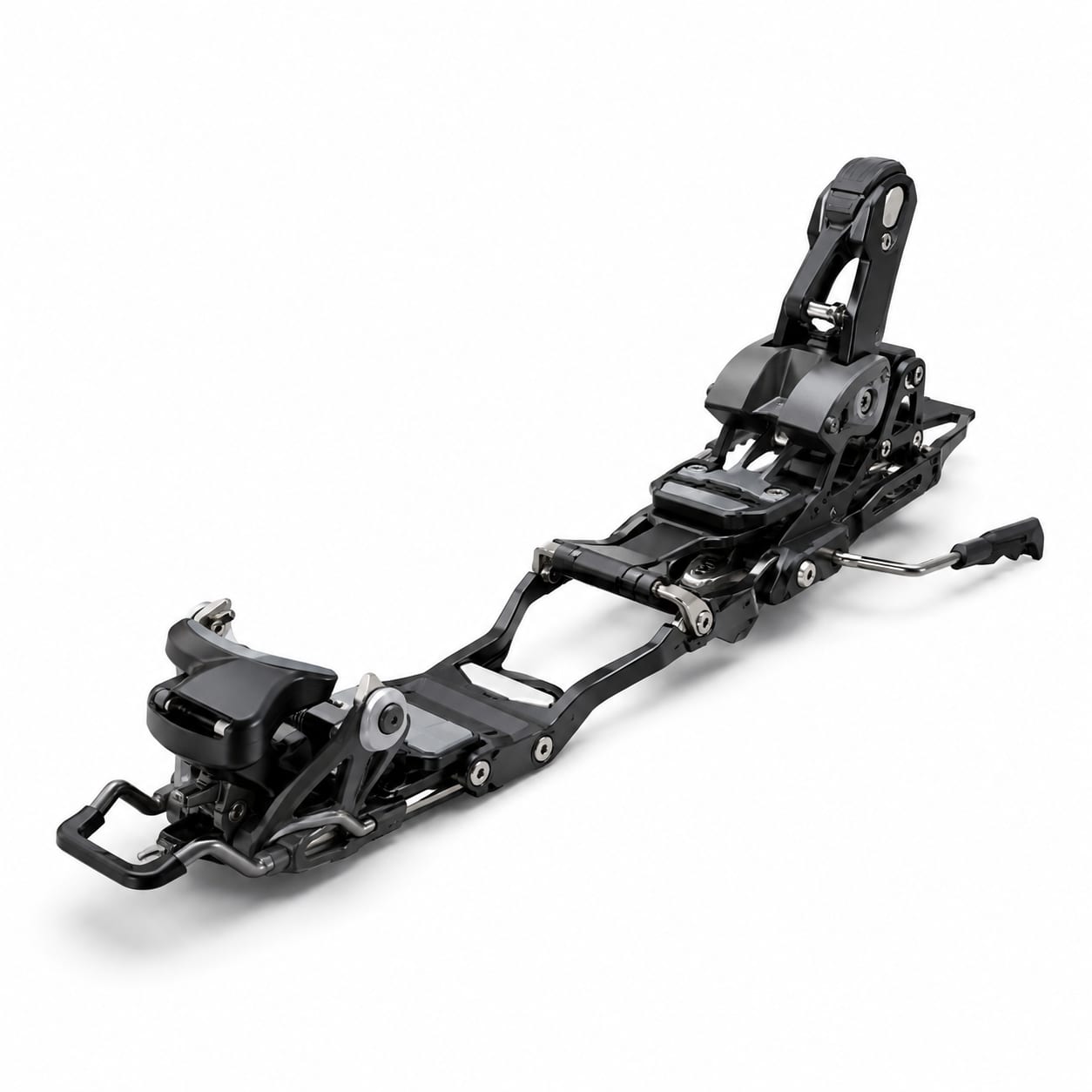
Alpine touring frame bindings feature a hinged frame mechanism that allows the entire heel piece to pivot upward from the toe during walking mode, while the toe piece remains fixed to the ski. When switched to ski mode, the frame locks down flat, creating a rigid connection between boot and ski that closely mimics a traditional alpine binding. This design means the binding can accommodate standard ISO 5355 alpine boot soles — the same boots you wear at the resort — eliminating the need for a separate touring boot with tech fittings. Frame bindings typically weigh between 1,800 and 2,800 grams per pair, making them the heaviest touring binding category by a significant margin. Models like the Marker Baron, Marker Duke, and Salomon Guardian have defined this category for years. They feature DIN ranges from 4–13 up to 6–16, climbing aids with two or three height positions, and brake widths from 85mm to 130mm. The trade-off is clear: you gain downhill confidence and boot compatibility, but you pay for it on every step of the ascent with weight that fatigues you faster than pin-tech alternatives. As hybrid bindings like the Salomon Shift have improved, frame bindings have lost market share, but they remain relevant for skiers who prioritize maximum downhill performance, already own alpine boots, or tour infrequently enough that investing in a full pin-tech setup isn't justified.

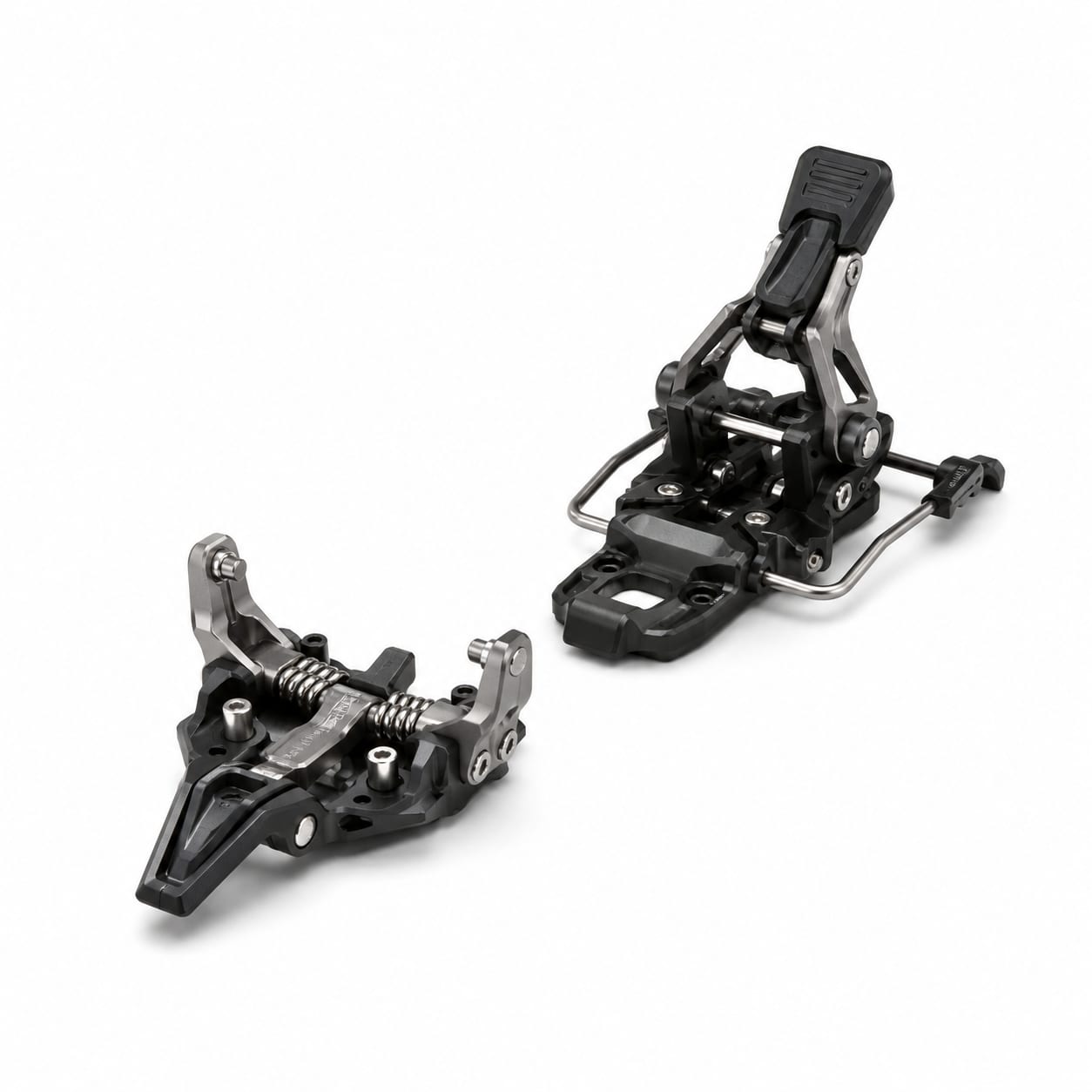
Alpine touring frame bindings occupy a specific niche in the skiing equipment landscape: they are designed for skiers who want the ability to tour uphill but refuse to compromise significantly on downhill performance. The core innovation is the pivoting frame — the heel assembly, including the heel cup and release mechanism, is mounted on a hinged arm that rotates upward from a pivot point near the toe piece. In walk mode, your heel lifts freely with each step while the toe remains engaged, and climbing aids (flip-up risers under the heel) reduce calf strain on steep skin tracks. In ski mode, the frame locks flat against the ski, and the binding functions essentially like a conventional alpine binding with full lateral and upward release capability.

The biggest advantage of frame bindings is boot compatibility. Unlike pin-tech bindings that require boots with tech fittings molded into the toe and heel, frame bindings work with any ISO 5355 alpine boot. This is a critical distinction for skiers who already own a quality pair of resort boots and don't want to purchase a second pair of touring-specific boots. It also means you get the rigid, high-performance sole platform of an alpine boot for the descent — no flexy rubber touring soles compromising your edge control. Some newer frame bindings also accommodate GripWalk soles, further expanding compatibility.

The downside is weight. Frame bindings are heavy — often 2,000 to 2,800 grams per pair compared to 600 to 1,000 grams for lightweight pin-tech bindings. That weight is on your feet, where it matters most. Every gram on the foot is roughly equivalent to three grams in your pack, so a frame binding setup can feel significantly more fatiguing on long ascents. The frame mechanism also adds stand height, which changes your stance and can feel less stable than a lower-profile binding. Additionally, the pivot point is typically behind the toe of the boot rather than at the ball of the foot, which creates a less natural walking stride compared to pin-tech bindings.

Despite these drawbacks, frame bindings remain the right choice for a specific type of skier: the resort-oriented rider who wants to venture into the sidecountry or do occasional backcountry laps without building a separate touring setup. They're also popular with skiers who charge hard on the descent and don't trust the lower elastic travel and retention characteristics of pin-tech bindings in rough, high-speed terrain. The Marker Duke, with its DIN range of 6–16 and burly metal construction, has long been the go-to for big-mountain skiers who tour to access lines but refuse to compromise on binding retention. For these users, the weight penalty is an acceptable trade for the confidence of knowing their binding will hold and release reliably at speed.

Quick facts

Primary purpose
Backcountry access with alpine-caliber downhill performance
Popular brands
MarkerSalomonTyroliaRossignol
Typical terrain
backcountrysidecountrylift-accessed backcountry

What makes it different

Frame pivots at toe for touring; locks rigidly for descent; closest downhill feel to alpine bindings; significantly heavier than tech/pin bindings; some models feature touring brackets that reduce pivot strain

Recommended ranges

How this type usually specs out

Each spec is explained in plain language, then we show what buyers usually look for on this type.

DIN / Release Value Range

DIN Range

What it means

The range of release force settings the binding supports. DIN (Deutsches Institut für Normung) values indicate the force required to release the boot. Must accommodate the skier's calculated release value based on weight, ability, and boot sole length.

Typical for this type

5–13 for most users; 6–16 for aggressive freeride skiers

Most common pick: 4–13 or 6–16

In practice

Frame bindings typically offer DIN ranges from 4–13 (mid-range models like Marker Baron) up to 6–16 (heavy-duty models like Marker Duke). The ranges are designed to accommodate intermediate through expert skiers who charge hard on descents.

Compared to other types

Frame bindings offer DIN ranges comparable to alpine bindings and higher than most pin-tech bindings (which typically max out at DIN 10–12). This is one of their key advantages for aggressive skiers.

Why it matters: Because frame bindings are chosen by skiers who prioritize downhill performance, the DIN range must support higher release values. A DIN range that tops out too low risks pre-release in aggressive terrain, which defeats the purpose of choosing a frame binding over a pin-tech option.

Brake Pad Width

Brake Width

What it means

The width of the brake arms when deployed. Brakes must be wide enough to clear the ski waist but not so wide they drag or catch. The brake prevents runaway skis after release.

Typical for this type

Match ski waist width plus 5–15mm clearance; most frame bindings are mounted on skis with 95–115mm waists

Most common pick: 95mm, 110mm, Or 130mm

In practice

Frame bindings are typically paired with wider all-mountain and freeride skis, so they are most commonly available in 95mm, 110mm, and 130mm brake widths. Some models also offer 85mm options for narrower setups.

Compared to other types

Frame bindings skew wider than alpine bindings (which commonly offer 75mm and 85mm options) but similarly to pin-tech and hybrid touring bindings, which also pair with wider skis.

Why it matters: Because frame bindings are used on wider skis designed for variable backcountry and off-piste conditions, brake width must accommodate ski waist widths typically ranging from 90mm to 120mm. Too narrow and the brakes won't deploy; too wide and they drag in carves.

Binding Type / Category

Binding Type

What it means

The fundamental design category of the binding, determining its intended use, mechanism, and compatibility with boot soles.

Typical for this type

Frame Touring

In practice

Frame touring bindings are defined by their pivoting heel frame mechanism. The entire heel assembly rotates upward from a pivot near the toe, allowing the heel to lift during walking while the toe stays fixed to the ski.

Compared to other types

Unlike pin-tech bindings (which use pins at the toe and a separate heel mechanism), frame bindings keep the boot locked into a traditional toe jaw and heel cup. Unlike hybrid bindings (which switch between pin and alpine modes), frame bindings use the same retention mechanism in both walk and ski modes.

Why it matters: The frame touring design is the defining characteristic of this subcategory. It determines the walking mechanics, weight, boot compatibility, and downhill performance profile. Understanding this type helps you evaluate whether the trade-offs align with your needs.

Boot Sole Type Compatibility

Boot Sole Compatibility

What it means

The types of ski boot soles the binding is designed to work with. Mismatched boot-sole combinations compromise release safety and may not engage properly.

Typical for this type

ISO 5355 Alpine Soles Are The Standard; Verify GripWalk Compatibility If Using Walkable Soles

Most common pick: ISO 5355 (Alpine); Some Models Also Accept GripWalk

In practice

The primary advantage of frame bindings is compatibility with standard ISO 5355 alpine boot soles. This means you can use your existing resort boots without needing touring-specific boots with tech fittings. Some newer models also accept GripWalk soles.

Compared to other types

Pin-tech bindings require ISO 9523 touring soles with tech fittings — they cannot be used with standard alpine boots. Hybrid bindings like the Salomon Shift require boots with tech fittings for touring mode. Alpine bindings only accept ISO 5355 or GripWalk. Frame bindings are unique in offering touring capability with standard alpine soles.

Why it matters: Boot compatibility is the number-one reason skiers choose frame bindings. If you already own alpine boots and don't want to invest in a separate touring boot, frame bindings are your only touring option. Mismatched soles compromise release safety.

Stand Height / Stack Height

Stand Height

What it means

The distance from the ski surface to the bottom of the boot sole when mounted. Higher stand heights increase leverage and edge power but reduce snow feel and stability.

Typical for this type

28–35mm is typical; lower is better for stability but limited by frame mechanism

Most common pick: 28–38mm

In practice

Frame bindings have higher stand heights than most other binding types because the pivoting frame mechanism adds vertical space between the ski and the boot sole. Typical stand heights range from 28mm to 38mm depending on the model.

Compared to other types

Frame bindings have the highest stand heights of any binding category — significantly higher than alpine bindings (17–22mm), pin-tech bindings (15–25mm), and hybrid bindings (20–28mm). This is one of their notable disadvantages.

Why it matters: Higher stand height increases leverage on edges (good for carving) but raises your center of gravity (reducing stability and snow feel). The added height of frame bindings is an inherent trade-off of the design and can feel noticeably less stable than low-profile alpine bindings.

Weight (Pair)

Weight Per Pair

What it means

Total weight of both bindings including brakes. Critical for touring setups where every gram matters on the ascent. Less important for resort skiing.

Typical for this type

1, 800–2, 200g for occasional touring; expect 2, 200–2, 800g for heavy-duty models with higher DIN

Most common pick: 1, 800–2, 800g

In practice

Frame bindings are the heaviest touring binding category by a wide margin. The pivoting frame mechanism, robust heel cup, and alpine-grade construction result in weights from approximately 1,800g (lighter models like Marker Baron) up to 2,800g (beefy models like Marker Duke).

Compared to other types

Frame bindings are roughly 2–4x heavier than pin-tech touring bindings (600–1,000g), 1.5–2x heavier than hybrid bindings (1,200–1,800g), and 1.3–1.8x heavier than standard alpine bindings (1,400–2,000g). This is their most significant trade-off.

Why it matters: Weight on your feet is the most fatiguing weight you can carry. At roughly 3x the impact of pack weight, heavy bindings significantly increase effort on ascents. For long tours, this is the primary disadvantage of frame bindings. For short sidecountry laps, it's more manageable.

Elastic Travel / Retention Travel

Elastic Travel

What it means

The distance the binding can flex elastically before releasing. Greater elastic travel allows the binding to absorb shocks and momentary forces without releasing, reducing inadvertent releases while maintaining safety.

Typical for this type

Standard Or High Elastic Travel Is Appropriate For The Aggressive Downhill Skiing Frame Bindings Are Designed For

Most common pick: Standard to High

In practice

Frame bindings offer elastic travel comparable to alpine bindings — typically standard to high. The toe piece and heel cup use spring-loaded jaws with meaningful lateral and vertical elastic travel, allowing the binding to absorb shocks without releasing prematurely.

Compared to other types

Frame bindings match or exceed alpine binding elastic travel and significantly exceed pin-tech bindings, which have low elastic travel due to their pin engagement design. This is one of the strongest arguments for frame bindings over pin-tech for aggressive skiers.

Why it matters: Good elastic travel is critical for the aggressive, high-speed skiing that frame binding users typically do. It reduces inadvertent releases in rough terrain while maintaining the ability to release cleanly in a genuine fall. This is a key advantage over pin-tech bindings.

AFD (Anti-Friction Device) Type

AFD Type

What it means

The mechanism under the toe of the binding that reduces friction during lateral release. AFD design affects release consistency across different boot sole types and snow conditions.

Typical for this type

Sliding AFD Preferred For Consistent Release With Multiple Sole Types; Fixed AFD Acceptable For ISO 5355 Only

Most common pick: Sliding AFD Or Fixed AFD Depending On Model

In practice

Frame bindings use traditional alpine-style AFD mechanisms under the toe piece. Higher-end models feature adjustable sliding AFDs that can accommodate both ISO 5355 and GripWalk soles. Entry-level models may use fixed/gliding AFDs designed for ISO 5355 only.

Compared to other types

Frame bindings use the same AFD types as alpine bindings, which is a safety advantage over pin-tech bindings that rely on pin geometry rather than a traditional AFD. Hybrid bindings use a combination of pin interface (touring) and alpine AFD (downhill).

Why it matters: AFD type affects release consistency and boot sole compatibility. If you plan to use GripWalk boots, you need a sliding AFD that adjusts for the different sole profile. For standard alpine boots, either type works.

Mounting System / Interface

Mounting System

What it means

How the binding attaches to the ski. Affects adjustability, remount options, and whether the binding can be moved without drilling new holes.

Typical for this type

Flat Mount Is Standard; Consider Quiver Killer Inserts If You Want to Swap Bindings Between Skis

Most common pick: Flat Mount (Drilled)

In practice

Frame bindings are almost universally flat-mounted, screwed directly into the ski top sheet. The frame mechanism requires a rigid, direct connection to the ski for proper function. Track systems and integrated systems are not used in this category.

Compared to other types

Same as most alpine and pin-tech bindings. Hybrid bindings also use flat mounting. The mounting system is not a differentiating factor between binding subcategories.

Why it matters: Flat mounting provides the most direct connection and lowest possible stack height, which is important given that frame bindings already have high stand heights. Proper drilling with correct bit size and depth stops is essential for a safe mount.

Ramp Angle / Delta Angle

Ramp Angle

What it means

The angle created by the height difference between the toe piece and heel piece. Affects stance, forward lean, and how the skier is positioned over the ski.

Typical for this type

4–6 degrees is typical; be aware that frame bindings tend toward higher ramp angles due to The Frame Design

Most common pick: 4–7 degrees

In practice

Frame bindings typically have ramp angles in the 4–7 degree range, which is slightly higher than standard alpine bindings (3–5 degrees). The frame mechanism and climbing aid hardware contribute to a taller heel piece relative to the toe.

Compared to other types

Frame bindings tend to have higher ramp angles than alpine bindings (3–5 degrees) and pin-tech bindings (2–5 degrees). The added height from the frame mechanism contributes to this. Some skiers find the stance less neutral than other binding types.

Why it matters: Higher ramp angles push you forward in your stance, which can aid carving but may cause quad fatigue on long days. Combined with the forward lean of your boots, total ramp can significantly affect your stance and comfort. Be especially mindful of this on long tours.

Recommended Ability Level

Recommended Ability Level

What it means

The skier ability level the binding is designed and DIN-ranged for. Helps match binding performance and safety characteristics to skier needs.

Typical for this type

Intermediate Through Expert; Not Appropriate For Beginners Due to Weight, Complexity, And DIN Range

Most common pick: Intermediate, Advanced, Expert

In practice

Frame bindings are designed for intermediate through expert skiers who have the skill to benefit from the touring capability and the downhill performance. The DIN ranges start at 4–6, which is above beginner territory. The weight and complexity also make them impractical for novices.

Compared to other types

Alpine bindings span all ability levels including beginners. Pin-tech bindings are typically used by advanced to expert skiers due to the touring focus. Hybrid bindings target intermediate to expert skiers. Frame bindings are similar to hybrids in their ability range.

Why it matters: A beginner would be better served by a lighter, simpler alpine binding. Frame bindings are for skiers who are already competent on the descent and want to add uphill capability. Choosing a binding above your ability level can create safety risks from improper DIN settings.

Recommended Ski Type

Ski Type Compatibility

What it means

The type of skiing and ski the binding is optimized for. Ensures the binding's performance characteristics match the intended use.

Typical for this type

Best paired with freeride or all-mountain skis with 90–115mm waist widths; can be used on touring skis but weight is a penalty

Most common pick: Freeride, All-Mountain, Touring

In practice

Frame bindings are most commonly mounted on freeride and all-mountain skis that are wide enough for off-piste conditions but still perform reasonably on groomers. They pair well with skis in the 90–115mm waist range. They can be used on dedicated touring skis but the weight penalty is more noticeable on lighter setups.

Compared to other types

Alpine bindings are optimized for frontside and all-mountain skis. Pin-tech bindings are designed for touring skis. Hybrid bindings work across all-mountain, freeride, and touring skis. Frame bindings overlap most with freeride and all-mountain categories.

Why it matters: Matching your binding to your ski type ensures a balanced setup. A heavy frame binding on a lightweight touring ski creates a sluggish, tip-heavy feel. On a burly freeride ski, the weight is more proportional and the downhill performance matches the ski's capability.

Climbing Aid / Heel Riser

Climbing Aid / Riser

What it means

Adjustable heel lifters on touring bindings that reduce calf strain during steep ascents. Not present on pure alpine bindings.

Typical for this type

Dual Position Is Sufficient For Most Users; Triple Position Is Nice For Steep Ski Mountaineering

Most common pick: Dual Position Or Triple Position

In practice

Frame bindings feature climbing aids that flip up under the heel frame to reduce calf strain on steep ascents. Most models offer two positions (typically around 30mm and 55mm lift), while some offer three positions for finer adjustment. The climbing aids are operated by flipping them with a pole grip.

Compared to other types

Alpine bindings have no climbing aids. Pin-tech bindings typically offer two to three riser positions. Hybrid bindings also offer multiple climbing aid positions. Frame bindings' climbing aids are comparable to pin-tech in function but may be slightly less efficient to operate due to the frame mechanism.

Why it matters: Climbing aids are essential for any sustained uphill travel. Without them, your calves bear the full load of the steep angle. Dual-position risers handle most touring scenarios, from moderate skin tracks to steep headwalls. The ability to flip between positions with your pole without removing your skis is important for efficiency.

Toe Release Direction

Toe Piece Release Direction

What it means

The directions in which the toe piece allows the boot to release. Affects the types of falls the binding protects against.

Typical for this type

Lateral + Upward Release Is Standard And Appropriate For The Aggressive Skiing Frame Bindings Are Designed For

In practice

Frame bindings use traditional alpine-style toe pieces that release both laterally (sideways) and upward. This provides protection in both twisting falls and forward-backward loading scenarios. The release characteristics are essentially identical to alpine bindings.

Compared to other types

Frame bindings match alpine bindings in toe release capability, offering lateral + upward release. This is superior to pin-tech bindings, which have limited upward release at the toe. Hybrid bindings offer alpine-style release in ski mode but pin-style in tour mode.

Why it matters: Multi-directional release at the toe is critical for safety in the variable terrain where frame bindings are used. Unlike pin-tech bindings that have limited upward release, frame bindings offer comprehensive fall protection comparable to resort bindings.

Primary Construction Material

Construction Material

What it means

The main material used in the binding body and key structural components. Affects weight, durability, and vibration damping.

Typical for this type

Mixed Construction Is Standard; Aluminum-Heavy Models Are More Durable; Composite-Heavy Models Are Slightly Lighter

Most common pick: Mixed (Aluminum And Composite)

In practice

Most frame bindings use a mix of aluminum and composite polymer materials. High-stress components like the heel cup and frame pivot are typically aluminum for strength, while the housing and climbing aids use composite for weight savings. Premium models like the Marker Duke use more metal throughout.

Compared to other types

Alpine bindings use similar mixed or aluminum construction. Pin-tech bindings use more composite and less metal to save weight. Hybrid bindings use mixed construction with aluminum in the toe jaws and composite in the touring mechanism. Frame bindings are among the most metal-heavy touring options.

Why it matters: The mixed construction balances durability and weight. Because frame bindings are already heavy, manufacturers use composite where possible to keep weight somewhat manageable. However, the critical load-bearing components must be metal for the DIN ranges and forces these bindings handle.

ISO Safety Certification

ISO Certification

What it means

The international safety standards the binding meets or exceeds. Certified bindings have been tested for consistent release values and durability.

Typical for this type

Both ISO 9462 (Alpine) And ISO 13992 (Touring) Certification Expected For Frame Bindings Sold In Regulated Markets

Most common pick: ISO 9462 And ISO 13992

In practice

Frame bindings should carry both ISO 9462 certification (for alpine binding safety) and ISO 13992 certification (for alpine touring binding requirements). Because they function as both alpine and touring bindings, dual certification ensures they meet safety standards for both modes.

Compared to other types

Alpine bindings carry ISO 9462 only. Pin-tech bindings carry ISO 13992. Hybrid bindings should carry both certifications. Frame bindings, like hybrids, should be dual-certified because they serve both alpine and touring functions.

Why it matters: Dual certification means the binding has been tested for consistent release in both ski and walk modes, and that the climbing aids and frame pivot meet touring-specific safety requirements. Always verify certification before purchasing — it's non-negotiable for safety.

Evaluation

Strengths and trade-offs

Pros

What this type does best

Works with standard alpine boots

Critical

Frame bindings accept ISO 5355 alpine boot soles, meaning you can tour with your existing resort boots. No need to invest in touring-specific boots with tech fittings, saving $400–$800 and avoiding a second pair of boots to store and maintain.

Near-alpine downhill performance

Critical

In ski mode, frame bindings deliver power transmission, elastic travel, and release characteristics comparable to alpine bindings. You can charge hard, ski fast, and trust the binding to hold and release reliably — something pin-tech bindings can't fully match.

Full lateral and upward toe release

High

Unlike pin-tech bindings that have limited upward release at the toe, frame bindings offer the same multi-directional release as alpine bindings. This provides more comprehensive protection in complex fall scenarios, especially at speed.

High DIN range options

High

Models like the Marker Duke offer DIN ranges up to 6–16, accommodating aggressive and expert skiers who need high retention values. This is significantly higher than most pin-tech bindings, which typically max out at DIN 10–12.

Robust, durable construction

Medium

Frame bindings are built to handle aggressive skiing in rough terrain. The metal-heavy construction and alpine-grade components are more durable than lightweight pin-tech bindings, especially for skiers who ski hard and tour occasionally rather than touring extensively.

Multiple climbing aid positions

Medium

Most frame bindings offer two or three climbing aid positions, reducing calf strain on skin tracks of varying steepness. The risers are typically easy to flip with a pole grip without removing your skis.

No pre-release concerns in rough terrain

High

The standard-to-high elastic travel means frame bindings absorb shocks and momentary forces without releasing inadvertently. For skiers who have experienced pre-release on pin-tech bindings in chopped-up snow, this is a significant confidence boost.

Cons

Trade-offs to be aware of

Very heavy for touring

Significant

At 1,800–2,800g per pair, frame bindings are the heaviest touring option. The weight on your feet causes significantly more fatigue on ascents compared to pin-tech bindings (600–1,000g). For long tours or multiple laps, this is a major drawback.

High stand height reduces stability

Moderate

The frame mechanism adds 28–38mm of stand height, which is noticeably higher than alpine or pin-tech bindings. This raises your center of gravity, reduces snow feel, and can make the ski feel less stable, especially in variable snow at speed.

Suboptimal walking pivot point

Moderate

The pivot point on frame bindings is typically behind the ball of the foot rather than at the toe tip like pin-tech bindings. This creates a less natural walking stride and makes the ski tail heavier during the swing phase, increasing fatigue on long approaches.

Declining market and innovation

Moderate

As hybrid bindings like the Salomon Shift improve, frame bindings are losing market share. This means fewer new models, less innovation, and potentially reduced parts availability in the future. The category is not dead but is clearly in decline.

Difficult to switch between walk and ski mode

Minor

Transitioning between walk and ski mode on frame bindings requires stepping out of the binding or manipulating the frame with your hands while balancing. This is slower and more cumbersome than pin-tech bindings, where you simply rotate the heel tower.

Not ideal for dedicated touring

Significant

If you tour frequently or for long distances, the weight, inefficient stride, and transition difficulty make frame bindings a poor choice compared to pin-tech. They're best for occasional touring, not as a primary backcountry binding.

Best for

Terrain

Sidecountry gates at resortsShort backcountry laps with steep descentsIn-bounds off-piste with occasional hike-to terrainBackcountry accessed via short, moderate approaches

Snow conditions

Variable backcountry snowChopped-up crud and mankSteep, technical descentsMixed resort and backcountry days

Skill level

IntermediateAdvancedExpert

Riding style

Aggressive freerideBig mountainCharger who tours to access terrainResort skier who wants occasional touring capability

Rider profile

Resort skier who wants to try backcountry without buying new bootsSkier with one ski quiver who needs both resort and touring capabilityAggressive skier who doesn't trust pin-tech retention at speedSidecountry enthusiast who does short hikes to access off-piste terrainSkier transitioning from resort to backcountry who wants familiar binding feel

Not ideal for

Reasons

Weight makes long tours excessively fatiguing — choose pin-tech insteadBeginners don't need touring capability and should start with simpler, lighter alpine bindingsThe high stand height and weight are counterproductive for park ridingIf you tour more than 50% of the time, a dedicated pin-tech setup will be more enjoyable and efficientSkimo and fitness touring prioritize weight above all else — frame bindings are the opposite of this philosophy

Terrain

Long backcountry approaches over 2 hoursMulti-day ski toursFlat, rolling terrain requiring extensive skating

Skill level

Beginner

Riding style

Skimo racingFast and light touringLong-distance ski mountaineeringPark and freestyle

Compare

How it stacks up

This page

Alpine Touring Frame Bindings

Works with alpine boots, better downhill performance, higher DIN range, more elastic travel, more reliable release at speed, more durable construction

Alternative

Alpine Touring Pin/Tech Bindings

Dramatically lighter (600–1,000g vs. 1,800–2,800g), more efficient stride with natural pivot point, faster transitions, better for long tours, lower stand height

Bottom line

Choose frame bindings if you ski resort primarily and tour occasionally, or if you don't want to buy touring boots. Choose pin-tech if you tour frequently, do long approaches, or prioritize uphill efficiency. If you tour more than 30% of the time, pin-tech is usually the better choice.

This page

Alpine Touring Frame Bindings

Works with standard alpine boots (no tech fittings required), simpler mechanism with fewer failure points, proven durability, no toe piece mode switching

Alternative

Hybrid / Shift-style Bindings

Lighter weight (1,200–1,800g vs. 1,800–2,800g), better touring stride with toe pivot at the tip, faster transitions, more modern design with ongoing innovation, lower stand height

Bottom line

Hybrid bindings like the Salomon Shift have largely superseded frame bindings for most users. Choose hybrids if you have or are willing to buy boots with tech fittings. Choose frame bindings only if you must use standard alpine boots or if you prefer the simpler, more proven mechanism.

This page

Alpine Touring Frame Bindings

Touring capability with heel lift and climbing aids, allows uphill travel, works in sidecountry and backcountry

Alternative

Alpine Bindings

Lighter weight (1,400–2,000g), lower stand height, more direct power transmission, simpler operation, wider model selection, no walk-mode transition needed

Bottom line

Choose alpine bindings if you never tour. The weight and complexity of frame bindings are not worth it for resort-only skiing. Choose frame bindings only if you genuinely need touring capability, even occasionally. Adding a frame binding to a resort-only setup adds cost, weight, and complexity with no benefit.

Shopping

Buying tips

  • 1

    Be honest about how much you actually tour. If it's less than 20% of your days, frame bindings make sense. If it's more than 30%, seriously consider pin-tech or hybrid bindings instead.

  • 2

    Check your boot sole type before buying. Frame bindings work with ISO 5355 alpine soles. If you have GripWalk boots, verify the specific model supports them — not all do.

  • 3

    Match the DIN range to your needs with room to grow. If you're an aggressive skier currently at DIN 8, a 4–13 range puts you in the middle. A 6–16 range gives more headroom but starts higher than some intermediates need.

  • 4

    Consider the Marker Baron (DIN 4–13, ~1,900g) for a lighter option or the Marker Duke (DIN 6–16, ~2,400g) for maximum retention. These are the dominant models in the category for good reason.

  • 5

    Don't forget brake width. Frame bindings are typically mounted on wider skis, so 95mm or 110mm brakes are most common. Measure your ski waist and add 5–15mm of clearance.

  • 6

    Factor in the total system weight. A frame binding on a heavy freeride ski creates a very heavy setup. If you're building a touring-oriented ski, the combined weight of ski + frame binding may be fatiguing on long days.

  • 7

    Try before you commit if possible. The high stand height and different stance of frame bindings can feel unusual if you're used to alpine bindings. Demo or rent first if you can.

  • 8

    Consider buying used boots with tech fittings instead of frame bindings. A used touring boot + new pin-tech binding may cost similar to new frame bindings and perform better on tours.

Care

Maintenance notes

  • Lubricate the frame pivot points annually with a silicone-based lubricant to prevent corrosion and ensure smooth walk/ski mode transitions.
  • Check frame lock engagement before every descent. A partially locked frame can release unexpectedly. Listen for a solid click and visually verify the lock is fully engaged.
  • Inspect climbing aid mechanisms regularly. The flip-up risers can accumulate ice and debris, preventing proper deployment or retraction. Clean and dry after wet tours.
  • Have your DIN settings checked by a certified binding technician at least once per season, or any time you change boots, ski conditions, or ability level.
  • Check screws for tightness after the first few days on new mounts, as bindings can settle. After that, check once per season. Do not overtighten — use a torque wrench if possible.
  • Store with walk mode engaged and climbing aids down to relieve spring tension on the frame mechanism during the off-season.
  • Replace any binding that shows visible cracking in the frame, heel cup, or toe housing. Frame bindings are under significant stress and structural failure is dangerous.
  • If transitioning from heavy use to storage, clean all snow, ice, and debris from the binding, dry thoroughly, and store in a dry location to prevent corrosion of the frame pivot.

Progression

Skill development path

Frame bindings are best suited for skiers who are already confident on the descent and want to add uphill capability. If you're a strong intermediate or advanced resort skier comfortable on black runs and variable snow, frame bindings let you explore sidecountry and backcountry without changing your boots or compromising downhill performance. As you gain touring experience and fitness, you may find the weight increasingly frustrating on longer tours — this is the natural progression toward pin-tech or hybrid bindings. Many skiers start with frame bindings, discover they love touring, and eventually build a dedicated lightweight setup while keeping their frame binding rig for resort-sidecountry days. The key progression is: learn to tour safely (avalanche education, skin track technique, transition efficiency) → build fitness for longer tours → evaluate whether the weight penalty still makes sense for your touring frequency → consider a lighter setup if touring becomes a primary activity.

FAQ

Common questions

Each question has a dedicated page with a full answer and links to the buying guide.

Can I use my regular alpine boots with frame bindings?

Yes — this is the primary advantage of frame bindings. They accept standard ISO 5355 alpine boot soles, so you can use your existing resort boots without any modifications or special fittings. Some models also accommodate GripWalk soles, but check compatibility for your specific binding and boot combination. You do not need tech fittings on your boots for frame bindings.

Are frame bindings too heavy for touring?

It depends on the type of touring you do. For short sidecountry laps, hike-to terrain at resorts, and approaches under an hour, the weight is manageable. For long backcountry tours, multi-day trips, or any tour over 2 hours, the weight (1,800–2,800g per pair) becomes a significant disadvantage. If you tour frequently or for long distances, pin-tech bindings (600–1,000g) are dramatically more efficient on the ascent.

How do frame bindings compare to the Salomon Shift?

The Salomon Shift (a hybrid binding) is lighter (about 1,600g per pair), has a more natural touring stride with the pivot at the toe tip, and transitions faster between walk and ski mode. However, the Shift requires boots with tech fittings for touring mode, while frame bindings work with any alpine boot. The Shift also has a more complex mechanism with more potential failure points. For skiers with tech-fitting boots, the Shift is generally the better choice. For skiers who want to use their alpine boots, frame bindings are the only touring option.

Do frame bindings release as reliably as alpine bindings?

In ski mode, frame bindings offer release characteristics very similar to alpine bindings, including lateral and upward toe release and standard-to-high elastic travel. They are tested to the same ISO 9462 standards. The key difference is that you must ensure the frame is fully locked into ski mode before descending — a partially locked frame could affect release behavior. Always verify the lock is engaged before skiing.