
Ski Boots · FAQ
Questions about Freestyle / Park Ski Boots
Straight answers on fit, specs, and when this type makes sense — each topic has its own page with links back to the buying guide.
Open Freestyle / Park Ski Boots guide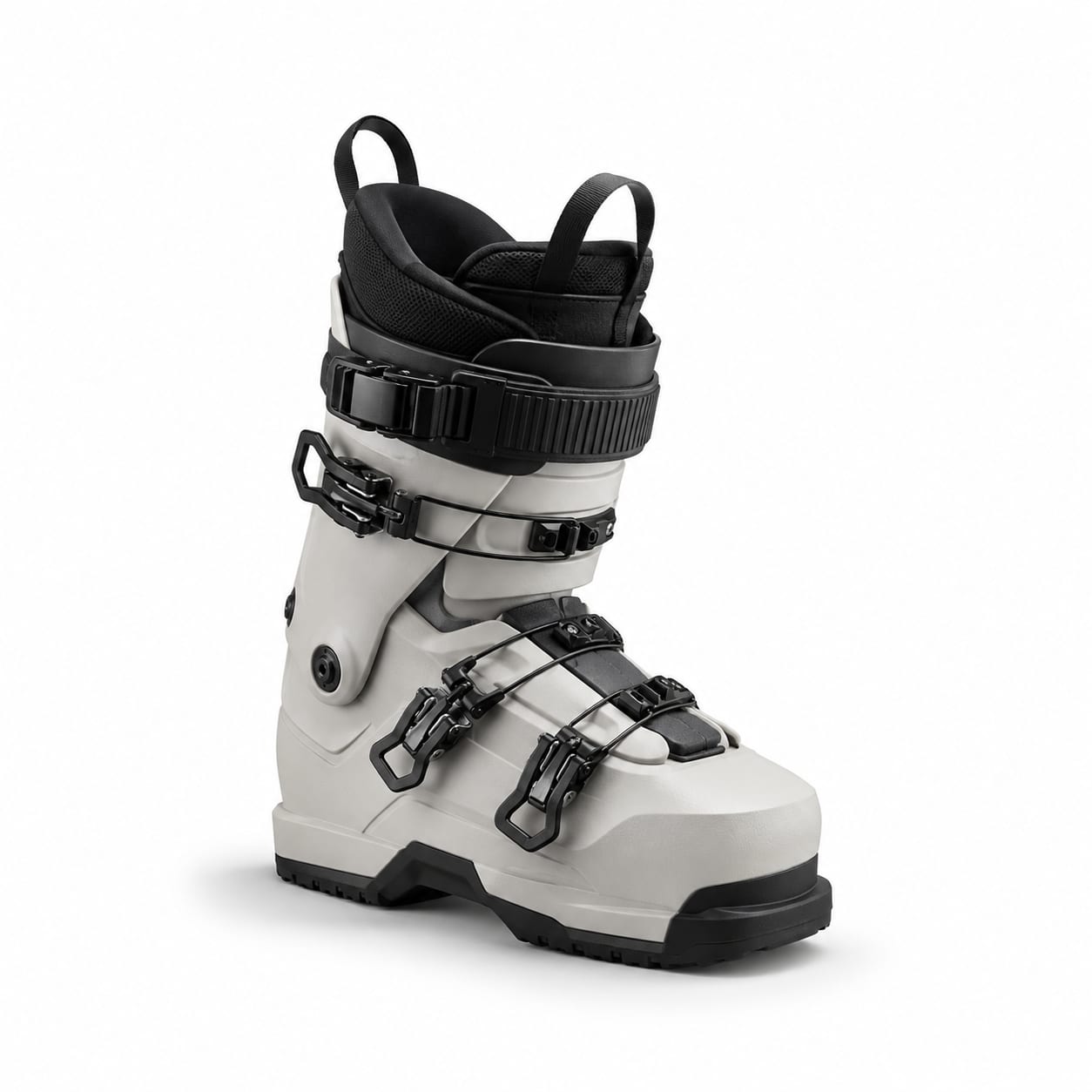
6 topics
Pick a question
Every answer links to the full subcategory guide and related gear types when it helps you decide.
Can I use freestyle ski boots for regular all-mountain skiing?
Yes, but with limitations. Freestyle boots work fine for cruising groomers and moderate terrain between park laps. However, their soft flex provides poor edge hold on icy slopes, vague feedback at high speeds, and less power for driving wider all-mountain skis. If you spend less than 50% of your time in the park, consider an all-mountain boot with a softer flex instead.
Read answer →02What flex rating should I choose for park skiing?
For most park skiers, 80–90 flex is the sweet spot. Lighter skiers and beginners should look at 70–80, while heavier or more aggressive park skiers may prefer 90–100. Going above 100 flex defeats the purpose of a freestyle boot—you'll lose the forgiveness and feel that make park skiing enjoyable. Remember that flex ratings vary between brands, so always try before you buy.
Read answer →03Do I really need shock absorption in park boots, or is it a gimmick?
It's absolutely not a gimmick. Shock-absorption systems—whether rubber heel inserts, 3-piece shell designs, or specialized dampening materials—significantly reduce the impact forces that travel through your body on landings. Over a full park session with dozens of jumps, this cumulative reduction in impact loading makes a real difference in joint health and fatigue. If you're hitting jumps of any size, shock absorption is a must-have feature.
Read answer →04Are 3-piece (tongue-style) boots like Full Tilt better for park skiing?
3-piece boots have a natural advantage for park skiing because their design inherently absorbs shock through the removable tongue and independent cuff. They also tend to have more consistent flex throughout the range of motion and are easier to get on and off. However, modern 2-piece overlap freestyle boots with dedicated shock inserts perform very well too. It comes down to personal preference and fit—both designs work well for park skiing.
Read answer →05Can I use freestyle boots with touring bindings for backcountry access?
Generally no. Most freestyle boots lack tech fittings (pin holes) required for tech/touring bindings and don't have walk mode for efficient uphill travel. They're also heavier than touring boots, making skinning exhausting. If you need backcountry capability, look at freeride boots with walk mode and tech compatibility instead. Some hybrid models exist, but they compromise on both park performance and touring efficiency.
Read answer →06How do I know if my bindings are compatible with GripWalk freestyle boots?
Check your bindings for the GripWalk (GW) symbol or marking on the heel and toe pieces. GripWalk boots require GripWalk-compatible bindings for safe use—using them in non-compatible bindings can cause prerelease or binding failure, which is dangerous. If your bindings don't have GW compatibility, either choose freestyle boots with alpine standard soles or upgrade your bindings. Most bindings made after 2018 offer GripWalk-compatible versions.
Read answer →