
Ski Boots · FAQ
Questions about Nordic / Cross-Country Ski Boots
Straight answers on fit, specs, and when this type makes sense — each topic has its own page with links back to the buying guide.
Open Nordic / Cross-Country Ski Boots guide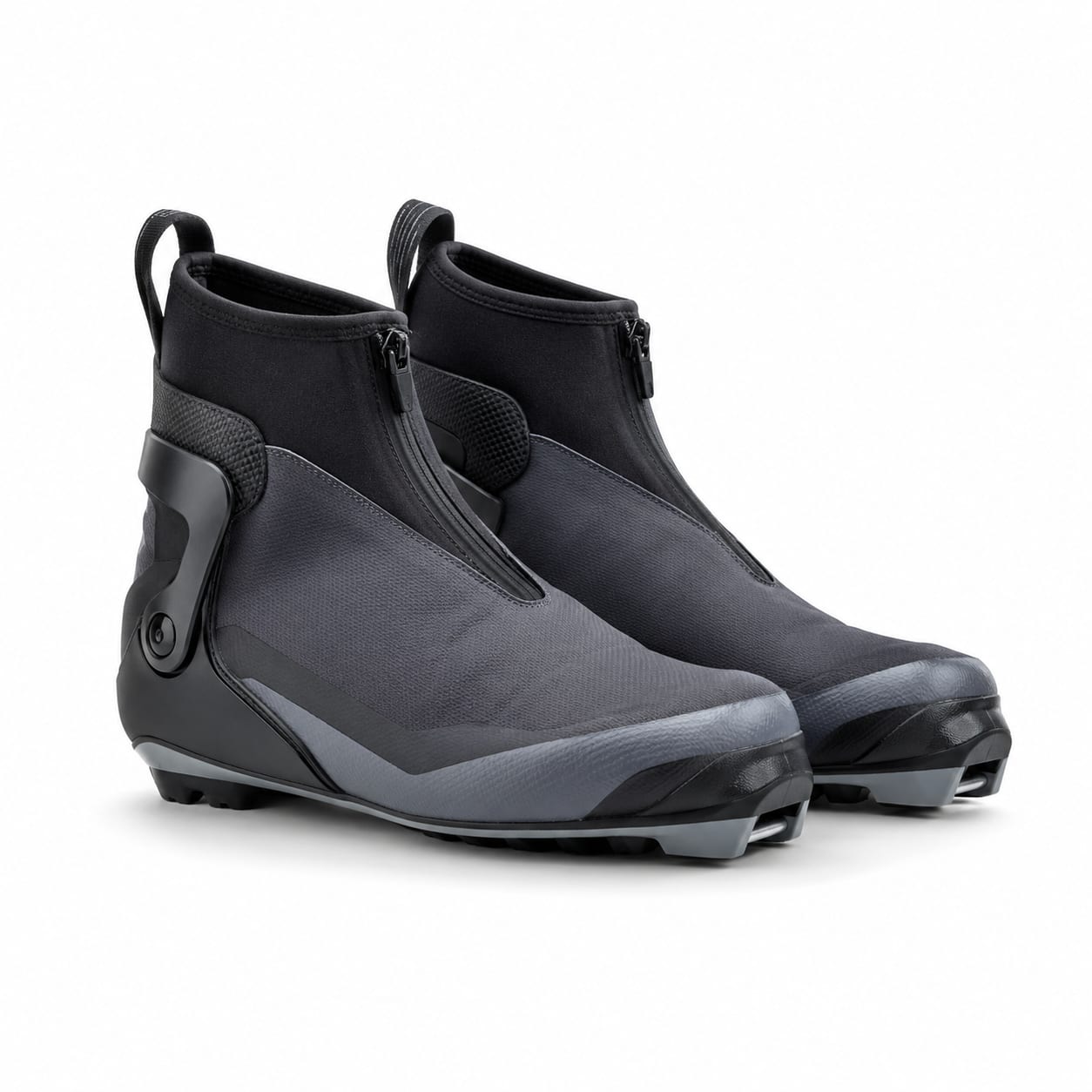
6 topics
Pick a question
Every answer links to the full subcategory guide and related gear types when it helps you decide.
Can I use Nordic boots with alpine bindings or at a downhill ski resort?
No. Nordic boots use completely different sole standards (NNN, Prolink, SNS) that are incompatible with alpine, GripWalk, or tech bindings. Attempting to use Nordic boots in alpine bindings is dangerous and will not work—the boots cannot engage the binding mechanism. Nordic boots also lack the ankle support, stiffness, and edge control needed for downhill skiing. If you want to ski at a resort, you need alpine or AT boots.
Read answer →02What is the difference between NNN, Prolink, and SNS binding systems?
NNN (New Nordic Norm by Rottefella) and Prolink (by Salomon) share the same sole profile and are functionally cross-compatible—you can use NNN boots in Prolink bindings and vice versa. SNS (Salomon Nordic System) is an older Salomon standard with a different sole interface that is NOT compatible with NNN/Prolink. SNS is being phased out, so new purchasers should choose NNN/Prolink for the widest boot selection. Turnamic (Fischer/Rossignol) uses the NNN sole standard and is fully compatible with NNN boots.
Read answer →03Do I need separate boots for classic and skate skiing?
For casual or recreational skiers, combi boots serve both disciplines adequately. However, if you ski both regularly or want to optimize performance, separate boots are recommended. Classic boots are low-cut with very flexible soles for maximum kick efficiency, while skate boots have higher cuffs for lateral support and slightly stiffer soles for push-off power. Using a skate boot for classic restricts ankle motion and reduces kick efficiency; using a classic boot for skate lacks the lateral support needed for stable V1/V2 technique.
Read answer →04How do I prevent cold feet in Nordic boots?
Cold feet are a common Nordic issue due to lower heat generation than alpine skiing. Strategies include: (1) Ensure boots fit properly—too tight restricts circulation, (2) Use quality merino wool Nordic socks, not cotton or thick alpine socks, (3) Add aftermarket insulated insoles, (4) Choose boots with built-in insulation or reflective heat liners for cold conditions, (5) Keep your core warm—cold extremities often start with inadequate core insulation, (6) Do up your laces snugly but not overtight, (7) Stay active and maintain pace to generate body heat, (8) Use chemical toe warmers on very cold days.
Read answer →05How should Nordic boots fit compared to alpine boots?
Nordic boots should fit more like a well-fitting hiking shoe than an alpine boot. You need enough toe room to wiggle your toes for circulation (about a finger's width at the front), but the heel must be locked down to prevent lift during the kick phase. The midfoot should be snug but not constricting. Unlike alpine boots, which are often downsized aggressively for performance, Nordic boots are typically sized closer to your street shoe size. Prioritize heel hold and circulation—cold, numb feet will end your ski day faster than any performance shortcoming.
Read answer →06Can I use Nordic boots for backcountry skiing in the mountains?
It depends on the terrain. Nordic backcountry or touring boots are suitable for rolling terrain with modest hills where you can descend with a snowplow or step turns. They are NOT suitable for mountain terrain with steep slopes, avalanche risk, or technical descents. For serious backcountry skiing with significant elevation gain and steep descents, you need AT (alpine touring) boots and bindings. Nordic backcountry boots are best for forest roads, frozen lakes, and gentle trails where the primary activity is touring rather than descending.
Read answer →