
Ski Hip Protectors · FAQ
Questions about Compression Shorts with Hip Pads
Straight answers on fit, specs, and when this type makes sense — each topic has its own page with links back to the buying guide.
Open Compression Shorts with Hip Pads guide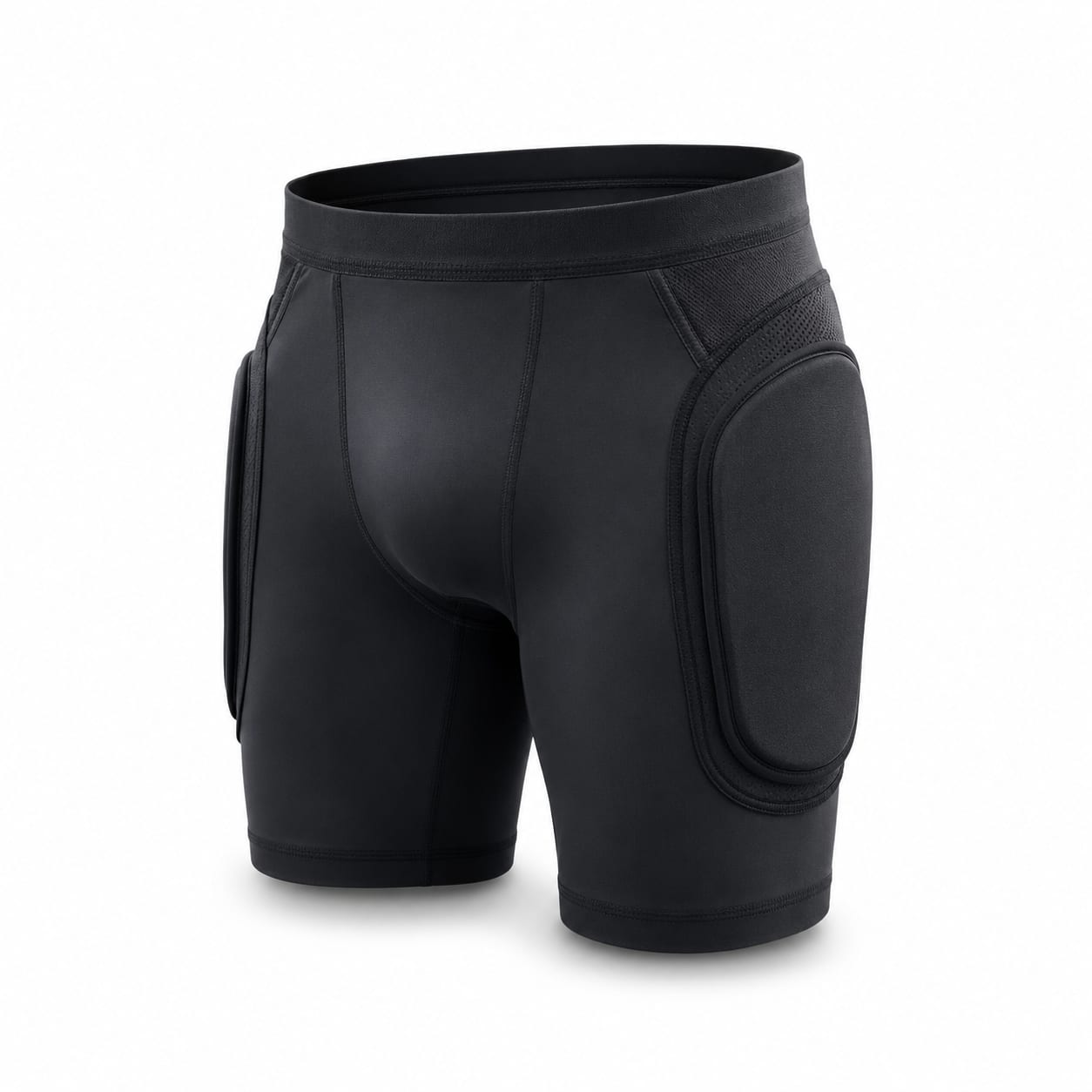
6 topics
Pick a question
Every answer links to the full subcategory guide and related gear types when it helps you decide.
Can I wear compression hip shorts under my regular ski pants, or do I need special pants?
Yes, compression hip shorts are designed to be worn under your normal ski pants. Most standard ski pants have enough room to accommodate them, especially low-profile models with smart foam pads. If your ski pants are very fitted or slim-cut, you may need to size up or choose an ultra-low-profile protector. Try the combination at home before heading to the mountain to ensure comfort and adequate room.
Read answer →02Do compression hip shorts actually prevent hip fractures, or just reduce bruising?
Quality compression shorts with CE-certified pads can meaningfully reduce hip fracture risk, not just bruising. CE Level 2 protectors transmit less than 9 kN of force, and hip fractures typically require 3-10 kN depending on bone density. This means CE Level 2 protectors can reduce force below fracture threshold for many falls. CE Level 1 protectors (under 18 kN) reduce injury severity and may prevent fractures in lower-impact falls. Non-certified pads provide only bruise reduction. For skiers with osteoporosis, CE Level 2 is strongly recommended.
Read answer →03How do I know if the pads are positioned correctly on my hips?
The pads should cover the greater trochanter—the bony prominence you can feel on the upper outside of each thigh, roughly at the level of your hip joint crease. When wearing the shorts, press on the pad and you should feel the bony point underneath it. If the pad sits above or inside this point, the sizing or gender fit is wrong. Test pad position in a skiing stance (knees bent, slightly forward lean) since your body position changes when skiing. If pads shift off the greater trochanter when you move, the shorts don't fit correctly.
Read answer →04Are D3O and SAS-TEC pads really better than regular foam, or is it just marketing?
Smart foams like D3O and SAS-TEC are genuinely superior to standard EVA foam for impact protection. They are rate-sensitive materials that remain soft and flexible during normal movement but instantly stiffen when subjected to impact forces, absorbing significantly more energy per millimeter of thickness. This means a 10 mm D3O pad can outperform a 20 mm EVA pad in impact testing while being far more comfortable to wear. Independent EN 1621-1 testing consistently shows smart foams achieving better force transmission scores at lower thickness. The main downside is cost—smart foam protectors are typically 30-50% more expensive than EVA equivalents.
Read answer →05How should I handle bathroom breaks while wearing compression hip shorts?
This is the most common practical complaint with compression shorts. You'll need to pull down both your ski pants and the compression shorts, which typically requires at least loosening your ski boots in a restroom. Some skiers plan bathroom breaks around lodge stops where they can fully remove layers. If this is a major concern, consider models with a zip fly front (available from some brands) or look into wrap/belt style protectors that are easier to remove. Most skiers find the inconvenience manageable once they develop a routine.
Read answer →06How often should I replace my compression hip shorts?
Inspect your shorts annually before each ski season. Replace them if: the foam pads feel permanently compressed, cracked, or hardened; the elastic has lost its compression and the shorts feel loose; the fabric is worn thin or has holes; or the shorts have been through a major impact event. With regular use (20-40 days per season), smart foam models typically last 2-3 seasons before needing replacement. EVA foam models may need replacement after 1-2 seasons. The fabric and elastic often wear out before the pads lose effectiveness, so pay attention to fit—if the shorts no longer hold pads firmly in position, they need replacing regardless of pad condition.
Read answer →