
Ski Socks · FAQ
Questions about Race Ski Socks
Straight answers on fit, specs, and when this type makes sense — each topic has its own page with links back to the buying guide.
Open Race Ski Socks guide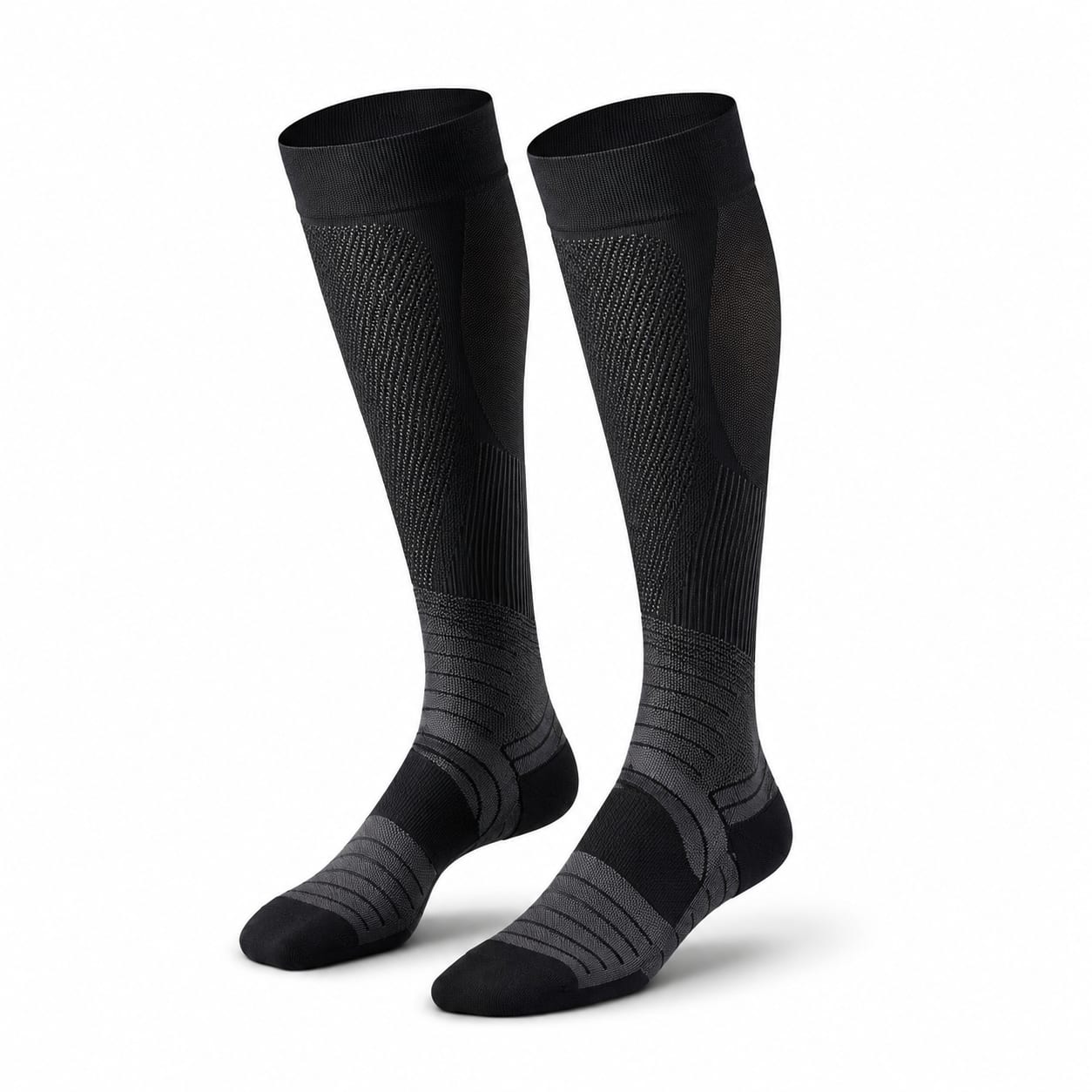
6 topics
Pick a question
Every answer links to the full subcategory guide and related gear types when it helps you decide.
Why are race ski socks so thin? Don't my feet need cushioning?
Race socks are thin because cushioning reduces boot feel and alters the precise fit of race boots. In a properly fitted race boot, your foot is held securely by the liner and shell—cushioning adds a compliant layer that absorbs energy and dampens the feedback you need for precise edge control. If your feet hurt in race socks, the issue is almost certainly boot fit, not sock thickness. A bootfitter can address pressure points and volume issues far more effectively than a thicker sock ever could.
Read answer →02Can I wear race ski socks for regular recreational skiing?
You can, but you probably won't enjoy it. Race socks are too thin and too compressive for comfortable recreational skiing. They provide no cushioning for long days, minimal warmth for cold lift rides, and the firm compression can feel unnecessarily tight when you're not pushing at race intensity. If you have race boots and sometimes ski recreationally in them, race socks are fine. But if you have recreational boots, all-mountain or lightweight performance socks will be much more comfortable and still provide good feel.
Read answer →03How do I know if the compression is too tight?
Firm compression should feel snug and supportive but never painful, numbing, or tingly. If your feet feel cold or numb within 15-20 minutes of putting on the socks and boots, the compression may be too firm or the sock may be too small. Other signs of excessive compression include visible deep indentations when you remove the sock, or a pins-and-needles sensation. If you experience these symptoms, try moderate compression (15-20 mmHg) or size up. Never sacrifice circulation for compression—the performance benefits only work when blood flow is improved, not restricted.
Read answer →04Do I really need left/right specific socks?
For racing, yes. The difference is subtle but real: anatomical socks have no excess material anywhere, which means no bunching, no wrinkles, and no pressure points inside the boot. In a race boot where the fit is precise to the millimeter, even a small fold in a universal-fit sock can become a distraction or a pain point over hours of training. If you're spending the money on race boots and race socks, the anatomical fit is part of the complete performance package.
Read answer →05Why are race socks more expensive than regular ski socks?
Race socks cost more because of their specialized construction: anatomical left/right shaping requires separate knitting programs for each foot, firm graduated compression requires precise engineering and higher-quality elastane, seamless or hand-linked toe closures are labor-intensive, and the merino-synthetic blends use premium fibers. You're paying for performance features that matter in competition but are unnecessary for recreational skiing. For racers, the cost is justified by the measurable performance benefits.
Read answer →06How long do race ski socks last?
With proper care (cold wash, air dry, rotation between pairs), quality race socks typically last 1-2 seasons of regular training (3-4 days per week). The first thing to go is usually compression—after many wash cycles, the elastane loses some recovery, and the sock feels less supportive. The heel and toe reinforcement zones are the next failure points. Replace socks when you notice compression loss, thinning at high-wear areas, or persistent odor even after washing. Serious racers often replace their primary training pairs annually.
Read answer →