
Race socks are thin because cushioning reduces boot feel and alters the precise fit of race boots. In a properly fitted race boot, your foot is held securely by the liner and shell—cushioning adds a compliant layer that absorbs energy and dampens the feedback you need for precise edge control. If your feet hurt in race socks, the issue is almost certainly boot fit, not sock thickness. A bootfitter can address pressure points and volume issues far more effectively than a thicker sock ever could.
Ski Socks · Race Ski Socks
Why are race ski socks so thin? Don't my feet need cushioning?
Related gear types
If this answer nudged you toward a different style, these guides compare specs and trade-offs.
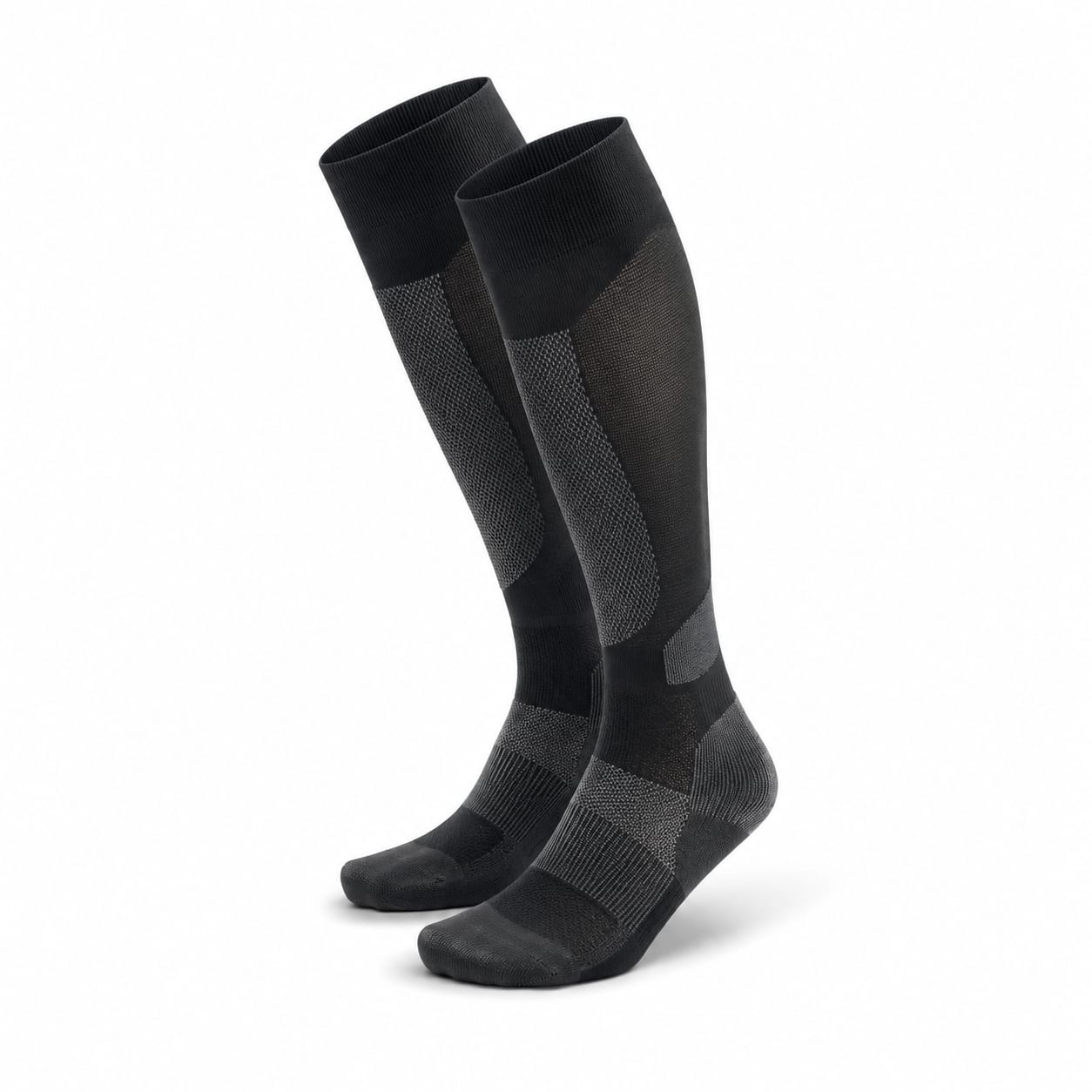
Lightweight Ski Socks
$15 – $38
Minimal-cushion ski socks designed for a responsive, close-to-boot fit with maximum feel and temperature regulation in mild conditions.
ultra-thin constructionminimal or no cushion zonesover-the-calf height
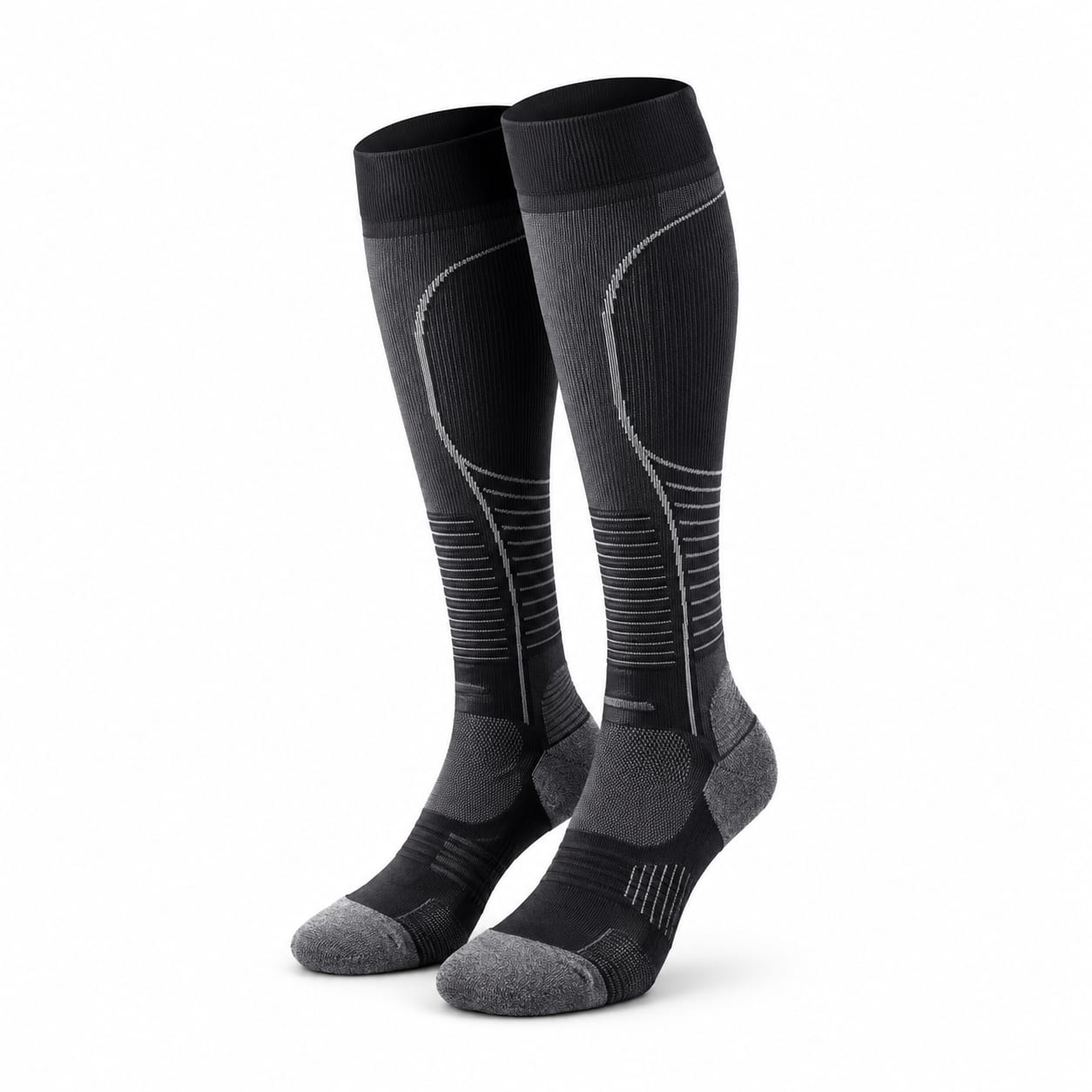
Compression Ski Socks
$25 – $60
Graduated compression ski socks that improve blood flow, reduce fatigue, and enhance recovery during and after skiing.
graduated compressiontight fitover-the-calf height
More questions
- Can I wear race ski socks for regular recreational skiing?
- How do I know if the compression is too tight?
- Do I really need left/right specific socks?
- Why are race socks more expensive than regular ski socks?