
Skis · FAQ
Questions about Alpine Touring (AT) / Backcountry Skis
Straight answers on fit, specs, and when this type makes sense — each topic has its own page with links back to the buying guide.
Open Alpine Touring (AT) / Backcountry Skis guide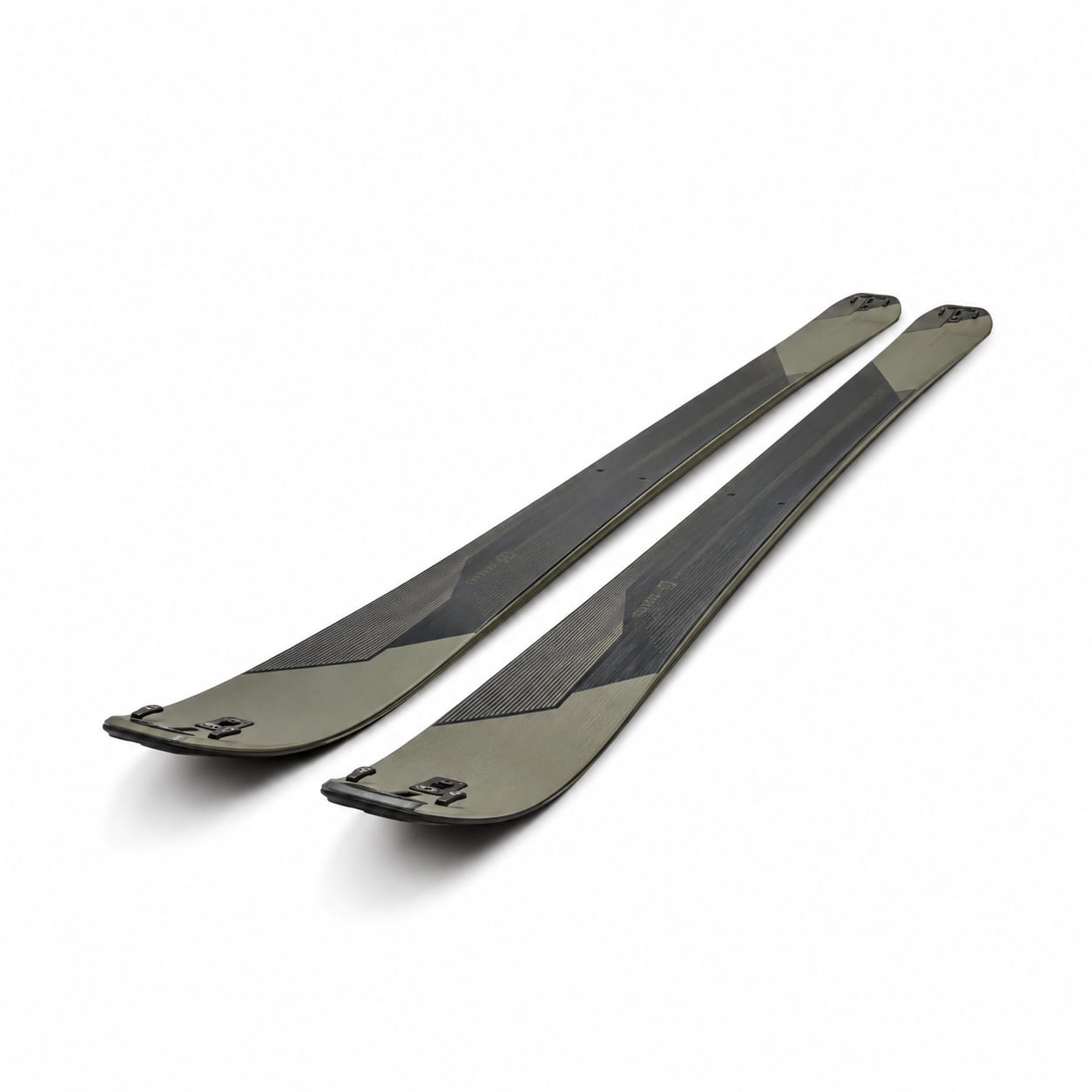
6 topics
Pick a question
Every answer links to the full subcategory guide and related gear types when it helps you decide.
Can I use AT skis at the resort?
Yes, AT skis can be skied at resorts, but they won't perform as well as dedicated alpine skis on groomed runs. Their lighter weight means less dampening and more chatter at speed, and wider waists with rocker reduce edge hold on firm snow. If you ski resorts 80%+ of the time, consider a hybrid-compatible AT ski or a separate resort setup. For occasional resort days mixed with regular touring, AT skis are perfectly acceptable.
Read answer →02How much should my AT skis weigh?
Weight depends on your touring objectives. For ski mountaineering and fitness tours, aim for under 3000g per pair. For all-around backcountry use, 3000–3400g is the sweet spot. For backcountry freeride where downhill performance is the priority, 3400–4000g is acceptable. Going over 4000g per pair means you're essentially skiing a resort ski with touring bindings—the uphill penalty is significant. A good rule of thumb: if you're questioning whether the ski is too heavy on your first tour, it probably is.
Read answer →03Do I need a different width AT ski than my resort ski?
Not necessarily—many skiers choose similar widths for both. However, backcountry snow is often softer and less tracked than resort snow, so you may want a slightly wider ski for the backcountry (e.g., 100mm AT vs. 90mm resort). Conversely, if you ski a very wide resort ski (110mm+) for powder, you might go narrower for touring to save weight and improve firm-snow performance. The 95–105mm range is the most versatile for backcountry use.
Read answer →04Can I mount touring bindings on any ski?
Technically yes, but it's not recommended. Skis not designed for touring may lack reinforced core material under the binding mounting area, increasing the risk of binding pull-out during touring. AT-specific skis have reinforced mounting zones designed to handle the repeated flex cycles and unique stresses of touring bindings. If you must mount touring bindings on a non-touring ski, use a reputable shop and consider using binding reinforcement plates.
Read answer →05What's the difference between a touring ski and a freeride ski with touring bindings?
The main differences are weight, construction, and binding compatibility. Touring skis are purpose-built to be lighter (often 500–1500g less per pair), with lightweight cores, no metal layers, and optimized construction for uphill efficiency. Freeride skis with touring bindings prioritize downhill performance—they're damper, more stable at speed, and often have metal reinforcement, but they're significantly heavier on the uphill. Choose based on whether you value uphill efficiency or downhill performance more.
Read answer →06Do I need avalanche safety gear to use AT skis?
Absolutely—avalanche safety gear (beacon, probe, shovel) and the knowledge to use it are mandatory for any backcountry travel, regardless of terrain or conditions. AT skis are just one component of a complete backcountry setup. Taking an avalanche course (AIARE 1 or equivalent) before your first backcountry tour is essential. Even experienced backcountry skiers never travel without this equipment and the training to use it effectively.
Read answer →