Ski Type / Category
Ski Type
What it means
The primary intended use and design category of the ski, which dictates its overall geometry, flex, and feature set.
Typical for this type
Touring
In practice
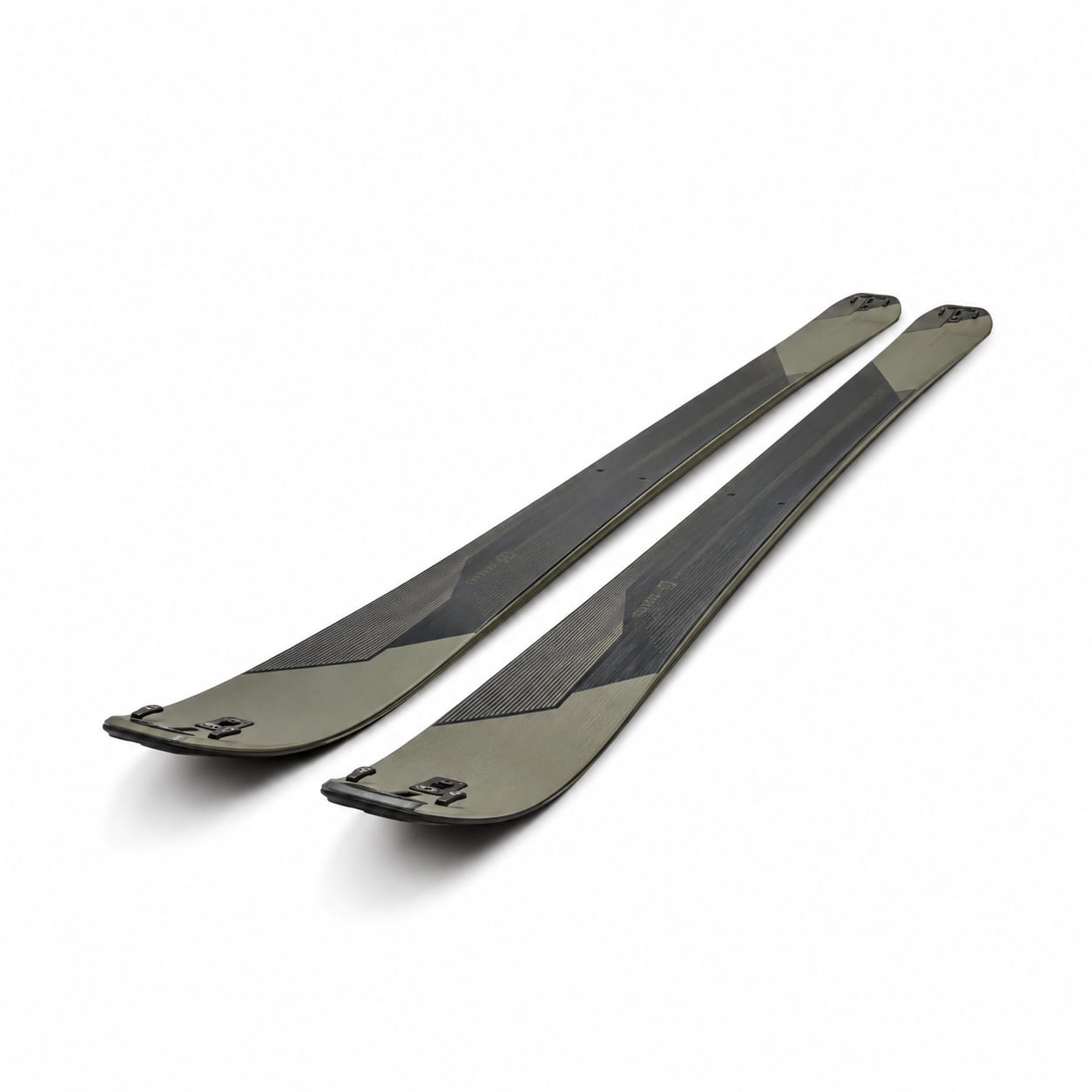
AT skis are classified as the 'touring' type, designed specifically for uphill travel with compatible binding mounts and weight-optimized construction. Some models blur the line with freeride skis, but the touring designation indicates purpose-built backcountry design.
Compared to other types
Unlike all-mountain or freeride skis that prioritize only downhill performance, touring skis are engineered for the complete up-and-down cycle. They sacrifice some downhill dampening and stability for significantly better uphill behavior.
Why it matters: The touring type ensures the ski has the correct mounting reinforcement, weight targets, and geometry for backcountry use. Choosing a non-touring type means sacrificing uphill efficiency or binding compatibility.
What it means
The total length of the ski from tip to tail, measured in centimeters. Affects stability, turn radius, and maneuverability.
Typical for this type
160–185 cm
Most common pick: 170 cm
In practice
AT ski length follows similar sizing principles to resort skis but some skiers go slightly shorter (2–5 cm) to reduce swing weight and improve maneuverability in tight terrain like trees and chutes. Typical lengths range from 160cm for smaller skiers and ski mountaineering to 185cm for larger skiers in open terrain.
Compared to other types
AT skis are often sized 2–5 cm shorter than equivalent resort skis to save weight and improve maneuverability in technical terrain. Freeride skis are typically sized longer for maximum flotation and stability.
Why it matters: Length affects both uphill and downhill performance. Shorter skis are easier to maneuver in tight backcountry terrain and lighter on the uphill. Longer skis provide more flotation and stability in open terrain at speed.
What it means
The width of the ski at its narrowest point (underfoot), measured in millimeters. The single most important geometry measurement that determines terrain suitability.
Typical for this type
85–110 mm
Most common pick: 98 mm
In practice
The 95–105mm range is the sweet spot for most backcountry skiers, providing enough flotation for soft snow while remaining manageable on firm windboard and crust. Ski mountaineers may go as narrow as 85mm for firm snow efficiency, while powder-focused backcountry skiers may prefer 105–115mm.
Compared to other types
AT skis are typically wider than frontside skis (63–75mm) and similar to or slightly narrower than dedicated freeride skis (105–120mm). The 85–110mm range covers the backcountry spectrum from ski mountaineering to powder touring.
Why it matters: Waist width determines flotation in untracked snow and skinning efficiency. Narrower waists work better with narrower skins (less weight) and perform better on firm snow. Wider waists provide essential flotation in deep powder but add weight and reduce edge-to-edge quickness.
What it means
The width of the ski at its widest point near the tip, measured in millimeters. Works with waist width to determine the ski's sidecut and floatation characteristics.
Typical for this type
118–145 mm
Most common pick: 130 mm
In practice
AT skis feature wider tips to aid flotation in untracked snow and ease turn initiation in variable conditions. Tip widths typically range from 118mm on narrower ski mountaineering models to 145mm on wide powder touring skis.
Compared to other types
AT ski tips are wider than frontside and all-mountain skis (100–120mm) but may be slightly narrower than dedicated freeride skis (130–155mm) to save weight.
Why it matters: Wider tips help the ski plane up in soft snow rather than diving, which is critical in backcountry where you encounter untracked snow frequently. The tip width also affects how easily the ski initiates turns in heavy or variable snow.
What it means
The width of the ski at its widest point near the tail, measured in millimeters. Affects turn completion, stability, and how the ski releases from turns.
Typical for this type
100–130 mm
Most common pick: 115 mm
In practice
AT ski tails vary based on intended use. Skis with wider tails (110–130mm) provide more support for charging in soft snow, while narrower pin tails (100–110mm) offer easier turn release and a more surfy feel. Many AT skis feature a slightly tapered tail to reduce weight and improve maneuverability.
Compared to other types
AT skis often have more tail taper than freeride skis, resulting in narrower tails relative to tip width. This reduces swing weight and makes the ski easier to pivot in technical terrain.
Why it matters: Tail width affects how the ski finishes a turn and releases in variable snow. In the backcountry, a slightly tapered tail helps with smearing turns in tight terrain and reduces the chance of the tail hooking in heavy snow.
What it means
The theoretical radius of the smallest turn the ski can make when tipped on edge, measured in meters. Derived from the sidecut dimensions. Determines the natural turn shape of the ski.
Typical for this type
15–24 m
Most common pick: 18 m
In practice
Most AT skis have turn radii between 15–24m, with the 17–20m range being most common for all-around backcountry use. Shorter radii (15–17m) suit tight trees and technical terrain, while longer radii (20–24m) provide stability in open alpine terrain at speed.
Compared to other types
AT skis typically have longer turn radii than frontside/carving skis (10–16m) due to their wider dimensions, and similar radii to all-mountain wide and freeride skis.
Why it matters: Turn radius determines the natural turn shape of the ski. In the backcountry, you encounter varied terrain from tight trees to open bowls—a medium radius offers the best versatility. Very short radii can feel hooky at speed, while very long radii are hard to maneuver in tight spots.
Rocker/Camber Profile
Rocker/Camber Profile
What it means
The longitudinal shape of the ski when unweighted—how it curves from tip to tail. The most influential design element for how a ski feels and performs.
Typical for this type
Tip Rocker to Tip Tail Rocker
In practice
Tip & tail rocker with camber underfoot is the most common profile for AT skis, providing flotation in soft snow, easy pivot in variable conditions, and enough edge hold for firm snow descents. Tip rocker with camber through the tail is preferred by skiers who want more tail edge hold for firm snow and steeps.
Compared to other types
AT skis favor more rocker than frontside and all-mountain skis because backcountry snow is predominantly soft or variable. Full camber is rare in AT skis because it provides poor flotation. Full rocker is uncommon except in dedicated powder touring skis.
Why it matters: Rocker profile is critical for backcountry performance. Tip rocker provides flotation and easy turn initiation in untracked snow. Tail rocker allows easy smearing and pivot in tight terrain. Camber underfoot provides edge hold on firm snow and windboard, which you encounter frequently in the backcountry.
Flex / Stiffness
Flex Rating
What it means
How stiff or soft the ski is along its length, typically rated on a scale. Affects edge hold, stability, energy transfer, and forgiveness.
Typical for this type
5–8
Most common pick: 6
In practice
AT skis typically fall in the medium to medium-stiff range (5–8). Softer flex (5–6) is more forgiving and easier to initiate turns in variable snow, preferred by lighter skiers and those covering long distances. Stiffer flex (7–8) provides better edge hold on firm snow and stability at speed for aggressive skiers charging big lines.
Compared to other types
AT skis are generally softer than racing and expert freeride skis (8–10) because softer flex saves weight and provides more forgiveness in variable snow. They are similar in flex to all-mountain skis but may feel slightly softer due to lighter construction.
Why it matters: Flex affects both uphill and downhill performance. Softer skis are easier to maneuver and more forgiving in variable backcountry snow but may deflect at speed. Stiffer skis hold better on firm snow and charge through crud but require more energy to ski and may be harder to initiate turns when fatigued after a long approach.
Core Material
Core Material
What it means
The primary material used in the ski's core, which largely determines its weight, flex characteristics, dampening, and feel.
Typical for this type
Hybrid Lightweight to Wood
In practice
Lightweight hybrid cores using paulownia, balsa, or air-channel designs are most common in AT skis, prioritizing weight savings for uphill efficiency. Some models use full wood cores (poplar, ash) for better downhill performance at the cost of weight. Wood + composite cores with carbon stringers offer a middle ground.
Compared to other types
AT skis are the most likely category to use lightweight hybrid cores. Resort-oriented skis typically use denser wood or wood+composite cores for better performance. Foam cores are rare in AT skis because they lack the durability needed for backcountry use.
Why it matters: Core material is the primary determinant of ski weight. In the backcountry, weight directly affects uphill efficiency and fatigue. Lightweight cores make long tours more enjoyable but may sacrifice some downhill dampening and power compared to denser wood cores.
Construction Type
Construction Type
What it means
The method used to build the ski's structure, affecting durability, edge hold, weight, and price.
Typical for this type
Sandwich to Hybrid
In practice
Sandwich/sidewall construction is most common in AT skis because it provides the best edge hold on firm backcountry snow and the durability needed for variable conditions. Hybrid construction (sidewall underfoot, cap at tips) is also popular as it reduces swing weight in the tips and tails.
Compared to other types
AT skis use similar construction to freeride and performance all-mountain skis. Full cap construction is rare in AT skis because the edge hold compromise is unacceptable for backcountry use where firm snow is common.
Why it matters: In the backcountry, you encounter firm snow, windboard, and crust where edge hold matters for safety. Sandwich construction provides superior edge grip and durability. The weight savings of cap construction at the tips can reduce swing weight without significantly compromising performance.
Weight (Per Pair)
Weight Per Pair
What it means
The total weight of both skis, measured in grams. Affects swing weight, touring efficiency, and overall maneuverability.
Typical for this type
2600–4000 g
Most common pick: 3200 g
In practice
AT ski weights vary dramatically by intended use. Ski mountaineering skis can be as light as 2400–2800g per pair. All-around backcountry skis typically weigh 3000–3600g. Heavier backcountry freeride skis reach 3800–4200g. The 3000–3400g range is the sweet spot for most skiers balancing uphill and downhill performance.
Compared to other types
AT skis are significantly lighter than resort freeride skis (4200–5500g) and racing skis (4000–5000g). They are comparable to or lighter than all-mountain skis (3400–4400g). The weight difference is the primary trade-off versus resort-oriented skis.
Why it matters: Weight is arguably the most important dimension for AT skis because it directly affects uphill efficiency. Every 100g per pair matters over thousands of vertical feet. However, going too light sacrifices downhill performance, dampening, and durability. The right weight depends on your fitness, touring objectives, and how much you value downhill performance.
Recommended Skill Level
Skill Level
What it means
The rider ability level the ski is designed for, which determines flex, forgiveness, and performance characteristics.
Typical for this type
Intermediate to Expert
Most common pick: Advanced
In practice
AT skis are primarily designed for advanced to expert skiers because backcountry skiing requires strong technique for variable, uncontrolled snow conditions. Some intermediate-friendly models exist with softer flex and easier initiation, but backcountry travel itself demands solid skiing fundamentals for safety.
Compared to other types
AT skis skew higher in skill level than all-mountain and frontside skis because the backcountry environment is more demanding. Beginner and lower-intermediate skiers should develop skills at resorts before venturing into the backcountry.
Why it matters: Backcountry terrain is uncontrolled and unpredictable—firm windboard, breakable crust, heavy crud, and tight trees are common. Skiers need sufficient skill to handle these conditions confidently. AT skis designed for experts are stiffer and more demanding but perform better in challenging conditions.
What it means
The primary terrain and snow conditions the ski is optimized for. Most skis handle multiple terrain types but excel in specific conditions.
Typical for this type
Backcountry, Powder, Mixed
In practice
AT skis are optimized for backcountry/off-piste terrain but must also handle powder and mixed conditions. The best all-around AT skis perform competently in all three. Some models are specialized—narrower for ski mountaineering (firm snow focus) or wider for deep powder missions.
Compared to other types
AT skis are the only category specifically designed for backcountry terrain. While freeride skis also handle off-piste conditions, they lack the weight optimization and binding compatibility for efficient uphill travel.
Why it matters: Backcountry terrain is inherently varied—you may encounter powder, windboard, crust, and soft slush in a single tour. AT skis must handle this range competently. Unlike resort skiing where conditions are more controlled, backcountry skiers cannot avoid difficult snow conditions.
What it means
Whether the ski has an upward-curving tail matching the tip, allowing the skier to land and ski backwards (switch).
Typical for this type
False (With Some Partial Twin Tip Models)
In practice
Most AT skis have flat or slightly raised tails rather than full twin tips. A flat tail provides better edge hold on firm snow and more powerful turn completion—important for backcountry conditions. Some models feature a partial twin tip (slight tail rise) as a compromise for switch capability and easier turn release.
Compared to other types
AT skis are less likely to have twin tips than freestyle and playful all-mountain skis. Freeride skis are split between twin tip and flat tail designs. The backcountry emphasis on edge hold and power favors flat or partially raised tails.
Why it matters: In the backcountry, tail edge hold matters for firm snow and steep terrain where you need confident turn completion. Full twin tips sacrifice some tail edge grip and power. However, a slight tail rise can help with turn release in heavy snow without significantly compromising edge hold.
Dampening / Vibration Control
Dampening
What it means
The ski's ability to absorb vibrations and chatter at speed, typically achieved through metal layers, rubber, or specialized technologies. Affects smoothness and edge contact.
Typical for this type
Minimal to Moderate
In practice
Most AT skis feature minimal to moderate dampening to save weight. Minimal dampening is common in lightweight touring skis, resulting in a livelier feel that can chatter at speed on firm snow. Moderate dampening is found in heavier AT skis that prioritize downhill performance. High dampening is rare because it requires metal layers that add significant weight.
Compared to other types
AT skis have significantly less dampening than freeride and racing skis, which often feature titanal layers for smoothness. This is the most noticeable difference when skiing AT skis at resorts—they feel more lively and less planted at speed compared to metal-reinforced resort skis.
Why it matters: Dampening affects smoothness and edge contact at speed. In the backcountry, you may encounter rough, variable snow where some dampening helps. However, the weight cost of high dampening is usually too steep for touring skis. Most backcountry skiers accept some chatter for weight savings.
Metal Reinforcement
Metal Layers
What it means
Whether and how the ski incorporates metal (typically titanal/aluminum) layers in its construction for added torsional rigidity, edge hold, and dampening.
Typical for this type
None to Single
In practice
The vast majority of AT skis have no metal layers to minimize weight. Some heavier backcountry freeride models incorporate a single titanal layer for improved edge hold and dampening, but this adds 150–250g per ski. Double metal layers are extremely rare in AT skis due to the prohibitive weight.
Compared to other types
AT skis are the least likely category to feature metal layers. Freeride and racing skis commonly use single or double metal for maximum edge hold and dampening. All-mountain skis are mixed. The absence of metal is a key differentiator and the primary reason AT skis feel less damp at speed.
Why it matters: Metal layers are the biggest contributor to ski weight after core material. For touring, the weight penalty of metal is hard to justify. However, skiers who prioritize downhill performance and frequently encounter firm snow may benefit from a single metal layer. Carbon fiber is increasingly used as a lighter alternative for adding torsional rigidity without the weight of metal.
Binding Compatibility
Binding Compatibility
What it means
The type of binding mounting system the ski supports, which determines which bindings can be installed.
Typical for this type
Touring Compatible to Hybrid
In practice
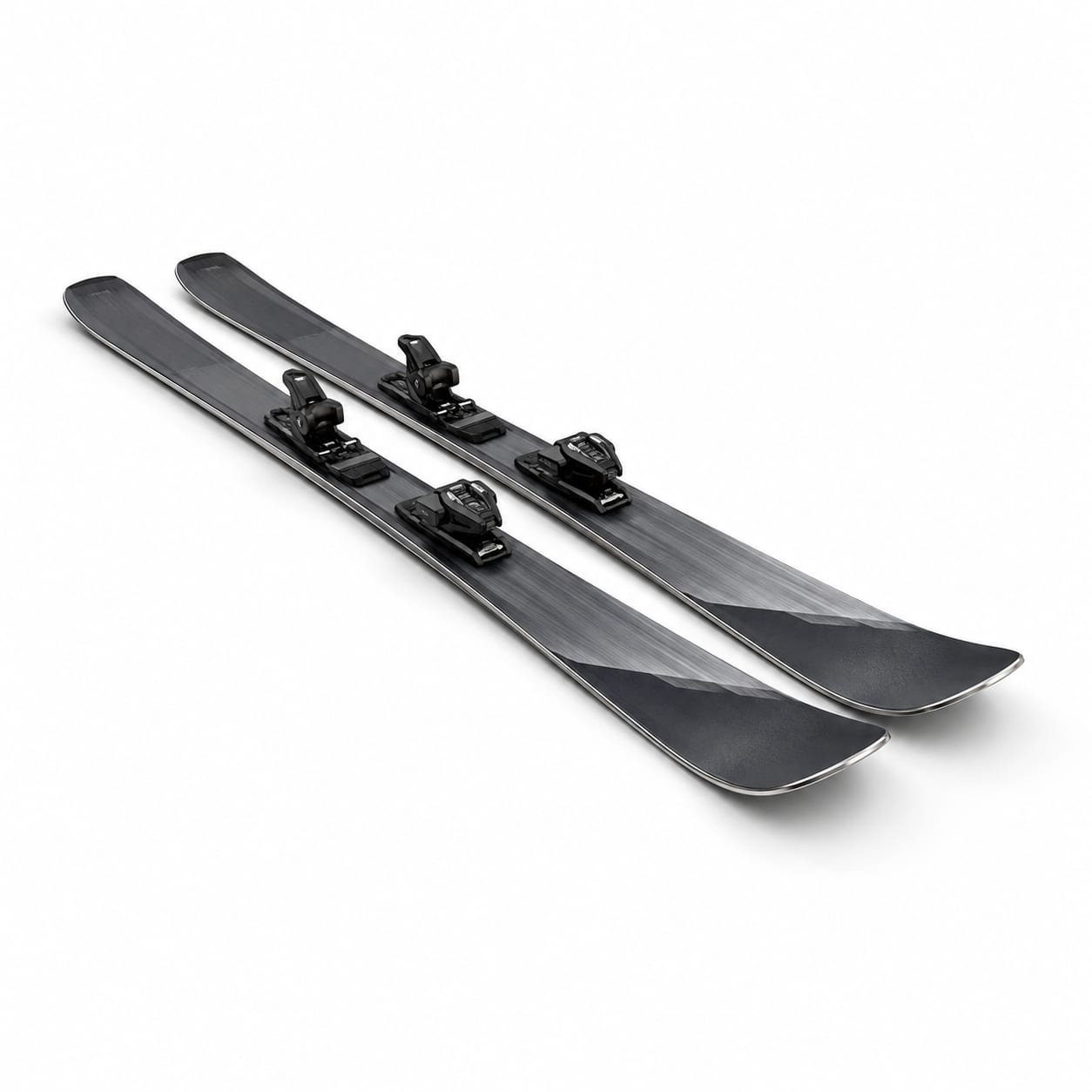
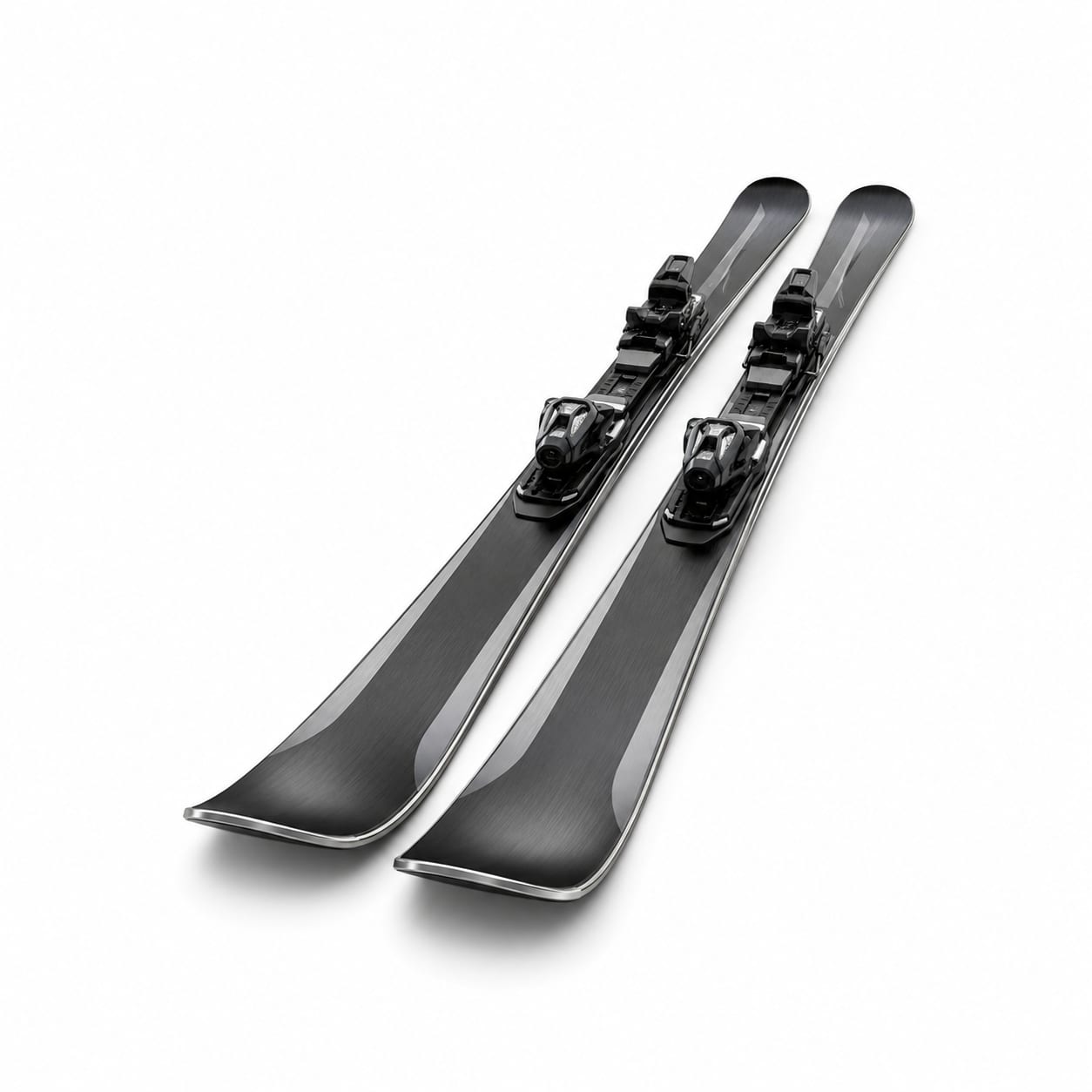
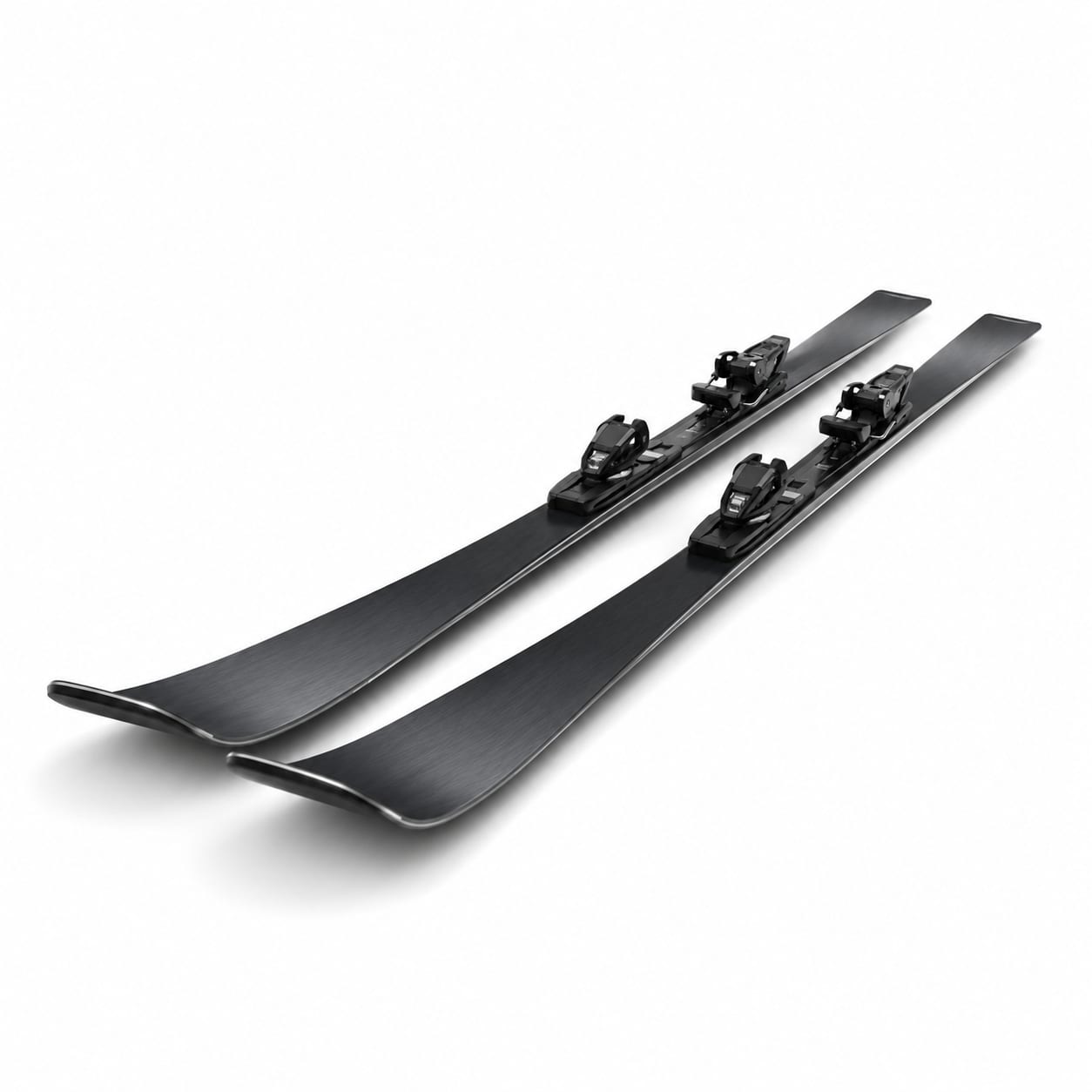
AT skis are designed with touring binding compatibility as standard, featuring reinforced mounting zones for tech/pin bindings. Many also support hybrid mounting for skiers who use both touring and alpine bindings. The hybrid option is ideal for one-ski quivers that see both resort and backcountry days.
Compared to other types
AT skis are the only category where touring compatibility is standard. All-mountain and freeride skis typically use flat alpine or system alpine mounts. Some freeride skis are now offered in touring-compatible versions, reflecting the growing backcountry market.
Why it matters: Binding compatibility determines what bindings you can mount and thus how you can use the ski. Tech/pin bindings are essential for efficient uphill travel. If you want to use the same skis at resorts with alpine bindings, hybrid compatibility ensures the mounting area can handle both. Mounting touring bindings on non-reinforced skis risks binding pull-out.