
Cycling Helmet · FAQ
Questions about Full Face Mountain Bike Helmet
Straight answers on fit, specs, and when this type makes sense — each topic has its own page with links back to the buying guide.
Open Full Face Mountain Bike Helmet guide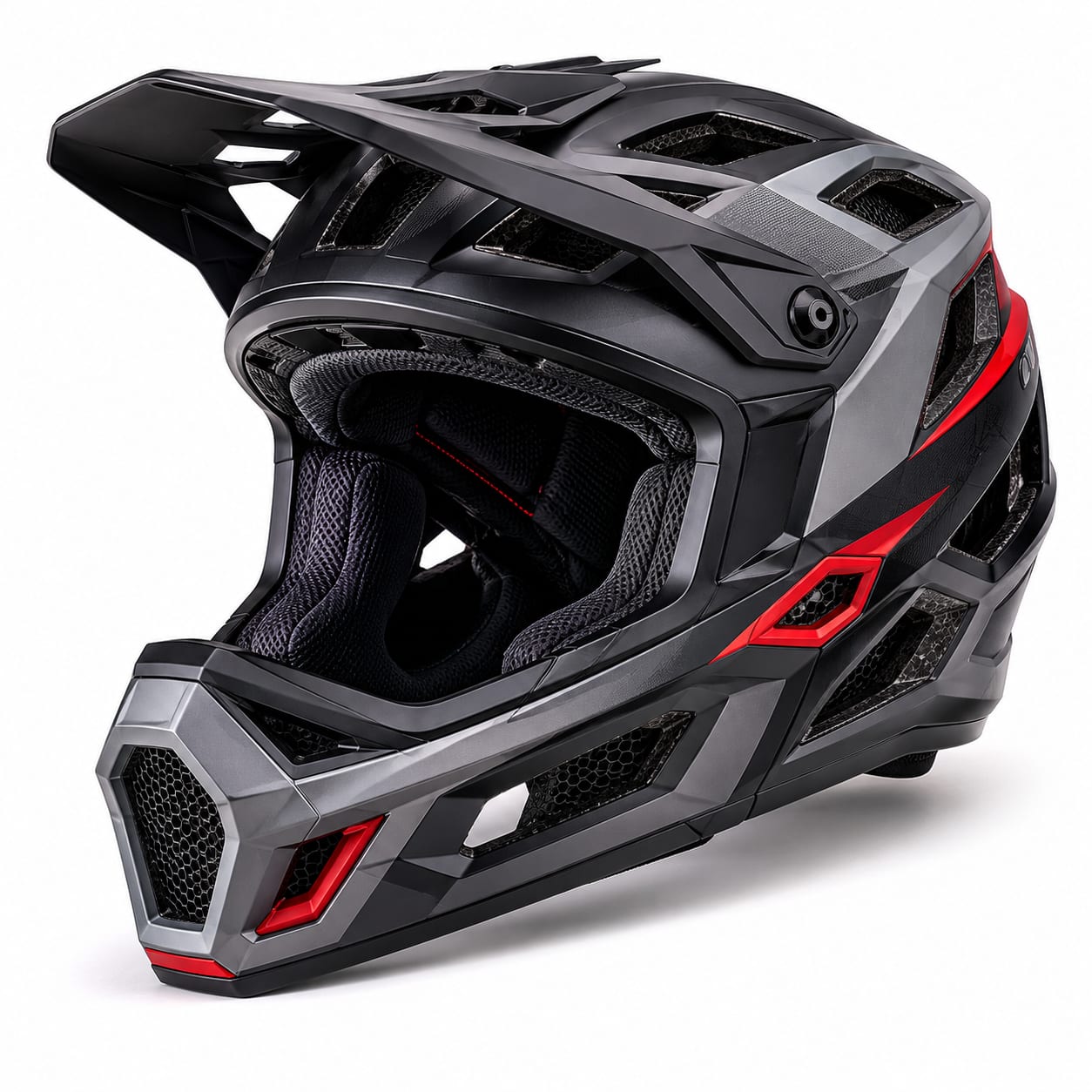
6 topics
Pick a question
Every answer links to the full subcategory guide and related gear types when it helps you decide.
Do I really need a full face helmet for downhill mountain biking?
Yes. Downhill mountain biking involves speeds of 30–60+ km/h on rough, technical terrain where crashes can result in direct face and jaw impacts. Studies of MTB injuries consistently show that facial and dental injuries are among the most common severe outcomes in downhill crashes. A full face helmet's chin bar can prevent or significantly reduce the severity of these injuries. Most bike parks and DH race organizations require them, and for good reason. If you're riding terrain where you could crash face-first, you need a full face helmet.
Read answer →02What's the difference between a bicycle full face helmet and a motocross helmet?
Bicycle full face helmets are designed for the specific impact energies of cycling (typically up to ~60 km/h) and are much lighter (600–1100g vs 1200–1700g for MX helmets) with better ventilation for the physical exertion of pedaling. MX helmets meet DOT or ECE motorcycling standards for much higher impact energies, making them overbuilt and excessively heavy for bicycle use. Using an MX helmet for mountain biking means carrying unnecessary weight, poorer ventilation, and a helmet optimized for the wrong impact range. Always choose a bicycle-specific full face helmet for MTB.
Read answer →03Are convertible full face helmets with removable chin bars as safe as fixed chin bar helmets?
Convertible helmets are generally safe and meet the same certification standards, but there are trade-offs. The chin bar attachment points introduce potential failure points that don't exist in fixed designs, and some convertible models may not achieve the same level of chin bar rigidity as a one-piece design. However, they still provide significantly more protection than open-face helmets when the chin bar is attached. For pure downhill racing and bike park use, a fixed chin bar helmet offers the most robust protection. For enduro racing where you need to climb between stages, a convertible model's versatility may be worth the minor protection trade-off.
Read answer →04How should a full face MTB helmet fit?
A full face helmet should fit snugly around your entire head with even pressure and no pressure points. The chin bar should sit approximately 1–2 finger widths from your chin and jaw when your mouth is closed—close enough to protect you but with enough standoff for impact absorption. The cheek pads should contact your cheeks without excessive pressure. The visor should not obstruct your upward vision when in the lowered position. When you shake your head vigorously, the helmet should move with your head, not shift independently. Always try on multiple brands as the internal shapes vary significantly.
Read answer →05How hot are full face helmets, and can I do climbs in one?
Full face helmets are significantly hotter than open-face helmets due to the chin bar restricting airflow. On sustained climbs in warm weather, most riders find them uncomfortably hot, and goggles will likely fog. Many riders remove their full face helmet for climbs and carry it or attach it to their pack. Convertible models solve this by allowing chin bar removal for climbs. If you regularly ride long climbs followed by descents, a convertible model or carrying your helmet on climbs is the practical solution. For bike park use with lift access, the heat is less of an issue since you're not pedaling uphill.
Read answer →06When should I replace my full face MTB helmet?
Replace your full face helmet after any crash where your head hits the ground or an object, even if damage isn't visible—the EPS foam compresses on impact and loses its protective capability. Replace it every 3–5 years even without crashes, as UV exposure, sweat, and temperature cycling degrade the foam and shell over time. Replace immediately if you notice any cracks in the shell, loose chin bar attachment points, frayed straps, or if the helmet has been dropped from significant height onto a hard surface. Most manufacturers offer crash replacement programs at 30–50% discount.
Read answer →