
Road Bike · FAQ
Questions about Aero Road Bike
Straight answers on fit, specs, and when this type makes sense — each topic has its own page with links back to the buying guide.
Open Aero Road Bike guide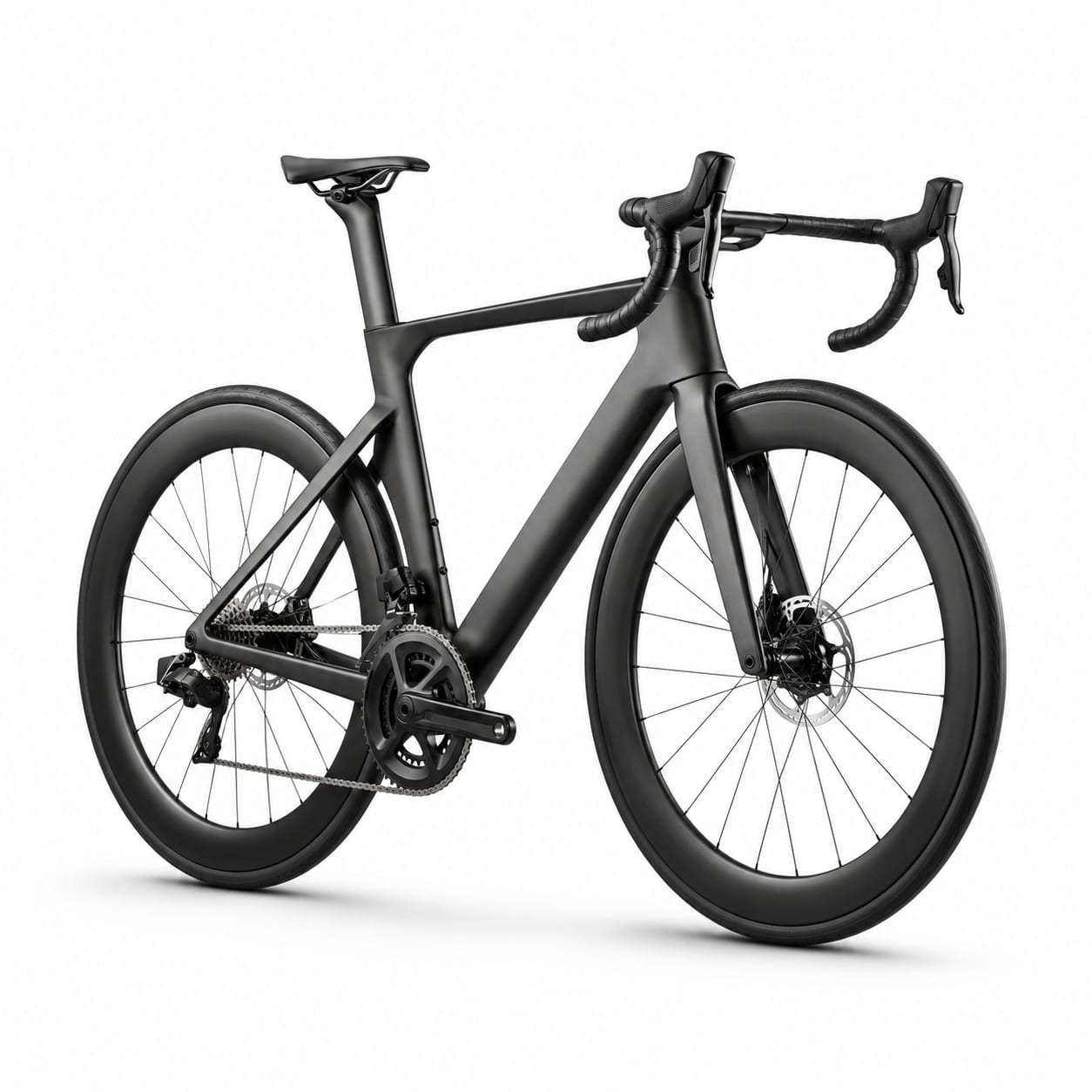
6 topics
Pick a question
Every answer links to the full subcategory guide and related gear types when it helps you decide.
Are aero road bikes actually faster than lightweight climbing bikes?
Yes, on flat and rolling terrain. At 40 km/h, an aero bike saves approximately 15–25 watts compared to a lightweight bike with round tubes. This advantage diminishes on steep climbs (above 6–8% gradient) where the 200–400 gram weight penalty becomes more significant. For most riders on mixed terrain, the aero advantage on flats outweighs the climbing penalty, making aero bikes faster overall on typical road courses.
Read answer →02Can I change the handlebar width or stem length on an aero bike with an integrated cockpit?
It depends on the specific system. Most integrated cockpits use a two-piece design where the stem attaches to a proprietary bar, allowing stem length changes within the manufacturer's range. Some use a one-piece bar/stem that cannot be adjusted. Always check the specific system's options before purchasing, and confirm that your ideal fit dimensions are available. Proprietary replacement parts are typically more expensive and may have limited availability.
Read answer →03Is an aero road bike too uncomfortable for long rides?
Modern aero bikes have improved significantly in comfort through dropped seatstays, compliance-focused seatposts, and tuned carbon layups. Many current aero bikes are comfortable for 4–6 hour rides if the geometry fits your flexibility. The primary comfort limitation is the aggressive riding position, not the frame itself. If you can comfortably maintain a low position, modern aero bikes are viable for gran fondos and long training rides.
Read answer →04Do I need deep-section wheels to get the aero benefit?
The frame provides the core aero advantage, but wheels are the second-largest source of aerodynamic drag on a bike. Deep-section wheels (50–60 mm front, 60–80 mm rear) complement the aero frame and can save an additional 5–10 watts at 40 km/h compared to shallow alloy wheels. Many complete aero bikes come with appropriate wheels, but if yours has shallow wheels, upgrading to deep-section wheels is one of the most cost-effective speed improvements available.
Read answer →05How much does internal cable routing really matter for aerodynamics?
Internal routing through the headset saves approximately 3–5 watts at 40 km/h compared to external cables. While this is a modest gain, it contributes to the cumulative aero advantage when combined with tube shaping, integrated cockpits, and hidden clamps. The aesthetic benefit is arguably more significant — clean lines look purposeful and professional. The trade-off is more complex maintenance and limited stem adjustment.
Read answer →06Should I choose an aero road bike or an aero-all-around bike?
The distinction between 'pure aero' and 'aero-all-around' has blurred significantly. Most current aero road bikes incorporate compliance features and accept 28–30 mm tires, making them more versatile than earlier generations. If you race criteriums or flat road races, a dedicated aero bike is the clear choice. If you ride fast group rides and gran fondos on varied terrain, consider the newer generation of aero-influenced bikes that blend aero tube shapes with slightly more relaxed geometry and wider tire clearance.
Read answer →