
Ski Boots · FAQ
Questions about Alpine Touring (AT) / Backcountry Ski Boots
Straight answers on fit, specs, and when this type makes sense — each topic has its own page with links back to the buying guide.
Open Alpine Touring (AT) / Backcountry Ski Boots guide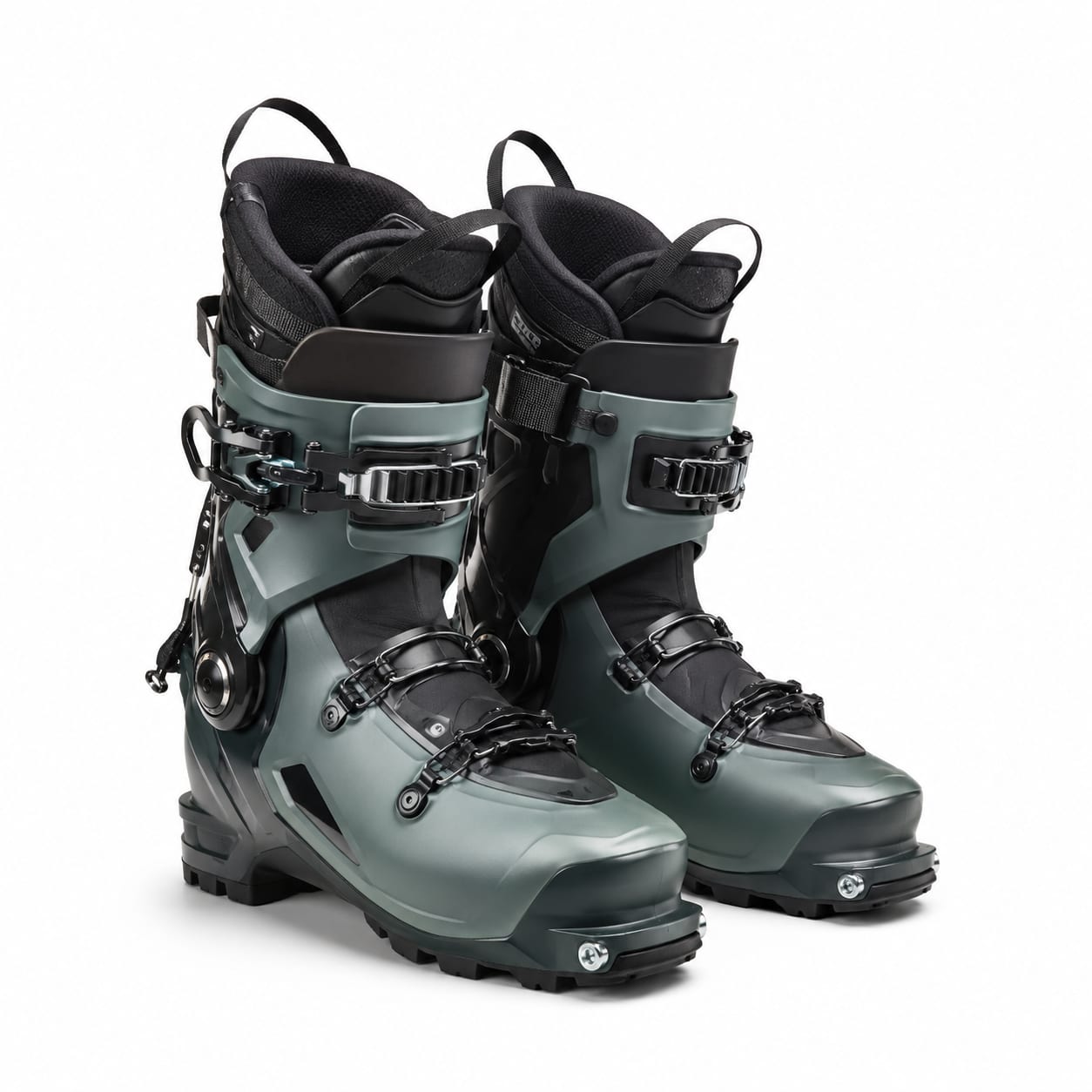
6 topics
Pick a question
Every answer links to the full subcategory guide and related gear types when it helps you decide.
Can I use AT boots with my regular alpine bindings at the resort?
It depends on the sole type. Standard tech/touring soles are NOT compatible with alpine bindings and using them together is dangerous—prerelease or failure to release can occur. However, many modern AT boots feature hybrid soles with both tech fittings and GripWalk certification. These work with GripWalk-compatible alpine bindings (look for the GW symbol). Always verify binding compatibility before using any boot-binding combination. When in doubt, consult a certified binding technician.
Read answer →02How much walk range of motion do I really need?
For most backcountry skiers, 55–60° is the sweet spot. This provides a natural enough stride for efficient skinning on moderate to steep tracks. If you primarily do short laps with minimal approach, 50° is adequate. If you're doing long, steep approaches or technical mountaineering, prioritize 60°+. The difference between 50° and 65° is very noticeable on sustained skinners—the extra range lets you take longer strides with less effort. However, don't assume more walk range means worse downhill performance; modern designs achieve both.
Read answer →03Why are AT boots so much more expensive than alpine boots?
AT boots cost more because they incorporate additional engineering and components: precision-machined tech fittings, robust walk mode mechanisms, lightweight shell materials (Grilamid/Pebax cost more than PU), and often higher-quality heat-moldable liners. The market is also smaller, so R&D and tooling costs are spread over fewer units. Expect to pay $600–900 for quality AT boots versus $400–700 for comparable alpine boots. Think of the premium as the cost of the touring capability that makes backcountry skiing possible.
Read answer →04Should I size AT boots differently than my alpine boots?
Many experienced AT skiers opt for the same mondo size as their alpine boots but with slightly more volume in the forefoot, or they rely on heat-moldable liners to fine-tune the fit. Feet tend to swell during long tours, so a boot that's perfect in the parking lot may feel tight at the summit. However, you still need secure heel hold for the descent. The best approach is to get professionally fitted with the socks you'll tour in, and err on the side of a snug fit that can be customized through liner molding rather than sizing up.
Read answer →05Can I use my AT boots for an entire resort season?
Technically yes, if you have hybrid-sole AT boots and GripWalk-compatible bindings. However, it's not ideal. AT boots are less durable on hard resort snow, their walk mode mechanisms can develop play over time, and they don't provide the same edge-to-edge precision as alpine boots for carving groomers. If you ski 30+ resort days per year plus touring, consider having separate setups. If you're a casual resort skier who tours frequently, a single pair of hybrid AT boots can work fine.
Read answer →06What's the difference between tech bindings and frame AT bindings for boot compatibility?
Tech (pin) bindings require boots with tech fittings—metal inserts in the toe and heel that engage with the binding's pins. Frame AT bindings (like the Marker Duke PT or Salomon Guardian) grip the boot sole like an alpine binding and can work with any boot that has an alpine-compatible sole, including some AT boots with hybrid soles. Tech bindings are much lighter and more efficient for touring. Frame bindings are heavier but offer more familiar alpine-like release characteristics and work with a wider range of boots. Most dedicated AT skiers use tech bindings with tech-compatible AT boots.
Read answer →