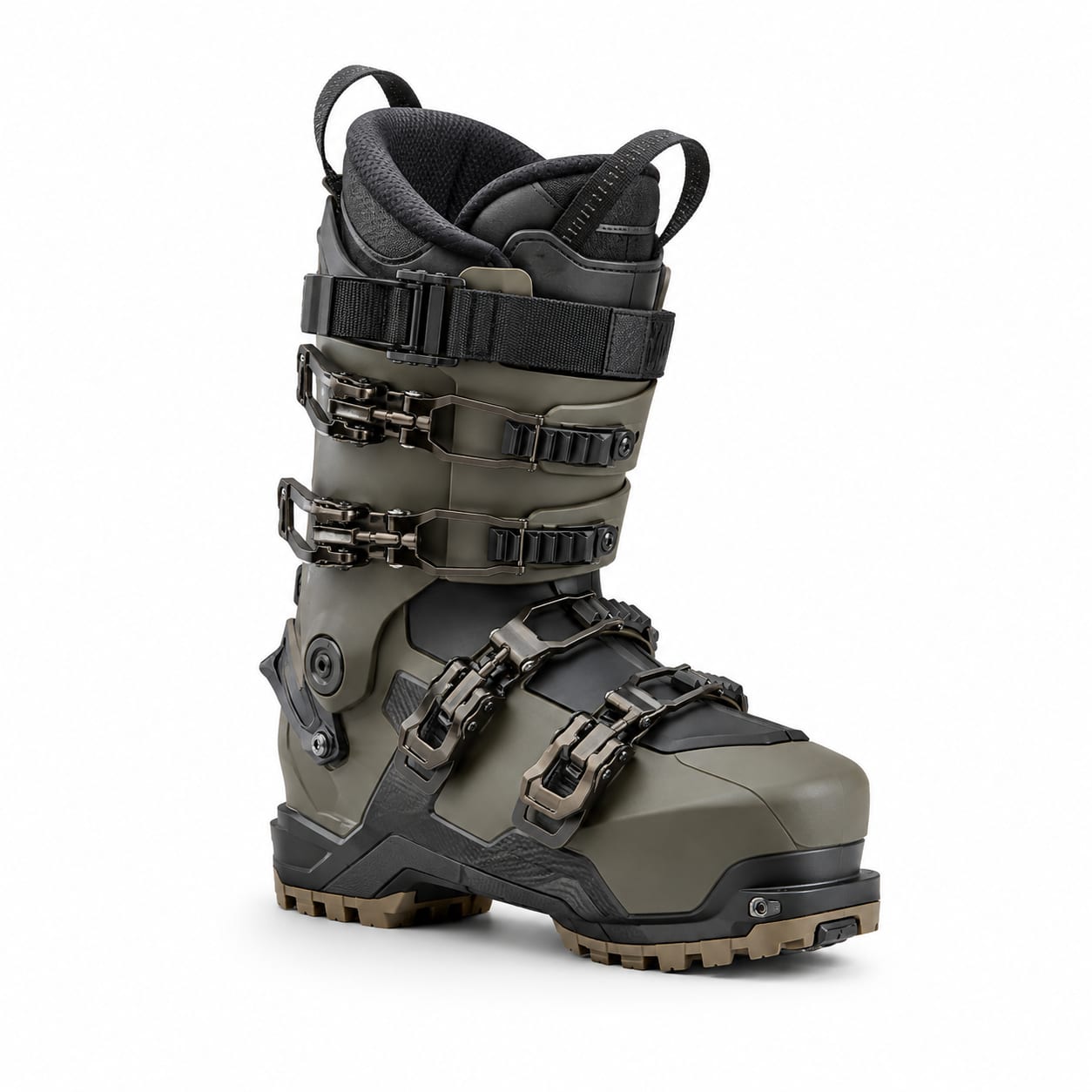
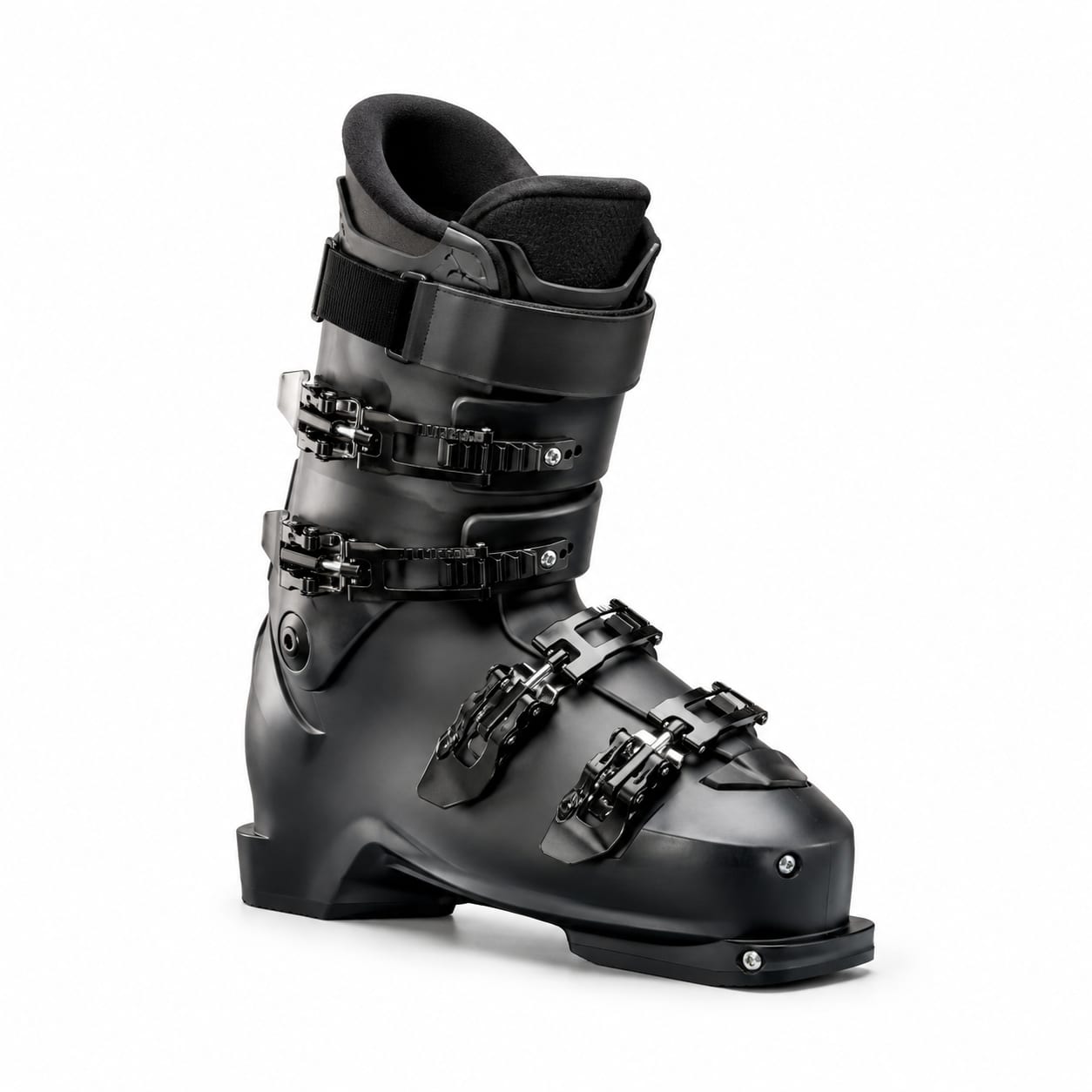
Kitvore.com

Kitvore.com

Specs that matter. Gear that fits.

Ski Boots · Subcategory

Alpine Touring (AT) / Backcountry Ski Boots

Lightweight ski boots with tech-binding compatibility and generous walk mode for efficient uphill travel and capable downhill performance in the backcountry.

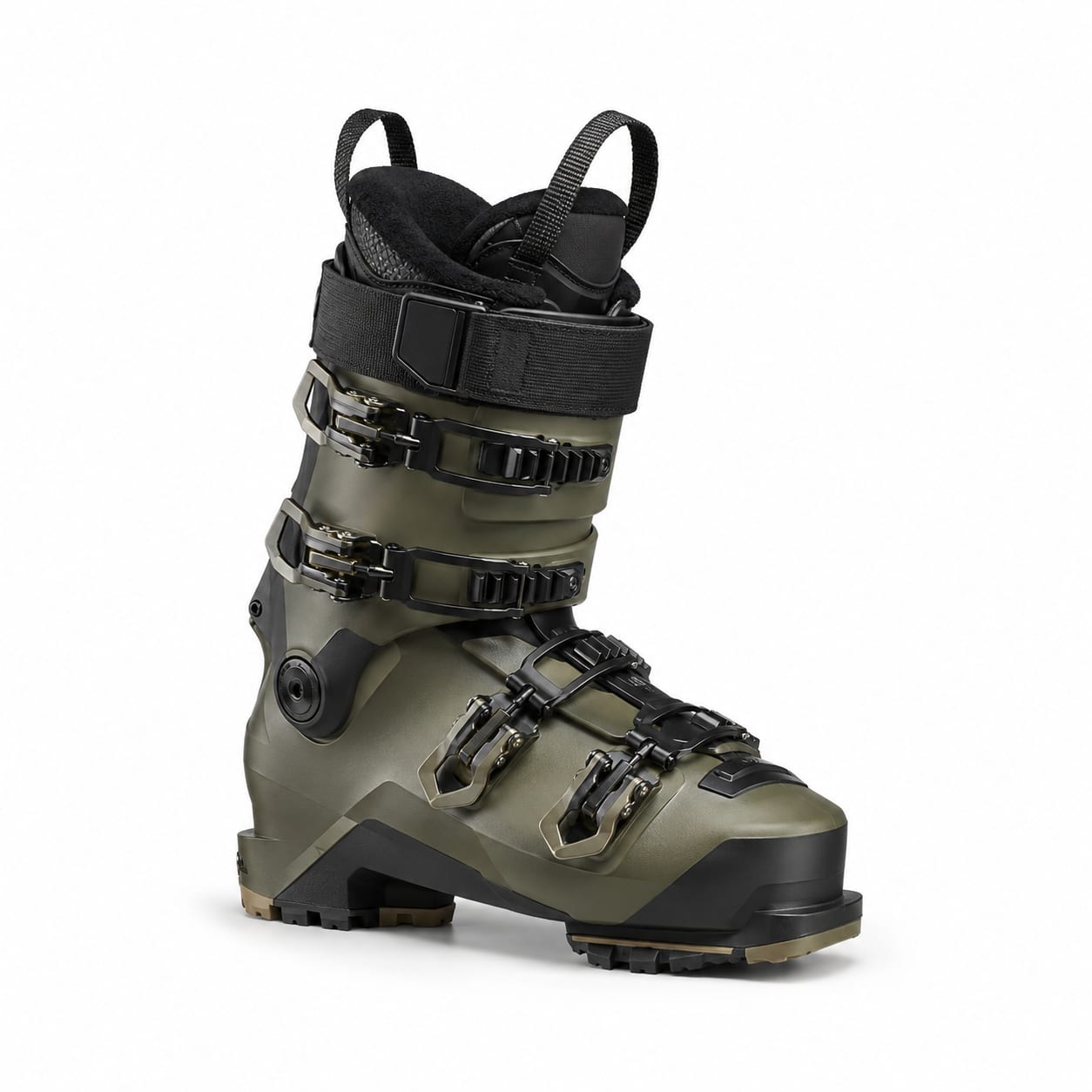
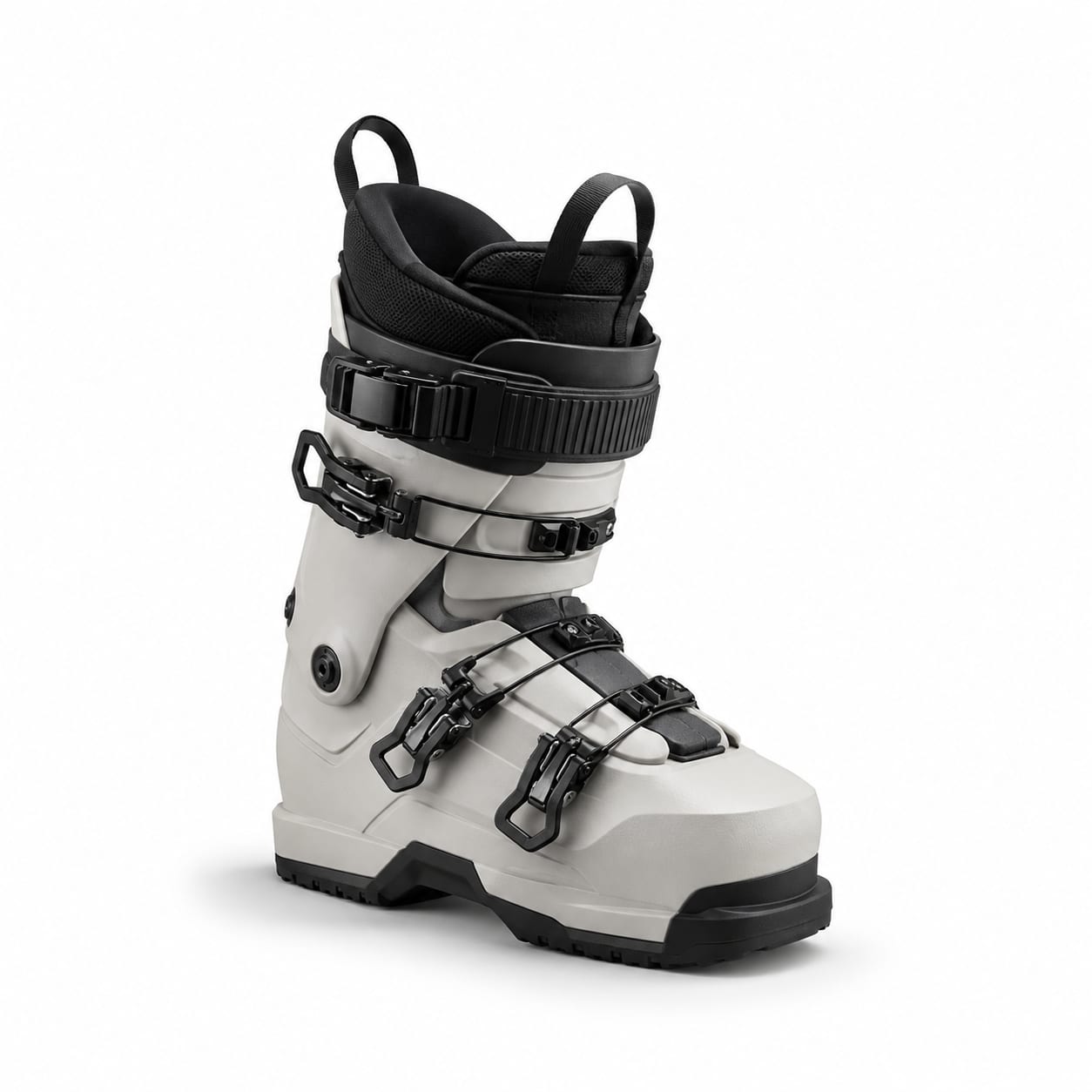
Alpine Touring (AT) ski boots are purpose-built for backcountry skiing, where earning your turns means skinning uphill before descending. They feature tech-compatible toe and heel fittings for pin bindings, a walk mode with 50–70° of cuff rotation for natural stride on ascents, and lightweight shell materials like Grilamid or Pebax that shave critical grams. Modern AT boots have closed the downhill performance gap significantly, offering flex ratings from 100–130 that can drive wide freeride skis with authority. Whether you're doing short sidecountry laps or multi-day ski traverses, AT boots balance uphill efficiency with the downhill power you need to enjoy the descent.

$400 – $1300premium tierintermediateadvancedexpert

Best known for

Tech-binding (pin) compatibility for uphill travelWalk mode with 50–70° cuff rotation for efficient skinningLightweight construction using Grilamid or Pebax shellsRockered rubber touring soles for traction on rock and iceRemovable spoiler and power strap for tour/ski mode transitions
Alpine Touring (AT) / Backcountry Ski Boots

Guide

Detailed overview

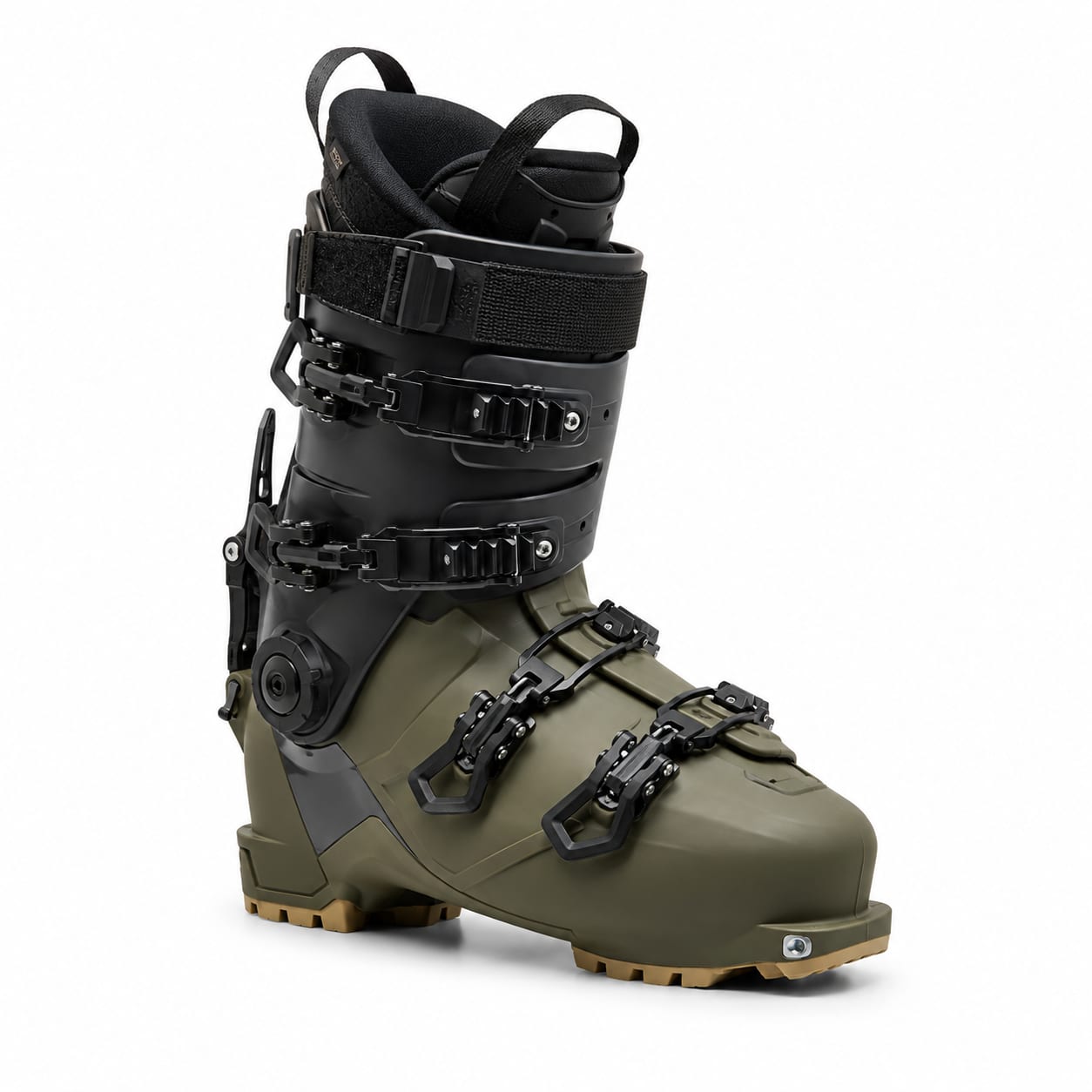
Alpine Touring ski boots are the critical link between backcountry skier and ski when both ascending and descending off-piste terrain. Unlike pure alpine boots, AT boots incorporate tech fittings (metal inserts in the toe and heel) that engage with pin-style touring bindings, allowing a free-heeling stride for skinning. A mechanical walk mode unlocks the cuff from the lower shell, providing 50–70° of forward rotation that mimics a natural walking motion on steep skin tracks. The best AT boots manage to deliver this touring capability while maintaining enough downhill stiffness and precision to confidently ski variable backcountry snow conditions. Shell materials lean toward lightweight polyamides (Grilamid) and Pebax rather than traditional PU, and liners are typically heat-moldable Intuition-style foam that provides insulation and customization without excess weight. Buckle counts range from 2 to 4, with 3-buckle designs being the most common compromise between closure precision and weight savings. AT boots occupy a spectrum from ultralight ski-mountaineering models under 1,500g per pair to beefy freeride-touring hybrids that approach alpine boot performance at around 3,200g per pair.

The evolution of alpine touring ski boots over the past decade has been nothing short of revolutionary. Early AT boots forced skiers to accept significant downhill performance compromises—soft flexes, imprecise closure, and vague power transfer that made skiing anything beyond mellow powder a sketchy proposition. Today's AT boots have narrowed the performance gap dramatically, with models like the Tecnica Zero G, Scarpa Maestrale, and Dynafit Radical delivering 120+ flex indices that can drive modern wide-body freeride skis through chop, crust, and steep technical terrain with genuine authority.

The defining feature of any AT boot is tech-binding compatibility. Small metal fittings molded into the toe and heel of the shell engage with the pins of tech bindings (Dynafit, G3, Salomon, and others), creating a secure but releasable connection. On the ascent, the heel is free to lift while the toe pivots, allowing a natural walking stride with the aid of climbing skins. At the top, the heel is locked down and the walk mode is switched to ski mode, creating a functional alpine boot for the descent. This dual-mode operation is the essence of AT boot design—every feature must serve both the uphill and downhill equation.

Walk mode range of motion is where AT boots truly differentiate themselves from freeride boots with walk features. While a freeride boot might offer 25–40° of cuff rotation, dedicated AT boots deliver 55–70°, which translates to longer, more natural strides on skin tracks and significantly less fatigue on long approaches. This greater range comes from specialized cuff designs with extended travel and minimal friction. The best walk mechanisms are also easy to operate with gloves, using large levers or switches that can be flipped without removing your pole straps.

Weight is the ever-present consideration in AT boot selection. Every gram on your foot is amplified over thousands of steps on the uphill, and the difference between a 1,400g boot and a 1,800g boot becomes very real on a 4,000-vertical-foot tour. However, weight savings come with tradeoffs: lighter boots typically use thinner shell walls, fewer buckles, and less robust liners, all of which can compromise downhill performance, durability, and warmth. The sweet spot for most backcountry skiers who value the descent lies in the 1,500–1,800g per boot range, where you get capable downhill performance without being penalized on the up.

Fit remains the most critical factor in AT boot selection, just as it is with alpine boots. The same rules apply: a snug heel pocket, even pressure across the forefoot, and no pressure points that will be magnified over hours of touring. However, AT boot fit has an additional dimension—comfort on the uphill. A boot that's slightly too tight might be tolerable for 2-hour resort sessions but becomes agonizing on a 6-hour tour. Many AT skiers opt for a slightly more accommodating fit than their pure alpine setup, or rely on heat-moldable Intuition liners to fine-tune the balance between performance and all-day comfort. Custom footbeds are strongly recommended, as they improve both power transfer on the descent and reduce foot fatigue during long ascents.

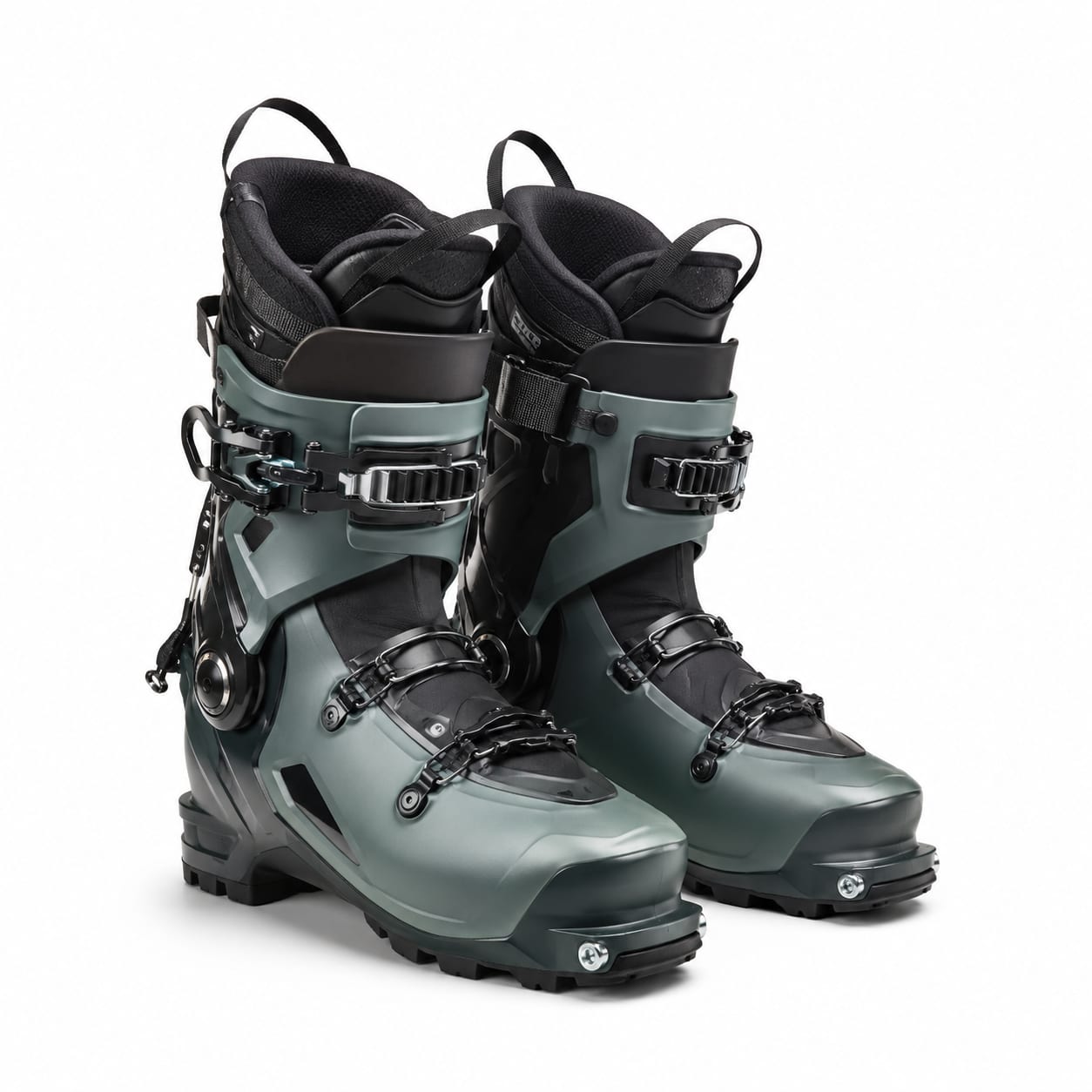
Quick facts

Primary purpose
Backcountry skiing with efficient uphill travel and reliable downhill performance
Popular brands
ScarpaDynafitTecnicaSalomonLa SportivaAtomic
Typical terrain
backcountrymountain passesskin tracksuntracked descentsalpine terrain

What makes it different

Significant weight savings over resort boots; Full walk-mode articulation; Tech toe fittings (pin-compatible); Vibram or rockered soles for hiking

Recommended ranges

How this type usually specs out

Each spec is explained in plain language, then we show what buyers usually look for on this type.

Boot Type / Discipline

Boot Type

What it means

The primary intended use category of the ski boot, which determines overall construction, features, and performance characteristics.

Typical for this type

Touring

In practice

AT boots are classified as touring type, defined by tech-binding compatibility, walk mode, and lightweight construction optimized for uphill travel and backcountry descents.

Compared to other types

Unlike freeride boots that may include walk mode as a convenience feature, touring boots are purpose-built for skinning with tech fittings, greater walk range, and significantly lower weight.

Why it matters: The touring designation ensures the boot has the fundamental features—tech fittings, walk mechanism, rockered sole—required for backcountry skiing with pin bindings.

Flex Rating (Stiffness)

Flex Rating

What it means

A numerical index indicating how resistant the boot cuff is to forward bending. Higher numbers mean stiffer boots that resist flex more, providing more precise power transfer but requiring more strength and technique to drive.

Typical for this type

95–130

Most common pick: 110

In practice

AT boots typically range from 95–130 flex index, with most popular models in the 105–120 range. Ultralight skimo boots may go as low as 80, while freeride-touring hybrids reach 130.

Compared to other types

AT boots are typically 10–20 flex points softer than equivalent alpine boots due to lighter shell materials and walk mode mechanisms that reduce structural rigidity. A 110-flex AT boot skis similarly to a 100-flex alpine boot.

Why it matters: Flex determines how effectively you can drive your skis in variable backcountry snow. Too soft and you'll lack control in chop and crust; too stiff and the boot becomes fatiguing on long tours and harder to skin efficiently.

Last Width (Forefoot Width)

Last Width

What it means

The width of the boot shell at the widest point (forefoot/ball area), measured in millimeters. This is the single most important fit dimension for comfort and control.

Typical for this type

97–102mm

Most common pick: 99mm

In practice

AT boots most commonly offer last widths of 97–102mm, with 99mm being the most prevalent. Some brands offer multiple width options within their AT lineup.

Compared to other types

AT boots tend to run slightly wider on average than frontside boots (which skew 96–98mm) but narrower than freeride boots (which often include 102–104mm options). The mid-range 99mm width suits the widest range of backcountry skiers.

Why it matters: A proper last width ensures both comfort during long tours and precise control on the descent. Feet tend to swell during extended touring, so a slightly more accommodating fit than your alpine boot can prevent tour-ending pain.

Volume / Instep Height

Volume / Instep Height

What it means

The overall internal volume and height of the boot through the instep and midfoot area. Categorized as low, medium, or high volume, this affects both comfort and heel hold.

Typical for this type

Low Volume to Medium Volume

In practice

Most AT boots are designed with medium volume to balance comfort on long ascents with heel hold for descending. Low-volume options exist for performance-oriented skiers with narrow feet.

Compared to other types

AT boots skew slightly toward medium volume more than race or frontside boots (which favor low volume for maximum precision), reflecting the need for all-day touring comfort.

Why it matters: Instep volume affects both heel hold on the descent and comfort on the uphill. Too much volume causes heel lift and blisters during skinning; too little creates pressure points that become unbearable over hours of touring.

Shell Material

Shell Material

What it means

The primary plastic or composite material used in the boot shell and cuff, which affects weight, stiffness, cold-weather performance, and ease of entry.

Typical for this type

Polyamide Pa Or Pebax

In practice

Grilamid (polyamide) is the most common shell material in AT boots, offering the best balance of weight savings, stiffness, and cost. Pebax is used in premium models for superior flex consistency across temperatures. Composite designs (PU lower, Grilamid cuff) appear in freeride-touring hybrids.

Compared to other types

Unlike alpine boots where PU is the gold standard for consistent performance, AT boots prioritize weight savings with polyamide or Pebax. This is the biggest material difference between AT and alpine boot categories.

Why it matters: Shell material directly impacts weight—the primary concern for touring—and cold-weather performance. Grilamid saves 200–400g per pair versus PU but can stiffen noticeably below -15°C. Pebax offers the most consistent flex across temperatures at a premium price.

Liner Type

Liner Type

What it means

The type of inner boot/liner that provides insulation, cushioning, and customizable fit around the foot and ankle.

Typical for this type

Intuition Or Thermo Formable

In practice

Intuition-style heat-moldable foam liners are standard in most quality AT boots. They provide excellent customization, good insulation, and lighter weight than traditional liners. Some ultralight models use thinner thermo-formable liners to save weight.

Compared to other types

AT boots almost universally feature heat-moldable liners, while entry-level alpine boots may use non-moldable standard liners. The Intuition-type liner is more prevalent in AT than any other subcategory because of its superior warmth-to-weight ratio.

Why it matters: A proper liner is crucial for AT boots because it must provide comfort during hours of skinning, warmth in cold backcountry conditions, and enough stiffness for downhill power transfer. Intuition liners mold precisely to your foot, reducing hot spots and improving heel hold.

Number of Buckles

Buckle Count

What it means

The number of closure buckles on each boot. More buckles provide finer adjustment and more even closure pressure, while fewer buckles save weight and simplify entry.

Typical for this type

3–4

In practice

3-buckle designs are the most common in AT boots, offering a good balance of closure precision and weight savings. 4-buckle models provide better downhill performance at the cost of additional weight. 2-buckle designs are reserved for ultralight skimo boots.

Compared to other types

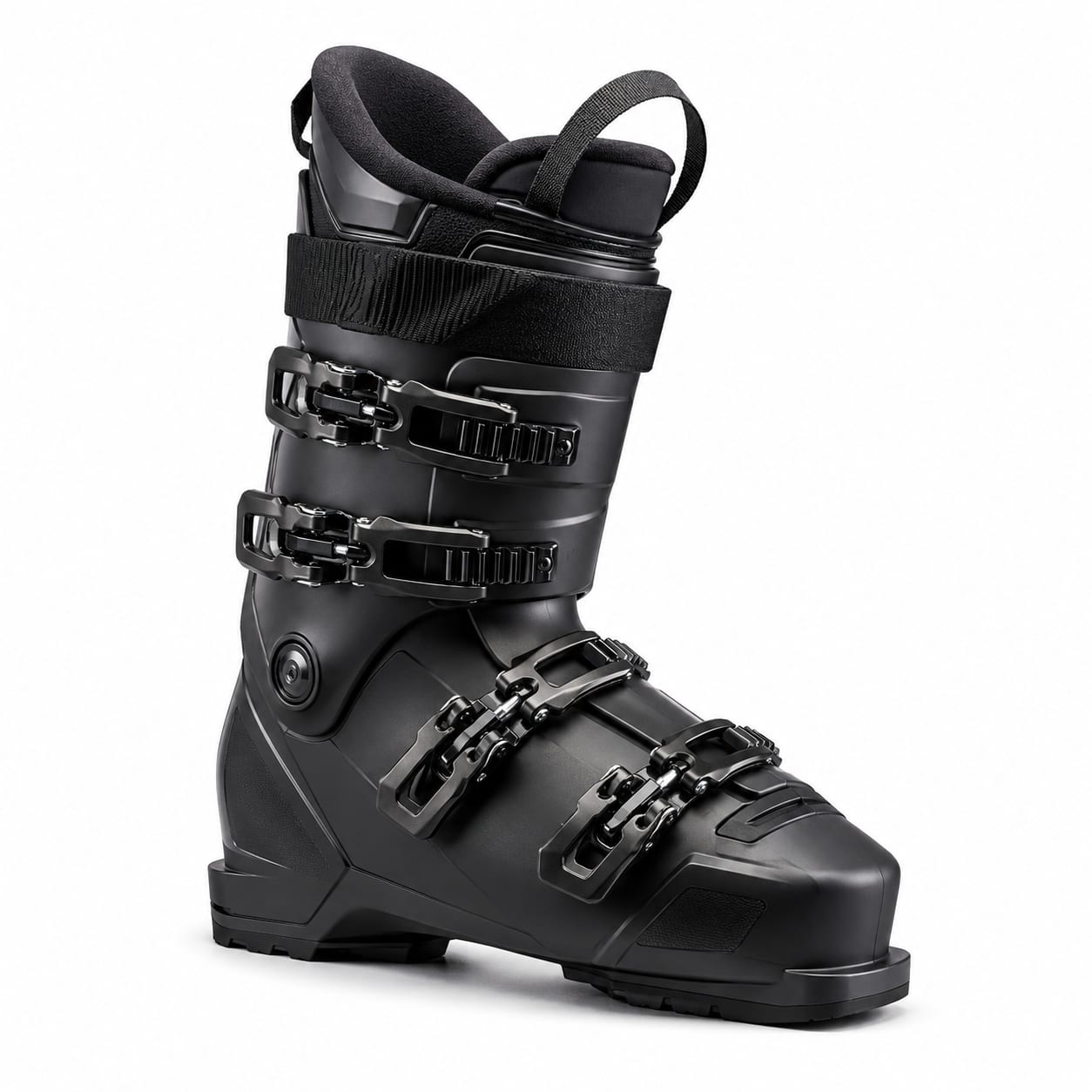
AT boots are the only subcategory where 3-buckle designs are the norm rather than the exception. Alpine, frontside, and race boots are almost exclusively 4-buckle. This reflects the weight-conscious philosophy of touring.

Why it matters: Buckle count affects both the precision of your boot closure and the weight you carry uphill. 3 buckles provide adequate closure for most skiers while saving roughly 80–120g per boot versus 4-buckle designs.

Walk Mode / Hike Mechanism

Walk Mode

What it means

A mechanism that unlocks the cuff from the lower shell, allowing a greater range of forward motion for walking, hiking, or skinning.

Typical for this type

True (Essential)

In practice

Walk mode is a defining, non-negotiable feature of AT boots. Every AT boot includes a mechanism that unlocks the cuff from the lower shell for uphill travel.

Compared to other types

While some freeride and all-mountain boots include walk mode as a convenience feature, AT boots have the most robust and highest-range walk mechanisms, designed for thousands of transitions rather than occasional lodge walks.

Why it matters: Without walk mode, skinning would be nearly impossible—your range of motion would be limited to 15–20° of forward lean, making even moderate skin tracks exhausting. Walk mode is what makes backcountry skiing feasible.

Walk Range of Motion (Degrees)

Walk Range of Motion

What it means

The total range of forward cuff rotation when in walk mode, measured in degrees. Greater range makes walking, skinning, and hiking easier and more natural.

Typical for this type

50–70°

Most common pick: 60°

In practice

Dedicated AT boots offer 50–70° of walk range, with most popular models in the 55–65° range. Ultralight skimo boots may reach 70°+, while freeride-touring hybrids typically offer 50–55°.

Compared to other types

AT boots offer significantly more walk range than freeride boots (25–40°) or all-mountain boots with walk mode (15–25°). This is one of the clearest differentiators between dedicated touring boots and resort-oriented boots with walk features.

Why it matters: Greater walk range translates directly to longer, more natural strides on skin tracks, reducing fatigue on long ascents. The difference between 45° and 60° is very noticeable on steep, sustained skinners.

Boot Sole Length (BSL)

Boot Sole Length

What it means

The length of the boot sole in millimeters, critical for binding setup and adjustment. Different from mondo point size; the same size boot can have different BSL across brands.

Typical for this type

Varies by mondo size (263–340mm across all sizes)

Most common pick: 305mm

In practice

BSL is determined by your mondo point size and varies by brand and model. A size 27.0 AT boot typically has a BSL of 303–310mm. AT boots may have slightly different BSLs than alpine boots of the same size due to tech fittings in the sole.

Compared to other types

AT boots may have slightly different BSLs than alpine boots in the same mondo size due to the tech fittings and rockered sole design. Always verify BSL when switching between boot types.

Why it matters: BSL is critical for binding setup—both tech bindings and any frame AT bindings you might use. When switching between AT and alpine setups, you must verify BSL compatibility and adjust bindings accordingly.

Forward Lean Angle

Forward Lean

What it means

The angle of the cuff relative to vertical, positioning the skier's body forward over the skis. Affects stance, balance, and the ability to drive the ski tips.

Typical for this type

14–18° (adjustable on most models)

Most common pick: 16°

In practice

AT boots typically offer 14–18° of forward lean, with most models providing adjustable lean settings (often two positions). A more upright stance (14–15°) is comfortable for touring, while a more aggressive lean (17–18°) enhances downhill driving power.

Compared to other types

AT boots are more likely to offer adjustable forward lean than alpine boots, reflecting the need to optimize stance for both ascending and descending. The range is similar to all-mountain boots.

Why it matters: Adjustable forward lean lets you optimize your stance for both uphill comfort and downhill performance. Many AT skiers prefer a more upright setting for skinning and a more forward position for descending.

GripWalk Sole Compatibility

GripWalk Compatible

What it means

Whether the boot features a GripWalk sole profile (rockered, rubberized) that requires GripWalk-compatible bindings for safe use.

Typical for this type

Tech Touring (With Optional GripWalk Hybrid)

In practice

AT boots feature tech/touring soles with metal fittings for pin bindings and rockered rubber lugs for traction on rock and ice. Many modern AT boots also carry GripWalk certification, making them compatible with certain GripWalk alpine bindings for resort use.

Compared to other types

AT boots are the only subcategory where tech/touring soles are standard. Some models offer hybrid soles that work with both tech bindings and GripWalk alpine bindings, providing versatility for skiers who use one boot for both resort and backcountry.

Why it matters: Sole type determines binding compatibility—this is a safety-critical consideration. Tech soles are required for pin bindings. If you want to use your AT boots at the resort on alpine bindings, you need a hybrid sole that's both tech-compatible and GripWalk-certified.

Weight Per Pair (grams)

Weight Per Pair

What it means

The total weight of both boots in grams. Weight significantly affects touring efficiency and all-day fatigue, with lighter boots being easier on the uphill but sometimes sacrificing downhill performance.

Typical for this type

2200–3200g

Most common pick: 2800g

In practice

AT boots range from ultralight skimo models at 1,800–2,200g per pair to freeride-touring hybrids at 2,800–3,200g. The sweet spot for most backcountry skiers is 2,400–3,000g, balancing uphill efficiency with downhill capability.

Compared to other types

AT boots are dramatically lighter than alpine boots (3,500–4,500g) and significantly lighter than freeride boots (3,200–4,000g). This weight savings comes from lighter shell materials, fewer buckles, thinner liners, and less reinforcement.

Why it matters: Weight is arguably the most important dimension for AT boots because it directly affects touring efficiency and fatigue. Every 100g per boot is felt over thousands of uphill steps. However, going too light sacrifices downhill performance, durability, and warmth.

Micro-Adjustable Buckles

Micro-Adjustable Buckles

What it means

Whether the buckles can be fine-tuned with a screw mechanism for precise tension adjustment beyond the standard catch positions.

Typical for this type

True (Recommended)

In practice

Most mid-range and above AT boots feature micro-adjustable buckles that allow fine-tuning of closure tension. This is particularly valuable for AT boots because feet swell during long tours and you may need to adjust buckle tension throughout the day.

Compared to other types

Micro-adjustable buckles are equally common in AT and alpine boots at the same price points. The feature is arguably more valuable in AT boots due to the longer duration of wear and greater fit changes during touring.

Why it matters: Micro-adjustability lets you dial in precise closure for the descent and then loosen slightly for the ascent without changing buckle catch positions. This is essential for managing the fit changes your feet undergo during a full day of touring.

Power Strap Type

Power Strap

What it means

The velcro or mechanical strap at the top of the cuff that provides additional closure power and fine-tuning of upper cuff tension.

Typical for this type

Wide Velcro Or Standard Velcro

In practice

AT boots most commonly use wide velcro power straps (40mm+) or standard velcro straps. Some models feature removable power straps that can be removed for touring to increase range of motion and reduce weight. Mechanical/buckle straps are rare in AT boots.

Compared to other types

AT boots are more likely to feature removable power straps than alpine boots, and less likely to use mechanical/buckle straps due to weight and complexity concerns.

Why it matters: The power strap provides the final closure at the top of the cuff. In AT boots, a removable strap is valuable because removing it can increase walk range and reduce shin pressure on the uphill. Wide straps provide better power transfer for the descent.

Cuff Alignment / Cant Adjustment

Cuff Alignment Adjustment

What it means

The ability to adjust the lateral angle of the cuff relative to the lower shell, accommodating bowlegged or knock-kneed stances for proper edge engagement.

Typical for this type

True (Recommended For Performance-Oriented Skiers)

In practice

Most quality AT boots offer cuff alignment adjustment, allowing lateral cuff angle changes to accommodate bowlegged or knock-kneed stances. This is important for proper edge engagement in variable backcountry snow conditions.

Compared to other types

Cuff alignment availability in AT boots is similar to all-mountain and freeride boots. It's standard on most models above the entry level.

Why it matters: Proper cuff alignment ensures both edges engage equally, which is critical in backcountry terrain where you may encounter firm conditions that demand precise edge control. Misalignment can cause one edge to hook while the other feels vague.

Recommended Skill Level

Recommended Skill Level

What it means

The skier ability level the boot is designed and optimized for, which correlates with flex, features, and overall construction philosophy.

Typical for this type

Intermediate to Expert

Most common pick: Advanced

In practice

AT boots are primarily designed for advanced to expert skiers who have the skills to navigate backcountry terrain. Some intermediate-friendly models exist with softer flexes (95–105) and more forgiving fits, but backcountry skiing itself requires solid technique.

Compared to other types

AT boots skew higher in recommended skill level than all-mountain or freestyle boots because backcountry skiing requires stronger technique. However, they're more accessible than race boots. The AT category has fewer true beginner options because backcountry skiing itself isn't a beginner activity.

Why it matters: Choosing a boot that matches your ability ensures you can effectively control the boot on the descent without fatigue. Backcountry terrain is more demanding than groomed runs, so even intermediate AT skiers benefit from boots with some performance capability.

Evaluation

Strengths and trade-offs

Pros

What this type does best

Exceptional Uphill Efficiency

Critical

Tech-binding compatibility and 50–70° walk range enable natural, efficient skinning stride that dramatically reduces fatigue on long ascents compared to any alpine or freeride boot.

Significant Weight Savings

Critical

AT boots save 500–1,500g per pair compared to alpine boots, which translates to noticeably less fatigue over thousands of uphill steps and easier travel on technical terrain.

Versatile Tour/Ski Mode Transitions

High

The walk/ski mode mechanism allows quick transitions between uphill and downhill configurations, typically taking 30–60 seconds per boot even with gloves on.

Improved Traction and Walking Comfort

High

Rockered rubber touring soles provide dramatically better traction on rock, ice, and hard surfaces than alpine DIN soles—essential for boot packs, scramble sections, and parking-lot approaches.

Closing the Downhill Performance Gap

High

Modern AT boots with 110–130 flex ratings and improved shell designs deliver downhill performance that approaches alpine boots, making them capable of driving wide freeride skis through challenging backcountry conditions.

Customizable Fit for Long Days

Medium

Intuition-style heat-moldable liners and micro-adjustable buckles allow precise fit customization that accommodates foot changes during multi-hour tours, reducing hot spots and improving comfort.

Hybrid Compatibility Options

Medium

Many modern AT boots feature hybrid soles that work with both tech bindings and GripWalk-compatible alpine bindings, allowing one boot to serve both resort and backcountry duty.

Cons

Trade-offs to be aware of

Reduced Downhill Power vs. Alpine Boots

Moderate

Even the stiffest AT boots can't match the power transfer and precision of equivalent alpine boots due to lighter shell materials, walk mode mechanisms, and tech fittings that create slight flex under load.

Binding Compatibility Limitations

Significant

Tech soles only work with pin bindings. If you want to use AT boots on alpine bindings at the resort, you need a hybrid-sole model and GripWalk-compatible bindings. Using the wrong combination is dangerous.

Cold-Weather Flex Variability

Moderate

Grilamid and Pebax shells can stiffen noticeably in extreme cold (below -15°C), changing the boot's flex characteristics and making the walk mode feel stiffer on cold morning tours.

Less Durability Than Alpine Boots

Moderate

Lighter shell materials and thinner construction mean AT boots typically have shorter lifespans than alpine boots, especially if used frequently at the resort on hard snow and ice.

Higher Cost for Equivalent Performance

Minor

AT boots typically cost $100–300 more than alpine boots with comparable flex and features, due to the added complexity of walk mechanisms, tech fittings, and lightweight materials.

Fewer Fit Options

Minor

The AT boot market has fewer models and last-width options than the alpine market, making it harder to find the perfect fit—especially for very narrow or very wide feet.

Best for

Terrain

Backcountry bowls and meadowsSidecountry accessed via gatesSki mountaineering routesMulti-day traverses and hut tripsSteep skin-track approaches

Snow conditions

PowderCorn snowVariable backcountry snowSpring touring conditionsWind-affected and breakable crust

Skill level

intermediateadvancedexpert

Riding style

Backcountry freerideSki mountaineeringTouringSplitboarding (as reference for approach)

Rider profile

Dedicated backcountry skier earning 80%+ of turnsResort skier who regularly accesses sidecountrySki mountaineer tackling technical objectivesFitness-oriented skier who values the uphill as much as the downSkier doing hut trips and multi-day traverses

Not ideal for

Reasons

Tech-binding soles are incompatible with standard alpine bindings unless using a hybrid modelLighter construction sacrifices the edge-to-edge precision and power that dedicated resort skiers needWalk mode mechanism introduces slight play that's noticeable in high-speed carvingBeginners lack the technique to safely navigate backcountry terrain where AT boots are designed to performSofter flex options in AT boots may not provide enough support for heavy, aggressive resort skiers

Terrain

Groomed resort runs exclusivelyTerrain parks and halfpipesMogul fields at the resort

Skill level

beginner

Riding style

Frontside carvingPark and freestyleCompetitive racing

Compare

How it stacks up

This page

Alpine Touring (AT) / Backcountry Ski Boots

Significantly lighter (500–1,000g per pair less), much greater walk range (55–70° vs. 25–40°), tech-binding compatibility for efficient skinning, and better traction with rockered touring soles.

Alternative

Freeride Boots with Walk Mode

Freeride boots offer superior downhill power transfer, 4-buckle closure precision, and full alpine binding compatibility. They're better for skiers who primarily ride the resort with occasional sidecountry laps.

Bottom line

Choose AT boots if you skin uphill regularly (50%+ of your days involve touring). Choose freeride boots if you're primarily a resort skier who occasionally ducks a gate for a sidecountry lap.

This page

Alpine Touring (AT) / Backcountry Ski Boots

AT boots provide genuine touring capability with tech fittings, high walk range, and lightweight construction. All-mountain boots with walk mode are heavy and limited for actual touring.

Alternative

All-Mountain Boots

All-mountain boots offer better downhill performance, more fit options, lower cost, and universal alpine binding compatibility. They're the right choice for 90%+ resort skiers.

Bottom line

Only choose AT boots if you actually tour. If you never skin uphill, all-mountain boots will serve you better at a lower price point with superior resort performance.

This page

Alpine Touring (AT) / Backcountry Ski Boots

Standard AT boots deliver far better downhill performance with stiffer flexes, more substantial liners, and better closure systems. They're warmer, more comfortable, and more durable for regular backcountry skiing.

Alternative

Ultralight Skimo Race Boots

Skimo boots are dramatically lighter (1,200–1,600g per pair vs. 2,400–3,200g) with even greater walk range, making them unmatched for fitness-oriented touring and ski mountaineering racing.

Bottom line

Choose standard AT boots unless you're competing in skimo races or prioritize uphill speed above all else. Skimo boots sacrifice too much downhill performance and comfort for most recreational backcountry skiers.

This page

Alpine Touring (AT) / Backcountry Ski Boots

AT boots offer walk mode, tech compatibility, and weight savings that make backcountry skiing possible. They also provide better traction for any walking scenario.

Alternative

Frontside / Piste Boots

Frontside boots deliver maximum edge grip, power transfer, and precision for high-speed carving on groomed snow. They're stiffer, more responsive, and provide the most direct connection to the ski.

Bottom line

These are fundamentally different tools for different purposes. If you want to ski backcountry, you need AT boots. If you only ski groomers, frontside boots will dramatically outperform any AT boot.

Shopping

Buying tips

  • 1

    Prioritize fit above all else—even more than with alpine boots, a poor-fitting AT boot will ruin long tours. Get professionally fitted and consider custom footbeds.

  • 2

    Choose weight based on your touring style: 1,400–1,700g per boot for fast-and-light missions, 1,500–1,800g for general backcountry, and 1,600–1,900g+ if you prioritize downhill performance.

  • 3

    If you plan to use one boot for both resort and backcountry, look for hybrid-sole models with both tech fittings and GripWalk certification. Verify your resort bindings are GripWalk-compatible.

  • 4

    Don't over-boot your ability. A 130-flex AT boot is extremely demanding and will fatigue you on long tours. Most skiers are best served in the 105–120 flex range.

  • 5

    Test the walk mode in the store: flip it to walk mode and flex forward. The transition should be smooth, the range should feel generous, and the lever should be operable with gloves.

  • 6

    Consider liner quality carefully. Intuition-style liners are worth the premium for their moldability, warmth, and durability. Aftermarket liners can upgrade a boot that comes with a basic liner.

  • 7

    If you have wide feet, look at brands like Scarpa and Dalbello that offer wider AT lasts. Tecnica and Lange AT boots tend to run narrower.

  • 8

    Factor in the cost of tech bindings when budgeting—AT boots require pin bindings, which are an additional $400–800 investment beyond the boots themselves.

Care

Maintenance notes

  • Dry liners and shells thoroughly after every tour. Remove liners and insoles, and store boots open in a dry, room-temperature area. Moisture trapped in liners leads to odor, bacterial growth, and cold feet on the next tour.
  • Inspect tech fittings before each season. The metal toe and heel inserts should be clean, free of burrs, and firmly seated in the shell. Damaged or loose fittings can cause binding malfunction.
  • Lubricate walk mode mechanisms annually with silicone-based lubricant to ensure smooth operation and prevent freezing in cold conditions.
  • Check buckle function and micro-adjust threads regularly. Backcountry conditions (ice, dirt, grit) can cause buckles to stick or strip. Clean and lubricate as needed.
  • Replace worn toe and heel lugs on the sole. Excessively worn lugs can affect tech-binding engagement and reduce traction on rock and ice. Some models have replaceable toe and heel pads.
  • If shells develop deep scratches or gouges from rock contact, inspect for cracks that could propagate. Minor scratches can be smoothed with fine sandpaper; cracks require professional assessment or replacement.
  • Heat-moldable liners can be re-molded once or twice if fit changes, but avoid excessive remolding as the foam loses integrity with each heating cycle.

Progression

Skill development path

AT boots follow a natural progression as your backcountry skills develop. New backcountry skiers transitioning from resort skiing should start with a freeride-touring hybrid in the 100–110 flex range (e.g., Tecnica Zero G 110, Scarpa Maestrale RS) that provides familiar downhill performance with genuine touring capability. As you log more touring days and develop efficient skinning technique, you may prefer lighter boots in the 1,500–1,700g range with 105–115 flex for faster, longer tours. Expert skiers tackling technical mountaineering objectives often run two AT setups: a mid-weight boot (1,600–1,800g, 115–130 flex) for big-mountain freeride objectives, and an ultralight boot (1,200–1,500g, 90–110 flex) for fast ski mountaineering and long traverses. The key is matching boot weight and stiffness to your primary objective—there's no single AT boot that excels at everything.

FAQ

Common questions

Each question has a dedicated page with a full answer and links to the buying guide.

Can I use AT boots with my regular alpine bindings at the resort?

It depends on the sole type. Standard tech/touring soles are NOT compatible with alpine bindings and using them together is dangerous—prerelease or failure to release can occur. However, many modern AT boots feature hybrid soles with both tech fittings and GripWalk certification. These work with GripWalk-compatible alpine bindings (look for the GW symbol). Always verify binding compatibility before using any boot-binding combination. When in doubt, consult a certified binding technician.

How much walk range of motion do I really need?

For most backcountry skiers, 55–60° is the sweet spot. This provides a natural enough stride for efficient skinning on moderate to steep tracks. If you primarily do short laps with minimal approach, 50° is adequate. If you're doing long, steep approaches or technical mountaineering, prioritize 60°+. The difference between 50° and 65° is very noticeable on sustained skinners—the extra range lets you take longer strides with less effort. However, don't assume more walk range means worse downhill performance; modern designs achieve both.

Why are AT boots so much more expensive than alpine boots?

AT boots cost more because they incorporate additional engineering and components: precision-machined tech fittings, robust walk mode mechanisms, lightweight shell materials (Grilamid/Pebax cost more than PU), and often higher-quality heat-moldable liners. The market is also smaller, so R&D and tooling costs are spread over fewer units. Expect to pay $600–900 for quality AT boots versus $400–700 for comparable alpine boots. Think of the premium as the cost of the touring capability that makes backcountry skiing possible.

Should I size AT boots differently than my alpine boots?

Many experienced AT skiers opt for the same mondo size as their alpine boots but with slightly more volume in the forefoot, or they rely on heat-moldable liners to fine-tune the fit. Feet tend to swell during long tours, so a boot that's perfect in the parking lot may feel tight at the summit. However, you still need secure heel hold for the descent. The best approach is to get professionally fitted with the socks you'll tour in, and err on the side of a snug fit that can be customized through liner molding rather than sizing up.