
Ski Goggles · FAQ
Questions about Cylindrical Lens Ski Goggles
Straight answers on fit, specs, and when this type makes sense — each topic has its own page with links back to the buying guide.
Open Cylindrical Lens Ski Goggles guide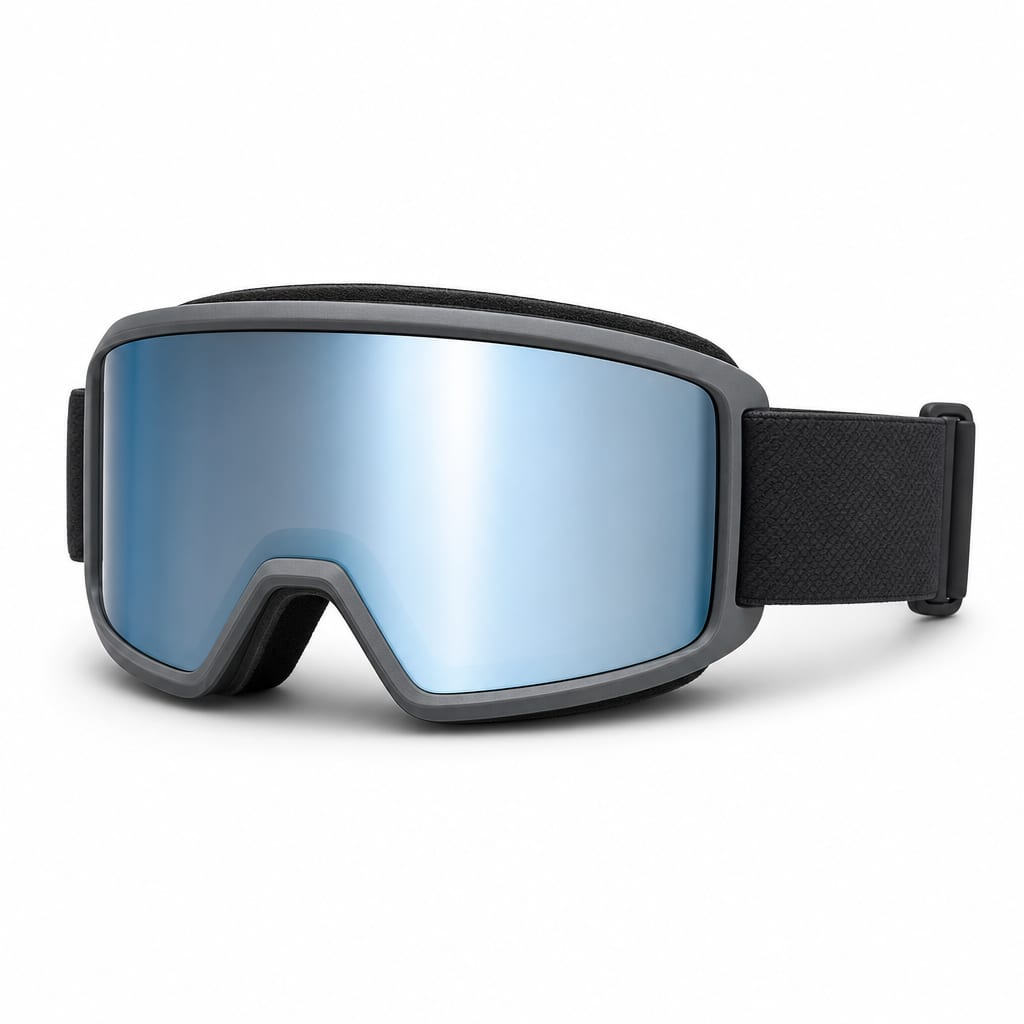
6 topics
Pick a question
Every answer links to the full subcategory guide and related gear types when it helps you decide.
Are cylindrical goggles good enough for serious skiing?
Yes, absolutely. Cylindrical goggles provide clear central vision and adequate peripheral awareness for the vast majority of skiing situations. The optical differences between cylindrical and spherical lenses are most noticeable at the far edges of your peripheral vision, which you rarely rely on for critical decisions during normal riding. Many professional park riders and experienced skiers use cylindrical goggles by choice. Focus on getting the right VLT and tint for your conditions — that matters far more than lens shape.
Read answer →02Will I notice the peripheral distortion of cylindrical lenses?
Most skiers don't notice it during normal riding. The distortion occurs at the far edges of your peripheral vision where your eyes don't focus sharply anyway. You might notice it if you specifically look for it — objects at the extreme periphery may appear slightly stretched or compressed. If you're skiing fast through tight trees or navigating complex terrain where split-second peripheral awareness matters, spherical lenses provide a measurable advantage. For groomed runs, park, and general resort skiing, the distortion is functionally irrelevant.
Read answer →03Can I swap lenses on cylindrical goggles easily?
It depends on the interchangeability system. Cylindrical lenses are actually easier to swap than spherical lenses in traditional frame-swap systems because the simpler single-curve shape flexes more predictably. Many modern cylindrical goggles now offer magnetic or mechanical quick-swap systems that allow lens changes in seconds, even with gloves on. If you anticipate changing lenses on the mountain, prioritize a quick-swap system over traditional frame-swap designs.
Read answer →04Why are cylindrical goggles cheaper than spherical ones?
The price difference comes primarily from manufacturing complexity. Cylindrical lenses require forming a single horizontal curve, which is simpler and faster to produce. Spherical lenses must be precisely curved on two axes simultaneously, requiring more sophisticated manufacturing processes, tighter quality control, and higher rejection rates for optical imperfections. The raw materials are similar — you're paying for the more complex manufacturing, not better materials.
Read answer →05Do cylindrical goggles fog more than spherical ones?
Not inherently. Fogging is determined by the anti-fog system (dual-lens construction and coating quality), ventilation design, and how well the goggle seals to your face. A cylindrical goggle with premium anti-fog coating and enhanced ventilation will resist fogging better than a spherical goggle with standard coating and minimal vents. Cylindrical goggles do have slightly less internal air volume than oversized spherical models, which means humidity can build up marginally faster, but this is a minor factor compared to coating and ventilation quality.
Read answer →06Should I buy a cylindrical goggle with a spare lens or two separate goggles?
For most riders, one cylindrical goggle with a spare lens is the better approach. Cylindrical spare lenses are affordable (often $25-50), take up minimal pocket space, and modern quick-swap systems make changes fast. Two separate goggles cost more total but give you a full backup if one gets damaged. If you ski in wildly varying conditions and have the budget, two goggles with different dedicated lenses eliminates on-mountain lens swaps entirely.
Read answer →