
Ski Poles · FAQ
Questions about Adjustable/Telescoping Ski Poles
Straight answers on fit, specs, and when this type makes sense — each topic has its own page with links back to the buying guide.
Open Adjustable/Telescoping Ski Poles guide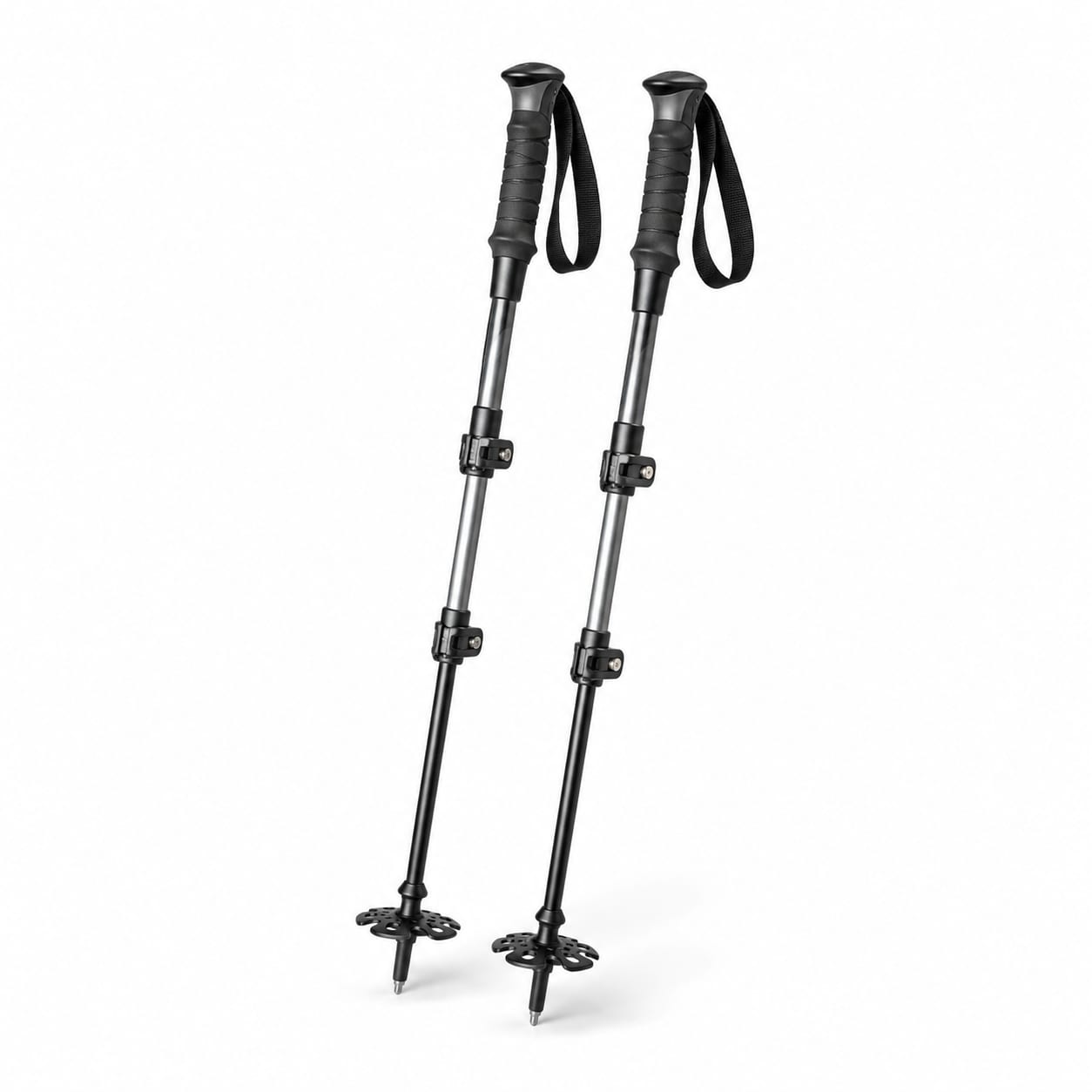
6 topics
Pick a question
Every answer links to the full subcategory guide and related gear types when it helps you decide.
How much should I lengthen my poles for uphill skinning versus downhill skiing?
Most touring skiers add 5–10 cm to their standard downhill pole length for uphill skinning. The longer pole provides better reach and a more efficient striding motion on ascents. Experiment on moderate terrain to find what feels most efficient—your arms should swing naturally without reaching or hunching. On steep switchbacks, you may prefer an even longer setting.
Read answer →02Do adjustable poles ever collapse unexpectedly while skiing?
Yes, this can happen if locks aren't properly tightened or if ice/debris interferes with the mechanism. External clamp systems are less prone to this than twist-lock mechanisms. Always verify your poles are locked by pushing down firmly on them before descending. Clean and maintain locking mechanisms regularly, and replace worn clamps. Properly maintained external clamp poles rarely collapse under normal skiing loads.
Read answer →03Are adjustable poles worth it if I only ski at resorts?
For pure resort skiing on consistent terrain, adjustable poles add weight, cost, and complexity without meaningful benefit. Fixed-length poles are lighter, simpler, and more reliable for resort use. The main exceptions are traveling skiers who need compact poles for luggage, families sharing poles, or resort skiers who also occasionally venture into sidecountry or backcountry.
Read answer →04What's the difference between two-section and three-section telescoping poles?
Two-section poles have one adjustment point and are simpler, lighter, and generally more reliable. They collapse to roughly 55–65% of their extended length. Three-section poles have two adjustment points, offering a wider total adjustment range and packing down shorter (45–55 cm), but they're heavier and have an additional potential failure point. Most touring skiers prefer two-section poles for their reliability; three-section poles are better for travel or ski mountaineering where packed length matters most.
Read answer →05Can I use my adjustable ski poles for summer hiking and trekking?
Many adjustable ski poles work for summer trekking, especially models with extended grips and interchangeable baskets. However, dedicated trekking poles often have different grip ergonomics, longer adjustment ranges for uphill/downhill hiking, and rubber tip covers for rocky terrain. If you hike frequently, dedicated trekking poles are worth the investment. For occasional summer use, your ski poles with rubber tip covers will work adequately.
Read answer →06How do I prevent my adjustable poles from freezing in wet, cold conditions?
Ice buildup in the shaft junctions is a common issue in wet snow. To minimize freezing: dry poles thoroughly before extending them, keep the inside of outer shafts clean, avoid getting snow inside the shafts during transitions, and consider applying a thin coat of silicone lubricant to the inner shaft sections. External clamp mechanisms are less affected by ice than twist-lock systems. If poles do freeze, warm them gently (inside your jacket) rather than forcing the mechanism.
Read answer →