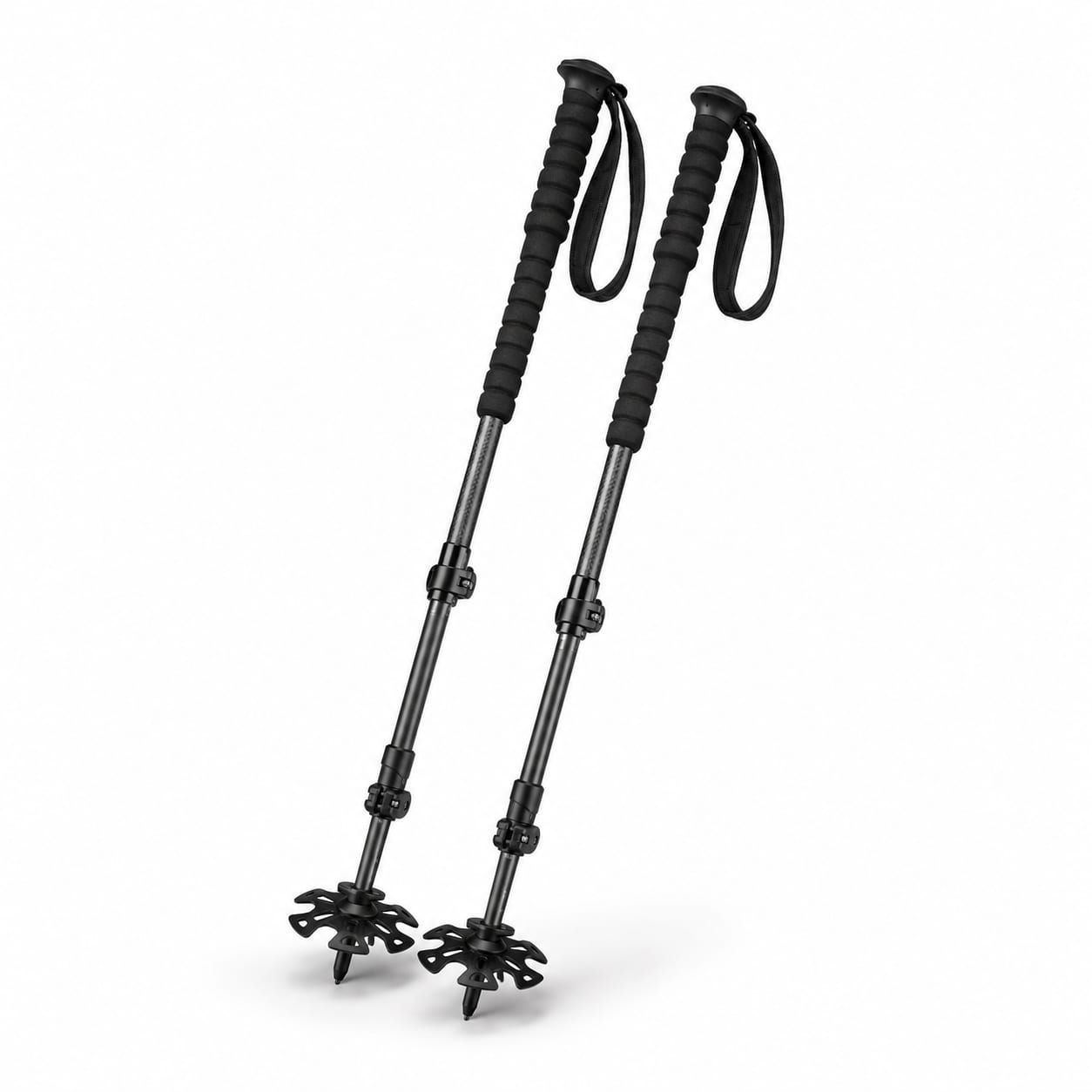
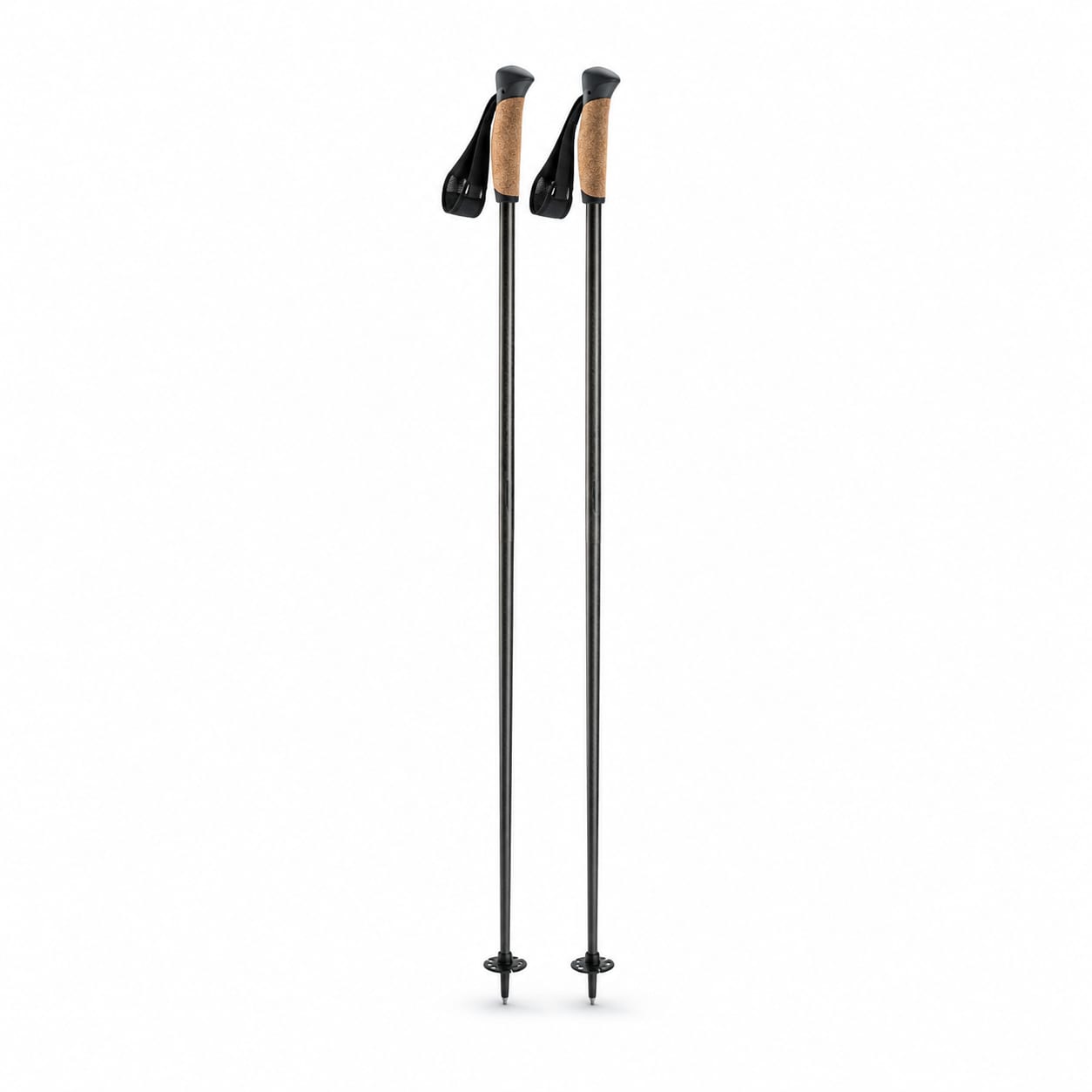
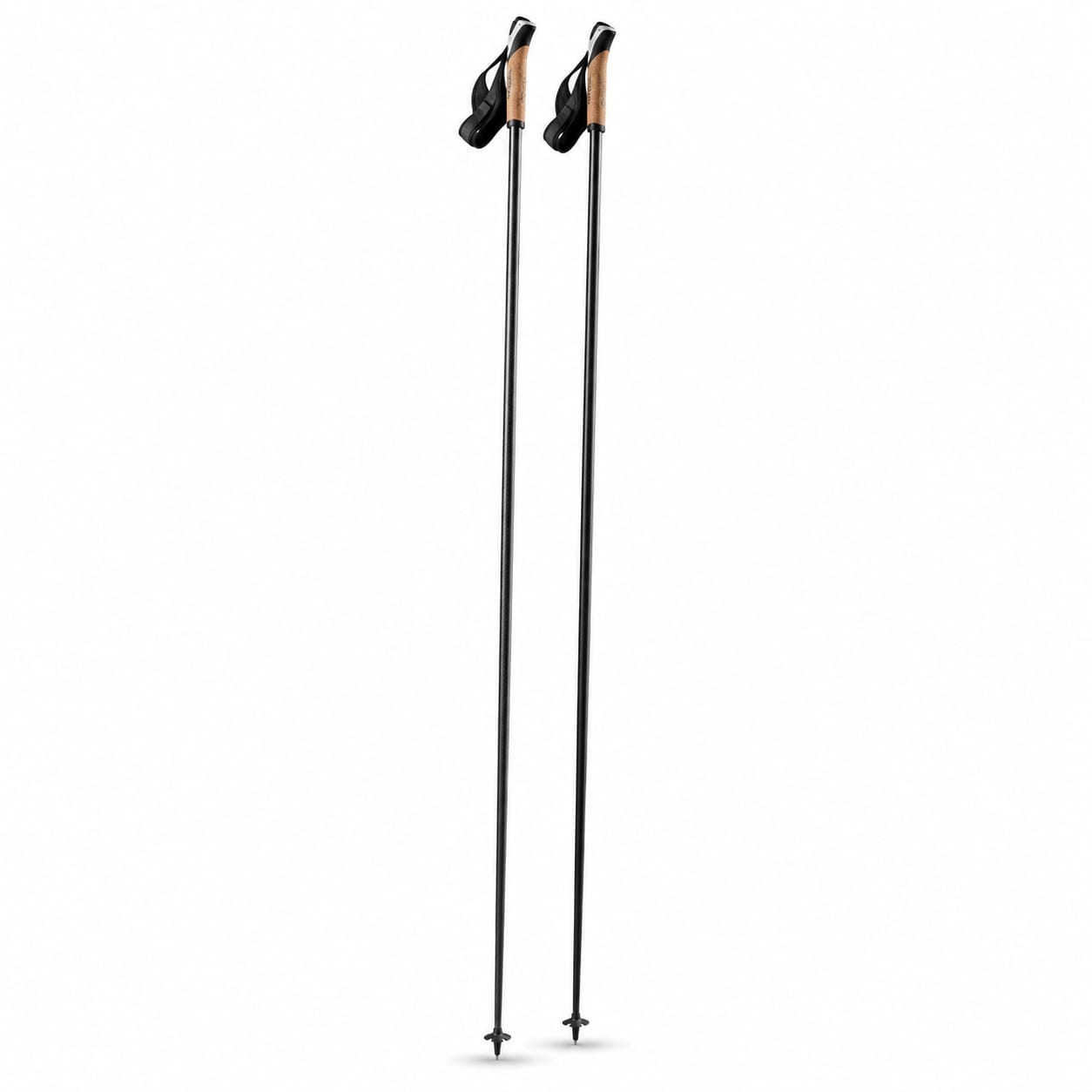
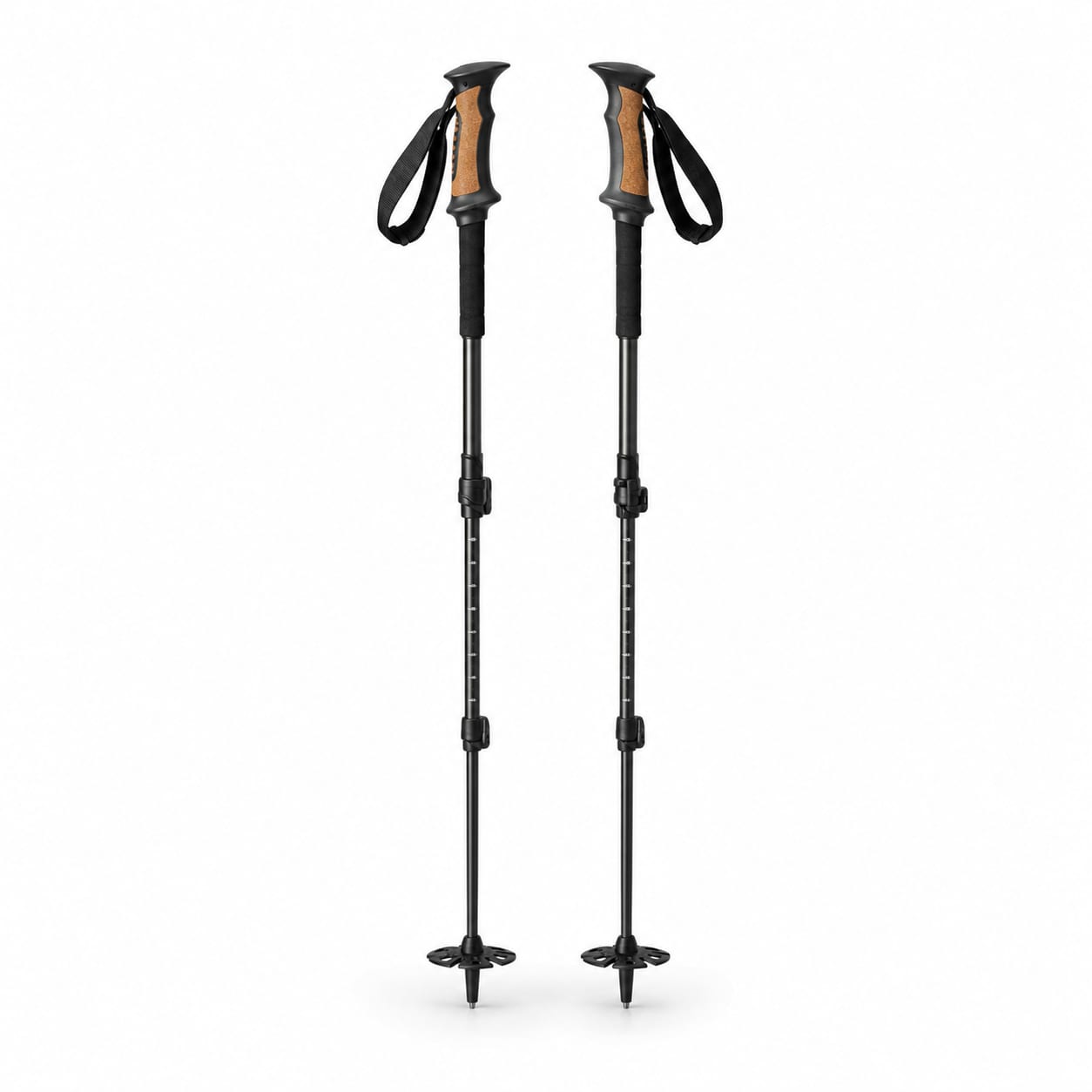
The primary material used in the pole shaft, which determines weight, durability, stiffness, vibration dampening, and price.
Aluminum
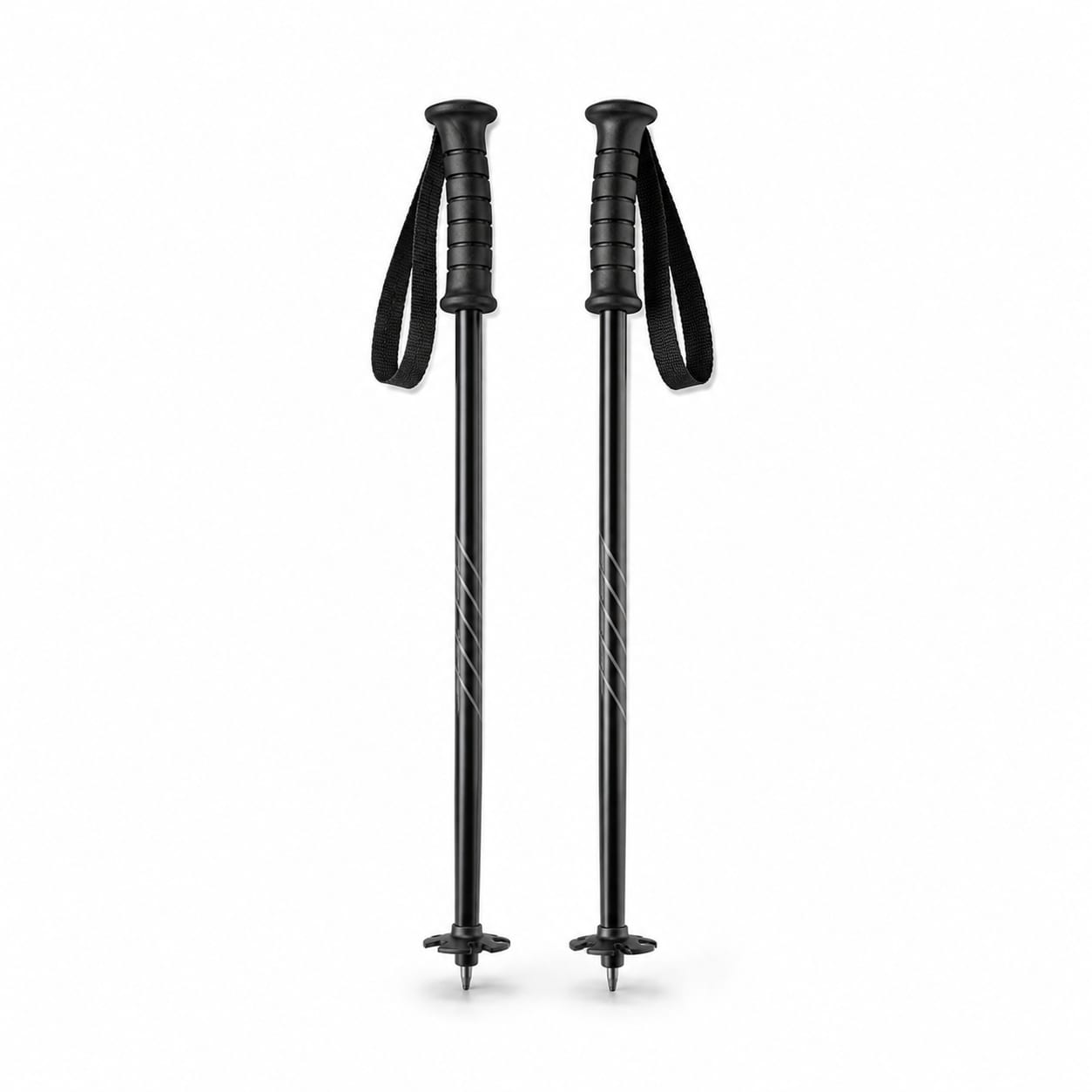
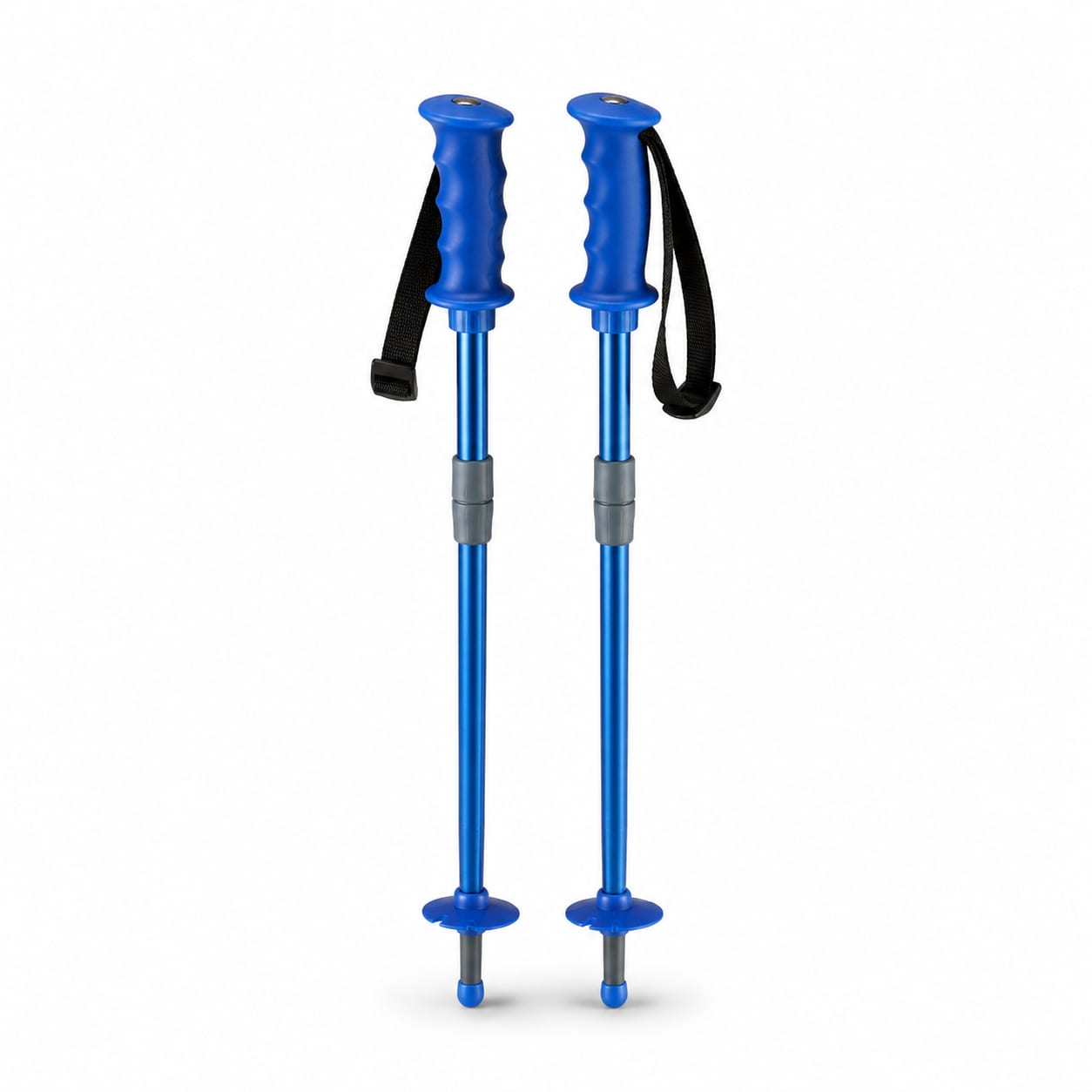
Standard alloy shafts, typically 6000 or 7000 series aluminum. Durable, affordable, and bends rather than shatters under stress.
Carbon Fiber
High-modulus carbon fiber shafts offering the best strength-to-weight ratio. Extremely light and stiff.
Composite/Fiberglass
Blends of fiberglass, carbon, and other composite materials. Balances weight, durability, and cost.
Bamboo
Natural bamboo shafts, often with composite reinforcement. Eco-friendly with unique flex characteristics.
Aluminum is the best choice for most recreational skiers due to durability and value. Carbon fiber is worth the investment for racers, touring skiers, or anyone who skis frequently and appreciates low weight. Composite blends offer a middle ground. Avoid carbon if you frequently crash on rocks or are hard on equipment.
Construction
Construction Type
Whether the pole is a fixed single shaft, telescoping adjustable, or folding design. Affects packability, versatility, and weight.
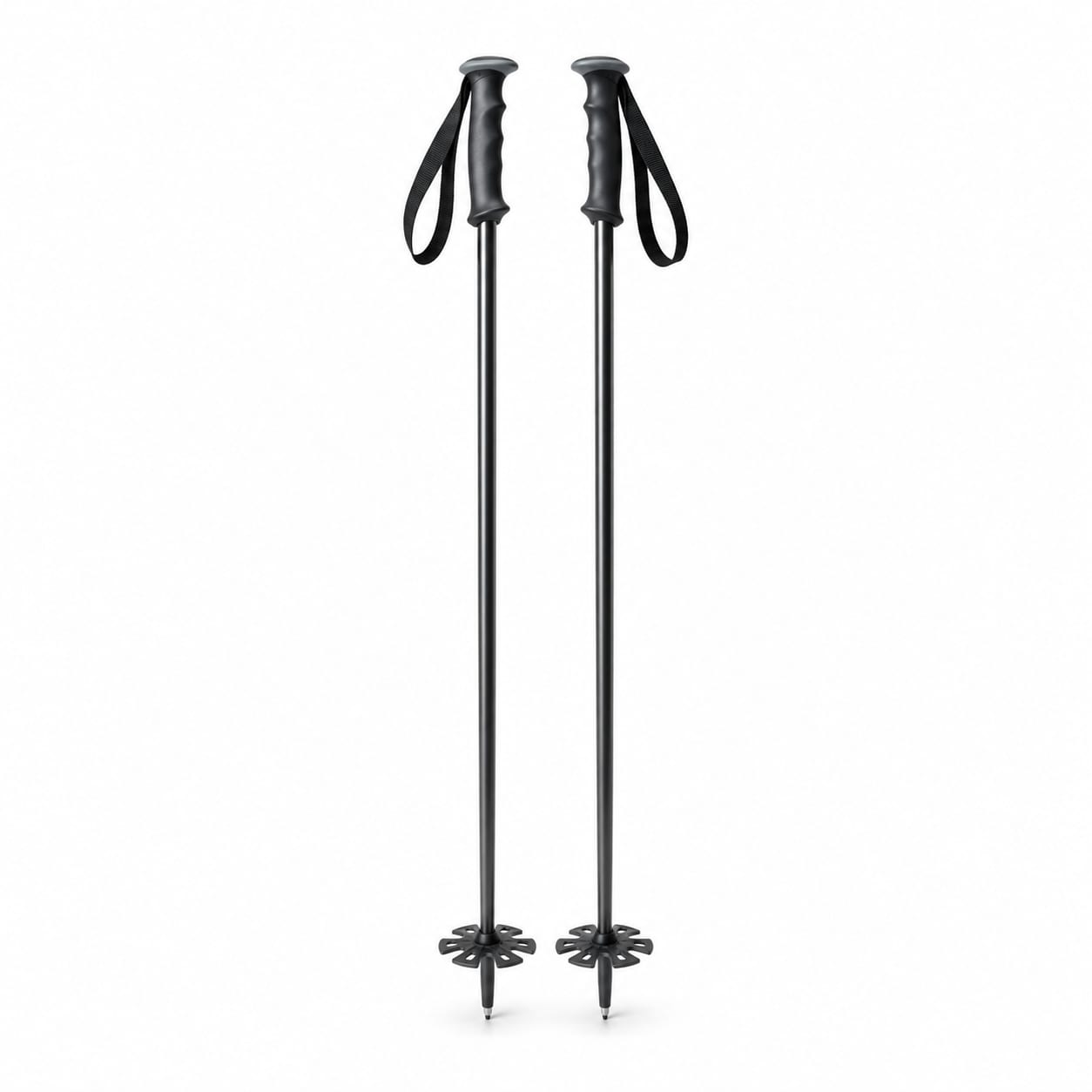
Fixed Length
One-piece shaft with no adjustment points. Simplest, lightest, and most durable construction.
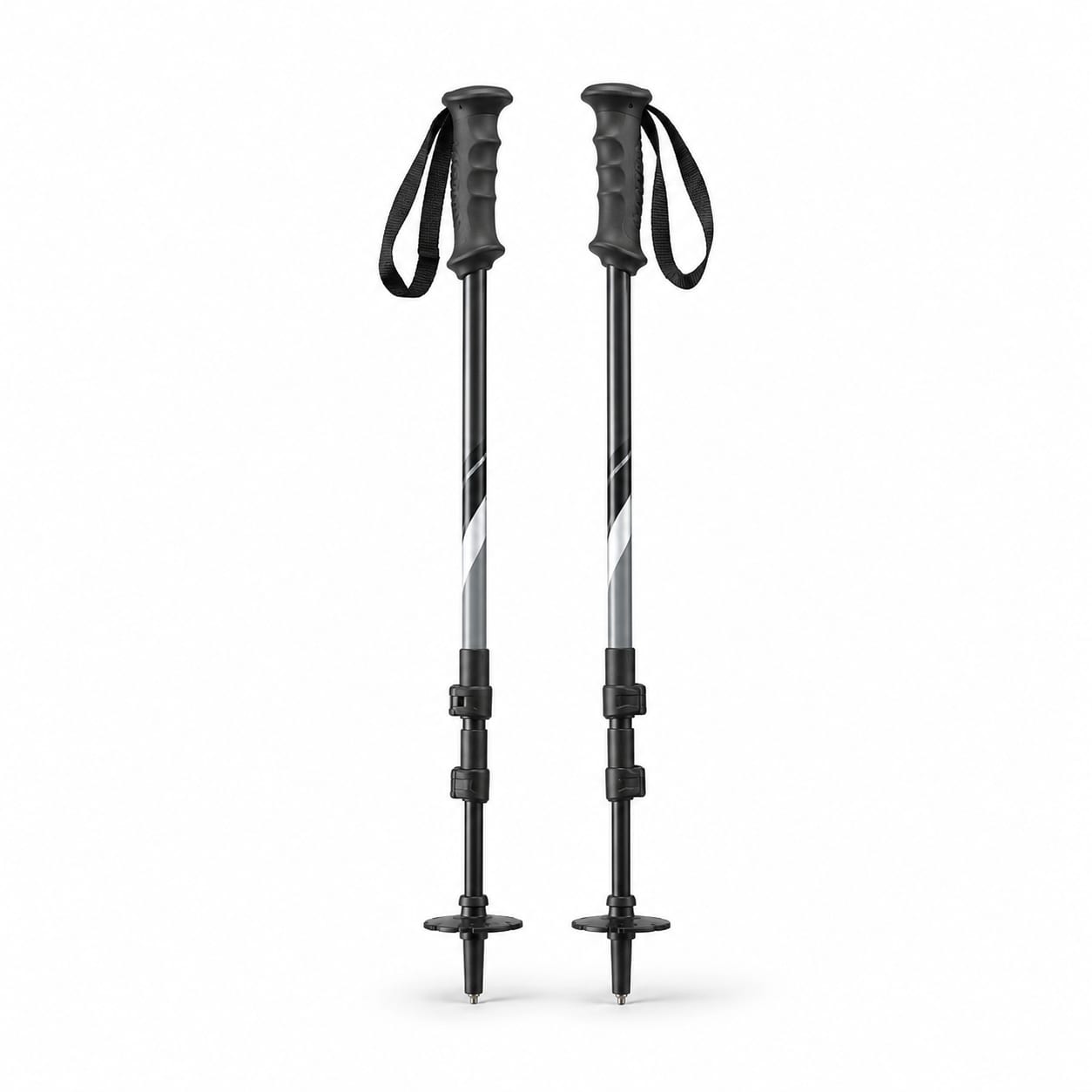
Telescopic/Adjustable
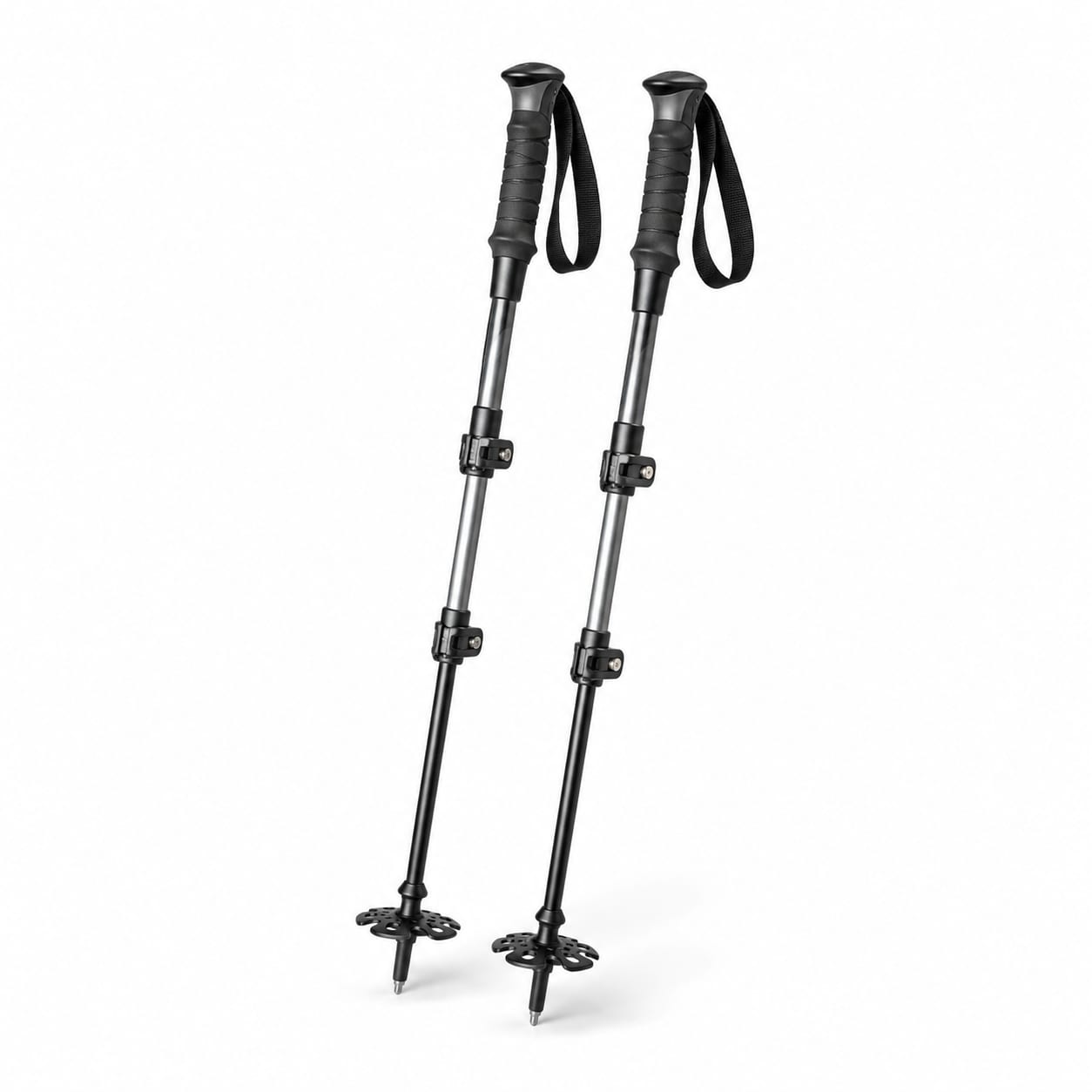
Two or three sections that slide and lock at various lengths. Adjustable for different terrain and users.
Folding/Collapsible
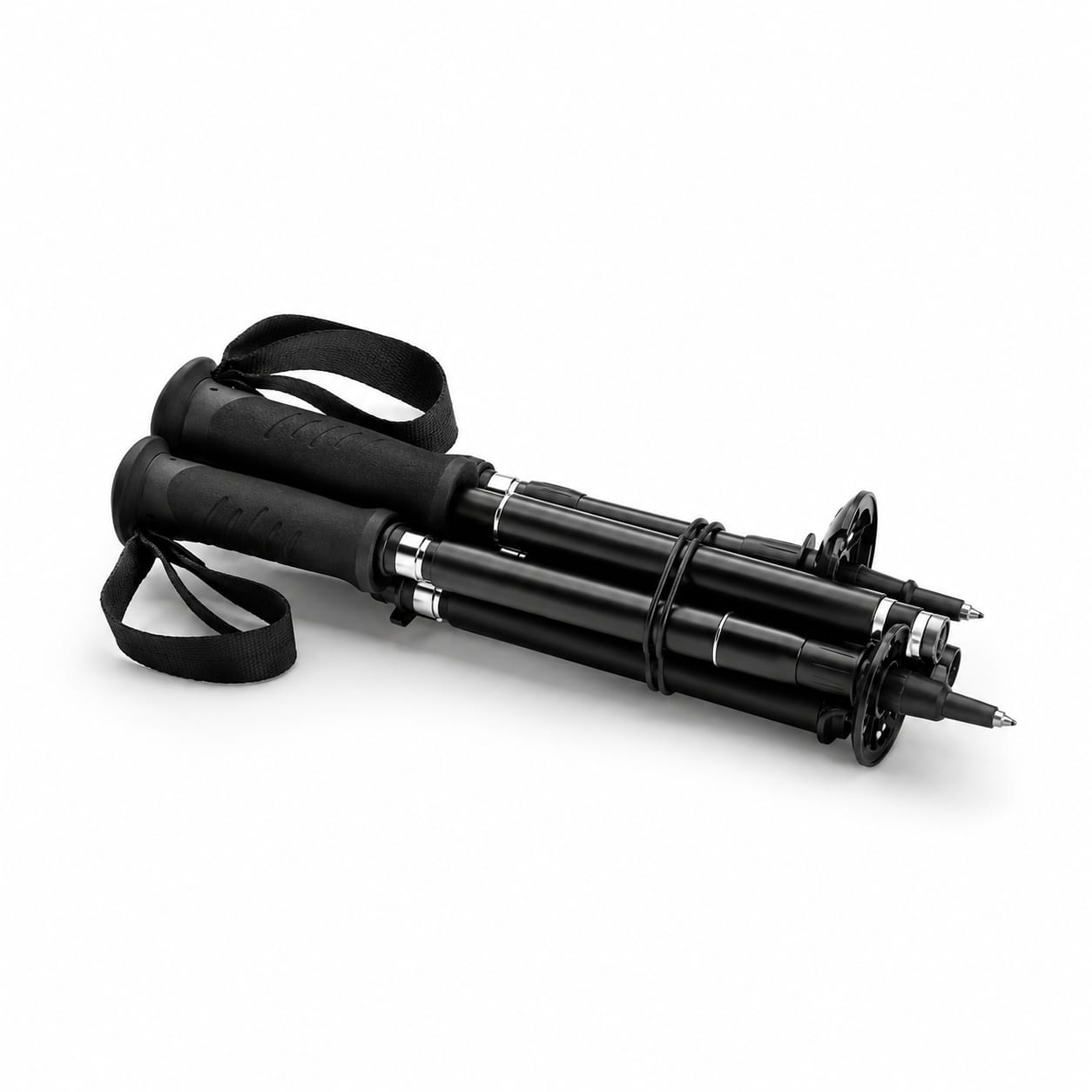
Sections connected by an internal cord that fold together like an avalanche probe. Most compact packed size.
Fixed poles are best for 90% of resort skiers—they're lighter, more durable, and cheaper. Telescopic poles are essential for backcountry touring where you adjust length for uphill vs. downhill. Folding poles are ideal for ski mountaineering where compact packed size matters most. If you only ski at resorts, fixed poles are the clear choice.
The material of the pole tip (point), which affects durability, grip on hard snow and ice, and longevity.
Carbide/Tungsten
Carbide or tungsten carbide tip inserts. Extremely hard and wear-resistant.
Steel
Steel tips, common on budget and rental poles. Harder than aluminum but softer than carbide.
Rubber Tip Cover
Rubber caps that fit over metal tips, not a tip material itself but an accessory for parking lot and indoor use.
Carbide tips are worth seeking out—they last significantly longer and grip better on icy surfaces. Most poles above entry-level price points include carbide tips. Steel tips are acceptable for beginners or casual skiers. Always use rubber tip covers when walking on pavement to preserve your tips.
Shaft Diameter
Shaft Diameter
The diameter of the pole shaft, typically tapering from grip to tip. Affects swing weight, stiffness, and aerodynamics.
Typical range: 12–20 mm
Most ski poles have a grip-end diameter of 16-18mm tapering to 12-14mm at the tip. Thinner shafts reduce swing weight but may be less durable. Tapered designs optimize stiffness at the grip while reducing weight at the tip. This dimension is rarely a primary buying consideration but affects the overall feel. Racing poles often feature more aggressive tapering for reduced aerodynamic drag.
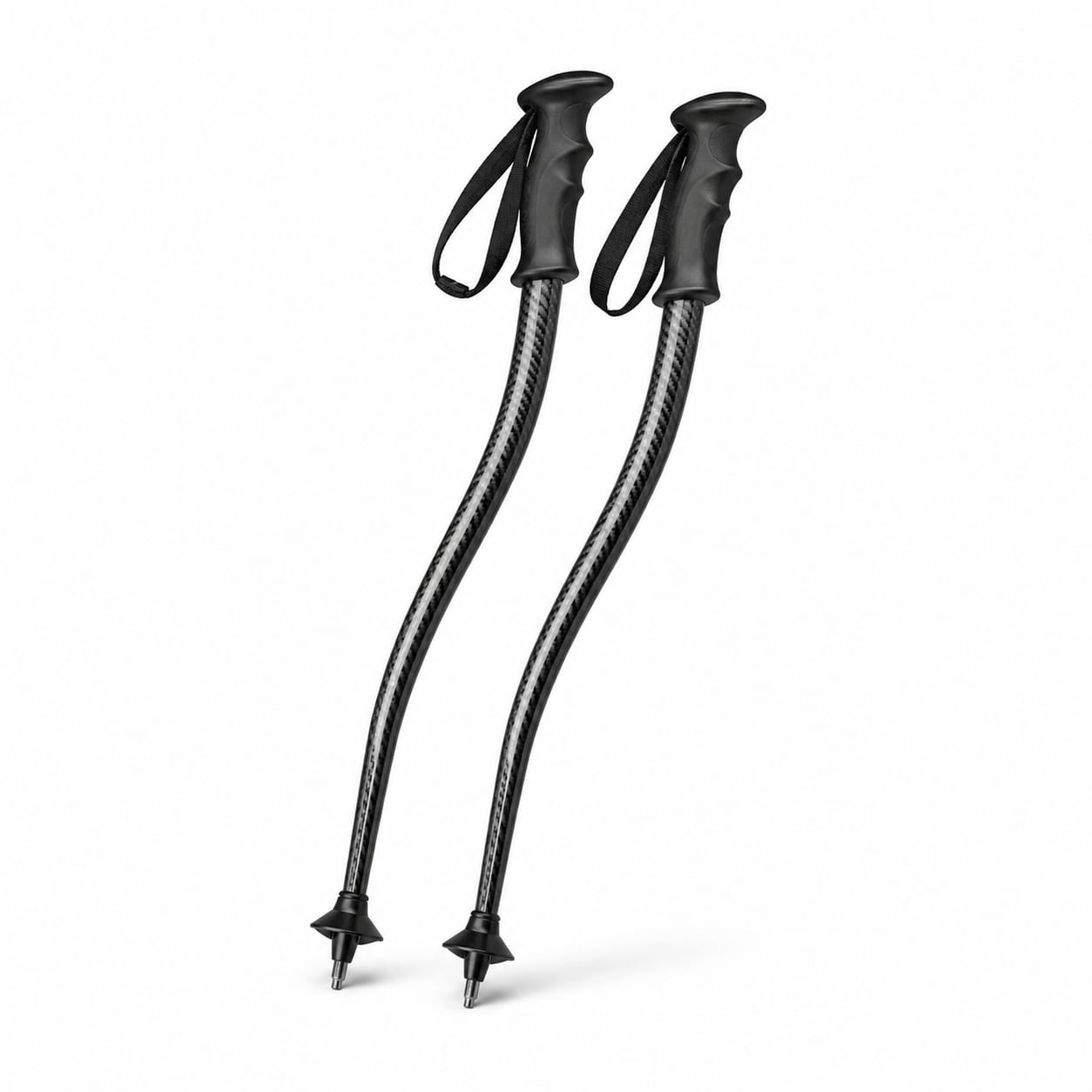
Whether the pole shaft is straight or features a bend/curve, typically designed for aerodynamic tuck positions in racing.
Curved/Bent
Shaft features a bend that wraps around the body in a tuck position, reducing aerodynamic drag.
Straight
Traditional straight shaft design. Standard for all non-racing applications.
Curved shafts are exclusively for speed discipline racing (GS and above). They provide no benefit for recreational skiing and add cost. Slalom racers use straight poles. If you're not racing speed disciplines, choose straight poles.
Lock Mechanism
Locking Mechanism
The type of mechanism used to secure adjustable poles at the desired length. Affects reliability, ease of use, and durability.
External Clamp/Flicklock
External lever clamp that tightens around the shaft. Quick to adjust and easy to operate with gloves.
Internal Expander/Twist Lock
Internal expanding wedge that tightens when twisted. Clean external appearance but can be harder to operate.
Push Button/Pin Lock
Spring-loaded button that clicks into preset holes. Quick deployment to fixed lengths.
External clamps (Flicklock-style) are the gold standard for adjustable ski poles—they're reliable, easy to use with gloves, and visible when secured. Internal twist locks are less reliable and harder to operate in cold, wet conditions. Push-button systems work well for folding poles with preset lengths. For touring, prioritize external clamp mechanisms.