Kitvore.com

Kitvore.com

Specs that matter. Gear that fits.

Ski Poles · Subcategory

Adjustable/Telescoping Ski Poles

Multi-length ski poles that telescope to adapt from uphill skinning to downhill charging.

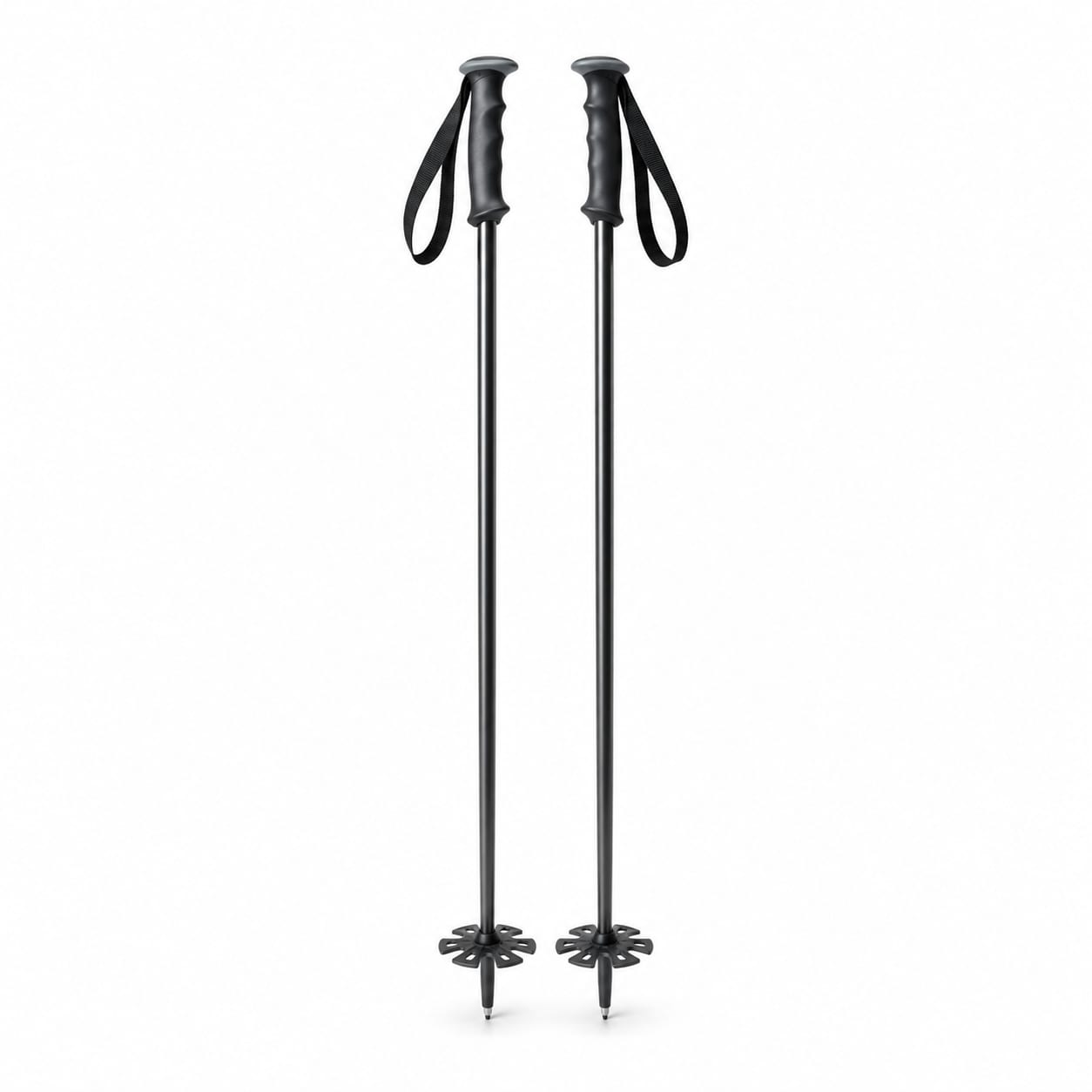
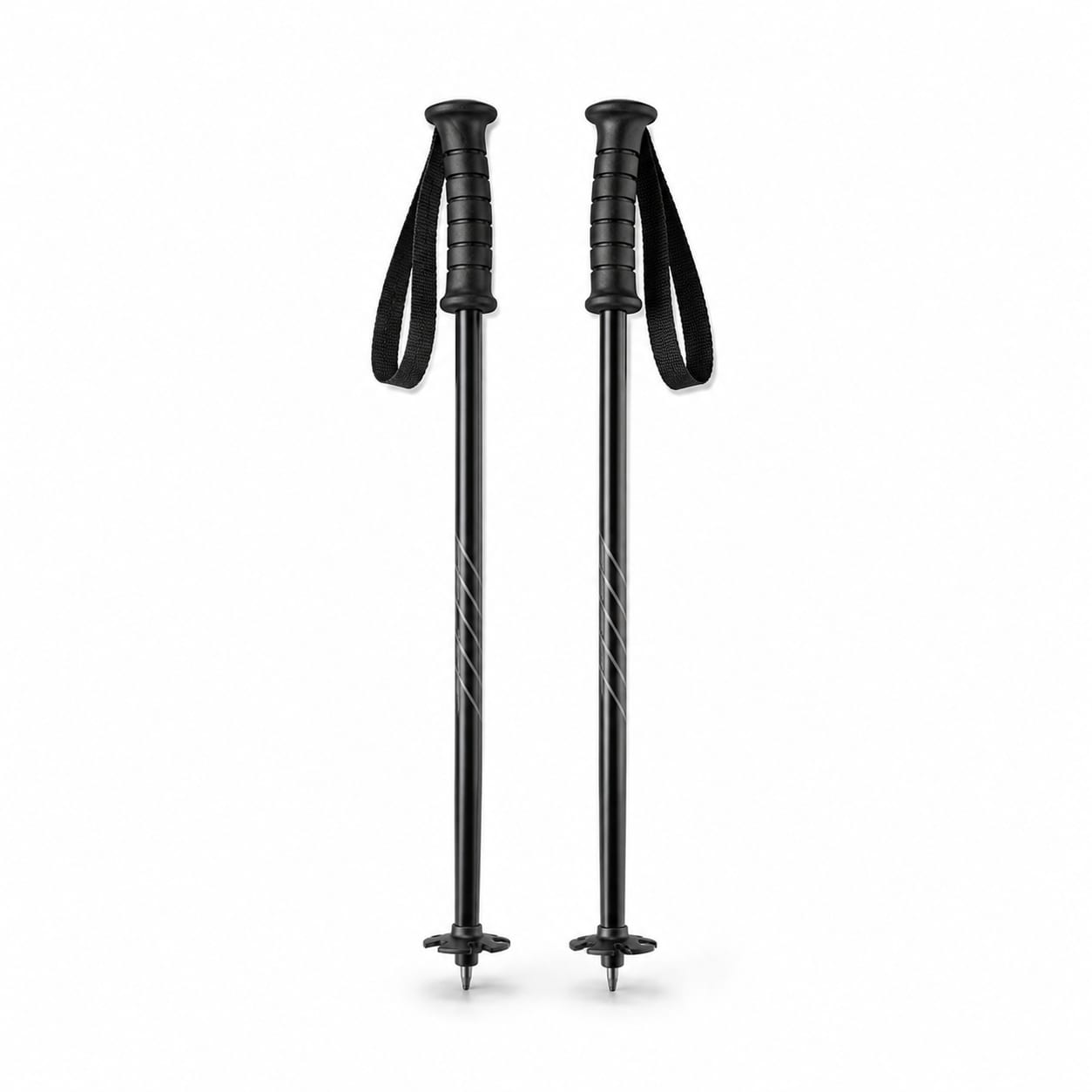
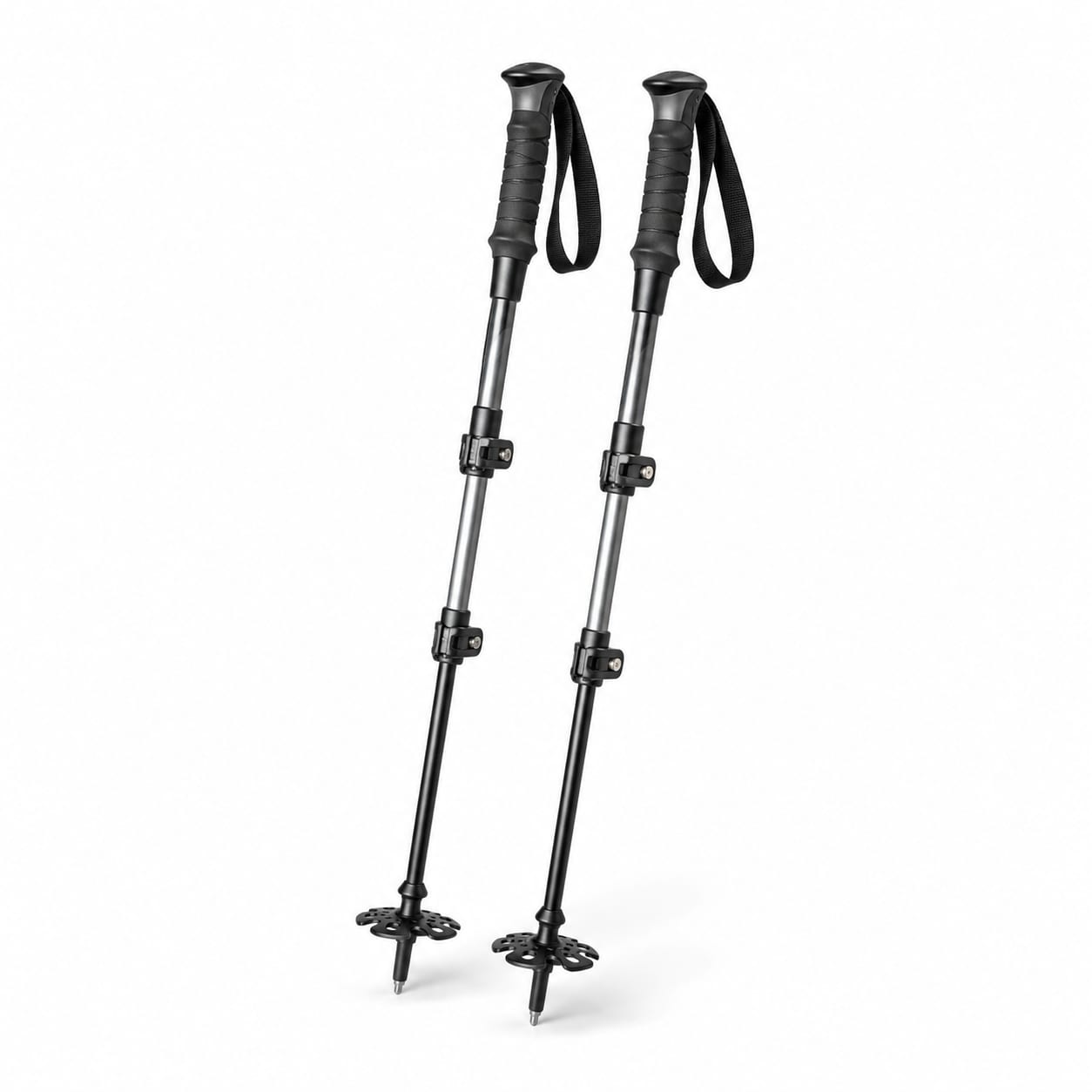
Adjustable/telescoping ski poles feature two or three sliding sections with locking mechanisms, allowing you to change pole length on the fly. They are essential for backcountry touring where longer poles aid uphill skinning and shorter poles improve downhill control, and invaluable for steep traverses, variable terrain, and shared equipment scenarios.

$40 – $220mid tierbeginnerintermediateadvanced

Best known for

On-the-fly length adjustment for uphill and downhill transitionsBackcountry and ski touring versatilitySteep traverse adaptability with extended grip zonesTravel-friendly collapsed size compared to fixed poles
Adjustable/Telescoping Ski Poles

Guide

Detailed overview

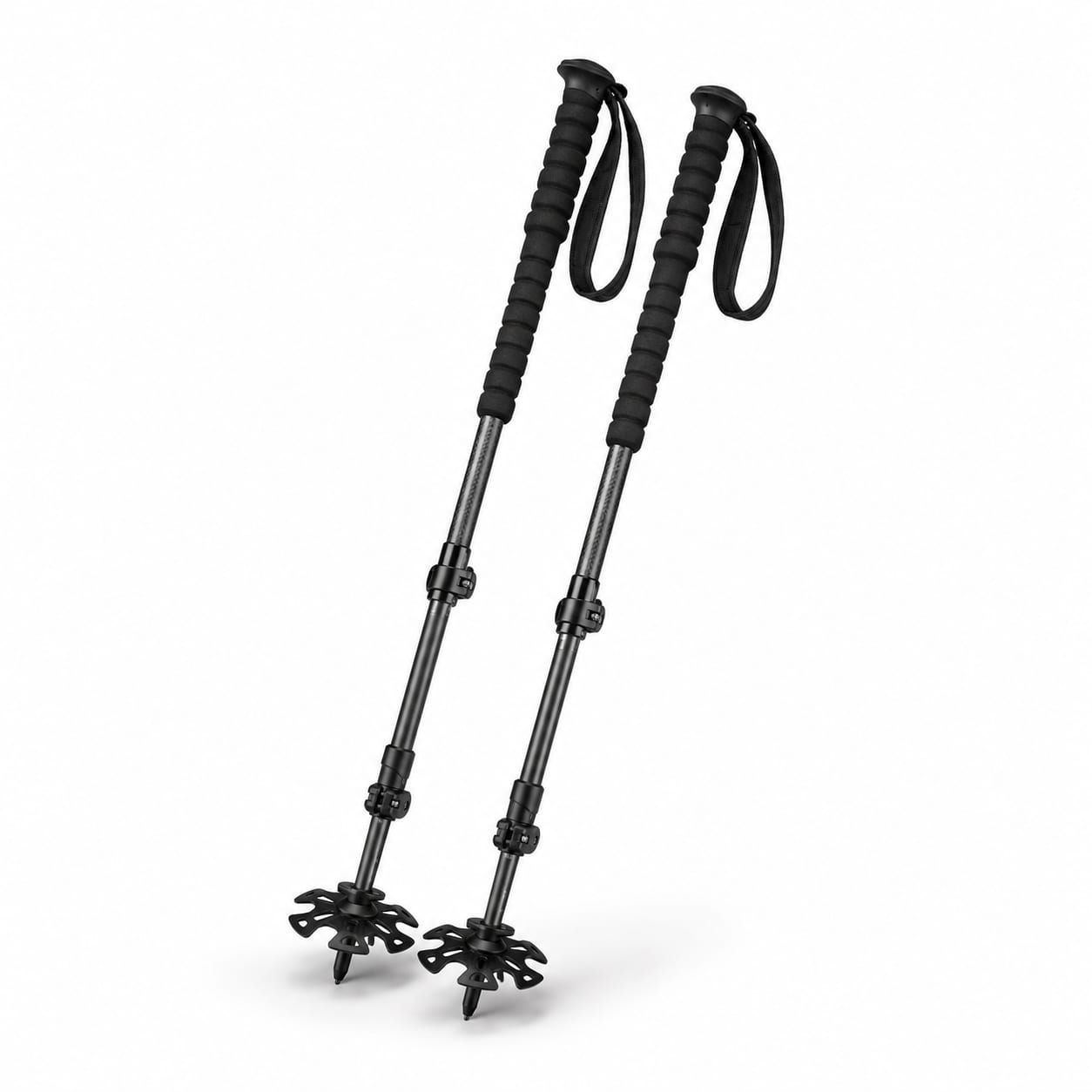
Adjustable or telescoping ski poles are built with overlapping shaft sections that slide and lock at chosen lengths, giving skiers the ability to tailor pole height to terrain, snow conditions, or personal preference. The most common configuration uses two sections (upper and lower shaft), though three-section designs exist for greater packed length reduction. External clamp mechanisms—often called Flicklock-style—dominate the market due to their glove-friendly operation and visual confirmation of lock status. Internal twist-lock systems appear on budget models but are less reliable in cold, wet conditions. Adjustable poles are the standard choice for backcountry touring, where skiers lengthen poles for efficient striding on ascents and shorten them for descents. They also appeal to freeride skiers navigating steep sidehill traverses, travelers who need compact poles for luggage, and families sharing equipment across different-sized users. The trade-off versus fixed-length poles is added weight (typically 40–100g per pair), potential for section slippage under heavy load, and more moving parts to maintain.

Adjustable ski poles have become nearly mandatory in the backcountry touring world, and for good reason. When skinning uphill, a longer pole—often 5–10 cm above your resort pole length—allows a more powerful, efficient stride with better reach on steep switchbacks. On the descent, shortening the poles back to your normal length restores proper pole planting technique and maneuverability. This single feature transforms the touring experience, eliminating the compromise of choosing one length for both up and down.

The locking mechanism is the heart of any adjustable pole and the primary differentiator between models. External clamp systems, pioneered by Black Diamond's Flicklock and adopted by most major brands, use a lever that tightens a collar around the inner shaft. They're easy to adjust with gloves, visually confirm when locked, and generally reliable in cold conditions. Internal twist-lock mechanisms expand a plug inside the shaft when twisted; they're lighter and sleeker but can slip, freeze, or wear over time. For serious touring in variable conditions, external clamps are the clear recommendation.

Material choice in adjustable poles follows similar logic to fixed poles but with added considerations. Aluminum remains the most common and durable choice, especially for the upper section where wall thickness accommodates the clamping mechanism. Carbon fiber lower sections reduce swing weight and improve dampening but are more vulnerable to damage from clamping force and side impacts. Many premium models use an aluminum-carbon mix—aluminum upper for clamp durability, carbon lower for reduced weight at the tip end. This hybrid approach offers the best balance for most touring skiers.

Beyond touring, adjustable poles serve freeride skiers who regularly encounter steep traverses where choking down on an extended grip zone isn't enough—actually shortening the pole provides better balance and planting efficiency. They're also ideal for ski instructors working with different-height students, families sharing poles, and travelers who need poles to fit in luggage. However, for pure resort skiing on groomed runs, the added weight and complexity of adjustable poles offers little benefit over simpler, lighter fixed-length options.

Maintenance is more involved with adjustable poles. Locking mechanisms must be periodically cleaned and tension-adjusted to maintain reliable clamping. Sand, ice, and debris can accumulate inside shaft sections, causing sticking or slippage. The internal surfaces of the outer shaft should be kept clean, and clamp screws may need occasional tightening. Despite these upkeep requirements, a well-maintained pair of adjustable poles will deliver years of reliable service across thousands of vertical feet of touring.

Quick facts

Primary purpose
On-the-fly length adjustment for varied terrain, conditions, and skiing situations
Popular brands
Black DiamondLekiKomperdellRossignolSalomon
Typical terrain
All-mountainVaried terrainBackcountryResort

What makes it different

Length can be changed in seconds; ideal for terrain requiring different lengths; useful for skiers of different heights sharing poles; slightly heavier and less durable than fixed-length alternatives

Recommended ranges

How this type usually specs out

Each spec is explained in plain language, then we show what buyers usually look for on this type.

Length

Pole Length

What it means

The total length of the ski pole from tip to top of the grip, measured in centimeters. The most critical dimension for proper fit and performance.

Typical for this type

100–140 cm, Ensuring Your Ideal Fixed Length Falls Within The Adjustment Range

Most common pick: 100–135 cm (adjustable within range)

In practice

Adjustable poles do not have a single length; instead, they offer a continuous range. Most two-section telescoping poles cover a 25–40 cm range (e.g., 100–125 cm or 110–140 cm). Your ideal downhill pole length should sit near the middle of the range, leaving room to lengthen for uphill skinning.

Compared to other types

Fixed poles offer one length only; adjustable poles cover a range, which is their defining advantage. Folding poles may have slightly more limited ranges due to section constraints.

Why it matters: If your ideal length is near the edge of the adjustment range, you won't have sufficient room to lengthen or shorten for different terrain. Centering your ideal length within the range maximizes versatility.

Material

Shaft Material

What it means

The primary material used in the pole shaft, which determines weight, durability, stiffness, vibration dampening, and price.

Typical for this type

Aluminum For Durability And Value; Aluminum-Carbon Mix For Performance Touring; Full Carbon For Weight-Obsessed Skiers Who Are Careful With Gear

Most common pick: Aluminum Or Aluminum-Carbon Mix

In practice

Aluminum is dominant in adjustable poles because it tolerates clamping forces without cracking and bends rather than shatters on impact. Aluminum-carbon mixes (aluminum upper, carbon lower) are increasingly popular for reducing swing weight while maintaining clamp-area durability. Full carbon adjustable poles exist but require careful clamp tensioning to avoid shaft damage.

Compared to other types

Fixed-length poles more commonly use full carbon since there are no clamp stress points. Adjustable poles favor aluminum or hybrid construction for clamp-area durability.

Why it matters: The clamping mechanism compresses the outer shaft, making material durability at clamp points critical. Carbon shafts can crack if over-tightened, while aluminum tolerates clamping well.

Weight (Pair)

Weight Per Pair

What it means

The total weight of a pair of ski poles measured in grams. Lighter poles reduce arm fatigue and improve swing dynamics.

Typical for this type

Under 480 g for touring; under 450 g for race touring; 420–500 g for general adjustable use

Most common pick: 420–550 g

In practice

Adjustable poles are inherently heavier than fixed poles due to overlapping shaft sections, locking hardware, and additional material. Aluminum adjustable poles typically weigh 440–550 g per pair. Aluminum-carbon mix models range from 400–480 g. Full carbon adjustable poles can reach 380–440 g but at premium prices.

Compared to other types

Fixed aluminum poles weigh 400–500 g; fixed carbon poles can be as light as 180–300 g. Adjustable poles carry a 10–25% weight penalty over equivalent fixed-length models.

Why it matters: On multi-hour tours, every gram matters. However, overly light adjustable poles may sacrifice locking reliability and durability. The weight penalty versus fixed poles is typically 40–100 g per pair.

Basket

Basket Type

What it means

The disc or cone near the pole tip that prevents the pole from sinking into soft snow. Basket size and shape affect performance in different snow conditions.

Typical for this type

Interchangeable For Maximum Versatility; Powder Baskets (80 Mm+) For Dedicated Backcountry Use

Most common pick: Interchangeable Or Powder

In practice

Most adjustable poles come with powder baskets since their primary use is backcountry touring where deep snow is common. Many quality models feature interchangeable basket systems, allowing you to swap between standard baskets for firm conditions and powder baskets for deep snow. Some include both sizes in the package.

Compared to other types

Fixed resort poles typically come with standard baskets. Adjustable/backcountry poles almost always include powder baskets or interchangeable systems as standard equipment.

Why it matters: In backcountry powder, standard baskets sink uselessly, making pole plants unreliable and energy-sapping. Powder baskets are essential for soft snow performance. Interchangeable systems offer the best of both worlds.

Grip

Grip Type

What it means

The design and shape of the pole grip which affects comfort, security, and technique. Grip ergonomics are crucial for all-day skiing comfort.

Typical for this type

Freeride/Extended Grip For Steep Terrain; Ergonomic For Long Touring Days; Standard For Budget Models

Most common pick: Ergonomic Or Freeride/Extended Grip

In practice

Adjustable poles frequently feature extended grip designs with rubberized or foam sleeves below the main grip, allowing skiers to choke down on steep traverses without adjusting the pole length. This is especially valuable in backcountry terrain where sidehill traverses are common. Ergonomic grips with finger contours reduce fatigue on long tours.

Compared to other types

Fixed resort poles typically use standard or ergonomic grips without extended sections. Adjustable poles more commonly include freeride/extended grips as a terrain-adaptation feature.

Why it matters: Extended grips effectively add an instant micro-adjustment for sidehill situations, complementing the macro-adjustment of the telescoping mechanism. This combination provides the most versatile pole for varied terrain.

Grip Material

Grip Material

What it means

The material covering the grip area, affecting comfort, insulation, grip security, and moisture management.

Typical for this type

Cork For Touring (Moisture Management); Rubber For All-Around Durability; Foam For Extended Grip Sections

Most common pick: Cork Or Rubber Main Grip With Foam Extension

In practice

Cork grips are popular on adjustable touring poles because they wick moisture during strenuous ascents and mold to the hand over time. Rubber grips offer durability and all-weather grip. Foam is the standard material for extended grip sections below the main grip, providing comfortable choking-down with insulation and low weight.

Compared to other types

Fixed resort poles commonly use rubber or plastic grips. Adjustable/touring poles favor cork and foam for their moisture-wicking and comfort properties on long days.

Why it matters: Touring involves hours of gripping during sweaty ascents, making moisture management and comfort critical. The extended grip section material directly affects comfort on steep traverses.

Strap

Strap Type

What it means

The design of the strap or loop that secures the pole to the skier's wrist, affecting security, comfort, and release characteristics.

Typical for this type

Standard Strap For Simplicity And Universal Glove Compatibility; Trigger Systems For Convenience And Injury Prevention If Using Leki Gloves

Most common pick: Standard Strap Or Trigger S/3D (Leki Models)

In practice

Standard nylon webbing straps are most common on adjustable poles, offering reliable security and universal glove compatibility. Leki adjustable poles feature their proprietary Trigger S or Trigger 3D click-in systems, which provide quick connect/disconnect and release under excessive force to reduce thumb injury risk. However, Trigger systems require compatible Leki gloves or strap adapters.

Compared to other types

Strap preferences are similar across fixed and adjustable poles. The convenience factor of quick-release systems is amplified on adjustable poles due to more frequent pole handling during touring transitions.

Why it matters: On tours, you may frequently remove poles for transitions, skin adjustments, or avalanche probing. Quick-release systems add convenience but add cost and glove compatibility requirements.

Construction

Construction Type

What it means

Whether the pole is a fixed single shaft, telescoping adjustable, or folding design. Affects packability, versatility, and weight.

Typical for this type

Telescopic For Most Touring And Variable-Terrain Use; Folding For Ski Mountaineering Where Compact Packed Size Is Critical

In practice

This subcategory is defined by telescopic construction—two or three sliding sections that lock at chosen lengths. Two-section telescopic poles are the standard, offering sufficient adjustment range with reliable locking. Three-section designs pack smaller but add weight and another failure point. The overlapping sections add diameter and weight compared to fixed poles.

Compared to other types

Fixed poles are lighter and more durable but offer no adjustability. Folding poles pack smaller than telescopic but typically have more limited adjustment ranges and rely on internal cords that can stretch or break.

Why it matters: Telescopic construction enables the core benefit of length adjustment. The number of sections affects packed length, weight, and reliability—fewer sections generally mean more robust performance.

Tip Material

Tip Material

What it means

The material of the pole tip (point), which affects durability, grip on hard snow and ice, and longevity.

Typical for this type

Carbide Tips For All Adjustable Poles—Essential For Backcountry Durability And Ice Grip

Most common pick: Carbide/Tungsten

In practice

Carbide tips are standard on quality adjustable poles and are especially important for backcountry use where poles contact rocks, ice, and varied surfaces more frequently than on groomed runs. Carbide maintains its sharp point over many seasons, providing reliable grip on hard snow and ice during critical uphill skinning moments.

Compared to other types

Tip material expectations are similar across subcategories, but carbide is even more important for adjustable/backcountry poles due to harsher use conditions and the safety implications of tip failure on steep ascents.

Why it matters: Backcountry poles endure more tip abuse from rocks and hard alpine snow. Carbide's superior wear resistance ensures consistent grip performance over the pole's lifespan.

Shaft Diameter

Shaft Diameter

What it means

The diameter of the pole shaft, typically tapering from grip to tip. Affects swing weight, stiffness, and aerodynamics.

Typical for this type

Not A Primary Buying Consideration; Larger Upper Diameter Accommodates Clamping Mechanism

Most common pick: 18–20 mm upper section, 14–16 mm lower section

In practice

Adjustable poles have noticeably thicker upper shaft sections (18–20 mm) than fixed poles to accommodate the inner sliding section and clamping mechanism. The lower section tapers to a more typical 14–16 mm. This stepped diameter is a necessary consequence of the telescoping design and contributes to the weight penalty versus fixed poles.

Compared to other types

Fixed poles typically have 16–18 mm upper diameter tapering to 12–14 mm at the tip. Adjustable poles are 2–4 mm thicker at the upper section due to the overlapping shaft design.

Why it matters: The thicker upper section is required for the telescoping mechanism but increases swing weight compared to fixed poles. This is an inherent trade-off of adjustable construction.

Vibration Dampening

Vibration Dampening

What it means

The pole's ability to absorb and reduce vibrations transmitted from the tip through the shaft to the grip. Affects comfort and feel on hard, choppy snow.

Typical for this type

Moderate to High For Touring Comfort; Aluminum-Carbon Mix Offers Best Balance

In practice

Adjustable poles typically offer moderate vibration dampening. The overlapping shaft sections and clamping hardware actually add some dampening compared to fixed aluminum poles, as the junction points absorb vibration. Aluminum-carbon mix models provide better dampening through the carbon lower section. Full aluminum models transmit more vibration but offer better snow feel.

Compared to other types

Adjustable poles may actually dampen slightly better than fixed aluminum poles due to vibration absorption at section junctions. However, fixed carbon poles still offer the best dampening overall.

Why it matters: On long descent after a tiring ascent, vibration dampening reduces hand and arm fatigue. The telescoping junction provides some natural dampening, which is a small silver lining to the design.

Discipline

Intended Discipline

What it means

The primary skiing discipline the pole is designed for, which influences all other design choices from length to basket to material.

Typical for this type

Backcountry/Touring As Primary; Freeride/Big Mountain As Secondary; Alpine/All-Mountain For Resort Skiers Who Want Adjustability

Most common pick: Backcountry/Touring And Freeride/Big Mountain

In practice

Adjustable poles are designed primarily for backcountry touring, where length adjustment for uphill and downhill is essential. They also serve freeride and big mountain skiers who encounter steep traverses and variable terrain. Some all-mountain skiers choose adjustable poles for travel convenience or shared family use, though this is not their primary intended application.

Compared to other types

Fixed poles dominate alpine/all-mountain and racing disciplines where adjustability isn't needed. Adjustable poles own the backcountry/touring space and have significant presence in freeride/big mountain applications.

Why it matters: Discipline alignment ensures you get the features you need. Touring-focused adjustable poles include powder baskets, extended grips, and reliable locking—features less critical for resort-only use.

Curved Shaft

Curved Shaft

What it means

Whether the pole shaft is straight or features a bend/curve, typically designed for aerodynamic tuck positions in racing.

Typical for this type

Straight Shafts Only—Curved Shafts Are Incompatible With Telescoping Adjustment

Most common pick: Straight (False)

In practice

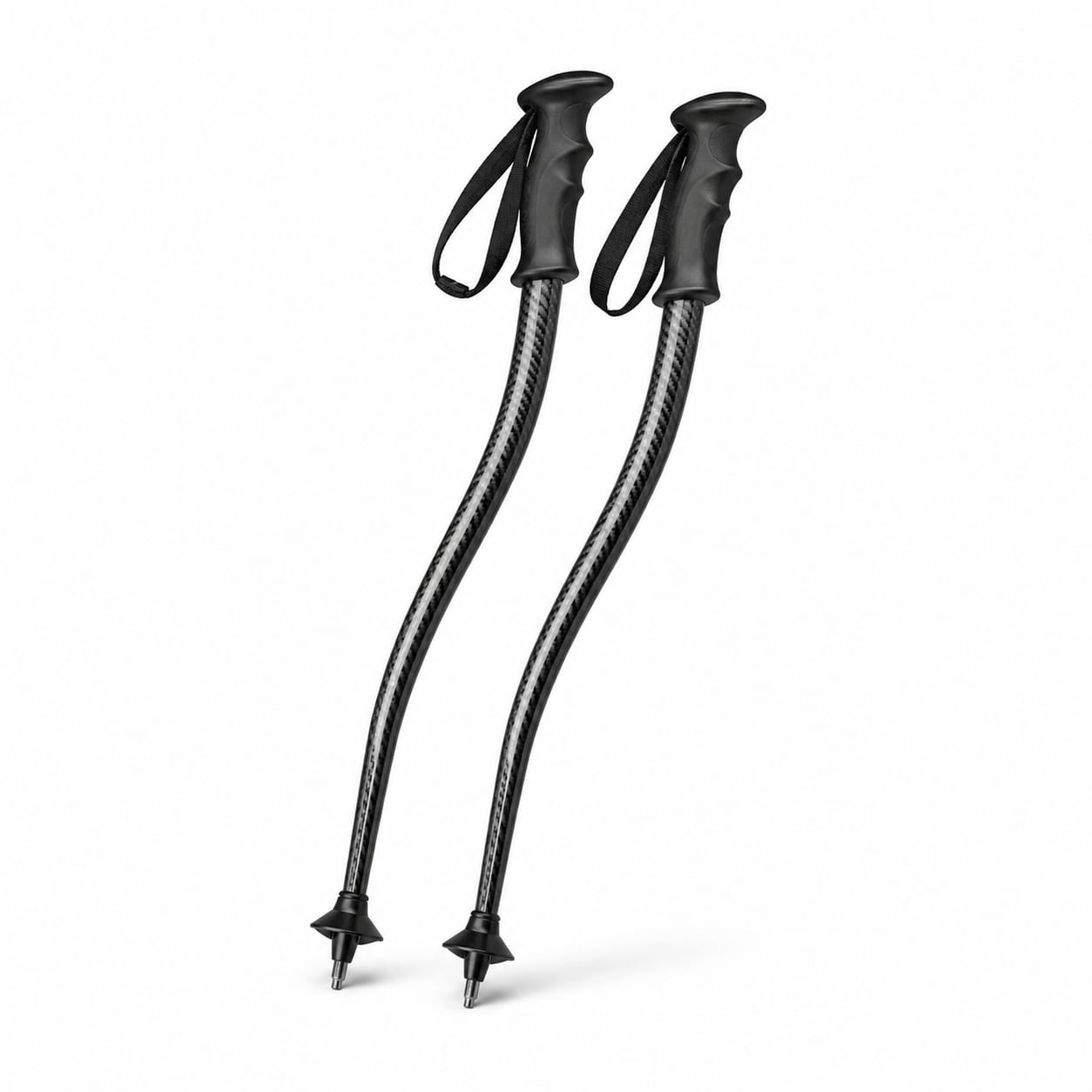
All adjustable/telescoping poles have straight shafts. Curved shafts are specific to GS and speed discipline racing poles and are incompatible with the telescoping mechanism. The sliding sections require straight shafts for proper alignment and locking.

Compared to other types

Fixed racing poles may feature curved shafts for aerodynamic tuck positions. Adjustable poles are exclusively straight-shafted due to the mechanical requirements of telescoping sections.

Why it matters: This is a non-issue for adjustable poles since curved shafts cannot telescope. If you need curved poles for speed discipline racing, you must choose fixed-length poles.

Adjustment Range

Adjustment Range

What it means

The range of lengths an adjustable pole can be set to, relevant only for telescopic and folding poles.

Typical for this type

Minimum 20 cm range for touring; 25–40 cm range ideal; ensure your ideal fixed length sits near the middle

Most common pick: 100–135 cm (35 cm range)

In practice

Common adjustment ranges include 100–125 cm, 105–130 cm, 110–135 cm, and 110–140 cm. For touring, you want at least 20 cm of adjustment to accommodate uphill lengthening and downhill shortening. Wider ranges offer more versatility but may compromise section overlap and stability at extreme extensions.

Compared to other types

This dimension is unique to adjustable and folding poles. Fixed poles have no adjustment range. Folding poles may have slightly more limited ranges (typically 20–30 cm) compared to telescopic poles (25–40 cm).

Why it matters: Insufficient adjustment range forces compromise—either too short for efficient skinning or too long for comfortable descending. The range must span both your uphill and downhill preferences.

Lock Mechanism

Locking Mechanism

What it means

The type of mechanism used to secure adjustable poles at the desired length. Affects reliability, ease of use, and durability.

Typical for this type

External Clamp For Touring And Serious Use; Avoid Internal Twist-Locks For Cold/Wet Conditions

Most common pick: External Clamp (Flicklock-Style)

In practice

External clamp mechanisms are the gold standard for adjustable ski poles. They use a lever that tightens a collar around the inner shaft, providing visible lock confirmation and easy glove-friendly operation. Internal twist-lock systems are found on budget models but are prone to slipping, freezing, and difficult adjustment with gloves. Push-button/pin-lock systems appear on some folding pole models.

Compared to other types

Locking mechanism is unique to adjustable and folding poles. Fixed poles have no locking mechanism. Among adjustable options, external clamps are strongly preferred over internal twist-locks for skiing applications.

Why it matters: Lock reliability is a safety issue—a pole that collapses during a steep descent or critical pole plant can cause a fall. External clamps are the most reliable and user-friendly option for skiing conditions.

Packed Length

Packed Length

What it means

The length of the pole when collapsed or folded to its minimum size. Relevant for travel and backcountry applications where poles need to fit in or on a pack.

Typical for this type

Under 65 Cm For Fitting Inside Most Touring Packs; Under 60 Cm For Air Travel Convenience

Most common pick: 55–70 cm (collapsed)

In practice

Two-section telescoping poles typically collapse to roughly 55–65% of their maximum extended length, resulting in packed lengths of 55–70 cm. Three-section telescoping poles can pack down to 45–55 cm. This is longer than folding poles (35–45 cm) but shorter than fixed poles which cannot be shortened at all.

Compared to other types

Folding poles pack to 35–45 cm (most compact). Telescoping poles pack to 55–70 cm. Fixed poles cannot be shortened. If internal pack storage is critical, folding poles are superior; for most touring, telescoping packed length is adequate.

Why it matters: Packed length determines whether poles fit inside a touring pack for steep climbing sections, helicopter travel, or luggage. Telescoping poles generally fit on the outside of packs but may not fit inside.

Evaluation

Strengths and trade-offs

Pros

What this type does best

On-the-fly length adjustment

Critical

Lengthen poles for efficient uphill skinning and shorten for downhill control. This adaptability is the core benefit and transforms the touring experience by eliminating the compromise of a single-length pole.

Steep traverse versatility

High

Shorten the downhill-side pole on steep sidehill traverses for better balance and planting efficiency, or use extended grip zones for quick micro-adjustments without changing pole length.

Travel and storage convenience

Medium

Collapsible to roughly half their extended length, making them easier to pack in luggage for trips and fit in car trunks or gear lockers.

Shared equipment compatibility

Medium

Multiple users of different heights can use the same poles by adjusting length, making them ideal for families, rental programs, or guiding operations.

Multi-condition adaptability

High

Adjust length for deep powder (shorter to reduce resistance), firm groomers (standard length), or steep chutes (varied lengths for sidehills)—one pole for many situations.

Interchangeable baskets often included

Medium

Many adjustable poles come with interchangeable basket systems or include both standard and powder baskets, adding to their all-conditions versatility.

Cons

Trade-offs to be aware of

Heavier than fixed-length poles

Moderate

Overlapping shaft sections, locking hardware, and additional material add 40–100 g per pair compared to equivalent fixed poles. This weight penalty is noticeable on long tours.

Potential for section slippage

Significant

Even well-maintained locking mechanisms can slip under heavy load, especially if not properly tightened or if ice/debris interferes with the clamp. Pole collapse during a critical moment can cause falls.

More maintenance required

Moderate

Locking mechanisms need periodic cleaning, tension adjustment, and inspection. Sand, ice, and debris can accumulate inside shaft sections. More moving parts mean more potential failure points.

Higher cost than fixed poles

Minor

The additional machining, hardware, and quality control for reliable locking mechanisms add 30–60% to the price compared to equivalent fixed-length poles of the same material quality.

Thicker shaft profile and reduced stiffness

Minor

The overlapping sections create a thicker upper shaft that increases swing weight, and the junction point can flex slightly under heavy loading, reducing the solid feel of a one-piece pole.

Best for

Terrain

Backcountry touring routesSteep traverses and sidehillsVariable off-piste terrainMixed ascent/descent daysBig mountain lines with approach climbs

Snow conditions

Variable snow conditionsDeep powder requiring length changesFirm morning snow softening by afternoonMulti-day tours with changing terrain

Skill level

IntermediateAdvancedExpert

Riding style

Ski touringSplitboardingFreeride/big mountainSki mountaineering

Rider profile

Backcountry touring skiers and splitboardersFreeride skiers who earn their turnsSki mountaineers approaching technical climbsTraveling skiers needing packable polesFamilies or groups sharing equipment

Not ideal for

Reasons

Added weight and complexity provide no benefit for resort-only skiing on consistent terrainLocking mechanisms are a liability in race situations where equipment must be absolutely reliableShort freestyle poles don't benefit from adjustabilityBeginners may not properly tighten locks, leading to frustrating pole collapse

Terrain

Groomed resort runs exclusivelyTerrain parksRace courses

Skill level

Beginners who don't yet understand pole length needs

Riding style

Alpine racingPark and pipe freestyleNordic/cross-country

Compare

How it stacks up

This page

Adjustable/Telescoping Ski Poles

Adjustable length for uphill/downhill transitions and varied terrain; collapsible for travel and storage; shared use across different-height skiers.

Alternative

Fixed-Length Ski Poles

Lighter weight; lower cost; no moving parts to fail; stiffer and more responsive feel; no risk of section slippage.

Bottom line

Choose adjustable poles if you tour or encounter varied terrain. Choose fixed poles for resort-only skiing where adjustability offers no meaningful benefit.

This page

Adjustable/Telescoping Ski Poles

Wider adjustment range; more robust locking with external clamps; easier mid-run length changes; generally lower price point.

Alternative

Folding/Collapsible Ski Poles

Much more compact packed size (35–45 cm vs. 55–70 cm); fits inside touring packs; faster deployment with push-button locks; lighter than some telescopic models.

Bottom line

Choose telescoping poles for general touring where you adjust length frequently. Choose folding poles for ski mountaineering where compact packed size for pack stowing is the priority.

This page

Adjustable/Telescoping Ski Poles

Versatility across terrain and conditions; adjustable length; typically more durable construction; powder baskets for soft snow.

Alternative

Racing Ski Poles

Minimal weight; aerodynamic cone baskets and curved shafts (GS); maximum stiffness for power transfer; discipline-optimized design.

Bottom line

Choose adjustable poles for training, free-skiing, and any off-piste use. Choose racing poles exclusively for competition where every gram and aerodynamic advantage matters.

Shopping

Buying tips

  • 1

    Verify your ideal fixed-length pole size falls near the middle of the adjustment range, not at the extreme ends, so you have room to lengthen for uphills and shorten for steeps.

  • 2

    Prioritize external clamp (Flicklock-style) locking mechanisms over internal twist-locks—they're more reliable, easier to use with gloves, and provide visual confirmation that the pole is locked.

  • 3

    Choose aluminum or aluminum-carbon mix shafts over full carbon for adjustable poles—the clamping mechanism stresses the shaft, and aluminum tolerates this better without cracking.

  • 4

    Look for models with extended grip zones (foam or rubber sleeves below the main grip) for quick micro-adjustments on steep traverses without changing pole length.

  • 5

    Check that powder baskets are included or that the pole has an interchangeable basket system—standard baskets are inadequate for backcountry powder.

  • 6

    Consider the packed length if you need poles to fit inside a touring pack; three-section telescoping poles pack shorter than two-section models.

  • 7

    Test the locking mechanism in-store if possible: extend the pole, lock it, and push down hard to verify it holds without slipping. A pole that slips in the shop will slip on the mountain.

  • 8

    Budget for compatible gloves if considering Leki Trigger systems—the click-in convenience is real, but you'll need Leki-compatible gloves or strap adapters to use the system.

Care

Maintenance notes

  • Clean the inside of outer shaft sections periodically—sand, dirt, and debris accumulate and cause sticking or prevent secure locking.
  • Check and adjust clamp tension screws before each season and periodically during heavy use; clamps that are too loose will slip, while over-tightened clamps can damage carbon shafts.
  • Dry poles thoroughly after each use, especially after touring in wet snow, to prevent corrosion of aluminum sections and freezing of locking mechanisms.
  • Inspect carbide tips for wear and replace when they become rounded—worn tips lose grip on hard snow and ice, which is especially dangerous on steep ascents.
  • Lubricate locking mechanism threads and moving parts with a silicone-based lubricant annually; avoid petroleum-based products that can degrade plastic and rubber components.
  • Store poles fully extended with clamps loosened to reduce stress on shaft sections and locking mechanisms during the off-season.
  • Replace worn or cracked grip extensions and straps promptly—compromised grips are a safety issue on steep terrain where secure pole control matters.

Progression

Skill development path

Adjustable poles are most appreciated by intermediate-to-advanced skiers who understand how pole length affects technique across different terrain. Beginners may not yet recognize when to adjust length or how to properly operate locking mechanisms. As skiers progress from resort to backcountry, adjustable poles become essential—the uphill/downhill length change is non-negotiable for efficient touring. Expert skiers and ski mountaineers may upgrade from telescoping to folding poles for the packed-size advantage on technical climbs, while maintaining adjustable length capability. The key skill progression is learning when and how much to adjust: 5–10 cm longer for uphill skinning, standard length for descending, and shorter on the downhill side for steep traverses.

FAQ

Common questions

Each question has a dedicated page with a full answer and links to the buying guide.

How much should I lengthen my poles for uphill skinning versus downhill skiing?

Most touring skiers add 5–10 cm to their standard downhill pole length for uphill skinning. The longer pole provides better reach and a more efficient striding motion on ascents. Experiment on moderate terrain to find what feels most efficient—your arms should swing naturally without reaching or hunching. On steep switchbacks, you may prefer an even longer setting.

Do adjustable poles ever collapse unexpectedly while skiing?

Yes, this can happen if locks aren't properly tightened or if ice/debris interferes with the mechanism. External clamp systems are less prone to this than twist-lock mechanisms. Always verify your poles are locked by pushing down firmly on them before descending. Clean and maintain locking mechanisms regularly, and replace worn clamps. Properly maintained external clamp poles rarely collapse under normal skiing loads.

Are adjustable poles worth it if I only ski at resorts?

For pure resort skiing on consistent terrain, adjustable poles add weight, cost, and complexity without meaningful benefit. Fixed-length poles are lighter, simpler, and more reliable for resort use. The main exceptions are traveling skiers who need compact poles for luggage, families sharing poles, or resort skiers who also occasionally venture into sidecountry or backcountry.

What's the difference between two-section and three-section telescoping poles?

Two-section poles have one adjustment point and are simpler, lighter, and generally more reliable. They collapse to roughly 55–65% of their extended length. Three-section poles have two adjustment points, offering a wider total adjustment range and packing down shorter (45–55 cm), but they're heavier and have an additional potential failure point. Most touring skiers prefer two-section poles for their reliability; three-section poles are better for travel or ski mountaineering where packed length matters most.