
Ski Socks · FAQ
Questions about Backcountry / Touring Ski Socks
Straight answers on fit, specs, and when this type makes sense — each topic has its own page with links back to the buying guide.
Open Backcountry / Touring Ski Socks guide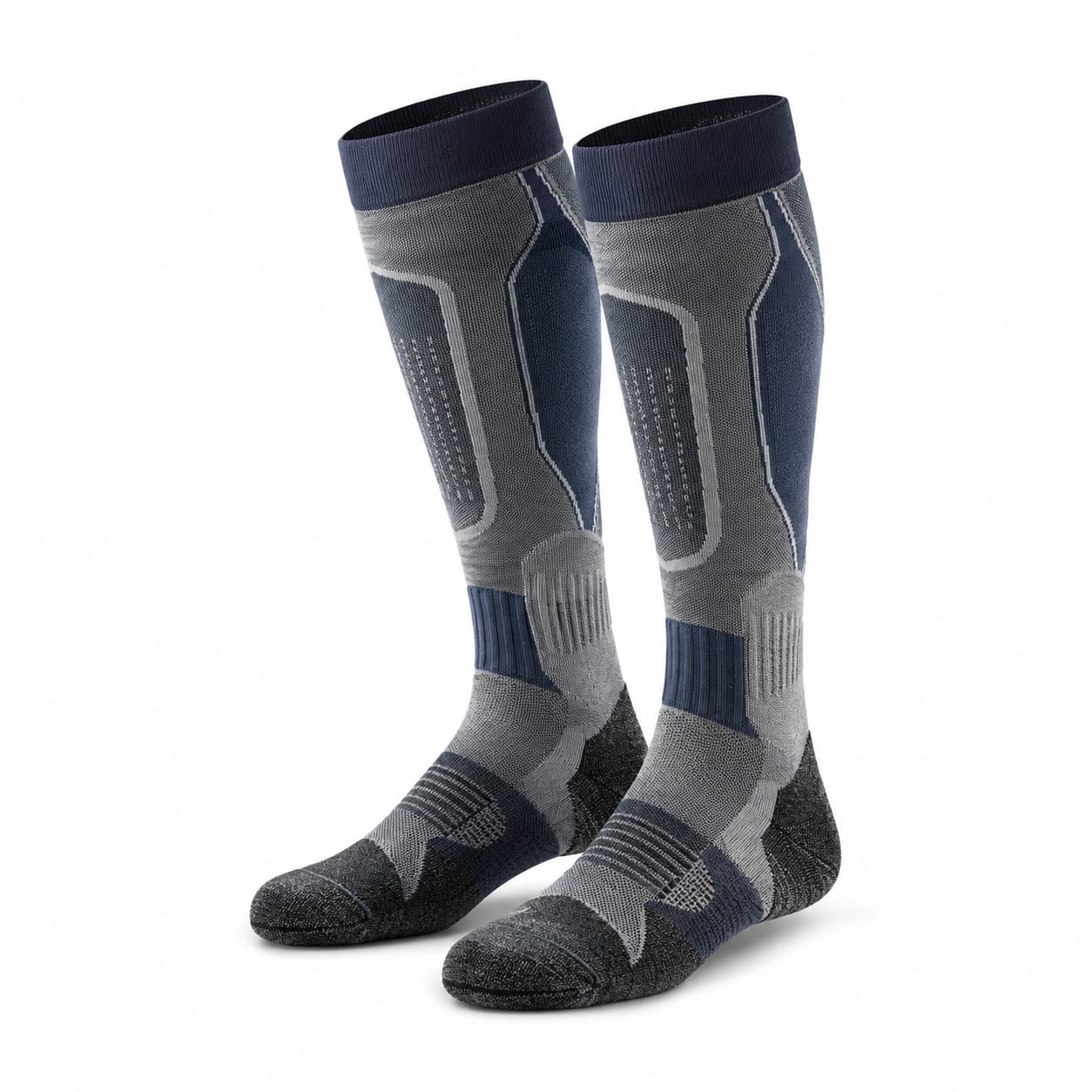
6 topics
Pick a question
Every answer links to the full subcategory guide and related gear types when it helps you decide.
Can I use my resort ski socks for backcountry touring?
You can, but you'll likely have cold, wet feet. Resort socks are designed to retain heat and provide cushioning for lift-served skiing — the opposite of what you need on the uptrack. They lack the ventilation zones to dump heat during climbing, so your feet sweat excessively, and that trapped moisture makes them cold on the descent. If you tour even occasionally, a dedicated touring sock is one of the cheapest and most impactful upgrades you can make.
Read answer →02Why are touring socks thinner than resort socks? Don't I need more warmth in the backcountry?
It seems counterintuitive, but thinner is warmer in the backcountry because of moisture management. Your feet produce far more sweat during touring than resort skiing — up to 3-4x more on a steep skintrack. A thick sock absorbs and holds that sweat, and when you transition to the descent, the wet sock rapidly cools your feet. A thinner, ventilated touring sock wicks moisture away from your skin and allows it to evaporate during the climb, so your feet arrive at the top dry and stay warm on the way down. Dry feet are warm feet.
Read answer →03How many pairs of touring socks do I need for a hut trip?
For a 2-3 day hut trip, one pair of high-merino touring socks with antimicrobial treatment is usually sufficient if you rinse them at the end of each day. For trips longer than 3 days, bring two pairs and alternate. The key is choosing socks with 55%+ merino content and antimicrobial treatment — these can handle multiple days of heavy use without becoming offensive. Pack weight matters in the backcountry, so resist the urge to bring a fresh pair for every day.
Read answer →04Do I really need compression in a touring sock?
It's not strictly necessary, but moderate compression (15-20 mmHg) provides a noticeable benefit on tours longer than 3-4 hours. It improves blood flow, reduces foot and leg fatigue, and keeps the sock from sliding around during the walking motion of skinning. If you've never worn compression socks, start with light compression and see if you like the feeling. Most touring skiers who try moderate compression don't go back to non-compression socks.
Read answer →05What's the difference between a touring sock and a lightweight spring ski sock?
While both are thin and breathable, touring socks include features that spring socks typically lack: extensive ventilation zones designed for high-output activity, moderate compression for fatigue reduction, reinforced zones for the walking motion of touring, and antimicrobial treatment for multi-day use. A spring sock is essentially a thin resort sock; a touring sock is a purpose-built garment for the ascent-descent cycle. The price difference reflects the additional engineering.
Read answer →06My feet still get cold on the descent even with touring socks. What am I doing wrong?
The most common cause is still overheating on the climb. If your feet are sweating heavily on the ascent, no sock can keep them warm on the descent — the moisture will cool rapidly. Try these fixes: (1) Use a lighter-weight sock or one with more ventilation. (2) Open your boot buckles slightly on the climb to improve airflow. (3) Remove your boot liners at the top to let them dry during transitions. (4) Make sure your boots aren't too tight, which restricts circulation. (5) Consider adding a vapor barrier liner sock for the descent on very cold days. The solution is almost always better moisture management on the climb, not more insulation.
Read answer →