
It's not strictly necessary, but moderate compression (15-20 mmHg) provides a noticeable benefit on tours longer than 3-4 hours. It improves blood flow, reduces foot and leg fatigue, and keeps the sock from sliding around during the walking motion of skinning. If you've never worn compression socks, start with light compression and see if you like the feeling. Most touring skiers who try moderate compression don't go back to non-compression socks.
Ski Socks · Backcountry / Touring Ski Socks
Do I really need compression in a touring sock?
Related gear types
If this answer nudged you toward a different style, these guides compare specs and trade-offs.
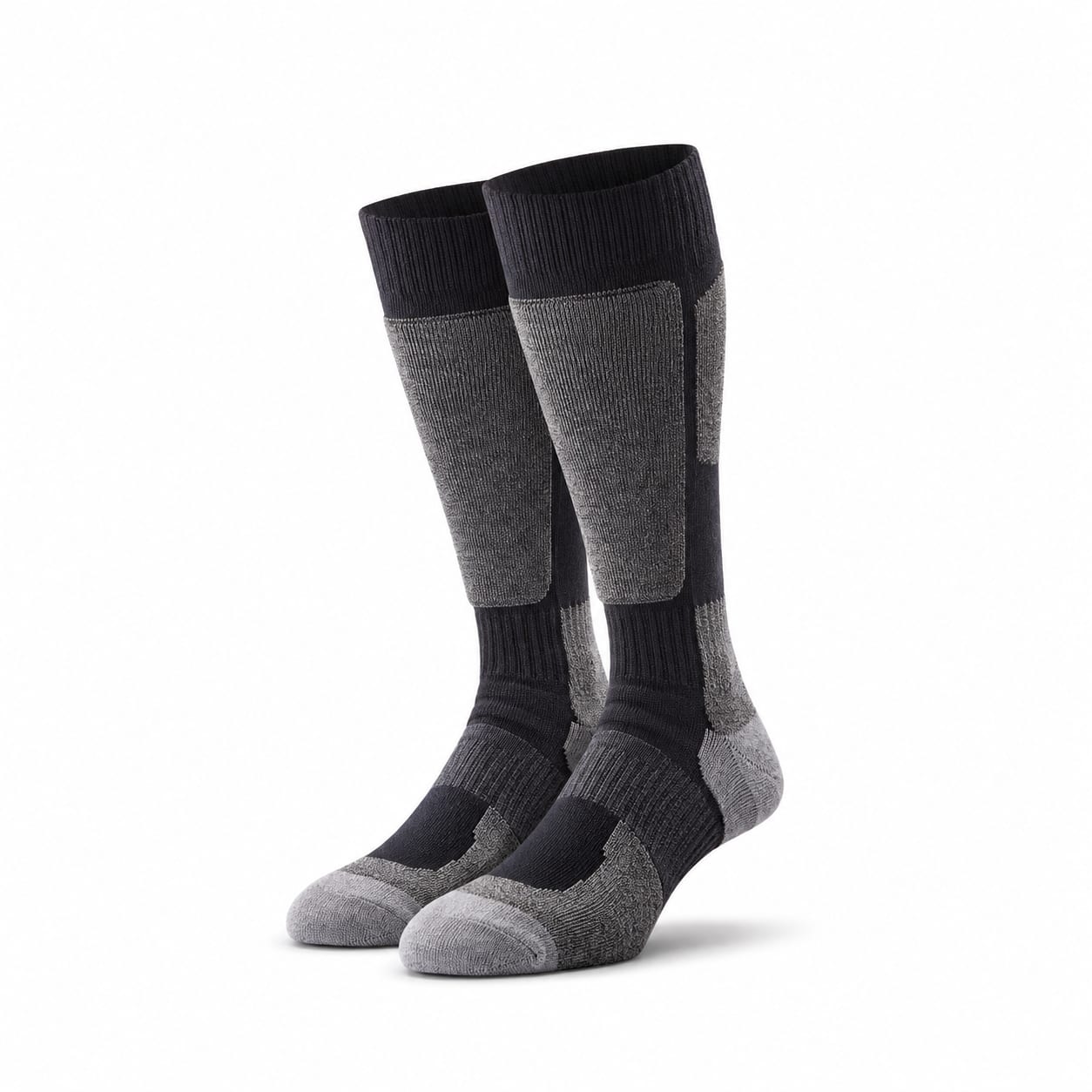
Medium Cushion Ski Socks
$16 – $42
Versatile all-around ski socks with balanced cushioning in key impact zones for comfort and warmth on most days and terrain.
strategic cushion zonesshin paddingover-the-calf height
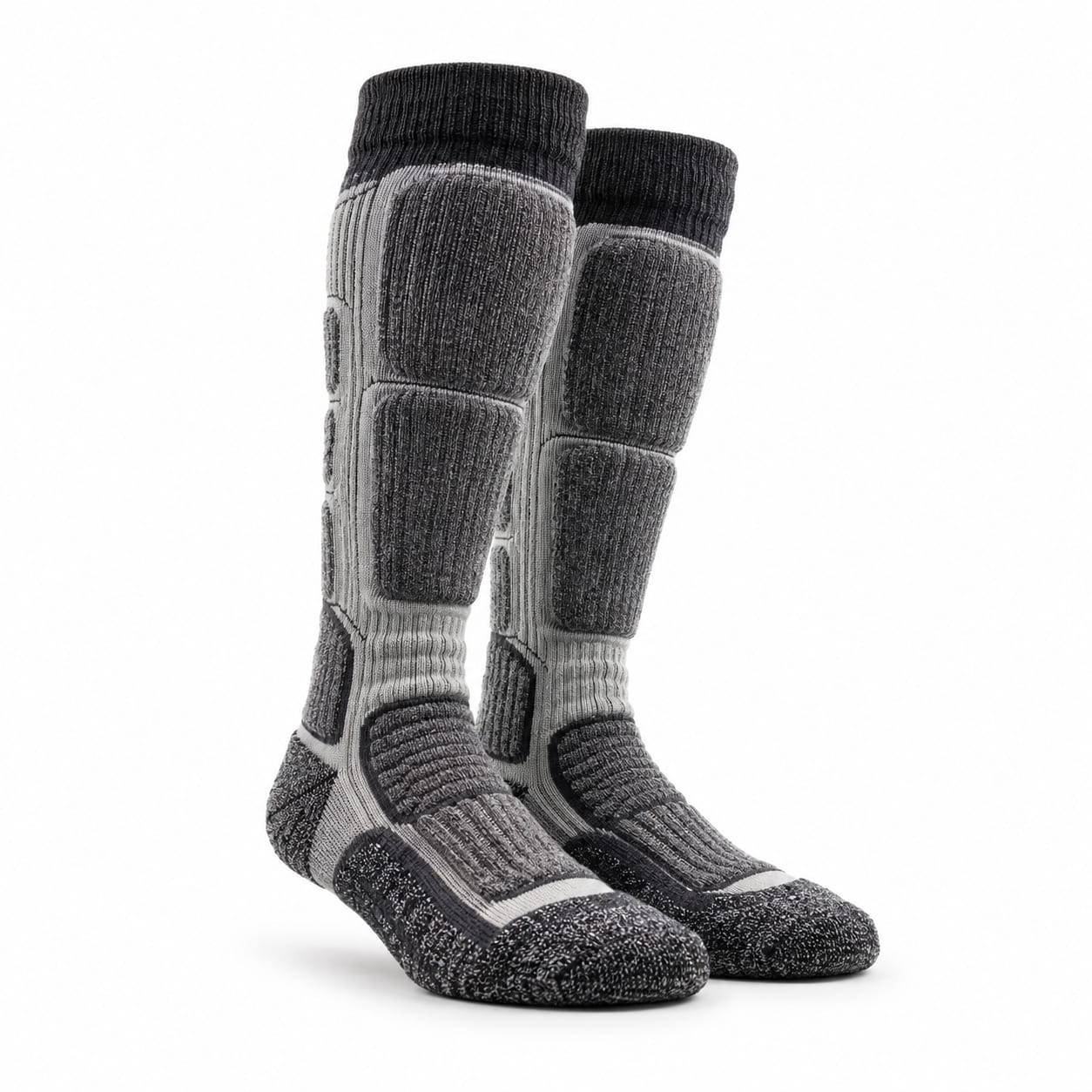
Heavy Cushion Ski Socks
$18 – $45
Maximum-cushion ski socks built for warmth, impact absorption, and all-day comfort in cold conditions and high-intensity riding.
full-density cushioningmaximum insulationover-the-calf height
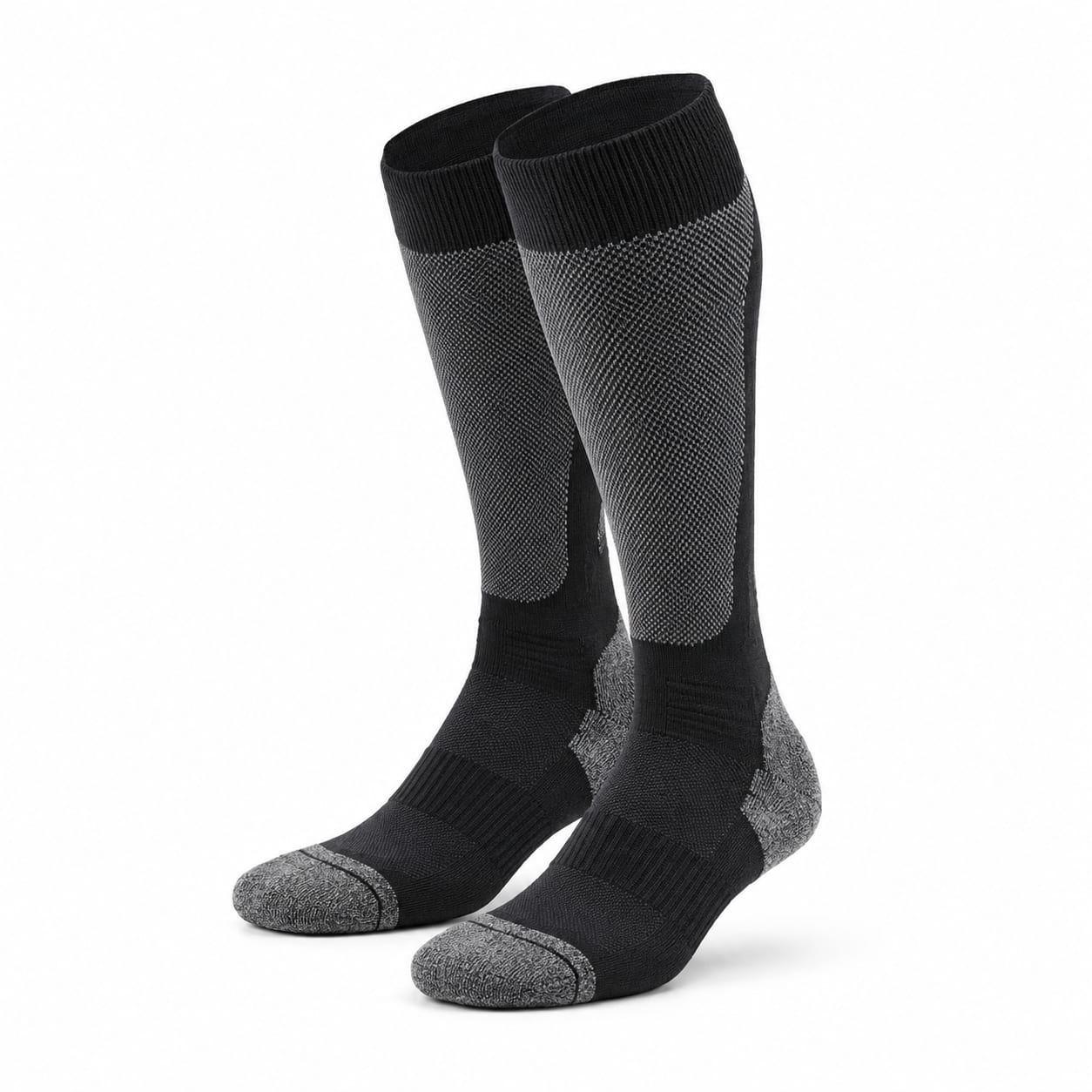
Cross-Country Ski Socks
$14 – $35
Lighter, more flexible socks designed for the range of motion and lower insulation needs of nordic skiing and skate skiing.
thinner constructionflexible forefootreduced shin padding
More questions
- Can I use my resort ski socks for backcountry touring?
- Why are touring socks thinner than resort socks? Don't I need more warmth in the backcountry?
- How many pairs of touring socks do I need for a hut trip?
- What's the difference between a touring sock and a lightweight spring ski sock?