What it means
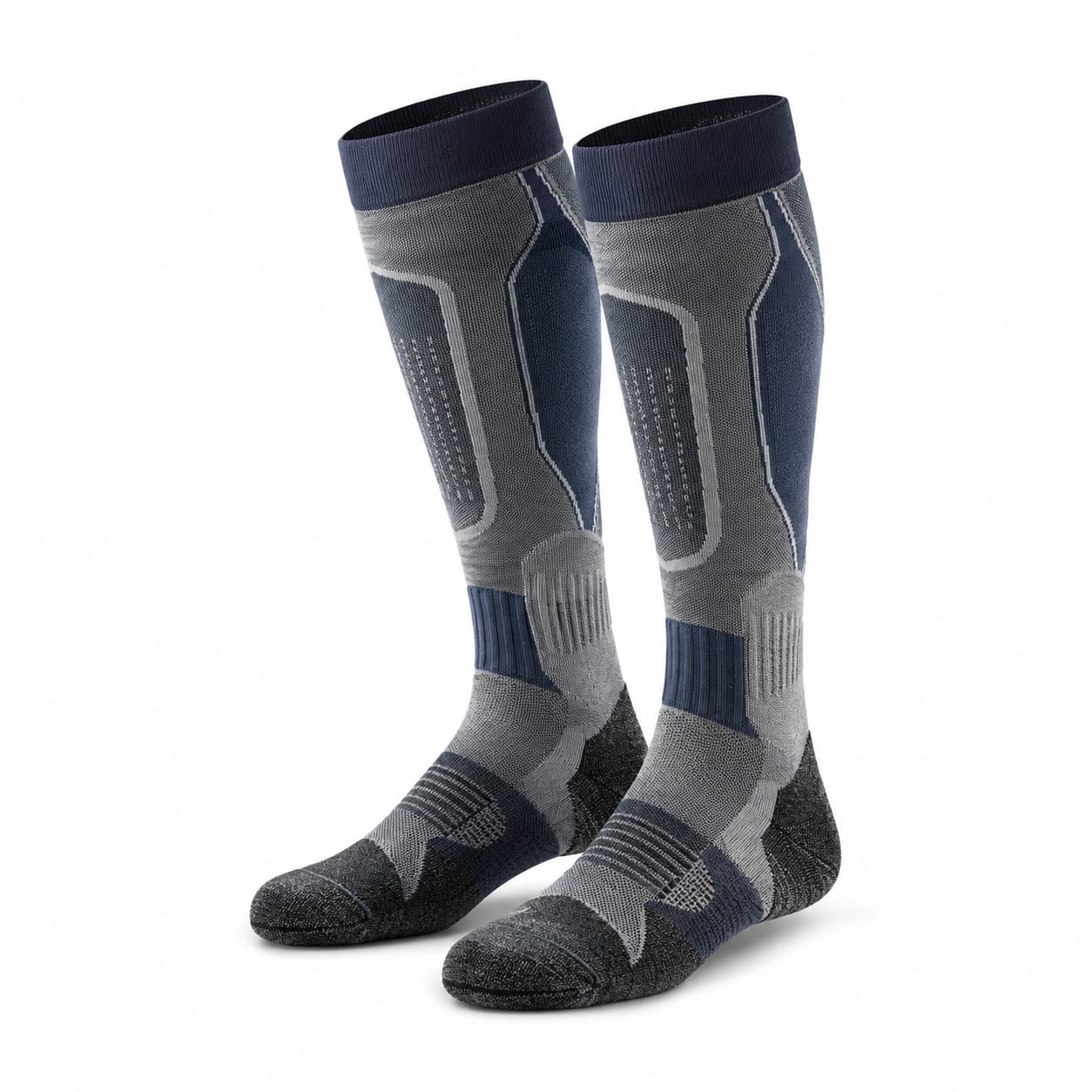
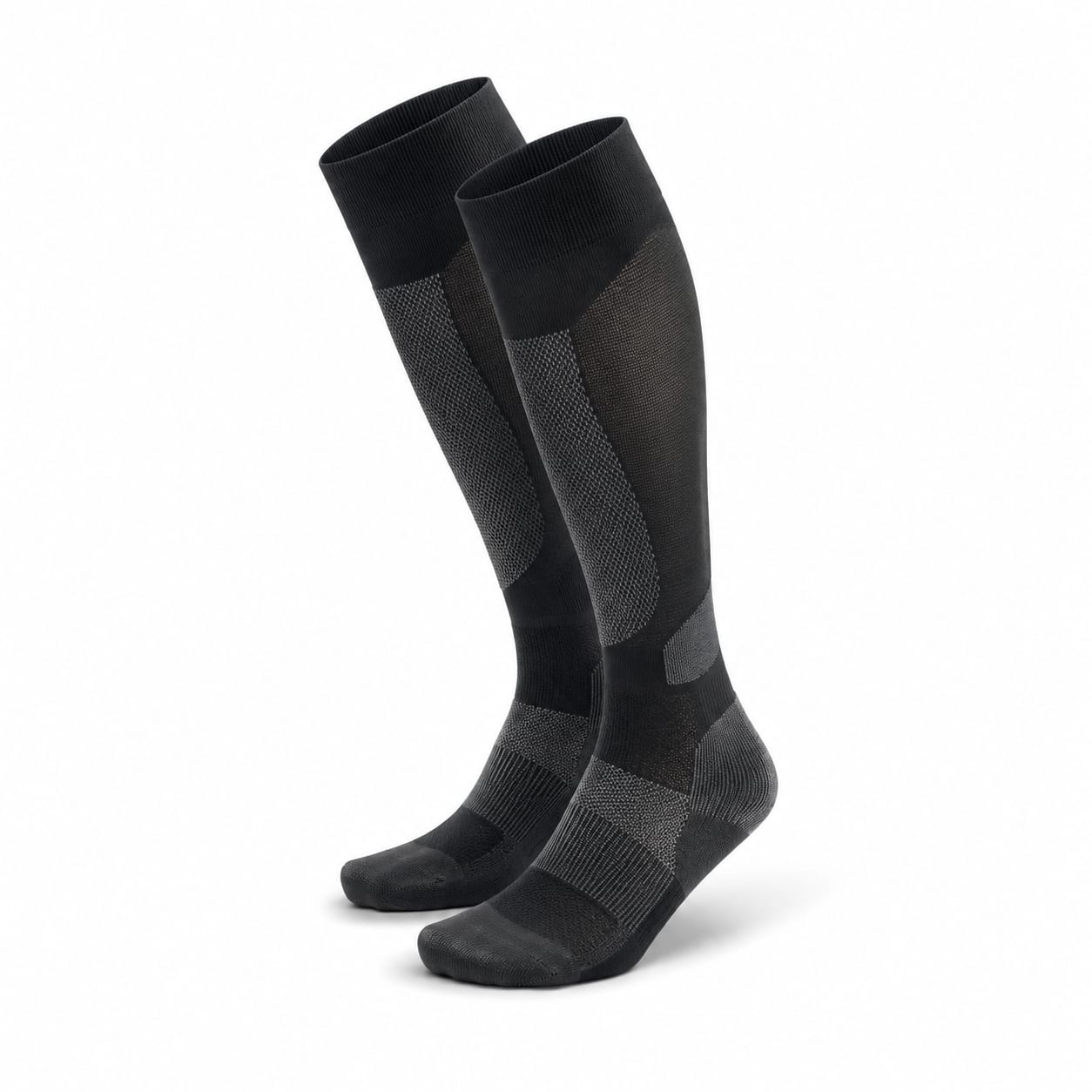
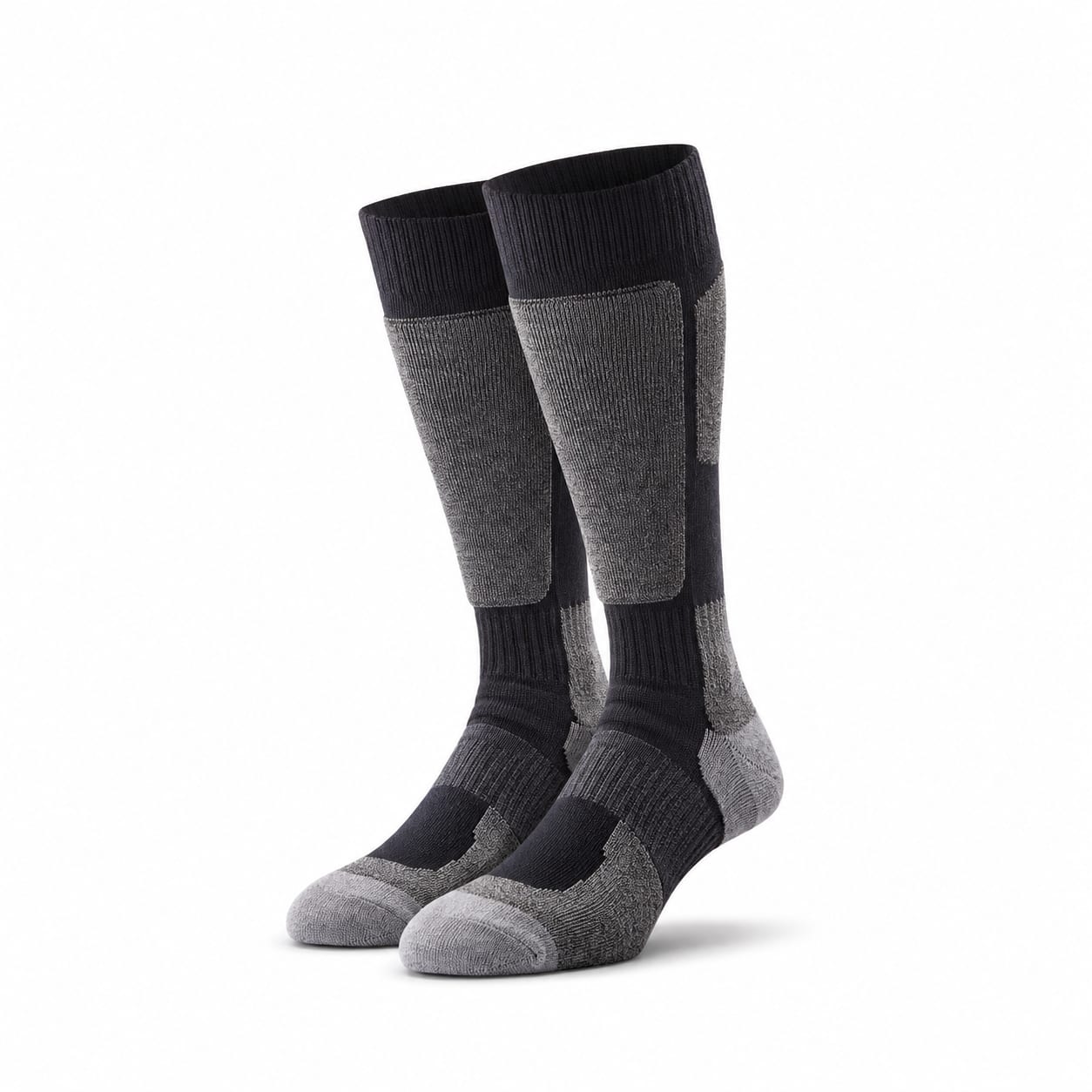
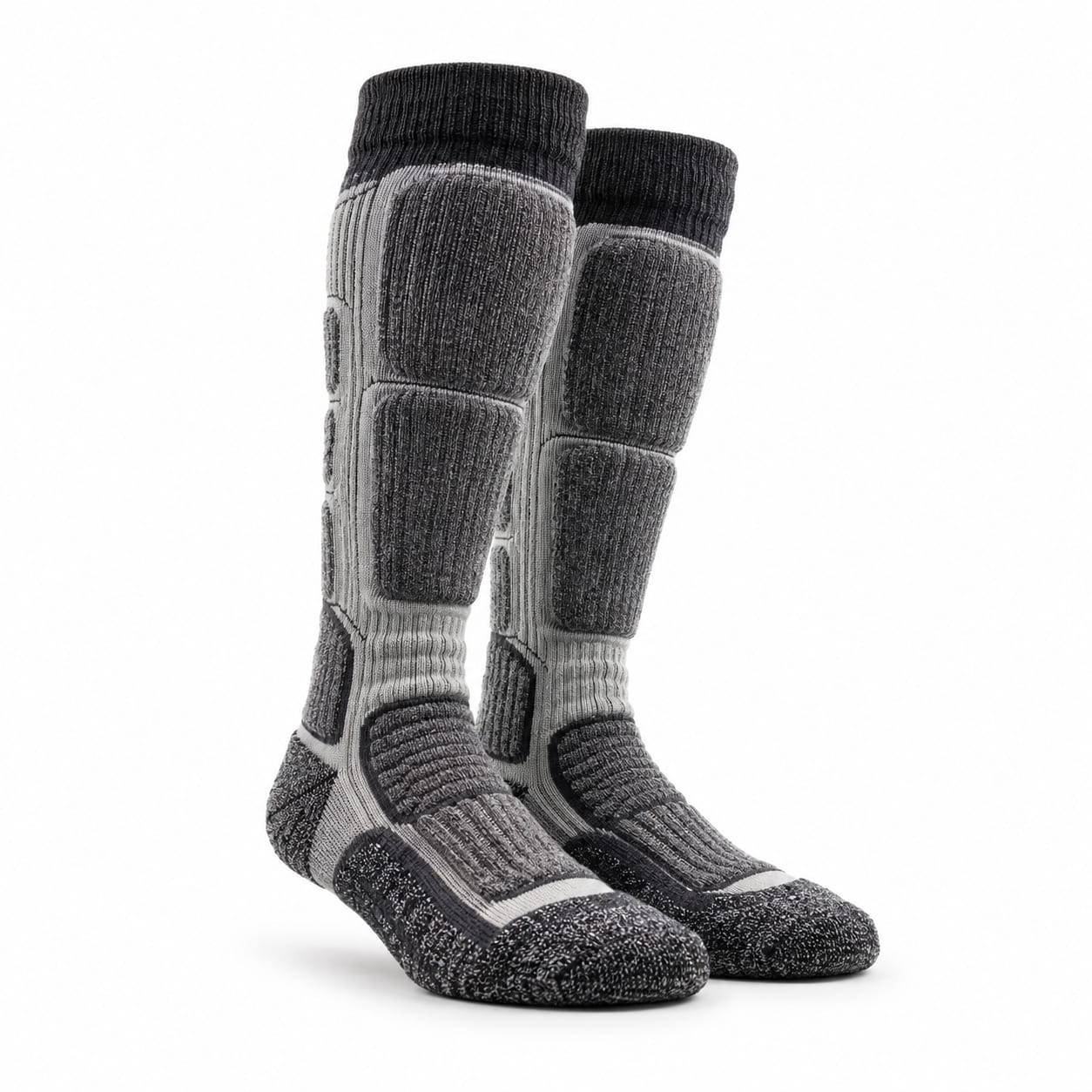
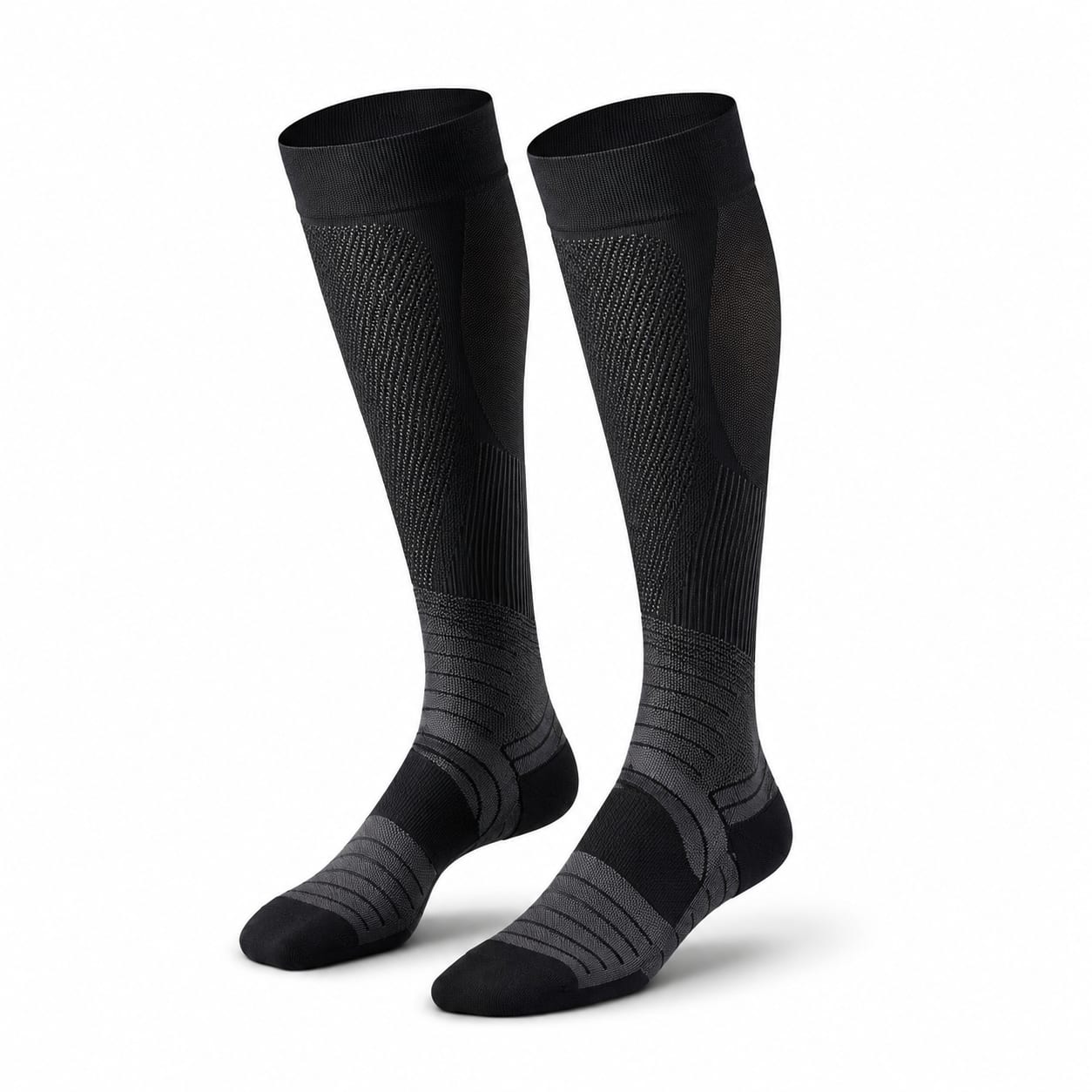
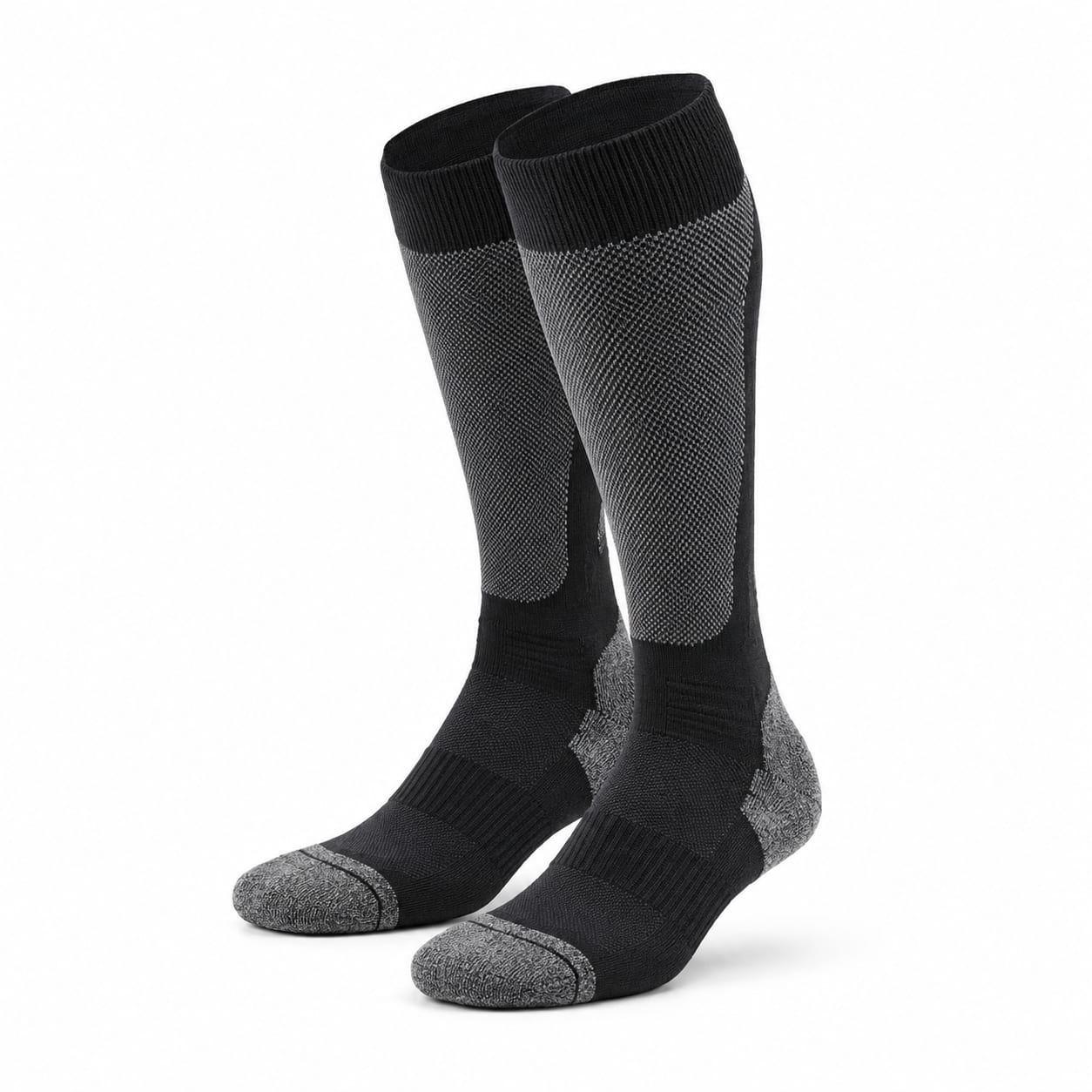
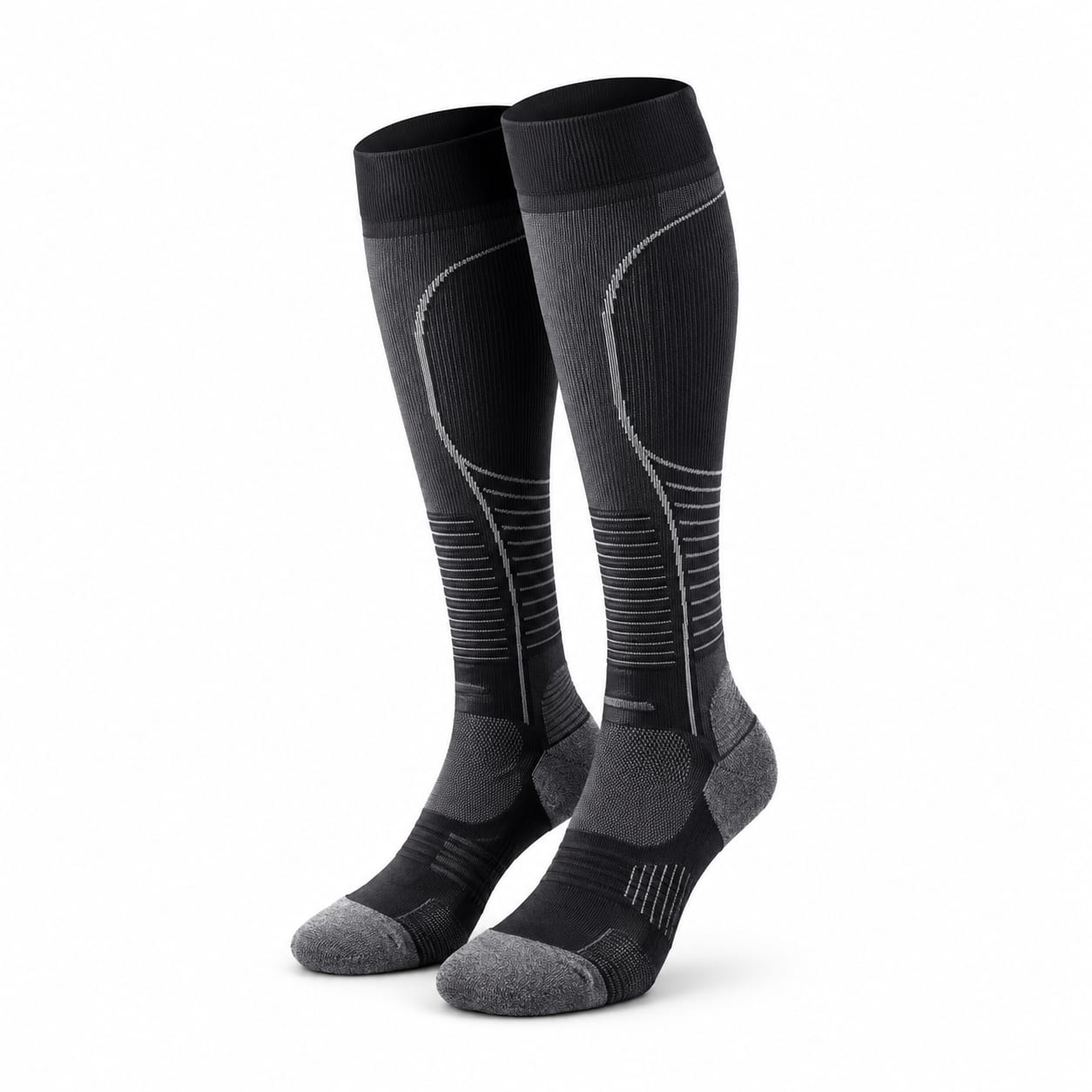
The height of the sock measured from the heel to the top of the cuff. Critical for preventing skin contact with the top of the ski boot shell.
Typical for this type
Over The Calf to Knee High
In practice
Over-the-calf is the standard for touring socks, providing full coverage above the touring boot cuff. Knee-high options are preferred by some backcountry skiers for extra warmth on long, cold days and additional compression coverage.
Compared to other types
Similar to resort socks in preferring OTC height, but knee-high sees slightly more adoption in backcountry for the added warmth on exposed ridges and during transitions. Resort socks rarely need knee-high height.
Why it matters: Touring boots have tall cuffs that must not contact bare skin. Additionally, the repeated flexing of the ankle during skinning makes a secure, tall cuff essential to prevent the sock from slipping down into the boot over hours of touring.
Cushioning
Cushioning Level
What it means
The overall amount and density of padding built into the sock, affecting warmth, comfort, and boot fit. More cushioning means more warmth but less room in the boot.
Typical for this type
Light to Medium
In practice
Light cushioning is the most common choice for touring socks, providing essential impact protection without the bulk that traps heat and moisture on the ascent. Medium cushioning is used for colder tours or skiers who prioritize downhill comfort.
Compared to other types
Touring socks run one full cushioning level lighter than resort socks on average. A resort skier might choose medium cushion, while the same skier on a tour would choose light. This is the most significant difference between the subcategories.
Why it matters: Heavy cushioning in a touring sock creates a moisture trap during high-output climbing. The sweat that accumulates in thick padding cannot evaporate efficiently, leading to cold, wet feet on the descent. Light cushioning allows faster moisture transport while still protecting high-impact zones.
Material
Primary Fiber Material
What it means
The dominant fiber type used in the sock construction, which determines moisture management, warmth, odor resistance, and durability.
Typical for this type
Merino Synthetic Blend to Merino Wool
In practice
Merino-synthetic blends dominate touring socks because they combine merino's superior moisture management and odor resistance with the durability needed to withstand the abrasion of touring boot liners and the repeated flexing of walking.
Compared to other types
Touring socks skew toward higher merino content than resort socks because odor resistance and moisture management matter more for multi-day use. Pure synthetic blends, sometimes acceptable for resort day trips, are a poor choice for touring.
Why it matters: Merino wool is non-negotiable for touring due to its ability to absorb moisture without feeling wet — critical when your feet are drenched on the climb and you need them dry for the descent. The synthetic component (typically nylon) adds the durability that pure merino lacks, especially in high-wear areas.
Merino %
Merino Wool Content
What it means
The percentage of merino wool in the sock's fiber composition. Higher percentages provide more natural performance benefits but may reduce durability.
Typical for this type
50% to 70%
Most common pick: 55%
In practice
Touring socks typically contain 50-70% merino wool, higher than the resort average, to maximize moisture wicking and odor resistance. The remaining content is nylon for durability and elastane for stretch and recovery.
Compared to other types
Touring socks average 5-15% higher merino content than resort socks. A resort sock might be 40-55% merino, while a touring sock is typically 50-70%. This reflects the greater importance of moisture management and odor control in the backcountry.
Why it matters: Higher merino content directly improves the sock's ability to manage the large volumes of sweat produced during touring. It also provides better odor resistance for multi-day trips. However, going above 70% merino reduces durability, which is a concern given the abrasion from touring boot liners.
Compression
Compression Level
What it means
The degree of graduated compression built into the sock, measured in mmHg. Compression improves blood flow, reduces fatigue, and enhances proprioception.
Typical for this type
Moderate (15-20 MmHg)
In practice
Moderate compression (15-20 mmHg) is the sweet spot for touring socks, providing meaningful fatigue reduction during long days of sustained effort while remaining comfortable for hours of wear.
Compared to other types
Touring socks are more likely to feature moderate compression than resort socks, where light compression is more common. The longer duration and higher exertion of touring make the fatigue-reduction benefits more valuable.
Why it matters: Touring days are long — often 4-8 hours of sustained physical effort — and the improved venous return from moderate compression noticeably reduces foot and leg fatigue. Compression also keeps the sock locked in place during the walking motion of skinning, preventing the bunching that causes blisters over thousands of strides.
Thickness
Thickness Category
What it means
The overall thickness of the sock construction, which directly affects boot fit, warmth, and feel. Related to but distinct from cushioning level.
Typical for this type
Lightweight to Midweight
In practice
Lightweight is the most popular thickness for touring socks because it allows maximum moisture transport and minimal heat retention on the ascent. Midweight is chosen for cold-weather tours or skiers who run cold.
Compared to other types
Touring socks are typically one thickness level lighter than what the same skier would wear at the resort. If you ski midweight at the resort, choose lightweight for touring. This is the second most important difference after cushioning.
Why it matters: A thick sock on a skintrack is a recipe for overheated, sweaty feet that will be cold on the descent. Lightweight construction allows sweat to evaporate quickly during the climb while still providing enough material for basic cushioning and warmth on the way down.
Left/Right Specific
Anatomical Fit Construction
What it means
Whether the sock is constructed with specific left and right foot shaping for improved fit and reduced bunching inside the boot.
Typical for this type
Anatomical Lr Preferred
In practice
Left/right anatomical construction is especially valuable in touring socks because the extended walking motion of skinning amplifies any bunching or wrinkling, leading to blisters over long distances.
Compared to other types
Anatomical fit is more strongly recommended for touring than for resort use because the consequences of bunching are more severe on long tours. Resort socks can get away with universal fit more easily.
Why it matters: On a resort day, a slightly bunched sock might cause mild discomfort. On a 6-hour tour with 4,000 vertical feet of climbing, that same bunching can develop into a painful blister that forces you to alter your stride or cut the day short. Anatomical fit eliminates this risk.
Shin Padding
Shin Cushioning
What it means
Dedicated cushioning zone on the front of the sock that protects the shin from ski boot pressure and impact. One of the most important zone-specific features.
Typical for this type
Light to Medium
In practice
Light shin cushioning is typical for touring socks, providing basic protection from boot tongue pressure without the bulk that traps heat. Medium is chosen for aggressive downhill skiing in touring boots or cold-sensitive skiers.
Compared to other types
Touring socks use lighter shin cushioning than resort socks on average. Resort socks commonly use medium shin cushioning, while touring socks default to light. The priority shifts from impact absorption to breathability.
Why it matters: Touring boots are generally softer than alpine boots, so shin pressure is less severe. However, during the descent, touring boots still transmit significant tongue pressure, and some cushioning is needed. Heavy shin padding would over-insulate during the climb.
Toe Seam Type
Toe Construction
What it means
How the toe area of the sock is constructed and seamed. Affects comfort and blister risk in the tight toe box of a ski boot.
Typical for this type
Seamless to Hand Linked
In practice
Seamless toe construction is strongly preferred for touring socks to eliminate friction points that can develop into blisters over the thousands of strides and hours of wear typical of a backcountry day.
Compared to other types
Seamless toes are more strongly recommended for touring than for resort use. While nice for resort skiing, they're arguably essential for touring where the consequences of a toe blister can be trip-ending.
Why it matters: A toe seam that's mildly annoying on a 2-hour resort session can become a debilitating blister on a 7-hour tour. The repetitive flexing of the foot during skinning creates constant friction at the toe, making seamless construction a comfort and safety issue, not just a luxury.
What it means
Built-in compression or elastic support in the arch/instep area of the sock. Provides a more secure fit and can reduce foot fatigue.
Typical for this type
Moderate to Firm
In practice
Moderate to firm arch support is common in touring socks to reduce foot fatigue during long days and keep the sock locked in place during the striding motion of skinning.
Compared to other types
Touring socks tend to have slightly more arch support than resort socks because the walking motion of touring creates more foot fatigue and more sock movement than the relatively static stance of resort skiing.
Why it matters: Touring involves thousands of steps with a heavy pack, and arch support in the sock helps reduce foot fatigue over these long distances. It also prevents the sock from sliding forward during the repeated heel-lift of the skinning stride, which can cause bunching at the toes.
Ventilation
Ventilation Zones
What it means
Mesh or thinner-knit zones designed to increase breathability and moisture escape in high-heat areas like the top of the foot and between toes.
Typical for this type
Extensive to Targeted
In practice
Extensive ventilation zones are the hallmark of touring socks, with mesh panels across the top of the foot, through the toe box, and sometimes along the ankle to maximize moisture escape during high-output climbing.
Compared to other types
Touring socks are the only ski sock subcategory where extensive ventilation is the default. Resort socks typically use targeted ventilation, and some cold-weather resort socks have none. This is the feature that most clearly differentiates a touring sock from a resort sock.
Why it matters: This is the single most distinguishing feature of touring socks. The ability to dump heat and moisture during the ascent is what prevents the cycle of sweat-soaked socks leading to cold feet on the descent. Extensive ventilation can reduce foot moisture by 30-50% compared to non-ventilated socks during high-output touring.
Odor Control
Antimicrobial Treatment
What it means
Whether the sock has an applied antimicrobial treatment (e.g., silver ions, Polygiene) to reduce odor-causing bacteria. Merino wool has natural antimicrobial properties.
Typical for this type
True Preferred
In practice
Antimicrobial treatments are more common and more valuable in touring socks than in any other subcategory because of the multi-day use patterns and high sweat production typical of backcountry skiing.
Compared to other types
Touring socks are more likely to include antimicrobial treatment than resort socks, where daily washing between uses is the norm. For resort skiing, this feature is a nice-to-have; for multi-day touring, it's a significant quality-of-life improvement.
Why it matters: On a hut trip, you might wear the same socks for 2-3 days. The combination of heavy sweating on ascents and limited washing opportunities makes antimicrobial treatment a practical necessity, not a luxury. Even with merino's natural odor resistance, the added treatment provides meaningful extra protection for multi-day tours.
Gender Fit
Gender-Specific Fit
What it means
Whether the sock is designed with gender-specific proportions. Women's-specific socks account for typically narrower heels, higher arches, and different calf proportions.
Typical for this type
Gender-Specific Fit Strongly Recommended
Most common pick: Mens / Womens
In practice
Both men's and women's-specific touring socks are widely available and strongly recommended over unisex options because the precise fit is even more critical in touring, where sock slippage causes blisters over long distances.
Compared to other types
Gender-specific fit is equally important across all ski sock subcategories, but the consequences of poor fit are more severe in touring due to the longer duration and walking motion. Unisex socks are less common in the touring category than in resort.
Why it matters: Women's touring socks account for narrower heels (reducing slippage during the striding motion of skinning), higher arches, and smaller calf circumference. These fit differences matter more in touring than resort skiing because the walking motion amplifies any fit issues. A heel that slips in a unisex sock will blister within an hour of skinning.
Reinforced Areas
Reinforced Zones
What it means
Specific areas of the sock with extra-durable construction to resist wear from ski boot friction and extend sock life.
Typical for this type
Heel + Toe (Essential), Sole (Recommended)
Most common pick: Heel, Toe, Sole
In practice
Touring socks commonly reinforce the heel, toe, and sole — more zones than typical resort socks — because the walking motion of touring creates additional wear, especially under the forefoot and at the heel where the boot's walk/ski mechanism creates friction.
Compared to other types
Touring socks are more likely to include sole reinforcement than resort socks, which typically only reinforce heel and toe. The walking motion of touring makes underfoot durability more important.
Why it matters: The striding motion of skinning creates wear patterns that don't exist in resort skiing. The sole receives more abrasion from walking, the heel experiences friction from the boot's walk mode hardware, and the toe flexes repeatedly with each step. Reinforcement in these zones extends sock life significantly.
Warmth Level
Warmth Rating
What it means
The overall warmth category of the sock, determined by thickness, material, and construction. Indicates the temperature range the sock is designed for.
Typical for this type
Lightweight Warmth to All Season
In practice
All-season warmth is the most versatile rating for touring socks, providing enough insulation for cold descents without causing overheating on the climb. Lightweight warmth is preferred for spring touring or high-output skiers.
Compared to other types
Touring socks skew lighter in warmth rating than resort socks. A skier who uses all-season resort socks might choose lightweight warmth for touring. Heavyweight warmth, common in resort socks for cold days, is rarely made in touring-specific models.
Why it matters: The warmth rating of a touring sock must balance two opposing needs: staying cool enough on the ascent to avoid excessive sweating, and warm enough on the descent to prevent cold feet. All-season warmth hits this balance for most conditions. Heavyweight warmth is almost never appropriate for touring because it causes overheating on the climb.
What it means
The sock size, which must correspond to the skier's shoe size for proper fit. Ill-fitting socks cause bunching, wrinkles, and discomfort in ski boots.
Typical for this type
Match Shoe Size Exactly Per Brand Chart
Most common pick: 4-15 US
In practice
Touring socks are available in the same size ranges as other ski socks, typically covering US women's 4-12 and men's 5-15. Precise sizing is even more critical in touring socks because excess material causes blisters during the walking motion of skinning.
Compared to other types
Size range is similar across all ski sock subcategories, but the importance of precise fit is amplified for touring. Resort socks can tolerate a slightly loose fit; touring socks cannot.
Why it matters: A sock that's slightly too large might cause minor annoyance in a resort boot, but on a tour, that extra material will bunch at the toes or heel with every step, creating hot spots that develop into blisters over thousands of strides. When between sizes, always size down for touring socks.