
While both are thin and breathable, touring socks include features that spring socks typically lack: extensive ventilation zones designed for high-output activity, moderate compression for fatigue reduction, reinforced zones for the walking motion of touring, and antimicrobial treatment for multi-day use. A spring sock is essentially a thin resort sock; a touring sock is a purpose-built garment for the ascent-descent cycle. The price difference reflects the additional engineering.
Ski Socks · Backcountry / Touring Ski Socks
What's the difference between a touring sock and a lightweight spring ski sock?
Related gear types
If this answer nudged you toward a different style, these guides compare specs and trade-offs.
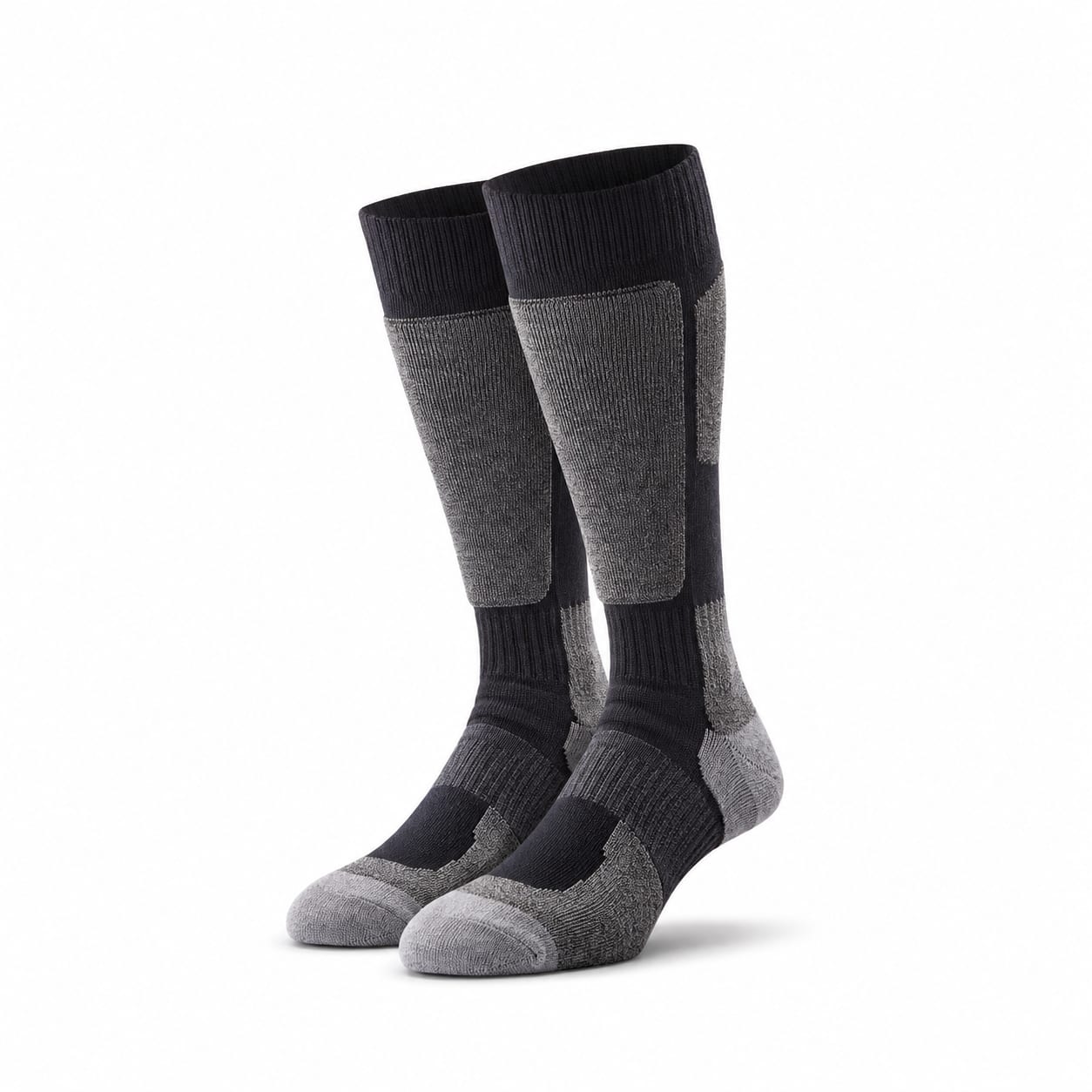
Medium Cushion Ski Socks
$16 – $42
Versatile all-around ski socks with balanced cushioning in key impact zones for comfort and warmth on most days and terrain.
strategic cushion zonesshin paddingover-the-calf height
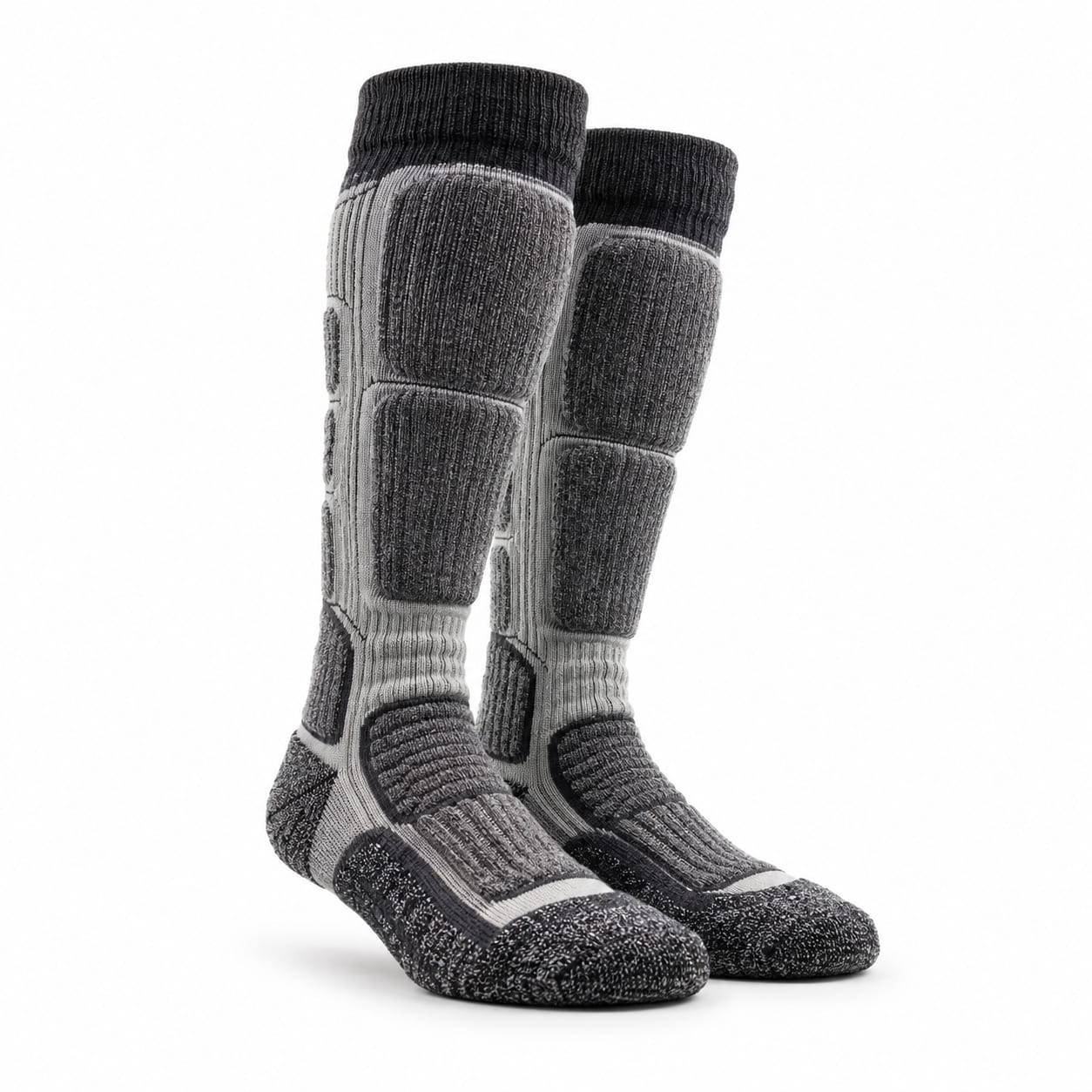
Heavy Cushion Ski Socks
$18 – $45
Maximum-cushion ski socks built for warmth, impact absorption, and all-day comfort in cold conditions and high-intensity riding.
full-density cushioningmaximum insulationover-the-calf height
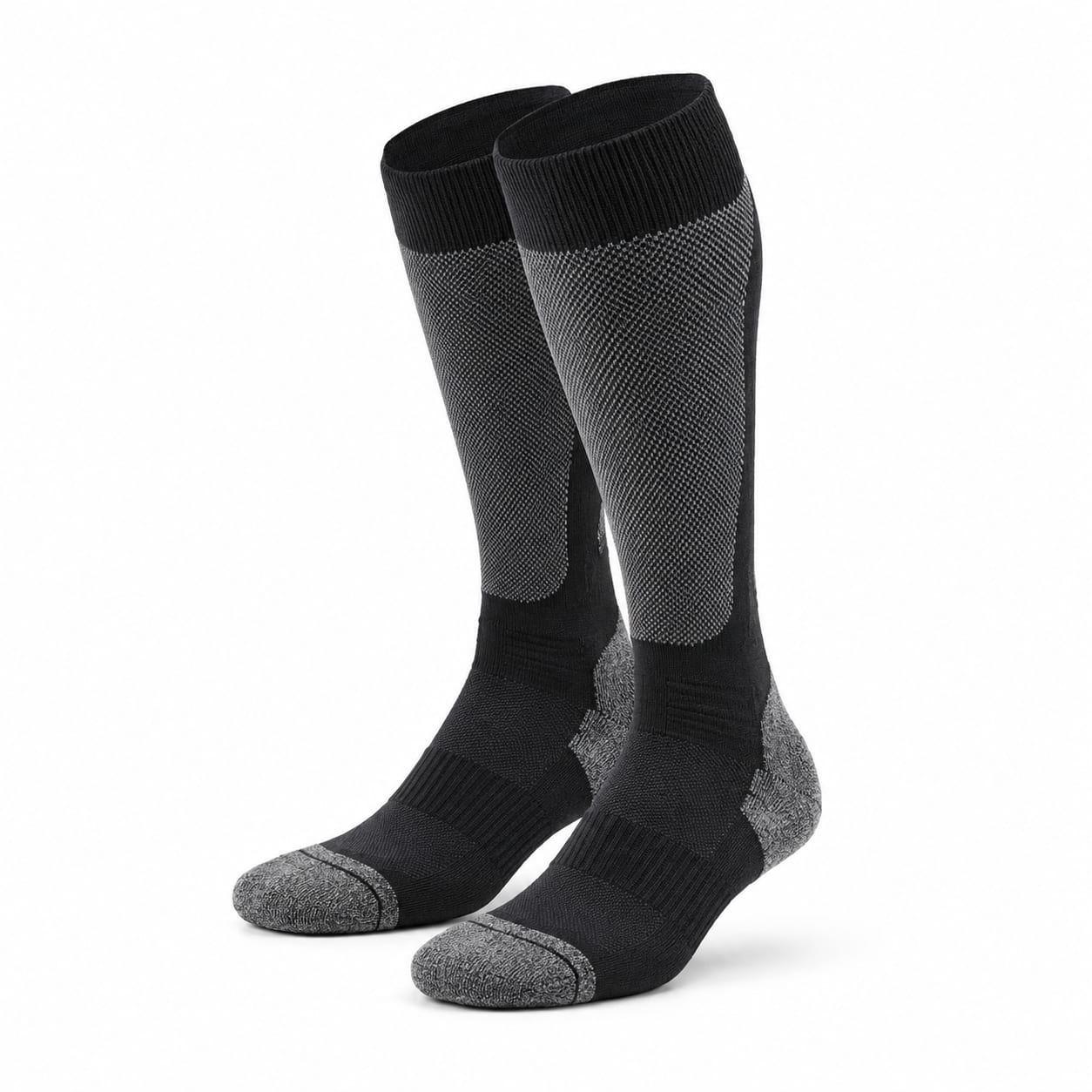
Cross-Country Ski Socks
$14 – $35
Lighter, more flexible socks designed for the range of motion and lower insulation needs of nordic skiing and skate skiing.
thinner constructionflexible forefootreduced shin padding
More questions
- Can I use my resort ski socks for backcountry touring?
- Why are touring socks thinner than resort socks? Don't I need more warmth in the backcountry?
- How many pairs of touring socks do I need for a hut trip?
- Do I really need compression in a touring sock?