
The most common cause is still overheating on the climb. If your feet are sweating heavily on the ascent, no sock can keep them warm on the descent — the moisture will cool rapidly. Try these fixes: (1) Use a lighter-weight sock or one with more ventilation. (2) Open your boot buckles slightly on the climb to improve airflow. (3) Remove your boot liners at the top to let them dry during transitions. (4) Make sure your boots aren't too tight, which restricts circulation. (5) Consider adding a vapor barrier liner sock for the descent on very cold days. The solution is almost always better moisture management on the climb, not more insulation.
Ski Socks · Backcountry / Touring Ski Socks
My feet still get cold on the descent even with touring socks. What am I doing wrong?
Related gear types
If this answer nudged you toward a different style, these guides compare specs and trade-offs.
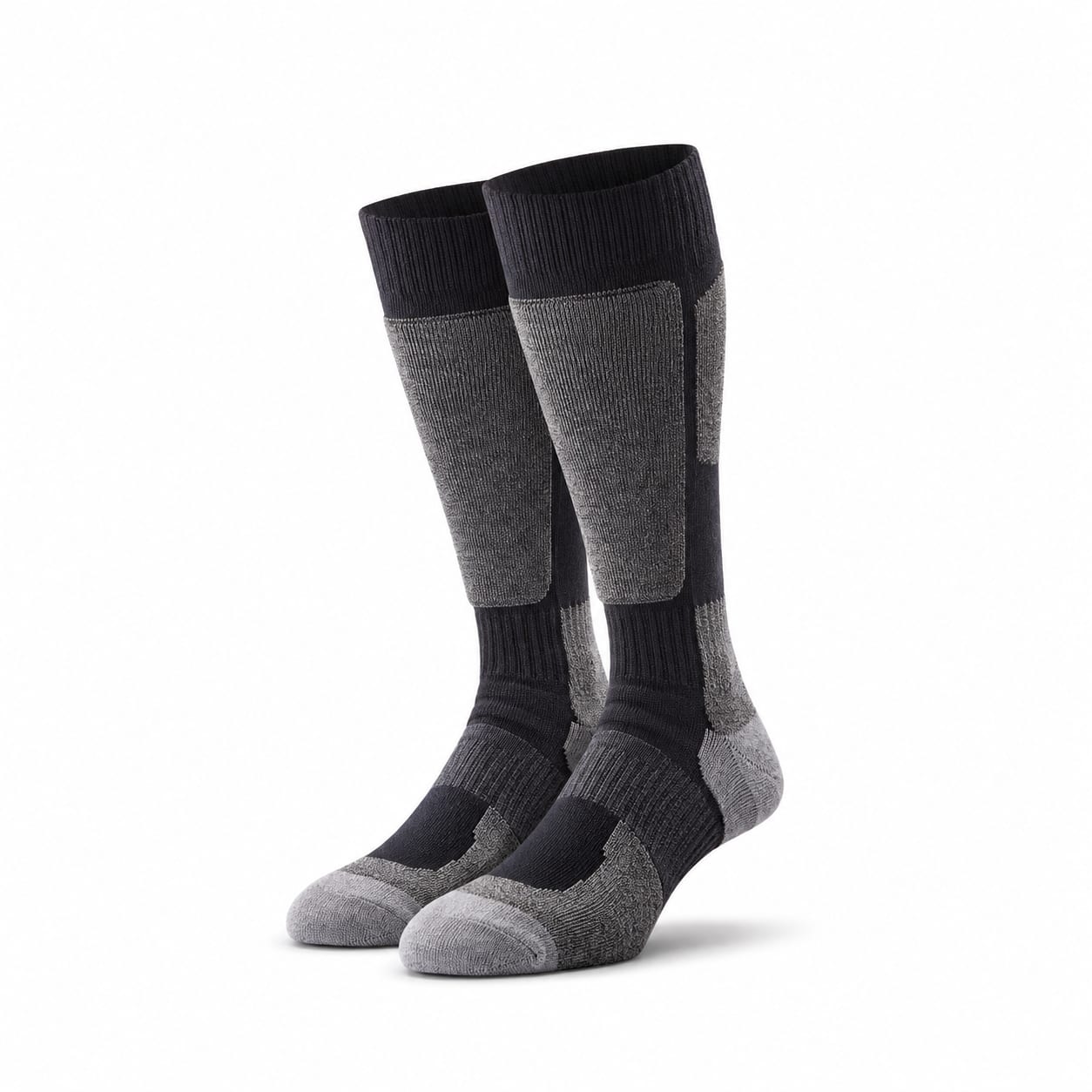
Medium Cushion Ski Socks
$16 – $42
Versatile all-around ski socks with balanced cushioning in key impact zones for comfort and warmth on most days and terrain.
strategic cushion zonesshin paddingover-the-calf height
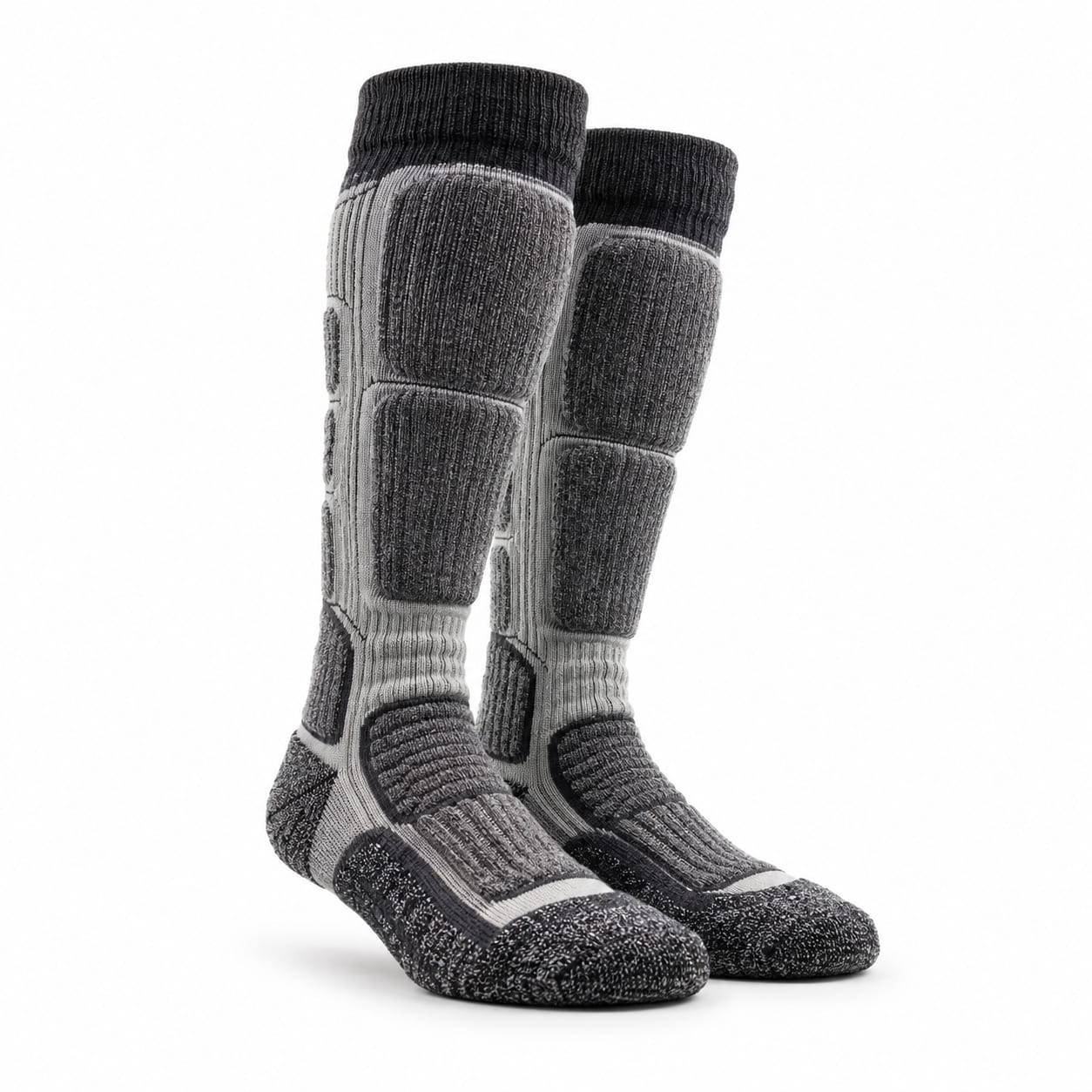
Heavy Cushion Ski Socks
$18 – $45
Maximum-cushion ski socks built for warmth, impact absorption, and all-day comfort in cold conditions and high-intensity riding.
full-density cushioningmaximum insulationover-the-calf height
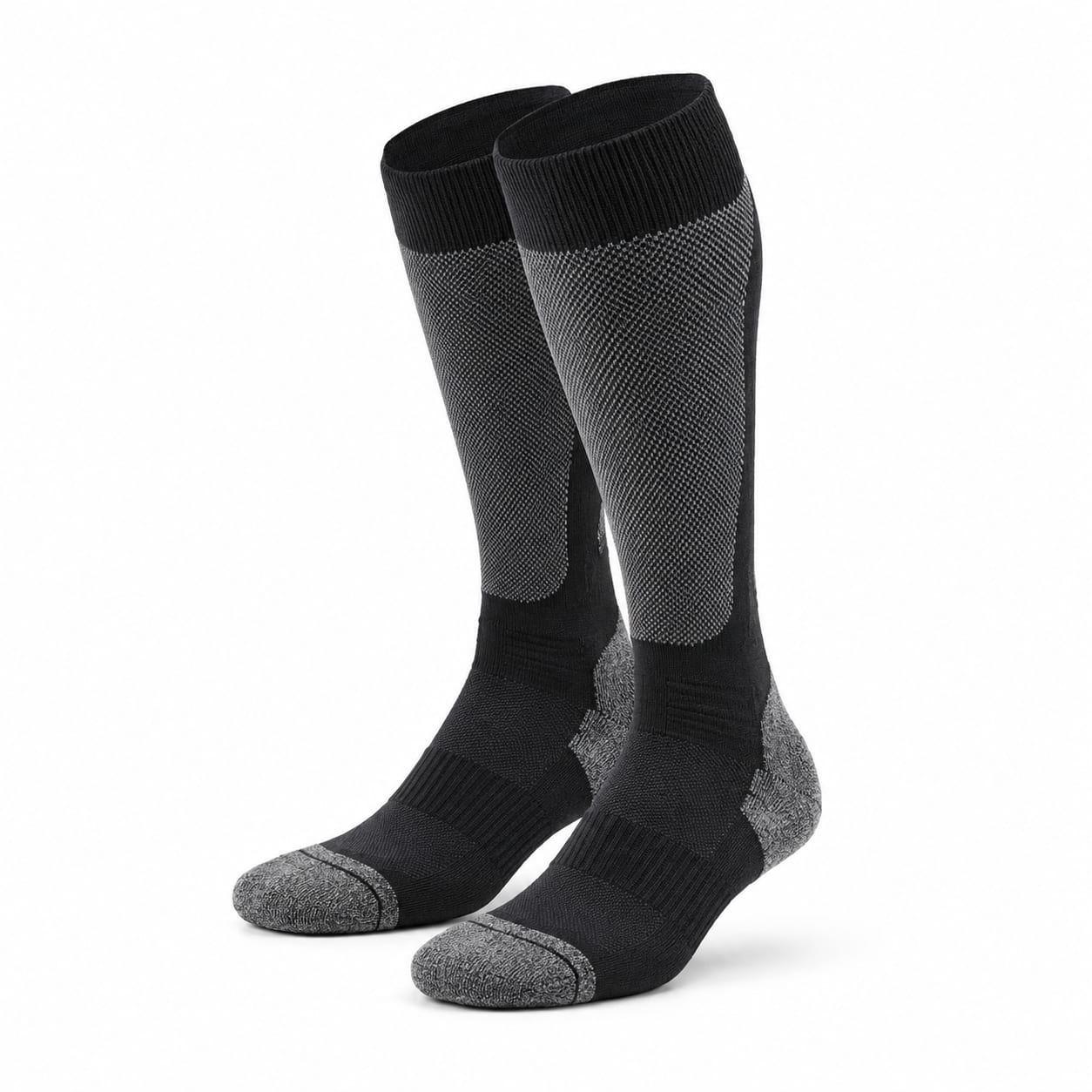
Cross-Country Ski Socks
$14 – $35
Lighter, more flexible socks designed for the range of motion and lower insulation needs of nordic skiing and skate skiing.
thinner constructionflexible forefootreduced shin padding
More questions
- Can I use my resort ski socks for backcountry touring?
- Why are touring socks thinner than resort socks? Don't I need more warmth in the backcountry?
- How many pairs of touring socks do I need for a hut trip?
- Do I really need compression in a touring sock?