
Cycling Shoes · Buying specs
Questions about Cycling Shoes specs
Straight answers on the specs that matter when you buy — each question covers one dimension or option so you know what to look for.
Open Cycling Shoes guide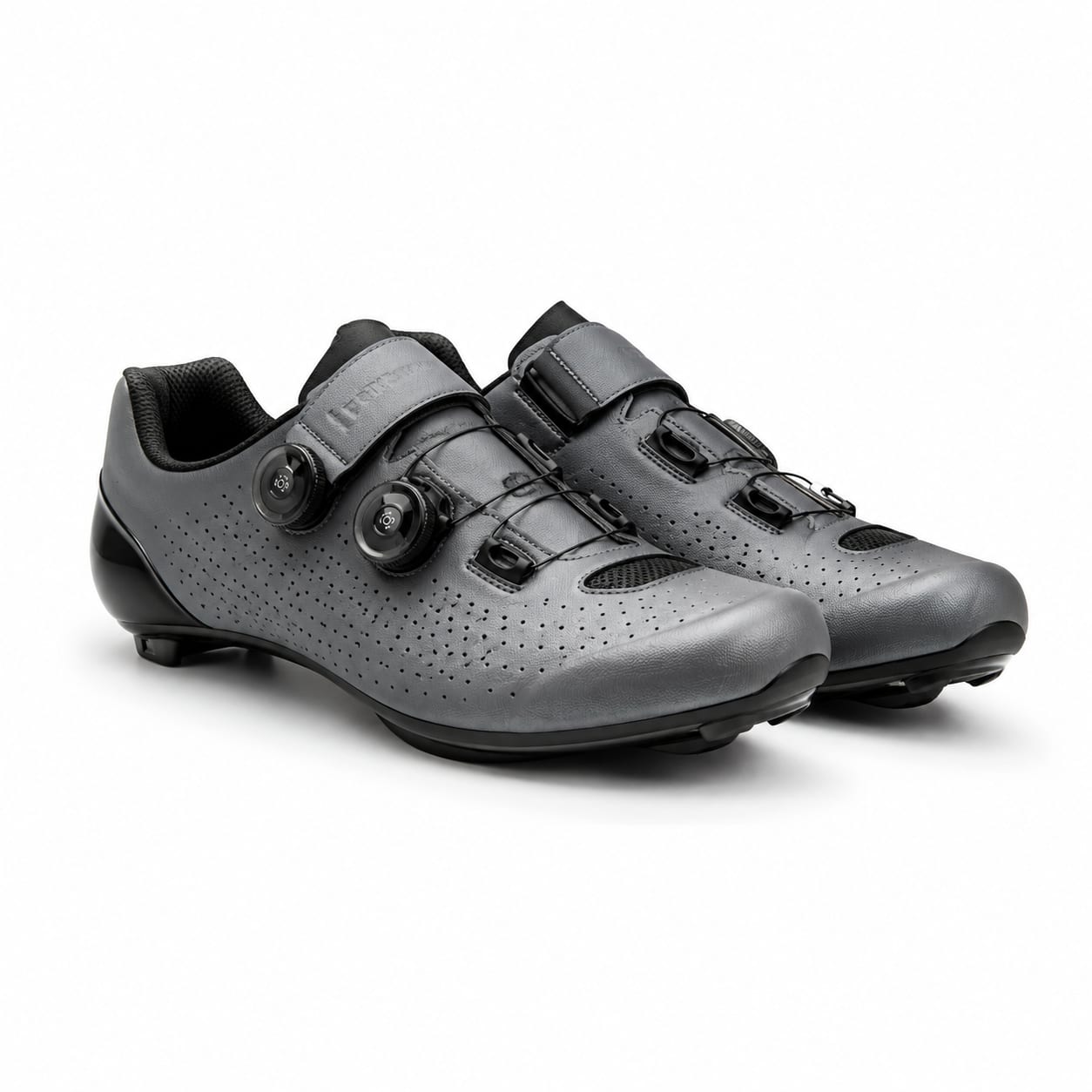
58 questions
Browse by spec group
Questions are organized the same way as the buying specs on the main equipment page.
Core Category & Compatibility
Fundamental attributes that determine what type of riding the shoe is designed for and which pedal systems it works with.
I ride road but sometimes walk into cafes - are road cycling shoes a bad idea?
Road cycling shoes are purpose-built for maximum power transfer. They feature ultra-stiff soles—often full carbon—and a smooth bottom with a 3-bolt cleat that sits exposed on the outside. This design minimizes flex so more of your effort reaches the pedals, which is why they're the go-to for road racing, fast group rides, and time trials. The downside is walkability. That exposed cleat and lack of tread make walking slippery and awkward, and repeated walking on hard surfaces can wear down your cleats quickly. If you're just doing a quick cafe stop, it's manageable—just walk carefully. If off-bike stops are a regular part of your rides, consider gravel or commuter shoes with a recessed 2-bolt cleat instead. They walk much better, though you'll sacrifice some pedaling efficiency. For most dedicated road riders, the performance benefit of road shoes outweighs the occasional awkward stroll.
Read answer →Discipline / Shoe Type · Mountain Bike (MTB)When should I choose mountain bike shoes over other cycling shoe types?
MTB shoes are the right pick whenever your riding involves trails, dirt, or frequent off-bike movement. They feature a recessed cleat area with aggressive tread, so you can walk on rocks, mud, and loose terrain without slipping or damaging your cleats. The 2-bolt cleat system (typically SPD) sits flush with the sole, keeping it protected when you're on foot. Compared to road shoes, MTB shoes sacrifice a bit of pedaling stiffness for walkability and durability. The reinforced toe and heel add protection on rugged terrain. This trade-off makes them ideal for trail riding, enduro, cross-country, and bikepacking—any situation where you might need to hop off and hike a section. Don't choose MTB shoes if you're exclusively road riding, as you'll give up power transfer for walkability you won't use. But if your rides mix dirt, gravel, or any off-bike time, MTB shoes are the practical choice.
Read answer →Discipline / Shoe Type · Gravel / AdventureWhat makes gravel cycling shoes different, and do I need them for mixed-terrain riding?
Gravel shoes sit right between road and mountain bike shoes, giving you a balance of pedaling efficiency and off-bike walkability. They use a 2-bolt cleat system (like MTB shoes) so the cleat sits recessed in the sole, but they have a stiffer midsole than most mountain bike shoes for better power transfer on long gravel rides. The tread is moderate—grippy enough for hike-a-bike sections or cafe stops, but not as aggressive as a dedicated trail shoe. This makes them ideal for gravel racing, bikepacking, and any ride where you're splitting time between pavement, dirt roads, and occasional off-bike time. If your rides are mostly pure road, stick with road shoes for maximum efficiency. If you're constantly off the bike on technical terrain, MTB shoes offer better protection. But if your riding blends both worlds, gravel shoes are the versatile sweet spot.
Read answer →Discipline / Shoe Type · Commuter / UrbanDo I need commuter cycling shoes, or can I just use my road or mountain bike shoes for riding to work?
If your commute involves walking—whether through an office, up stairs, or to a coffee shop—commuter cycling shoes are worth it. They look like regular sneakers, with a recessed cleat that doesn't click-clack on hard floors, and a flexible sole that makes walking feel natural instead of awkward. Road shoes have exposed cleats and stiff soles that make walking difficult and can damage floors. Mountain bike shoes are walkable but often look too technical for an office setting. Commuter shoes split the difference: they clip in for efficient pedaling but blend in when you hop off the bike. The trade-off is that commuter shoes aren't as stiff as road or even MTB shoes, so you lose some power transfer on longer, faster rides. If your commute is short and casual, that barely matters. But if you're riding 20+ miles at race pace, you might prefer a stiffer shoe and just change at the office.
Read answer →Discipline / Shoe Type · TriathlonDo I really need triathlon-specific cycling shoes, or can I just use my regular road shoes for race day?
You can absolutely use road shoes in a triathlon, but tri-specific shoes are designed to save you precious seconds during transitions. They feature a single wide strap instead of multiple dials or straps, plus heel loops and pull tabs that let you slip your foot in quickly while already clipped into the pedals—many triathletes pre-mount their shoes on the bike and slide in during the ride. The trade-off is that the single-strap design means fewer micro-adjustments for a precision fit, which matters less in a sprint or Olympic-distance race but might bother you on longer rides. If you're doing your first triathlon or only race occasionally, your road shoes will work fine. But if you're chasing personal bests and want every advantage in transition, dedicated triathlon shoes are a smart investment.
Read answer →Discipline / Shoe Type · Indoor / SpinDo I need special shoes for spin class or my Peloton, or can I just use my regular cycling shoes?
Indoor/spin shoes are specifically designed for stationary bike use, and they're worth considering if you ride indoors regularly. They feature breathable uppers to keep your feet cooler during intense sessions without airflow, and they're compatible with common indoor pedal systems like LOOK Delta (used on most Peloton bikes) or SPD (found in many spin studios). The simplified closure systems—often a single wide strap—make them easy to slip on and off, which is convenient for class settings. They also tend to be more affordable than road or mountain bike shoes since they don't need weatherproofing or aggressive tread. However, indoor shoes aren't built for outdoor riding. They lack the tread, durability, and weather protection needed for road or trail use. If you already own road shoes with LOOK Delta cleats, those will work fine on a Peloton. But if you're primarily an indoor rider, dedicated spin shoes offer the right balance of comfort, compatibility, and value.
Read answer →Cleat Compatibility · 3-Bolt (SPD-SL / LOOK Keo / Speedplay)I'm getting into road cycling — what does 3-bolt cleat compatibility mean, and is that what I need?
3-bolt refers to the hole pattern on the bottom of the shoe that your cleat bolts onto. It's the standard for road cycling and works with the major road pedal systems: Shimano SPD-SL, LOOK Keo, and Speedplay (with an adapter plate). The main benefit of 3-bolt road cleats is their larger contact area with the pedal, giving you a rock-solid platform and efficient power transfer when you're putting down watts. That's why road riders, triathletes, and time trialists almost always choose this system. The trade-off is that 3-bolt cleats protrude from the shoe sole, making walking clunky and slippery. If you plan to walk around at coffee stops or need a shoe for commuting with off-bike time, consider 2-bolt (SPD) shoes instead. But for pure road riding performance, 3-bolt is the way to go.
Read answer →Cleat Compatibility · 2-Bolt (SPD / crankbrothers / Time ATAC)What's the advantage of 2-bolt cycling shoes, and who should choose them?
2-bolt shoes use a compact cleat pattern that works with Shimano SPD, crankbrothers, and Time ATAC pedal systems. The "2-bolt" refers to the two holes in the shoe sole where the cleat attaches. The biggest advantage is walkability. The cleat sits recessed into the shoe's tread so it doesn't touch the ground when you walk. This makes 2-bolt shoes ideal for mountain biking, gravel riding, commuting, and touring—any situation where you hop off the bike to navigate terrain, grab coffee, or run errands. The trade-off is a smaller contact area with the pedal compared to 3-bolt road cleats, meaning slightly less stability for pure road racing. But for most riders outside of competitive road cycling, the everyday versatility and walkability of 2-bolt shoes makes them the practical choice.
Read answer →Cleat Compatibility · 4-Bolt (Speedplay Nano)Do I need 4-bolt cycling shoes for Speedplay pedals, or can I just use an adapter with regular 3-bolt shoes?
You don't strictly need 4-bolt shoes for Speedplay pedals—most 3-bolt road shoes work with Speedplay using an adapter plate. However, 4-bolt shoes have a direct-mount pattern built specifically for Speedplay, eliminating that adapter entirely. The big advantage is lower stack height. Without the adapter plate, your foot sits closer to the pedal axle, which can improve power transfer and give a more connected feel. You also get the full benefit of Speedplay's adjustable free float without any interference from the adapter. Choose 4-bolt shoes if you're committed to Speedplay pedals and want the lowest, cleanest setup possible. If you think you might switch to Shimano SPD-SL or LOOK Keo down the road, stick with 3-bolt shoes and use the adapter—you'll have far more shoe options and future flexibility.
Read answer →Cleat Compatibility · LOOK Delta (3-bolt variant)I'm buying cycling shoes for my Peloton—do I need LOOK Delta compatibility, and is it the same as LOOK Keo?
If you're riding a Peloton or using spin studio bikes, yes—you need LOOK Delta compatibility. These bikes come with LOOK Delta pedals, so your shoes must be able to mount Delta cleats. The tricky part is that LOOK Delta and LOOK Keo share the same 3-bolt drill pattern on the shoe sole, but the cleat shapes are completely different and not interchangeable. A LOOK Keo cleat won't clip into a Delta pedal, and vice versa. This is a common mix-up that can leave you unable to clip in on ride day. The good news: any 3-bolt road shoe will physically accept a LOOK Delta cleat on the sole. Just make sure you purchase the correct Delta cleats separately if they aren't included with your shoes or pedals, and you'll be all set for your spin sessions.
Read answer →Gender-Specific Design · Men'sWhat does it mean when a cycling shoe is labeled as men's, and who should buy it?
A men's cycling shoe is built on a last (the foot mold used to shape the shoe) designed around typical male foot proportions. This generally means a wider forefoot, higher overall volume, and a larger heel-to-ball ratio compared to women's-specific models. For most male riders with standard to wide feet, a men's shoe will offer the best fit right out of the box. That said, gender labels aren't absolute rules. Some women with wider feet may find men's shoes more comfortable than women's models, which tend to run narrower. The most important thing is how the shoe actually fits your foot—especially heel retention and whether you feel pressure points or excessive sliding. If you're a woman considering a men's shoe, keep in mind that sizing scales differ, so you'll typically need to size down about 1.5 sizes from your women's number.
Read answer →Gender-Specific Design · Women'sDo I really need women's-specific cycling shoes, or are unisex shoes just as good?
Women's-specific cycling shoes are built on a last (the foot mold used to shape the shoe) that accounts for typical differences in female foot proportions—most notably a narrower heel, lower overall volume, and a differently shaped toe box. These aren't just cosmetic differences; they directly affect how securely the shoe holds your foot. Heel slip is one of the most common complaints women have with unisex or men's cycling shoes, and on a bike, a slipping heel means lost power and discomfort on long rides. That said, not every woman's foot fits the women's last. If you have wider feet or higher volume, a unisex or men's shoe might actually feel better. The best approach is to try women's-specific models first, since they're designed around your general proportions, but don't rule out other options if the fit isn't right. Just remember to convert sizing—women's and men's scales differ, usually by about 1.5 sizes.
Read answer →Gender-Specific Design · UnisexAre unisex cycling shoes a good option for women, or should I stick with women-specific models?
Unisex cycling shoes can work for women, but it depends on your foot shape. Unisex shoes are built on a neutral last that typically follows men's sizing and proportions, meaning they tend to have a wider forefoot and higher overall volume than women-specific designs. If you have wider feet or a higher-volume foot, a unisex shoe might actually fit you better than a women's model. The most common issue women run into with unisex shoes is heel slip. Women's feet typically have a narrower heel relative to the forefoot, and unisex lasts often don't account for this. If your heel lifts while pedaling, you'll lose power transfer and risk blisters. Women-specific shoes address this with a narrower, more tapered heel cup. The best approach is to try both. Start with women-specific shoes since they're designed around typical female foot proportions, but don't rule out unisex options if you have wider feet. Focus on how the shoe actually feels—secure heel, comfortable forefoot, no pressure points—rather than the label on the box.
Read answer →Sole & Power Transfer
Attributes related to the shoe sole that directly affect pedaling efficiency, stiffness, and power transfer to the pedals.
Do I really need full carbon soles on my cycling shoes, or is that overkill for regular riding?
Full carbon soles are the stiffest, lightest option available, and they're fantastic for competitive road racing where every watt of power matters. They transfer your pedaling energy with virtually no flex, which is why pros and serious racers love them. But for most recreational riders, they're probably more than you need. The trade-off is comfort and walkability. Full carbon soles have zero give, which can feel harsh on long rides or if you have foot issues. They're also terrible for walking — think slippery coffee shop floors and awkward off-bike moments. If you're doing group rides, centuries, or commuting where you occasionally dismount, a carbon-reinforced or nylon sole will feel much friendlier. Save full carbon for the race scene. If you're not competing or chasing PRs, you'll get better value and everyday comfort from a less aggressive sole material.
Read answer →Sole Material · Carbon-Reinforced / Carbon CompositeIs a carbon-reinforced sole good enough for racing, or do I really need full carbon?
Carbon-reinforced soles combine a nylon base with a carbon fiber plate or inserts in key areas, giving you most of the stiffness benefits of full carbon at a lower price point. For the vast majority of racers and performance riders, this is plenty stiff — you'll get solid power transfer without the harsh, unforgiving feel that full carbon can have on long rides. The real advantage here is the slight compliance that nylon adds. Full carbon soles can feel brutally stiff, especially over hours in the saddle or if you have sensitive feet. Carbon-reinforced gives you a touch of flex that can actually improve comfort without noticeably sacrificing efficiency. Go with carbon-reinforced if you're racing or training seriously but don't want to spend top dollar, or if you've found full carbon shoes too harsh on longer efforts. Full carbon is really only worth it for elite racers chasing every last watt.
Read answer →Sole Material · Nylon / CompositeAre nylon soles good enough, or do I really need carbon for my cycling shoes?
Nylon or composite soles are a solid choice for most recreational riders, commuters, and anyone just getting into cycling. They offer decent stiffness for efficient power transfer, and you'll only notice some flex under really hard sprinting efforts. For casual rides and everyday pedaling, that slight flex is barely noticeable. The big advantage of nylon is comfort and value. These soles are more forgiving on your feet during longer rides, and they're much more walkable than stiff carbon plates. They also cost significantly less, making them a smart entry point if you're not racing. If you're doing competitive road racing or high-intensity efforts where every watt counts, carbon will give you a stiffer, more responsive platform. But for most riders who balance cycling with walking breaks and don't need race-level efficiency, nylon soles deliver plenty of performance at a friendlier price.
Read answer →Sole Material · Rubber / Vibram (MTB)Should I get mountain bike shoes with rubber/Vibram soles, or are stiffer soles better even for trail riding?
If you're doing enduro, downhill, or aggressive trail riding, rubber or Vibram-soled MTB shoes are usually the right call. These shoes have a stiff internal midsole for pedaling efficiency, but the aggressive rubber lugs on the outside give you serious traction when you're hiking steep, loose, or muddy terrain off the bike. That grip can be the difference between confidently scrambling up a slick incline and slipping all over the place. The trade-off is that rubber/Vibram soles flex more than carbon or nylon race soles, so you'll lose a bit of power transfer on hard pedaling efforts. For cross-country racing where you barely step off the bike, a stiffer sole makes more sense. But for gravity disciplines where you're constantly getting on and off the bike, checking lines, or hiking to features, the walkability and protection are worth the slight efficiency trade-off.
Read answer →Sole Material · EVA Foam / Soft SoleWhen does it make sense to choose cycling shoes with EVA foam or soft soles?
EVA foam and soft soles are all about comfort and walkability, making them a smart pick if you spend a lot of time off the bike. They're ideal for casual commuting, bike touring, and recreational rides where you're stopping frequently—think coffee breaks, errands, or exploring on foot. The cushioned feel keeps your feet happy both on and off the pedals. The trade-off is power transfer. Soft soles flex under hard pedaling, so energy is lost rather than delivered to the pedals. If you're sprinting, climbing hard, or riding fast group rides, that squish becomes noticeable and frustrating. So ask yourself: what matters more for your typical ride? If the answer is all-day comfort and easy walking, soft soles are a great choice. If you're chasing speed or efficiency, look at stiffer options like nylon or carbon instead.
Read answer →Sole Stiffness IndexWhat does the stiffness index on cycling shoes mean, and what number should I look for?
The stiffness index rates how much the sole resists bending under your pedaling force. A higher number means a stiffer sole that transfers more power to the pedals, while a lower number means more flex and comfort. Here's the catch: each brand uses its own scale. Shimano goes up to 12, Sidi up to 14, and the numbers don't translate directly between manufacturers. As a rough guide within any brand's range, 1-4 is recreational, 5-8 is sport-level, 9-12 is race-level, and 13+ is ultra-stiff pro territory. Most recreational and fitness riders are well-served in the 5-8 range. Going maximum stiffness isn't always better—ultra-stiff soles can cause hot spots and foot fatigue on longer rides, especially if you're not putting out race-level watts. Choose based on your riding intensity, not the highest number on the shelf.
Read answer →Sole Stack HeightWhat does stack height mean on cycling shoes, and should I care about it when shopping?
Stack height is the distance from the pedal axle to the bottom of your foot — basically how much sole material sits between you and the pedal. A lower stack height means your foot sits closer to the pedal, which slightly improves power transfer and pedaling stability. That's why road racing and time trial shoes often have stack heights around 5-8mm. For most road riders, stack height falls between 7-11mm, which is a solid balance of efficiency and comfort. Mountain bike shoes tend to run higher (10-15mm) because they need tread for walking off the bike. When comparing shoes, keep in mind that cleat type also affects your total stack — the same shoe can feel different with different cleats. If you're a competitive racer chasing every watt, lower stack height is worth seeking out. For recreational riders, a 1-2mm difference won't noticeably affect your ride, so prioritize fit and comfort instead.
Read answer →Walkability Rating · Not WalkableWhy would I buy cycling shoes I can barely walk in?
Shoes rated "Not Walkable" have smooth carbon soles with exposed 3-bolt cleats sticking out from the bottom. That makes walking awkward, slippery, and tough on your cleats—but it also delivers the absolute best power transfer you can get. Every watt you push into the pedal goes straight to the drivetrain with zero sole flex. These shoes are built for road racing and time trials, where you're clipped in for the entire ride and off-bike time is minimal. If you're chasing performance, that exposed cleat design is a feature, not a flaw—it allows a wider, more stable pedal platform and the stiffest possible sole construction. The tradeoff is real, though. Even a quick walk across a parking lot feels clunky, and cleats wear fast on pavement. If your rides include cafe stops, bathroom breaks, or any regular walking, consider shoes with at least limited walkability instead. But if you live in your pedals, non-walkable shoes give you the best on-bike efficiency available.
Read answer →Walkability Rating · Limited WalkabilityI'm getting into gravel riding - are shoes with limited walkability okay, or do I need something more walkable?
Limited walkability shoes are a great match for gravel racing and XC mountain biking, where you want a stiff sole for efficient power transfer but still need to handle quick off-bike moments. They feature a recessed cleat with some tread around it, so you can walk across a parking lot or make a brief pit stop without slipping or damaging your cleats. The trade-off is comfort on longer walks. If your gravel adventures include extended hike-a-bike sections over rough terrain, you'll probably want moderate walkability instead. But for racing or fast rides where you're mostly in the saddle, limited walkability gives you noticeably better pedaling efficiency than more walkable options. Think about your typical ride: if you're hopping off briefly for a nature break or quick café stop, limited walkability works perfectly. If you regularly hike miles with your bike over your shoulder, step up to moderate walkability.
Read answer →Walkability Rating · Moderate WalkabilityI'm getting into bikepacking and trail riding with some hike-a-bike sections. Are moderately walkable shoes a good middle ground, or will I regret not going stiffer?
Moderate walkability is exactly what most bikepackers and trail riders need. These shoes have a recessed cleat—so it doesn't click and slip on rocks—with decent tread and a sole that's slightly flexible but still stiff enough for efficient pedaling. You'll be comfortable walking short to moderate distances, like scrambling over a fallen tree or heading into a cafe, without feeling like you're clomping around in ski boots. The trade-off is real but manageable. You'll notice a bit more sole flex during hard efforts compared to a pure XC race shoe, but for most riders, the off-bike comfort is worth it. If your rides regularly involve unclipping and walking—even just for a few minutes at a time—moderate walkability hits the sweet spot between pedaling efficiency and actually being able to walk when you need to.
Read answer →Walkability Rating · High WalkabilityWhen do I actually need high walkability cycling shoes, and what's the downside?
High walkability shoes are the right choice when you're spending real time off the bike—commuting with walks at both ends, bike touring with sightseeing stops, or gravel adventures with hike-a-bike sections. They feature flexible soles, aggressive tread, and recessed cleats that let you walk almost like you're wearing sneakers. The trade-off is noticeable power loss when you pedal hard. That flexible sole bends under effort, so less of your force transfers directly to the pedals. If you're doing fast group rides, racing, or long road miles where efficiency matters, that flex becomes frustrating and can feel like you're wasting energy. Be honest about how much walking you actually do. If your rides involve more walking than sprinting, high walkability keeps you comfortable and safe off the bike. But if you rarely unclip, you're giving up on-bike performance for a feature you won't really use.
Read answer →Upper & Comfort
Attributes of the shoe upper that affect breathability, weather protection, comfort, and durability.
When should I choose synthetic leather cycling shoes over other upper materials?
Synthetic leather is a great all-around choice for most riders. It's durable, holds its shape well over time, and is easy to clean after muddy rides or wet commutes. You'll find it commonly used in mid-range road and mountain bike shoes because it strikes a solid balance between structure and comfort. The main trade-off is breathability. Synthetic leather offers moderate ventilation, so it's comfortable in mild to warm conditions but may feel hot on scorching summer days where mesh or knit uppers would be better. It's also not waterproof, so if you regularly ride in rain or cold, you might want to consider a GORE-TEX option instead. Choose synthetic leather if you want a low-maintenance, long-lasting shoe for general road riding, mountain biking, or commuting in typical conditions. It's especially good if you prioritize durability and easy care over maximum breathability or weather protection.
Read answer →Upper Material · Mesh / KnitI keep seeing knit and mesh cycling shoes — are they actually good or just trendy?
Mesh and knit uppers are fantastic if you ride in hot weather or sweat heavily. They offer maximum airflow and a sock-like, wrap-around feel that many riders find more comfortable than traditional materials. For summer road riding or warm-weather mountain biking, they're hard to beat. The trade-off is protection and durability. Mesh uppers won't shield your feet from rain, cold, or trail debris like synthetic leather or GORE-TEX would. They also tend to break down faster with heavy use, especially in mountain biking where abrasion is common. Choose mesh or knit if your priority is hot-weather comfort and you don't ride in wet conditions. Skip them if you need an all-season shoe or ride in muddy, rocky terrain where foot protection matters more than ventilation.
Read answer →Upper Material · MicrofiberIs a microfiber upper worth it for cycling shoes, or should I stick with synthetic leather?
Microfiber uppers are a great choice if you're looking for a performance-oriented shoe that balances comfort, breathability, and durability. Compared to synthetic leather, microfiber is softer against your foot, lighter in weight, and tends to hold its shape better over many miles of riding. That's why you'll find it in most mid-to-high-end race and performance shoes. The real advantage shows up on longer rides, where a softer, more conforming upper reduces hot spots and pressure points without sacrificing structure. Microfiber breathes reasonably well—though not as freely as mesh or knit—and it won't soak up water the way real leather can. If you're a road rider, gravel racer, or anyone putting in serious miles, microfiber hits a sweet spot between the durability of synthetic leather and the premium feel of higher-end materials. For casual commuting or budget-conscious riding, synthetic leather will serve you just fine, but for performance-focused cycling, microfiber is usually worth the upgrade.
Read answer →Upper Material · GORE-TEX / Waterproof MembraneShould I get cycling shoes with a GORE-TEX waterproof membrane?
GORE-TEX cycling shoes are a great choice if you regularly ride in wet or cold conditions. The waterproof membrane keeps rain, puddle splash, and wind out, so your feet stay dry and warm on soggy commutes, winter training rides, or multi-day bikepacking trips where you can't avoid the weather. However, that same waterproofing comes with a trade-off: reduced breathability. In warm or hot weather, GORE-TEX shoes can trap heat and moisture inside, leaving your feet feeling hot and sweaty. They also tend to cost more and weigh a bit more than non-waterproof alternatives. So if you mostly ride in dry, warm conditions or only occasionally get caught in the rain, you'll likely be happier with a more breathable upper like mesh, knit, or microfiber. Save the GORE-TEX shoes for the seasons and conditions where staying dry really matters.
Read answer →Upper Material · Real LeatherAre real leather cycling shoes worth it, or should I stick with synthetic materials?
Real leather cycling shoes offer something synthetics can't fully replicate: they mold to your foot shape over time, creating a custom fit that actually improves with mileage. They're also naturally breathable and extremely durable, often outlasting synthetic options by years. For touring, long-distance road riding, or lifestyle cycling, that break-in period pays off with all-day comfort. The tradeoffs are weight and upkeep. Leather shoes are noticeably heavier than microfiber or mesh options, which matters if you're chasing grams for racing. They also require regular cleaning and conditioning to stay supple and prevent cracking—especially if you ride in wet conditions. If you want a low-maintenance, lightweight shoe for hot-weather training or racing, synthetics are the smarter pick. But for riders who value long-term comfort and classic craftsmanship, and don't mind the occasional leather treatment, real leather delivers a fit and feel that's hard to beat.
Read answer →Ventilation Level · Minimal / SealedWhen would I want cycling shoes with minimal or sealed ventilation?
Minimal or sealed ventilation shoes are built for cold and wet riding conditions. With few or no ventilation ports, they trap warmth and block water from seeping in, keeping your feet comfortable when temperatures drop or the weather turns nasty. They're ideal for winter riding, rainy commutes, or if you regularly ride in cold climates. The trade-off is that sealed shoes can feel hot and stuffy in warmer weather. If you ride year-round in a place with real seasons, they'll likely be too warm for summer use. Some riders work around this by wearing overshoes on moderately ventilated shoes for winter, though dedicated sealed shoes will always provide better protection in harsh conditions. Think of minimal ventilation shoes as your cold-weather specialist—they excel when keeping feet warm and dry matters most, but they're not meant to be your only pair if you also ride in the heat.
Read answer →Ventilation Level · ModerateIs moderate ventilation a good choice if I only want to buy one pair of cycling shoes?
Yes, moderate ventilation is the best pick if you're only buying one pair of shoes. It gives you some mesh panels and perforations for airflow without leaving your feet fully exposed to the elements. Think of it as the do-it-all option — breathable enough for warm days, but not so airy that your feet freeze when temperatures drop.\n\nModerate ventilation shines in temperate climates where summers aren't blistering and winters aren't extreme. You can comfortably ride spring through fall without overheating or getting chilled. If you do hit a rainy cold day, you can always add overshoes to seal things up.\n\nThe tradeoff is that moderate ventilation won't match the cooling power of a heavily vented summer shoe in scorching heat, and it won't keep your feet as warm and dry as a sealed winter shoe. But for most riders in most conditions, it hits the sweet spot — and that versatility is hard to beat when you're only buying one pair.
Read answer →Ventilation Level · High / Well-VentilatedShould I get cycling shoes with high ventilation, or will they be too breezy for most rides?
Highly ventilated cycling shoes are ideal if you regularly ride in hot weather, live in a warm climate, or spend time on the indoor trainer. They feature extensive mesh panels, perforated uppers, and often vents in the sole itself—all designed to keep your feet cool when temperatures climb. The trade-off is that all that airflow works against you in cooler or wet conditions. Your feet can get cold surprisingly fast on a chilly morning, and those same vents let in water and road spray. If you ride year-round in a place with real seasons, high-ventilation shoes are best as a dedicated summer pair rather than your only option. One workaround: you can wear overshoes (shoe covers) over ventilated shoes to block wind and rain during cooler months. It's not as cozy as a sealed winter shoe, but it adds off-season versatility if you can only own one pair.
Read answer →Ankle Coverage · Low Cut / Below AnkleI mostly ride road and some XC mountain biking—should I stick with low-cut cycling shoes, or would higher ankle coverage be better?
For road riding and XC mountain biking, low-cut shoes are the right choice for most riders. They sit below the ankle bone, giving you maximum ankle mobility and the lightest weight—both of which matter when you're pedaling hard for hours. Most cycling shoes use this design because your ankle needs to move freely through each pedal stroke, and any restriction can feel awkward on long rides. The trade-off is that low-cut shoes offer zero ankle protection. If you're hitting aggressive trails where pedal strikes and flying debris are common, mid-ankle shoes might be worth considering. But for road, XC, and general riding, the freedom of movement and better breathability of a low-cut shoe is hard to beat. One thing to keep in mind: don't assume you need more coverage just because a shoe looks minimal. Low-cut is the standard for a reason in these disciplines.
Read answer →Ankle Coverage · Mid-AnkleDo I need mid-ankle cycling shoes for trail riding, or are standard low-cut shoes fine?
Mid-ankle cycling shoes extend just above your ankle bone, offering a balance between protection and mobility that makes them popular for trail and enduro mountain biking. The extra coverage shields your ankles from pedal strikes, flying debris, and trail brush — real concerns when you're riding aggressive terrain. The tradeoff is that mid-ankle shoes slightly restrict ankle movement compared to low-cut designs. For most trail and enduro riders, this minor limitation is worth the protection. They're also a solid choice for bikepacking, where varied terrain and long days make ankle coverage valuable. Skip mid-ankle shoes if you're riding road or XC racing, where maximum ankle mobility and minimal weight matter more. But if you're regularly hitting rocky trails or pushing through technical descents, that extra ankle coverage can save you from painful pedal strikes and scrapes.
Read answer →Ankle Coverage · High Ankle / Boot StyleShould I get high-ankle boot-style cycling shoes, or are they overkill for most riders?
High-ankle cycling shoes—basically boots that extend well above your ankle bone—are designed for specific situations where protection and weather resistance matter more than mobility. They shine in downhill and aggressive enduro riding, where pedal strikes, rock impacts, and trail debris are real hazards. They're also a great choice for winter riding or nasty conditions, since the extra coverage keeps your feet warmer and blocks out rain and mud. The trade-off is significant, though. That taller upper restricts how freely your ankle moves, which you'll notice during pedaling and especially when hiking sections of trail. High-ankle shoes are also heavier and less breathable than low-cut options, so your feet will run hotter on long rides in warm weather. For most road, XC, and general trail riding, low-cut or mid-ankle shoes are the better pick. Save the boot-style shoes for downhill days, harsh winters, or bikepacking through rough, wet conditions where that extra protection really earns its keep.
Read answer →Heat Moldable Upper/Sole · Yes - Heat MoldableShould I get heat moldable cycling shoes if regular shoes never feel quite right on my feet?
If you've struggled to find cycling shoes that fit comfortably off the rack, heat moldable shoes are absolutely worth considering. Brands like Bont, Lake, and Shimano's S-Phyre line make shoes that can be warmed up—usually in an oven or with a heat gun—then worn so they conform to your foot's specific shape. This can be a game-changer for riders with wide feet, high insteps, bunions, or other fit issues that standard shoes just don't accommodate. The molding process fine-tunes the shoe's shape to your foot, which helps reduce hot spots and pressure points that can ruin a ride. It's the closest thing to a custom shoe without the custom price tag. Just keep your expectations realistic—heat molding adjusts shape, not overall volume, so a shoe that's fundamentally too small won't magically fit. And follow the manufacturer's temperature and timing instructions carefully, as overheating can damage the materials.
Read answer →Heat Moldable Upper/Sole · No - Not Heat MoldableDo I need heat-moldable cycling shoes, or are standard non-moldable shoes fine for most riders?
For most cyclists, non-heat-moldable shoes work perfectly well. The majority of cycling shoes use standard construction where the fit is determined by the shoe's "last"—the foot-shaped mold the shoe is built around. Brands offer different lasts and width options to accommodate various foot shapes, so many riders find a comfortable fit without needing any customization. If you have fairly typical feet and can find a shoe that feels good off the shelf, there's no real benefit to paying extra for heat moldability. Non-moldable shoes also tend to be simpler to buy and wear right away, with no special process required. That said, if you have hard-to-fit feet—such as very wide forefeet, narrow heels, or bunions—heat-moldable options from brands like Bont or Lake can fine-tune the shape around your foot. Even with non-moldable shoes, you can still improve comfort with aftermarket insoles or by choosing models available in multiple widths.
Read answer →Fit & Retention
Attributes that determine how securely and comfortably the shoe holds the foot, affecting both performance and comfort.
What's the deal with BOA dials on cycling shoes — are they really better than regular straps or laces?
BOA dials use a rotary dial that tightens thin steel or polymer cables through the shoe, giving you a precise, even fit with just a twist. You can make micro-adjustments on the fly — loosen or tighten while riding — which is why they're the go-to closure system on most performance and race shoes across road, gravel, and mountain biking. The big advantage over Velcro straps or laces is that combination of quick adjustment and even pressure distribution across your foot. Pull the dial up and the whole system releases instantly for easy exit at coffee stops or race transitions. One thing to consider: single-dial shoes are common at lower price points, but dual-dial designs let you fine-tune the forefoot and midfoot separately for a more custom feel. Also, don't worry too much about durability — modern BOA dials like the Li2 and L6 are quite tough, and if one does fail, replacement kits are inexpensive and easy to install.
Read answer →Closure System · Velcro / Hook-and-Loop StrapsAre Velcro straps on cycling shoes too basic, or do they make sense for certain riders?
Velcro straps are actually a smart choice for specific types of riding. Their biggest advantage is simplicity—they're lightweight, reliable, and easy to operate, which makes them ideal for beginners who don't want to fuss with dials or laces. They're also the go-to for triathlon shoes because you can slap them on in seconds during transitions. The trade-off is adjustability. Unlike BOA dials or laces, Velcro can't fine-tune pressure across different zones of your foot, and the straps may loosen slightly over long rides. They also tend to collect mud and debris if you're riding off-road, and the hook-and-loop material wears out faster than other closure types. If you're a road racer chasing precise fit, look elsewhere. But for casual commuting, entry-level riding, kids' shoes, or triathlon, Velcro straps deliver where it counts: fast, easy, and hassle-free.
Read answer →Closure System · Ratchet BuckleAre ratchet buckles on cycling shoes still worth considering, or should I just go with BOA dials?
Ratchet buckles remain a solid choice, especially on mid-range road and mountain bike shoes. They give you micro-adjustability in small increments, so you can dial in a secure fit without overtightening—just click the buckle to tighten, and flip the lever to release. They're mechanical and straightforward, which many riders appreciate for reliability and ease of maintenance. Compared to BOA dials, ratchet buckles are slightly heavier and don't distribute pressure quite as evenly across the top of your foot. However, they're also typically more affordable and less prone to accidental release in rough terrain, which makes them popular for mountain biking. They won't match the quick-release convenience of pulling up a BOA dial, but they're far from outdated. A ratchet buckle setup makes the most sense if you want adjustable, secure retention without paying the premium for a dial system. They're commonly paired with a Velcro strap lower on the shoe for a two-zone fit that works well for recreational riders and racers on a budget.
Read answer →Closure System · LacesAre lace-up cycling shoes still a good choice, or should I go with BOA dials instead?
Lace-up cycling shoes have made a real comeback, especially in gravel and lifestyle categories. Their biggest advantage is fit customization — laces let you adjust tension independently at every eyelet, conforming to your foot shape better than any dial system. If you have a wide forefoot, narrow heel, or any asymmetry, laces can be surprisingly comfortable. They're also lightweight, simple, and never need replacement parts. The trade-off is convenience. You can't adjust laces while riding, so what you cinch up at the start is what you're stuck with. They're also slower on and off compared to a quick BOA release. The real safety concern is loose ends catching in your drivetrain — always tuck them under a strap or into the shoe's lace garage if it has one. Laces shine for gravel riding, casual road rides, and commuting where on-the-fly adjustment matters less. For racing or long days where foot swelling demands mid-ride tweaks, a dial system is more practical.
Read answer →Closure System · ATOP DialWhat is an ATOP dial on cycling shoes, and how does it compare to BOA?
An ATOP dial is a rotary closure system that works much like a BOA dial—you twist to tighten and pull up to release, giving you quick, micro-adjustable control over your shoe fit. It's typically found on performance-oriented shoes across road, gravel, and mountain biking disciplines. Functionally, ATOP and BOA feel very similar in everyday use. Both offer even pressure distribution and on-the-fly adjustments without stopping your ride. The main difference comes down to availability and replacement: ATOP uses its own proprietary parts, so if a dial needs replacing down the road, you'll need to source ATOP-specific components rather than the more widely available BOA parts. Choose ATOP when you want dial-style convenience on a shoe that fits well and suits your riding—don't let the brand name deter you. Just be aware that replacement dials or laces may require ordering from the shoe manufacturer rather than your local shop.
Read answer →Width / Fit Profile · NarrowI have slim feet and my heel keeps slipping in standard cycling shoes. Should I look for a narrow fit?
Yes, a narrow-fit cycling shoe is exactly what you need. Narrow shoes are built on a low-volume last (the foot mold that shapes the shoe), giving you a slimmer forefoot and lower instep that hugs slim feet securely. The biggest benefit is eliminating that heel slip, which wastes power and can cause blisters on longer rides. Narrow profiles are especially common from Italian brands like Sidi and Fizik, so those are great starting points. If standard shoes feel loose around your midfoot or your heel lifts when you pull up on the pedals, a narrow shoe will give you a much more connected, efficient feel. Just be sure you truly need the narrow fit—shoes that pinch across the ball of the foot will cause numbness and hot spots within miles. When in doubt, it's better to go wider rather than sizing up in length to compensate.
Read answer →Width / Fit Profile · Standard / MediumIs a Standard/Medium width cycling shoe right for me, or should I look at narrow or wide options?
Standard (or Medium) width is the default fit for most cycling shoes and works well for the majority of riders. If you've never had issues with shoes feeling too tight across the ball of your foot or too loose around your heel, Standard is likely your best starting point. The key sign that Standard isn't for you is foot discomfort during rides. If you experience numbness, tingling, or hot spots on longer rides, your shoes may be too narrow—try a Wide fit instead. On the flip side, if your heel slips or your foot slides around inside the shoe, a Narrow fit might give you a more secure hold. One important tip: don't size up in length to solve a width problem. A longer shoe won't fix forefoot squeezing and can create other fit issues. Instead, move to a wider width while keeping the same length. Brands like Shimano and Lake offer multiple width options, while Italian brands like Sidi and Fizik tend to run narrower even in their Standard widths.
Read answer →Width / Fit Profile · WideHow do I know if I need wide cycling shoes?
Wide cycling shoes feature a broader forefoot and deeper toe box compared to standard fits, designed for riders with wider feet, high insteps, or conditions like bunions. If you've ever felt your toes squeezed or experienced numbness and hot spots during rides—especially on longer efforts—a wide fit could be the solution. The biggest clue is persistent foot discomfort that doesn't improve with break-in. Many riders mistakenly size up in length to get more width, but this leads to heel slip and inefficient power transfer. Instead, moving to a wide-specific last gives your foot room where it actually needs it while maintaining a secure hold. Brands like Shimano and Lake offer the widest range of width options, while Italian brands like Sidi and Fizik tend to run narrower even in their standard sizes. If you're between sizes or struggling with comfort, trying a wide fit is often the better move.
Read answer →Width / Fit Profile · Extra Wide / EEI can't find cycling shoes that fit comfortably even in wide sizes. Should I be looking at Extra Wide or EE options?
Extra Wide or EE cycling shoes are designed for riders with very wide feet who still experience discomfort, numbness, or toe squeezing in standard wide models. If you've tried wide shoes and your feet still feel cramped—especially across the forefoot or if you have bunions or a high instep—this maximum-volume fit may be your answer. The trade-off is limited selection. Far fewer brands offer EE widths, so you'll have fewer style and feature options. Shimano and Lake are two brands known for carrying extra-wide options in their lineups. Don't make the common mistake of sizing up in length to compensate for width. A shoe that's too long can cause heel slip and reduce pedaling efficiency. Instead, seek out brands that offer true EE widths so you get the volume you need without going longer than your foot requires.
Read answer →Heel Retention System · Standard Heel CupIs a standard heel cup good enough for my cycling shoes, or should I look for something more advanced?
A standard heel cup is a basic molded design that relies on the shoe's overall fit and how snugly you dial in the closures. For casual riding, commuting, or recreational spins, it's usually perfectly adequate — if the shoe fits your heel shape well to begin with, you won't notice any issues. However, if you're doing harder efforts like sprinting, climbing out of the saddle, or racing, a standard heel cup may let your heel slip on the upstroke. That movement wastes energy and can cause hot spots or blisters over longer rides. Riders with narrow heels are especially likely to experience this problem. The key takeaway: don't just overtighten your whole shoe to fix heel slip. If your heel lifts during hard pedaling, look for shoes with reinforced or adjustable heel retention instead — they solve the problem without crushing your forefoot.
Read answer →Heel Retention System · Reinforced / Rigid Heel CupI'm getting heel slip during hard efforts—would a reinforced heel cup help?
A reinforced or rigid heel cup uses internal stiffening structure to grip your heel more firmly than a basic molded cup. This extra support prevents your heel from lifting during the upstroke, which wastes energy and can cause hot spots or blisters over long rides. If you're experiencing heel slip—especially during climbs or sprints—shoes with a reinforced heel cup are a solid upgrade. They're common in mid-range and performance-oriented shoes, offering noticeably better hold than entry-level cups without the premium price of adjustable systems. This option is ideal if you have moderately narrow heels or ride at a performance level but don't need the fine-tuned customization of an adjustable or dial-based heel system. Just keep in mind that if your heels are very narrow, you may eventually want to step up to an adjustable system for a more tailored fit.
Read answer →Heel Retention System · Adjustable Heel RetentionDo I really need adjustable heel retention on cycling shoes, or is that just for racers?
Adjustable heel retention lets you fine-tune how snugly the heel cup grips your foot using movable inserts or dials, like Sidi's adjustable heel cup or Shimano's Heel Stabilizer. It's not just for racers—it's for anyone whose heel tends to lift inside the shoe during the pedaling upstroke. This feature is especially valuable if you have narrow heels relative to your forefoot width. Many riders need a wider shoe for comfort up front but then experience heel slip because the heel cup is too roomy. Adjustable heel retention solves that mismatch without squeezing your entire foot. If you've ever found yourself cranking down your shoe closures to stop heel movement—only to end up with numb toes—adjustable heel retention is worth seeking out. It's typically found on premium shoes, but for riders with hard-to-fit heels, the investment pays off in comfort and efficiency every ride.
Read answer →Heel Retention System · Integrated Heel DialWhat does an integrated heel dial do, and is it worth paying extra for on cycling shoes?
An integrated heel dial is a BOA or similar adjustment dial positioned at the heel or ankle area of a cycling shoe, letting you tighten the heel zone independently from the rest of the shoe. This separate adjustment means you can dial in heel hold without over-compressing the forefoot—a common issue when you crank down a single dial to stop heel slip. This feature really shines if you have narrow heels but need a wider forefoot, since you can keep the front roomy while locking down the rear. It's also a game-changer for riders who experience persistent heel lift during hard efforts, especially on climbs or sprint accelerations when upward pedal forces are highest. You'll typically find integrated heel dials on high-end performance shoes with dual-zone closure systems. If you're a casual rider or don't struggle with heel slip, a reinforced heel cup is usually sufficient. But if you've ever found yourself overtightening your whole shoe just to keep your heel down, the independent control of an integrated heel dial is absolutely worth the investment.
Read answer →Toe Box Shape · Pointed / TaperedI love the sleek look of pointed toe box cycling shoes, but will they cause problems on longer rides?
Pointed or tapered toe boxes are common in Italian-style road shoes and give that streamlined, aerodynamic look many riders want. They work well if you have naturally narrow forefeet and primarily do road racing or shorter, high-intensity efforts where a snug fit feels responsive. However, if you have wider feet or spend long hours in the saddle, that tapered shape can squeeze your toes together, leading to numbness, hot spots, or even bunions over time. Remember that feet swell during exercise—what feels okay trying them on in the store may feel painfully tight an hour into a ride. If you're set on the look but have slightly wider feet, consider brands that offer a pointed shape with wider width options, or test shoes with the same riding socks you'll actually use. For most riders doing centuries or long gran fondos, a rounded or anatomical toe box is the safer bet for lasting comfort.
Read answer →Toe Box Shape · Rounded / StandardIs a rounded toe box on cycling shoes a good choice for most riders, or should I be looking at something more specific?
A rounded (or standard) toe box is the most common shape across cycling shoe brands for good reason—it works well for the majority of riders. It gives your toes enough room to sit in a natural position without feeling squeezed, while still keeping the shoe snug enough for efficient power transfer. Think of it as the middle ground between a sleek, tapered race shoe and a roomy anatomical fit. This shape is a solid pick if you ride across different disciplines—road, gravel, or commuting—and don't have especially narrow or wide feet. It allows some natural toe splay, which helps with comfort and circulation on rides of any length. If you've never had issues with toe numbness, hot spots, or bunions, a rounded toe box is likely your best bet. However, if you know you have particularly wide forefeet or experience discomfort on longer rides, you may want to consider a wide/anatomical option instead.
Read answer →Toe Box Shape · Wide / AnatomicalI get numb toes on long rides—would cycling shoes with a wide toe box help?
Yes, a wide or anatomical toe box could make a real difference. This shape gives your toes room to splay naturally, which improves circulation and reduces the pressure that causes numbness and hot spots. It's especially beneficial for long-distance riding, riders with wider forefeet, or anyone dealing with bunions. The trade-off is that a roomier toe box may feel slightly less locked-in than a tapered racing shoe. For most riders, that's a worthwhile exchange—comfort on a four-hour ride matters more than a marginal snugness gain. If you're sprinting crits, you might prefer something closer-fitting, but for endurance and gravel riding, the comfort payoff is significant. Remember that feet swell during exercise, so if your toes feel even slightly cramped in the shop, they'll likely feel worse after an hour of pedaling. Always test fit with the socks you plan to ride in.
Read answer →Included Insole / Footbed · Basic Flat InsoleI noticed some cycling shoes come with just a basic flat insole. Is that a dealbreaker?
Not necessarily. Basic flat insoles are simple foam footbeds with minimal arch support, and they're standard on most entry-level cycling shoes. If you're a casual rider sticking to shorter rides, they'll likely feel just fine. The real advantage of a basic insole is that it's easy and affordable to replace. Many riders who already use custom orthotics or aftermarket footbeds (like Superfeet or Specialized Body Geometry) actually prefer starting with a flat insole so they can swap in exactly what works for their feet. However, if you're planning longer rides or performance cycling, the lack of arch support can lead to foot fatigue, hot spots, or numbness. In that case, you'll want to budget for an aftermarket insole upgrade or look for shoes that come with contoured or interchangeable arch inserts right out of the box.
Read answer →Included Insole / Footbed · Contoured / Ergonomic InsoleWhat does a contoured or ergonomic insole do, and should I look for it in cycling shoes?
A contoured or ergonomic insole is a molded footbed with built-in arch support and a shaped heel cup. Unlike the basic flat foam insoles found on entry-level shoes, these hold your foot in a more stable position, which helps you transfer power to the pedals more efficiently and reduces fatigue on longer rides. This type of insole is common on mid-range to high-end cycling shoes and is a great match for riders with normal arches who want better support right out of the box. Some contoured insoles even come with interchangeable arch inserts, letting you fine-tune the fit without buying aftermarket footbeds. If you're doing performance riding—road cycling, gravel racing, or long-distance efforts—a contoured insole is definitely worth seeking out. However, if you have very flat feet or unusually high arches, you may still need to swap in a specialized aftermarket insole for ideal comfort.
Read answer →Included Insole / Footbed · Interchangeable Arch InsertsWhat does it mean when cycling shoes come with interchangeable arch inserts, and is that feature worth looking for?
Interchangeable arch inserts are insole systems that come with multiple arch height options—usually low, medium, and high—so you can choose the insert that best matches your foot shape. Instead of settling for a one-size-fits-all footbed, you simply swap in the arch support that feels right for you. This feature is especially worth seeking if you've experienced foot discomfort, numbness, or hot spots on rides, which often stem from inadequate arch support. Riders with particularly high or low arches benefit most, since standard contoured insoles rarely match their needs well. Shoes with interchangeable inserts tend to fall in the mid-range to premium price category. If you're eyeing a less expensive shoe with a basic flat insole, you can always add aftermarket insoles later—but that's an extra cost. Interchangeable inserts give you that custom fit right out of the box without the added expense.
Read answer →Included Insole / Footbed · Heat-Moldable InsoleWhat does a heat-moldable insole do, and should I look for that feature in a cycling shoe?
A heat-moldable insole can be warmed up and then shaped to match the exact contours of your foot, giving you a custom fit without buying separate aftermarket insoles. This is especially helpful if you have unique foot shapes, high or low arches that don't match standard insole profiles, or specific pressure points that cause discomfort on long rides. You'll typically find heat-moldable insoles in higher-end cycling shoes. The molding process usually involves heating the insoles in an oven or with a heat gun, then stepping into them so they conform to your feet as they cool. Some bike shops offer this service when you buy the shoes. If your feet fit comfortably in standard contoured insoles or you already use custom orthotics, heat-moldable insoles aren't necessary. But if you've struggled to find shoes that feel right or experience foot fatigue on longer rides, this feature can be a game-changer for comfort and power transfer.
Read answer →